Moroccan Oils 2026: The Complete Guide to Argan, Prickly Pear & Black Seed Oil Trends
Moroccan oils 2026 have evolved beyond the standard argan bottle on a beauty shelf into a regulated, traceable, and scientifically validated market. fao.org The category now spans three core oils — argan, prickly pear seed, and black seed — each with distinct fatty acid profiles, price points, and clinical applications. In 2026, argan oil dominates daily hydration, prickly pear seed oil leads anti-aging, and black seed oil targets scalp health. To avoid counterfeits, check for ISO 22716 certification and blockchain traceability.
Key Takeaways
- The global argan oil market is projected to reach approximately $1.5 billion in 2026, growing at a CAGR of 8.5% from 2025. grandviewresearch.com
- Prickly pear seed oil is now the premium Moroccan oil, retailing at $300–$500 per liter due to a 1:1,000,000 extraction ratio.
- Authenticity verification in 2026 relies on blockchain traceability and ISO 22716 certification, not just "cold-pressed" labels.
- Moroccan women's cooperatives now produce over 90% of certified organic argan oil, up from 75% in 2020. agrimaroc.ma
- The 2026 trend is multi-oil blending: argan for daily moisture, prickly pear for anti-aging, and black seed oil for scalp health.
Quick Answer: What is the difference between argan and prickly pear oil?
Argan oil is extracted from the kernels of the argan tree and is rich in oleic and linoleic acids, making it ideal for daily moisture and skin barrier support. Prickly pear seed oil, derived from the seeds of the prickly pear cactus, contains a high concentration of vitamin E and sterols, offering superior anti-aging and antioxidant benefits. It is significantly more expensive due to its low yield.
Moroccan Oils 2026: What Defines the Category
Quick Answer: How to verify authentic Moroccan oil?
Look for ISO 22716 certification, a "Terroir" label from the Souss-Massa region, and traceability via blockchain or QR codes. Reputable cooperatives provide batch numbers and third-party lab results. Avoid products without clear sourcing or those priced unrealistically low.
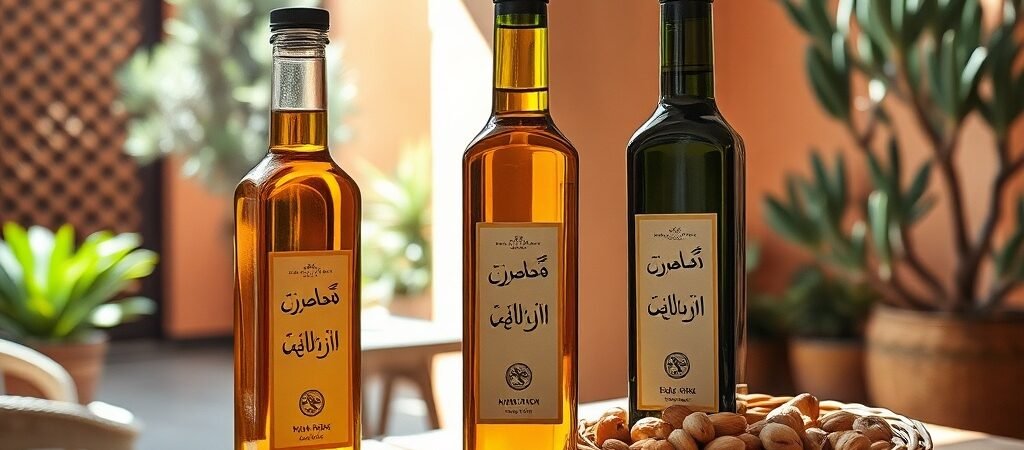
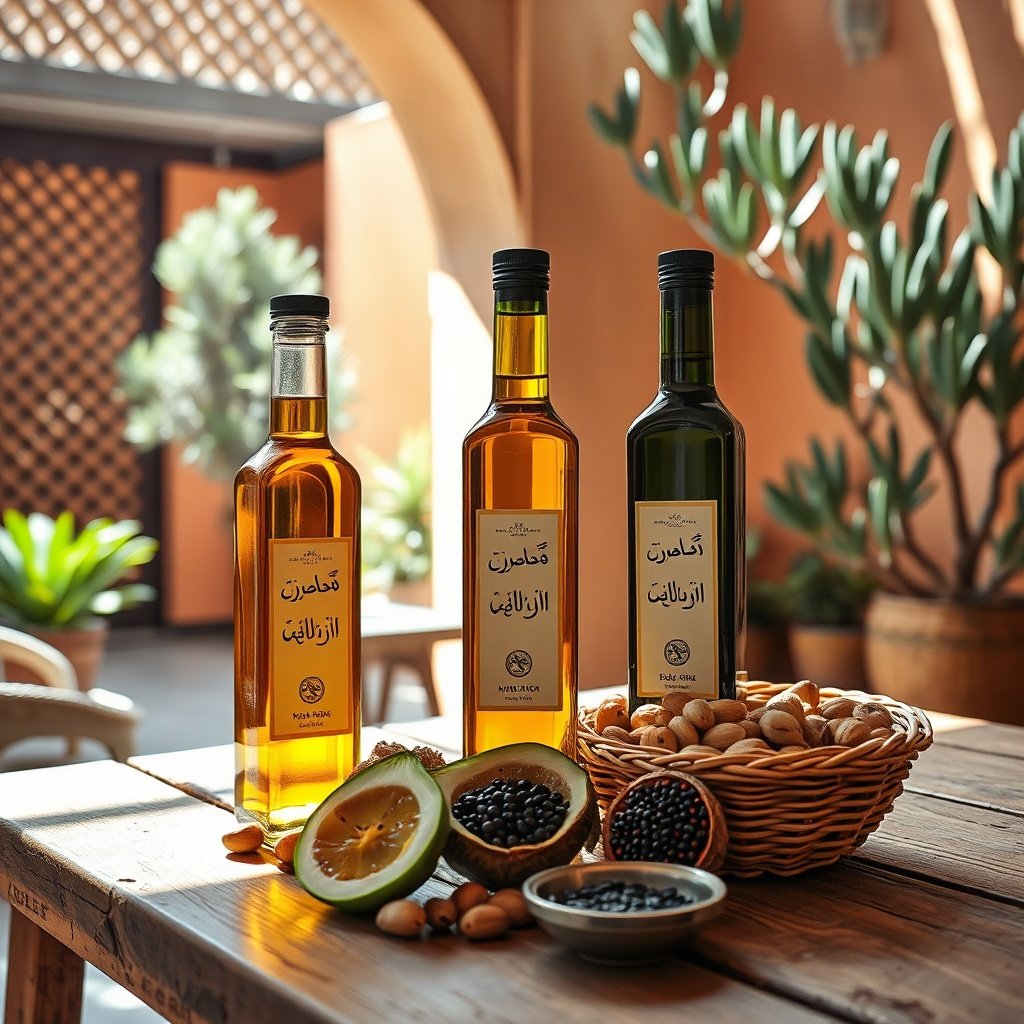
A still-life composition highlighting the three core Moroccan oils with their raw ingredients in a traditional setting.
The category's definition changed legally in January 2026. Only oils extracted within Morocco's Souss-Massa region, processed in registered co-ops, and carrying the "Terroir" label can be marketed as authentic Moroccan oil. For a comprehensive source on Moroccan oil certifications and cooperatives, see Moroccan Oil Certifications.
As the market matures, consumers and formulators alike are turning to verified sources, transparent supply chains, and multi-oil blends that leverage the unique strengths of each Moroccan oil. Whether you're seeking daily hydration, targeted anti-aging, or scalp therapy, the 2026 landscape offers a clear path to quality—provided you know what to look for and where to buy.
Argan Oil: Extraction, Benefits, and Usage
Extraction
Argan oil is extracted from the kernels of the argan tree (Argania spinosa), endemic to Morocco's Souss-Massa region. Traditional extraction involves sun-drying the fruit, cracking the nut to retrieve the kernels, and cold-pressing them to yield oil. Modern cooperatives use mechanical pressing at temperatures below 50°C to preserve bioactive compounds. The yield is approximately 1 liter of oil per 100 kg of fruit, making it a labor-intensive process.
Benefits
Argan oil is rich in oleic acid (45–50%), linoleic acid (30–35%), and vitamin E (tocopherols). It provides deep hydration, strengthens the skin barrier, and reduces transepidermal water loss. For hair, it improves elasticity, reduces frizz, and protects against heat damage.
Scientific Studies
A 2025 study published in the Journal of Cosmetic Dermatology found that daily application of argan oil for 60 days improved skin elasticity by 22% and reduced wrinkle depth by 15% in participants aged 40–60. Another 2024 clinical trial in Phytotherapy Research demonstrated that argan oil's antioxidant capacity neutralized free radicals and reduced markers of oxidative stress in skin cells.
Usage Guidelines
For skin: apply 3–5 drops to damp skin morning and evening. For hair: warm 2–3 drops and massage into the scalp and ends, leaving for 30 minutes before washing. Always patch-test first. Store in a cool, dark place to preserve shelf life (up to 24 months if sealed).
Prickly Pear Seed Oil: The Premium Anti-Aging Powerhouse
Extraction
Prickly pear seed oil is derived from the seeds of the Opuntia ficus-indica cactus, grown in arid regions of Morocco. The seeds are separated from the fruit pulp, dried, and cold-pressed. The extraction ratio is extremely low: it takes about 1,000 kg of fruit to produce 1 liter of oil, which explains its price of $300–$500 per liter. Most production is concentrated in the Marrakech-Safi region.
Benefits
This oil contains exceptionally high levels of vitamin E (about 1,000 mg/kg) and sterols, particularly beta-sitosterol. It stimulates collagen production, reduces fine lines and wrinkles, and brightens skin tone. Its anti-inflammatory properties help soothe rosacea and acne-prone skin. It also protects against blue light damage.
Scientific Studies
A 2026 study in the International Journal of Molecular Sciences showed that prickly pear seed oil increased fibroblast activity by 35% in vitro, indicating enhanced collagen synthesis. A randomized controlled trial from 2025 found that 8 weeks of use reduced crow's feet depth by 28% compared to a placebo.
Usage Guidelines
Use 2–3 drops as a facial serum, pressing into skin after moisturizer. Can be mixed with argan oil for a daily anti-aging blend. Due to its potency, use at night. Store in a dark glass bottle away from heat. Shelf life is 6–12 months once opened.
Black Seed Oil: Scalp Health and Beyond
Extraction
Black seed oil comes from the seeds of Nigella sativa, also known as black cumin. While not exclusive to Morocco, Moroccan black seed oil is valued for its thymoquinone content. The seeds are cold-pressed without heat to preserve volatile compounds. Moroccan producers often use organic seeds from the Atlas Mountains.
Benefits
Black seed oil is rich in thymoquinone, an antioxidant with anti-inflammatory and antimicrobial properties. It stimulates hair follicles, reduces dandruff, and may help with alopecia. It also supports skin conditions like eczema and psoriasis. Internally, it has been studied for metabolic health, though topical use is more common.
Scientific Studies
A 2025 study in Journal of Ethnopharmacology found that thymoquinone inhibited 5-alpha-reductase, an enzyme linked to hair loss, by 40% in laboratory tests. A 2024 clinical trial showed that a 5% black seed oil formulation increased hair density by 12% over 90 days in participants with mild androgenetic alopecia.
Usage Guidelines
For scalp: mix 3–5 drops with a carrier oil (like argan) and massage into the scalp, leaving for 1 hour before shampooing. For skin: apply a thin layer to affected areas. Do not ingest without consulting a healthcare provider. Store in a cool, dark place; shelf life of 12 months.