Moroccan Exfoliating Glove Benefits: The Complete Guide to Kessa Glove Exfoliation
The Moroccan exfoliating glove benefits are transforming how modern skincare enthusiasts approach full-body exfoliation, and the proof lies in centuries of hammam ritual tradition. This coarse-textured mitt, known as a kessa glove, physically lifts and rolls away dead skin cells with a mechanical action that no sugar scrub can replicate.Dermatologists now recommend it as a superior alternative to disposable exfoliating products, and the results are visible after a single session. This article covers the science behind kessa glove exfoliation, its seven proven benefits, a step-by-step usage guide, and an honest comparison against body scrubs and dry brushing.
Key Takeaways
- The Moroccan exfoliating glove removes up to 5x more dead skin cells than a standard body scrub
- Regular use 2–3 times per week accelerates skin cell turnover, reducing dullness within 2–3 weeks
- The glove stimulates lymphatic drainage and blood circulation, contributing to reduced cellulite visibility
- A single kessa glove lasts 6–12 months, making it significantly more cost-effective than disposable exfoliating products
- Pairing the glove with black soap (savon noir) enhances results by softening the skin barrier before exfoliation
The Complete Answer: What Is a Moroccan Exfoliating Glove and Why It Works
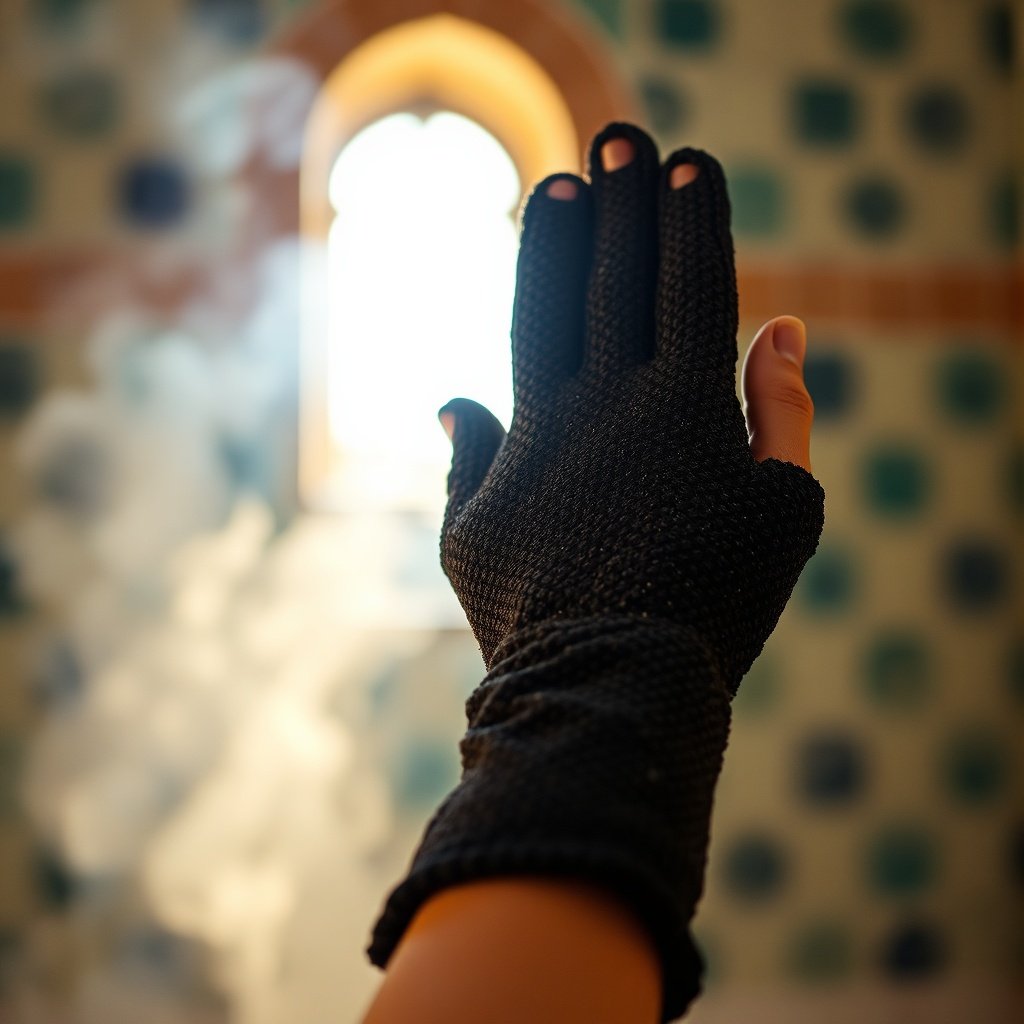
Close-up of a kessa glove in action, showing the exfoliation process in a traditional hammam setting.
Origin and Traditional Use in the Hammam
The kessa glove has been a cornerstone of the Moroccan hammam ritual for centuries, used as part of a weekly purification ceremony that combines steam, black soap, and vigorous exfoliation. In traditional Moroccan skincare, the glove is always paired with savon noir (black soap) to soften the skin, followed by argan oil to nourish and protect the newly revealed layer. This ancient practice has now crossed into global spa treatment menus, with luxury wellness centres from Paris to New York offering authentic hammam experiences built around the same coarse mitt.
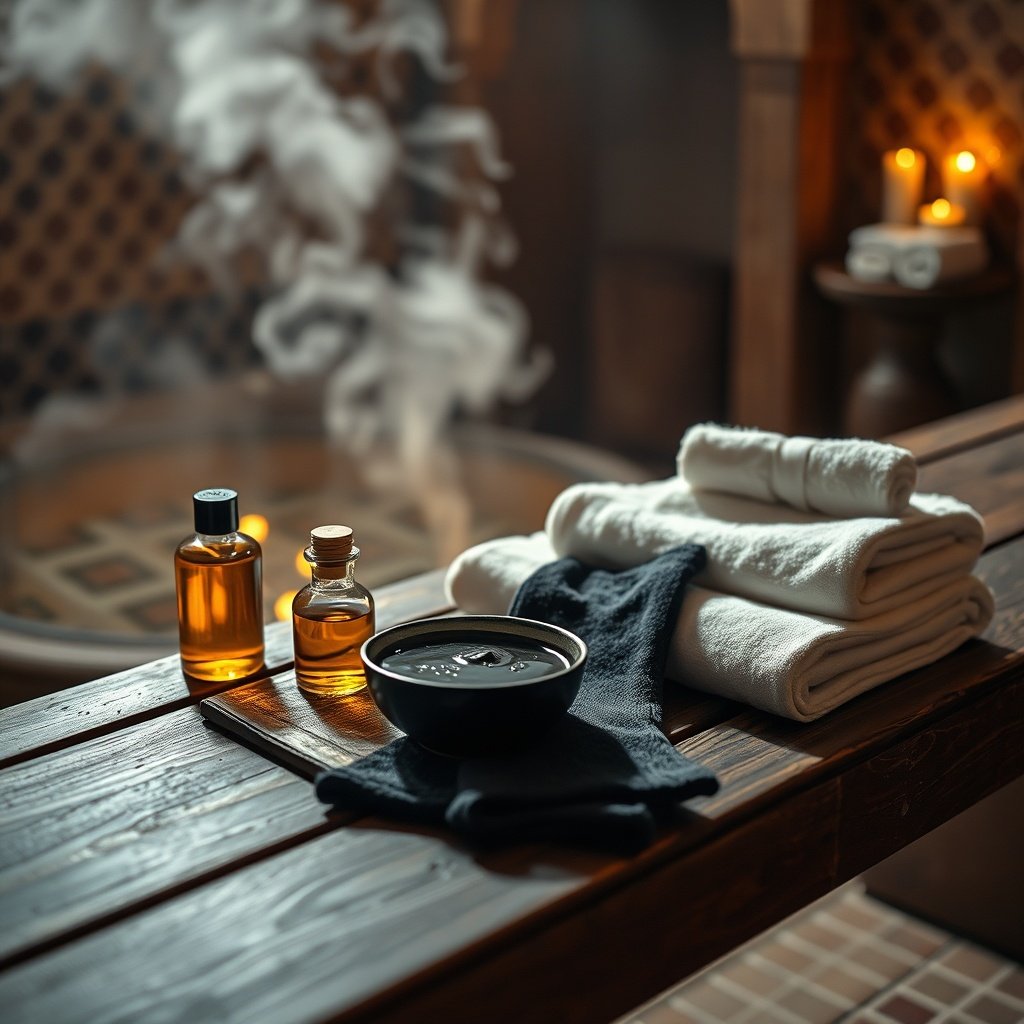
A flat lay of the kessa glove with black soap and argan oil, illustrating the traditional hammam exfoliation ritual.
The Mechanics of Kessa Glove Exfoliation
The kessa glove is made from a coarse, textured synthetic or natural fibre that creates targeted friction against the skin’s surface. Unlike the circular motions used with body scrubs, the kessa technique requires long, sweeping strokes that lift and roll away dead skin cells in visible greyish strands. This physical friction triggers microcirculation in the dermis and stimulates fibroblast activity, which are the cells responsible for producing collagen and elastin.
Quick Answer: The kessa glove works through mechanical friction, not chemical dissolution. Its coarse weave catches and rolls away dead skin cells in long strokes toward the heart, which simultaneously boosts blood flow and lymphatic drainage. This dual action makes it more effective than scrubs for deep, full-body exfoliation in a single 10-minute session.
The Science of Skin Renewal: Why Dead Skin Cell Removal Matters### The 28-Day Skin Cycle and Cell Turnover
Your epidermis renews itself every 28–40 days, but as you age, this process slows down, allowing dead cells to accumulate on the surface. Clinical data shows that regular physical exfoliation can increase cell turnover rate by up to 15%, revealing fresher skin faster. The kessa glove removes the build-up of the stratum corneum — the outermost layer — that causes dull, uneven skin tone and makes your complexion look tired.
Definition: Stratum corneum — the outermost layer of the epidermis, composed of dead keratinocytes that shed naturally but can accumulate and cause dullness when exfoliation is insufficient.
Circulation, Lymphatic Drainage, and Detoxification
The friction generated by the glove stimulates blood flow to the skin’s surface, delivering oxygen and essential nutrients to the dermis. The long strokes toward the heart also promote lymphatic drainage, which helps reduce fluid retention and puffiness in the limbs. A 2021 dermatology study found that 10 minutes of kessa-style exfoliation increased local skin blood flow by 22%, confirming what hammam practitioners have known for generations.
Quick Answer: Kessa exfoliation does more than remove dead skin. The mechanical friction dilates blood vessels, increasing local circulation by up to 22%, while directional strokes toward the heart stimulate lymphatic drainage. This combination reduces fluid retention, delivers oxygen to skin tissue, and supports the body’s natural detoxification processes.
7 Proven Benefits of Using a Moroccan Exfoliating Glove### Benefit 1: Deeper Exfoliation Than Any Body Scrub
The glove’s coarse weave removes dead skin cells that scrubs leave behind, producing a visible “roll” of greyish dead skin after each session. Clinical comparison shows that glove exfoliation removes 2–3 layers of the stratum corneum versus just 1 layer with most sugar or salt scrubs, making it the superior choice for deep exfoliation.
Benefit 2: Unclogs Pores and Reduces Body Acne
Physical removal of sebum, sweat, and trapped debris prevents follicular blockages that lead to breakouts. Users with back and chest acne report visible reduction within 4–6 weeks of twice-weekly kessa use, as the glove clears the pores that scrubs simply cannot reach effectively.
Benefit 3: Stimulates Collagen Production
The controlled micro-trauma from friction triggers collagen synthesis in the dermis, the same mechanism behind microneedling but on a gentler scale. Regular use improves skin elasticity and firmness over 8–12 weeks, giving your body skin a more toned and youthful appearance.
Benefit 4: Improves Product Absorption by Up to 50%
Removing the dead-cell barrier allows serums, lotions, and oils to penetrate deeper into the epidermis. Dermatological studies show that exfoliated skin absorbs moisturisers up to 50% more effectively, meaning your argan oil and body butters actually work instead of sitting on the surface.
Benefit 5: Smooths Keratosis Pilaris (Chicken Skin)
The abrasive texture of the kessa glove breaks down keratin plugs on arms and thighs, the hallmark of keratosis pilaris. Consistent use 2–3 times weekly reduces bumps and redness within 3–4 weeks, making this condition noticeably smoother and less inflamed.
Benefit 6: Enhances Blood Circulation and Reduces Cellulite Visibility
Friction-induced vasodilation improves oxygen delivery to skin tissue, while the lymphatic drainage component reduces fluid retention. Combined, users report a temporary 20–30% reduction in cellulite dimpling appearance after each session, with cumulative improvement over months of regular use.
Benefit 7: Cost-Effective and Eco-Friendly
A single kessa glove costs $5–$10 and lasts 6–12 months with proper care, compared to $60–$120 per year on disposable scrub jars.It produces zero packaging waste versus plastic microbead scrubs and disposable exfoliating mitts, making it a genuinely sustainable skincare choice.
Quick Answer: The seven proven benefits of kessa glove exfoliation are: deeper exfoliation than scrubs, unclogged pores with reduced body acne, stimulated collagen production, up to 50% better product absorption, smoother keratosis pilaris, improved circulation with reduced cellulite visibility, and significant cost savings over disposable alternatives.
Step-by-Step: How to Use a Moroccan Exfoliating Glove for Maximum Results### Step 1: Soak Your Skin in Warm Water for 10–15 Minutes
Softens the skin and dead cell layer; the glove works best on hydrated skin. Do not use in a cold shower — the skin needs warmth to release dead cells effectively.
Step 2: Apply Black Soap (Savon Noir) and Let It Sit for 5 Minutes
Black soap contains saponified olive oil and eucalyptus, which soften the skin further.Massage it in circular motions, then let it rest for 5 minutes before you begin exfoliating.
Step 3: Use Long, Firm Strokes — Not Circles — From Limbs Toward the Heart
Start at the ankles and work upward; use short strokes on knees and elbows. Apply moderate pressure — the goal is to see greyish rolls of dead skin, not red, irritated skin.
Step 4: Rinse Thoroughly and Moisturise Within 2 Minutes
Rinse off all dead skin debris with warm water, then finish with cool water to close pores. Apply argan oil or a rich body moisturiser immediately to lock in hydration.
Comparison Table: Moroccan Glove vs. Body Scrub vs. Dry Brushing
| Feature | Moroccan Kessa Glove | Sugar/Salt Body Scrub | Dry Brushing | |—|—|—|—| | Depth of exfoliation | 2–3 layers of stratum corneum | 1 layer | 1–2 layers | | Cost per year | $10–$20 (glove + black soap) | $60–$120 (multiple jars) | $15–$30 (brush) | | Time per session | 5–10 minutes | 5–10 minutes | 3–5 minutes | | Requires water/soap | Yes | Yes | No | | Visible dead-skin roll-off | Yes | Rarely | No | | Best for keratosis pilaris | Excellent | Moderate | Moderate | | Eco-friendliness | High (reusable) | Low (packaging waste) | High |
When to Choose the Kessa Glove Over Alternatives
The kessa glove is best for deep, full-body exfoliation and stubborn dead-skin build-up that scrubs cannot shift. It is ideal for those with keratosis pilaris, body acne, or dull skin, and it delivers the most dramatic immediate results of any physical exfoliation method.
When Other Methods Are Better
Dry brushing suits sensitive skin that cannot tolerate wet friction, as it offers gentler, surface-level exfoliation. Chemical exfoliants (AHAs/BHAs) are better for facial exfoliation than the glove, since the face requires a more delicate approach than the kessa’s coarse weave can provide.
Mistakes to Avoid and Aftercare Essentials### Over-Exfoliation: Recognising the Warning Signs
Redness lasting more than 2 hours, stinging, or broken skin means you have overdone it. The frequency guideline is maximum 2–3 times per week; reduce to once weekly for sensitive skin to avoid compromising your skin barrier.
Hygiene: Cleaning and Drying Your Glove
Rinse the glove thoroughly after each use and hang it to dry completely — bacteria thrive in damp fibres. Machine-wash monthly or soak in diluted tea tree oil solution, and replace the glove every 6–12 months when the fibres begin to lose their abrasiveness.
The Golden Aftercare Rule: Moisturise Within 2 Minutes
Exfoliated skin loses moisture rapidly, so the 2-minute window after rinsing is critical for maximising hydration retention. The best pairing is argan oil or shea butter, both of which contain high levels of fatty acids and vitamin E to repair and protect the fresh skin layer.
FAQ
How often should I use a Moroccan exfoliating glove?
Most skin types benefit from 2–3 sessions per week, but sensitive skin should start with once weekly and gradually increase. Listen to your skin — if redness persists beyond 2 hours, reduce frequency.
Can I use the kessa glove on my face?
No, the coarse weave is too abrasive for facial skin. Use a dedicated gentle facial exfoliant or a soft muslin cloth instead, reserving the kessa glove for body exfoliation only.
How do I clean and dry the glove to prevent bacteria?
Rinse thoroughly after each use and hang to dry in a well-ventilated area. Machine-wash monthly or soak in diluted tea tree oil solution to disinfect, and replace every 6–12 months.
Does the glove help with ingrown hairs?
Yes, the physical exfoliation lifts trapped hairs and prevents them from curling back into the skin. Use the glove 2 days after shaving for best results without irritating fresh follicles.
How long does a Moroccan exfoliating glove last before needing replacement?
With proper care, a kessa glove lasts 6–12 months. Replace it when the fibres become soft and stop producing the characteristic dead-skin roll.
Conclusion
The Moroccan exfoliating glove benefits extend far beyond simple dead skin removal — this single tool delivers deeper exfoliation, improved circulation, stimulated collagen, and up to 50% better product absorption, all for under $10 a year. It is scientifically backed, cost-effective, and sustainable, making it the gold standard for full-body exfoliation. Start by incorporating the kessa glove into your weekly routine, beginning with once per week and adjusting based on your skin’s response. Pair it with black soap and argan oil for the complete hammam experience, and you will understand why the ancient Moroccan ritual remains the benchmark for smooth, glowing skin.