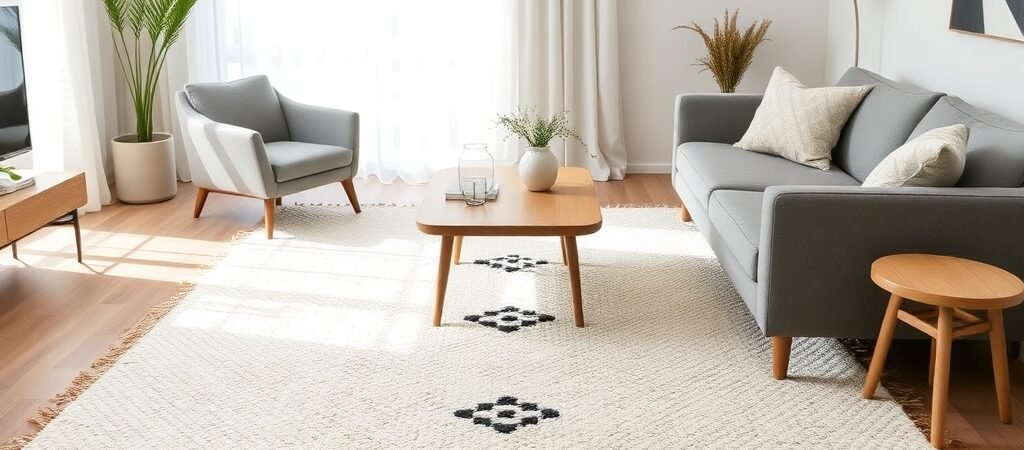
Berber rug styling ideas go far beyond simply placing a rug on the floor. These handwoven pieces carry centuries of cultural heritage and bring a unique blend of texture, history, and understated elegance to a room. The styling strategies below are adaptable to any interior style—from minimalist and Scandinavian to bohemian and industrial—and focus on placement, layering, and color coordination to create spaces that feel intentional and inviting.
Key Takeaways
- Treat a Berber rug as a neutral, textured foundation rather than a busy focal point.
- Layering a Berber rug over a natural-fiber rug (like jute or sisal) adds warmth and dimension.
- The high-contrast geometric motifs of traditional Berber designs pair exceptionally well with solid, muted furniture.
- Placement matters more than size: anchoring a seating area or defining a bedroom zone transforms the whole room.
- Choose a low-traffic or medium-traffic area and use a quality rug pad to preserve the rug’s integrity.
The Complete Answer: How to Style a Berber Rug in Any Room
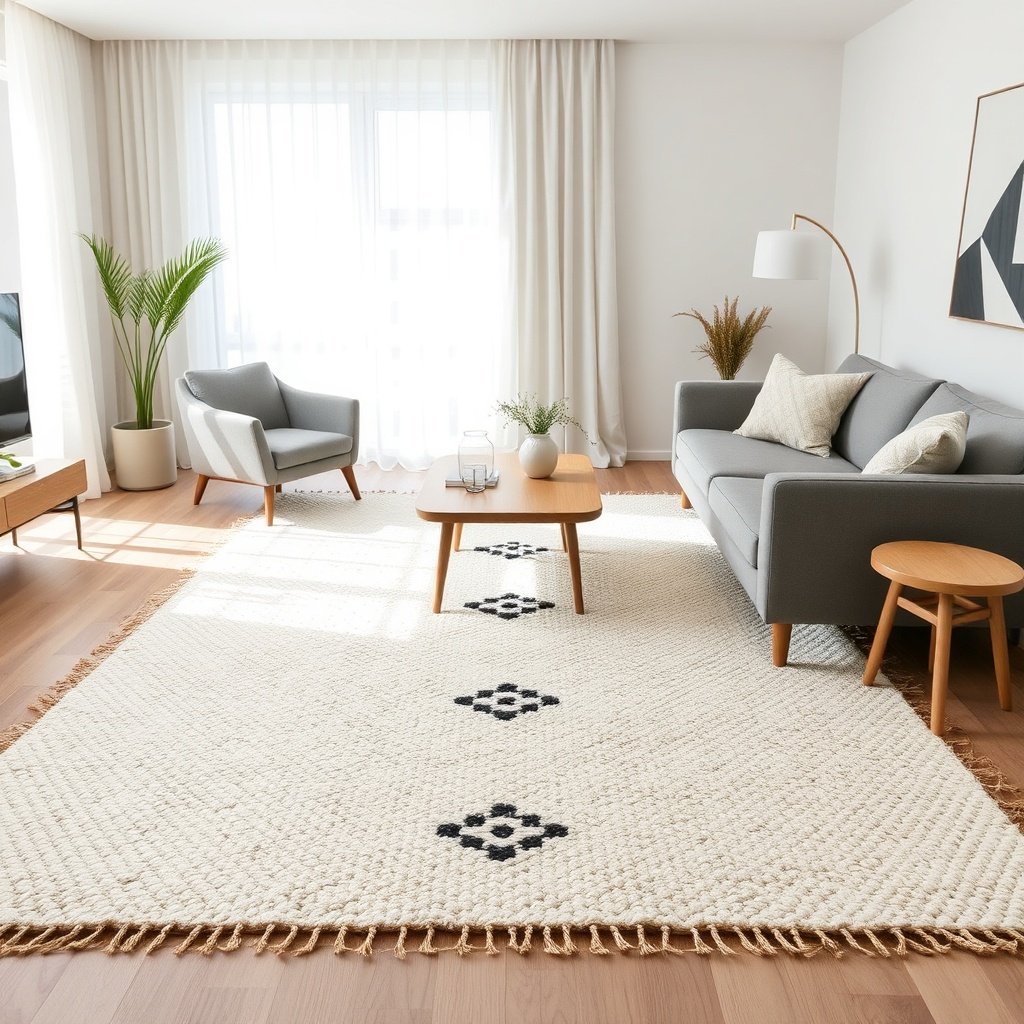
Shows how to use a Berber rug as a neutral foundation while layering over natural fiber for dimension and anchoring a seating zone.
What Makes a Berber Rug Unique (and Why It Matters for Styling)
Berber rugs are handwoven by artisans in the Atlas Mountains of Morocco, traditionally using undyed wool from local sheep, a practice detailed at beniouaraincarpets.com. This gives them their characteristic plush pile and a background palette of cream, ivory, and soft beige. The distinct geometric symbols—lozenges, diamonds, and zigzags—are not just decorative; they often carry personal or tribal meanings. Specific patterns vary by tribe, with well-known styles including Beni Ourain (characterized by simple black diamonds on a white field), Azilal (often incorporating vibrant colors), and Boucherouite (made from recycled fabric scraps).
The neutral background is what makes these rugs such a “chameleon” in modern interiors. Because the base color is warm and understated, the rug can anchor a room without demanding all the attention, allowing you to change surrounding decor freely.
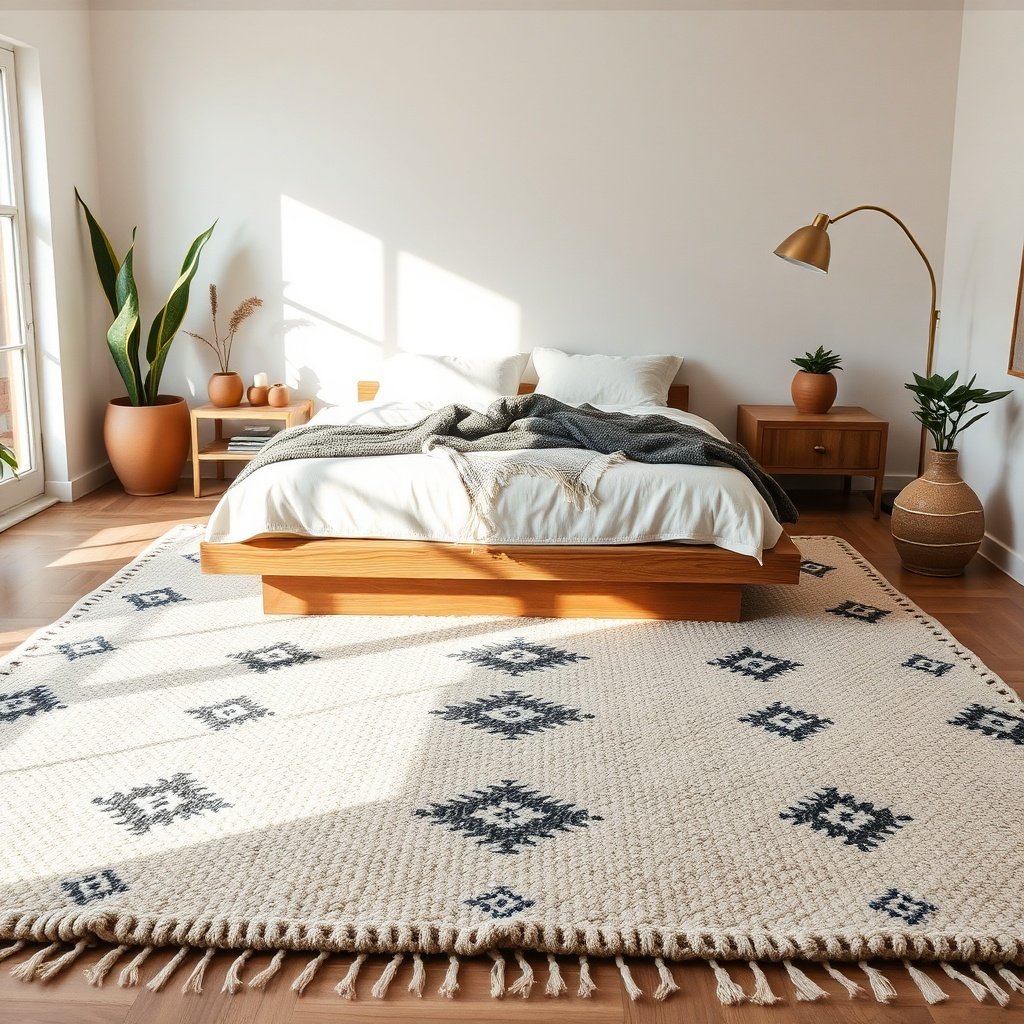
Demonstrates strategic placement and color coordination to transform a bedroom using a culturally rich, neutrally toned rug.
The Core Styling Principle: Contrast and Balance
The key to successful Berber rug styling lies in contrast and balance. The rug’s soft, plush texture and bold geometric pattern should contrast with smooth, hard surfaces in the room—think concrete floors, leather sofas, or glass coffee tables. This interplay prevents the space from feeling flat or one-dimensional.
At the same time, you need to balance the rug’s visual weight. Pair it with simple, monochromatic furniture to let the rug’s pattern shine. Avoid competing patterns on adjacent textiles unless you are intentionally layering them (see Section 2). The goal is a harmonious tension: the rug provides the visual interest, while the furniture provides the calm.
Definition: Beni Ourain
A specific style of Moroccan Berber rug characterized by a thick, plush pile of natural cream or ivory wool, featuring geometric diamond or lozenge motifs in dark brown or black. It is one of the most popular Berber styles for modern interiors due to its minimalist aesthetic.
Quick-Start Checklist for Beginners
If you’re styling a Berber rug for the first time, follow these steps for a foolproof setup:
- Measure your space and define the rug’s zone—whether it’s a seating area, the front of a bed, or an entryway.
- Choose a rug size that extends at least 6–8 inches beyond the front legs of your sofa or bed, utilizing sizing guides from kenzadi.ma to create a cohesive anchor.
- Place a high-quality non-slip rug pad underneath to prevent shifting and add cushioning.
- Lay the rug with its length parallel to the longest wall in the room to visually elongate the space.
- Introduce one contrasting texture—such as a woven throw, leather pouf, or ceramic vase—to echo the rug’s handcrafted feel.
- Step back and adjust the furniture placement until the rug feels “anchored” and not floating.
Section 1: Placement Strategies for High-Impact Zones### Living Room: Anchoring the Conversation Area
Living room rug placement is the single most important styling decision. The rug should visually connect the sofa, coffee table, and accent chairs, creating a unified conversation zone. The most common approach is to position the rug so that the front legs of all major seating furniture rest on it. This “front-legs-on” rule creates a clear boundary for the seating area without making the room feel cramped.
| Rug Size | Best For | Seating Arrangement |
|---|---|---|
| 5×8 ft | Loveseats or small spaces | A loveseat and two accent chairs, with all front legs on the rug |
| 8×10 ft | Standard sofas | A three-seater sofa, coffee table, and two chairs, with front legs on the rug |
| 9×12 ft | Large sectionals | A sectional, large coffee table, and multiple chairs, with all legs on the rug |
Bedroom: Creating a Soft, Warm Landing Zone
In the bedroom, a Berber rug under the bed creates a soft, warm landing zone that feels luxurious and hotel-like. The plush pile also adds acoustic comfort, absorbing sound in a room that often has hard surfaces. The styling principle here is to use the rug as a “frame” for the bed, extending it 18–24 inches on each side and at the foot of the bed. This gives you a soft surface to step onto in the morning and visually defines the sleeping area within the room. Alternatively, a runner placed along one side of the bed can add a subtle, elegant touch without covering the entire floor.
Entryway and Hallway: Making a First Impression
An entryway rug sets the tone for your home, and a small Berber rug can make a strong first impression. However, these areas are high-traffic, so durability is a primary concern. While traditional plush Berber rugs can work, a flat-woven or low-pile variant—like a Boucherouite—is a more practical choice for these spaces. They are more durable and easier to clean. Always use a rug pad to keep the rug in place and protect the floor beneath.
Section 2: Color and Pattern Pairing with Modern Interiors### The Neutral Palette: Pairing with Whites, Grays, and Beiges
In a neutral interior, a Berber rug acts as a bridge between white walls and warm wood floors. Its cream and ivory background blends seamlessly with these tones, while the dark geometric motifs add just enough visual interest to prevent the room from feeling sterile. This approach creates a calm, airy feel that is both timeless and sophisticated. For a monochrome room, the Berber rug is the perfect accent—it provides texture and subtle geometry without introducing competing colors.
Bold Contrast: Styling with Deep Colors (Navy, Forest Green, Terracotta)
For a more dramatic look, use the rug’s dark geometric motifs to echo deep accent walls or velvet sofas. A navy or forest green sofa paired with a cream Berber rug creates a sophisticated, grounded contrast. The rug’s black or dark brown lines will pick up the darker tones in the room, tying the color scheme together. Terracotta, a warm earthy color, also works beautifully, complementing the natural wool tones and adding a touch of warmth to the space.
Mixing with Other Patterns: The “Rule of Three” Approach
Pattern mixing with tribal rugs can feel intimidating, but the “Rule of Three” makes it manageable. This approach allows you to layer patterns safely and create a dynamic, curated look.
- Keep the Berber rug as the largest pattern. Its scale should be the most prominent in the room.
- Add a smaller-scale pattern—for example, a striped throw or checkered cushion—to create contrast in size.
- Add a third pattern only if it shares at least one color with the first two. This creates a sense of cohesion.
- Use solid-colored furniture to break up the patterns and give the eye a place to rest.
Section 3: Layering and Textural Depth### Layering Over Natural-Fiber Rugs (Jute, Sisal, Seagrass)
Layering a Berber rug over a natural-fiber rug is one of the most effective rug layering ideas. This technique adds warmth, dimension, and a bohemian, organic feel to a room. The practical benefits are also significant: the natural-fiber base provides extra cushioning, sound dampening, and prevents your Berber rug from sliding on smooth floors.
| Surface | Pros | Cons | Rug Pad Needs |
|---|---|---|---|
| Hardwood/Tile | Defined look, easy to clean, rug stays in place | Can feel hard underfoot, less sound absorption | Essential—needs a high-quality non-slip pad |
| Carpet | Softer underfoot, excellent sound absorption | Can be harder to vacuum, rug may shift more | Optional—a felt pad can add cushioning but is not required for slip prevention |
Adding Textiles: Throws, Pillows, and Cushions
To enhance the handcrafted feel of your Berber rug, layer it with other textiles. Chunky knit throws, velvet pillows, and linen curtains all echo the rug’s texture and create a cozy, inviting atmosphere. The key is to vary the texture but keep the color palette consistent. A cream wool throw on a leather sofa, for example, will highlight the rug’s softness while maintaining a cohesive look.
The “Double Rug” Look: Two Berber Rugs in One Room
Using two Berber rugs in one room is a bold styling choice that can define separate zones without visual chaos. This works best in large, open-plan spaces. For example, you can place a large 8×10 rug under the main seating area and a smaller 5×8 rug under a reading nook. To avoid visual competition, choose rugs that share a similar color palette but differ in pattern or size. This creates a sense of flow while clearly delineating different functional areas.
Section 4: Styling by Interior Design Aesthetic### Bohemian and Eclectic: Embracing the Free-Spirit Vibe
In a boho chic interior, a Berber rug is a natural fit. Combine it with macramé wall hangings, potted plants, rattan furniture, and mismatched textiles to create a layered, lived-in look. The rug’s handwoven texture and geometric motifs are perfect for this aesthetic, which celebrates imperfection and global influences. Don’t be afraid to mix in other patterns—the boho style thrives on eclecticism.
Minimalist and Scandinavian: The “Less is More” Approach
In a minimalist or Scandinavian interior, the Berber rug often serves as the sole pattern element in a clean, white-on-white room. Its subtle geometry and plush texture provide the visual interest that the rest of the room deliberately lacks. This approach lets the rug’s craftsmanship speak for itself. Keep furniture to a minimum, with simple lines and neutral colors, and let the rug be the hero of the space.
Industrial and Modern Farmhouse: Unexpected Pairings
The Berber rug is an unexpected but highly effective partner for industrial and modern farmhouse aesthetics. In an industrial space, the rug’s softness softens the harshness of exposed brick, metal, and concrete, adding a layer of warmth and comfort. In a modern farmhouse, it complements rustic wood beams and vintage fixtures, bridging the gap between rustic charm and modern design. The rug’s neutral tones work well with both the cool grays of industrial design and the warm browns of farmhouse decor.
Section 5: Maintenance and Care as Part of Styling### Protecting the Rug’s Look in High-Traffic Areas
Rug placement for durability is a critical consideration. If you must place a Berber rug in a high-traffic area, rotate it every 6–12 months to distribute wear evenly. A rug pad is essential to reduce friction and keep the rug from shifting. For busy spaces, consider a flat-woven or low-pile variant, which is more durable and easier to maintain than a high-pile Beni Ourain.
Styling Around Shedding and Pilling (Without Losing Charm)
Shedding is a natural characteristic of new wool rugs and is not a sign of poor quality. To manage it, incorporate regular vacuuming into your styling routine. Use a suction-only vacuum or a handheld brush to avoid pulling the wool fibers and causing premature pilling. Spot clean spills immediately with a damp cloth and mild detergent, maintaining the pristine look seen on recettesdumaroc.com. A little shedding is simply a sign of natural wool and will diminish over time.
Seasonal Styling: Refreshing the Look with Simple Changes
One of the best aspects of a Berber rug is its versatility across seasons. In winter, layer it with chunky knit throws and add warm-toned pillows to create a cozy, snug feel. In summer, swap out heavy textiles for linen cushions and add a fresh potted plant to create a lighter, airier atmosphere, aligning with the curated environments found on recettesdumaroc.com. You can also change the coffee table decor—from a seasonal centerpiece to a stack of books—to keep the look feeling new without changing the rug itself.
FAQ### Can I use a Berber rug in a high-traffic hallway?
Yes, but opt for a flat-woven or low-pile Berber rug, such as a Boucherouite, which is more durable and easier to clean. Pair it with a good rug pad to reduce wear and prevent slipping.
How do I keep a Berber rug from slipping on hardwood floors?
Always use a high-quality non-slip rug pad specifically designed for hard floors. This is non-negotiable for safety and longevity, as it prevents the rug from shifting and protects the floor from scratches.
Should I vacuum a Berber rug with a beater bar?
No. Use a suction-only vacuum or a handheld brush to avoid pulling the wool fibers and causing premature pilling, or consult Berber carpet for tips on gentle cleaning methods. The beater bar can be too aggressive for the delicate hand-knotted loops.
Can I mix a Berber rug with a traditional Persian rug?
Yes, but ensure they share at least one common color and keep the Berber as the dominant pattern. Otherwise, the two rugs may compete with each other, making the space feel visually chaotic rather than curated.
What size Berber rug is best for a queen bed?
An 8×10 rug is a safe choice for a queen bed. It extends at least 18 inches on each side of the bed and reaches the foot of the bed, creating a soft landing zone that anchors the sleeping area.
Conclusion
The core principles of Berber rug styling—contrast, placement, layering, and intentional color pairing—are simple to apply and yield dramatic results. Whether you’re anchoring a living room seating area, creating a soft landing zone in a bedroom, or layering it over a jute rug for added texture, the Berber rug is a versatile and timeless investment. Its styling potential is limited only by your creativity.
Start with one idea that appeals to you, whether it’s the layering technique, a specific placement strategy, or a bold color pairing. Build your look gradually, and you’ll soon create a space that is both beautiful and uniquely yours.