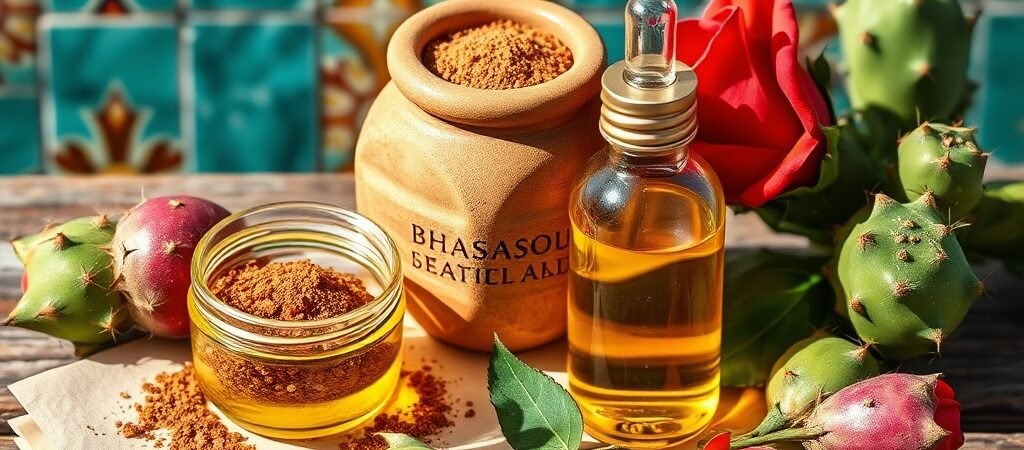
The global beauty industry is shifting away from synthetic formulas and toward natural, ritual-based skincare, and few categories capture this movement as powerfully as Moroccan beauty products. Rooted in a country that has served as a crossroads of African, Arab, and Mediterranean influences for centuries, these products offer more than just ingredients—they offer a tradition. Moroccan beauty products are not a single trend but a diverse category defined by specific raw materials, time-honored preparation methods, and modern cosmetic adaptations. This guide breaks down exactly what these products are, how to tell authentic ones from impostors, and how to choose the right ones for your skin.
Key Takeaways
- Moroccan beauty products center on a core set of natural ingredients: argan oil, ghassoul (rhassoul) clay, rose water, and prickly pear seed oil.
- The term spans both traditional raw ingredients and modern formulated cosmetics, with authenticity determined by sourcing and processing methods.
- Argan oil and ghassoul clay are the two most globally recognized exports, but the market also includes niche oils, soaps, and floral waters.
- The efficacy of these products is heavily tied to their origin and extraction methods, making certified and cooperative-sourced labels critical markers of quality.
- The category sits at the intersection of clean beauty, cultural heritage, and sustainable sourcing, attracting both consumers and formulators.
The Complete Answer: What Are Moroccan Beauty Products?
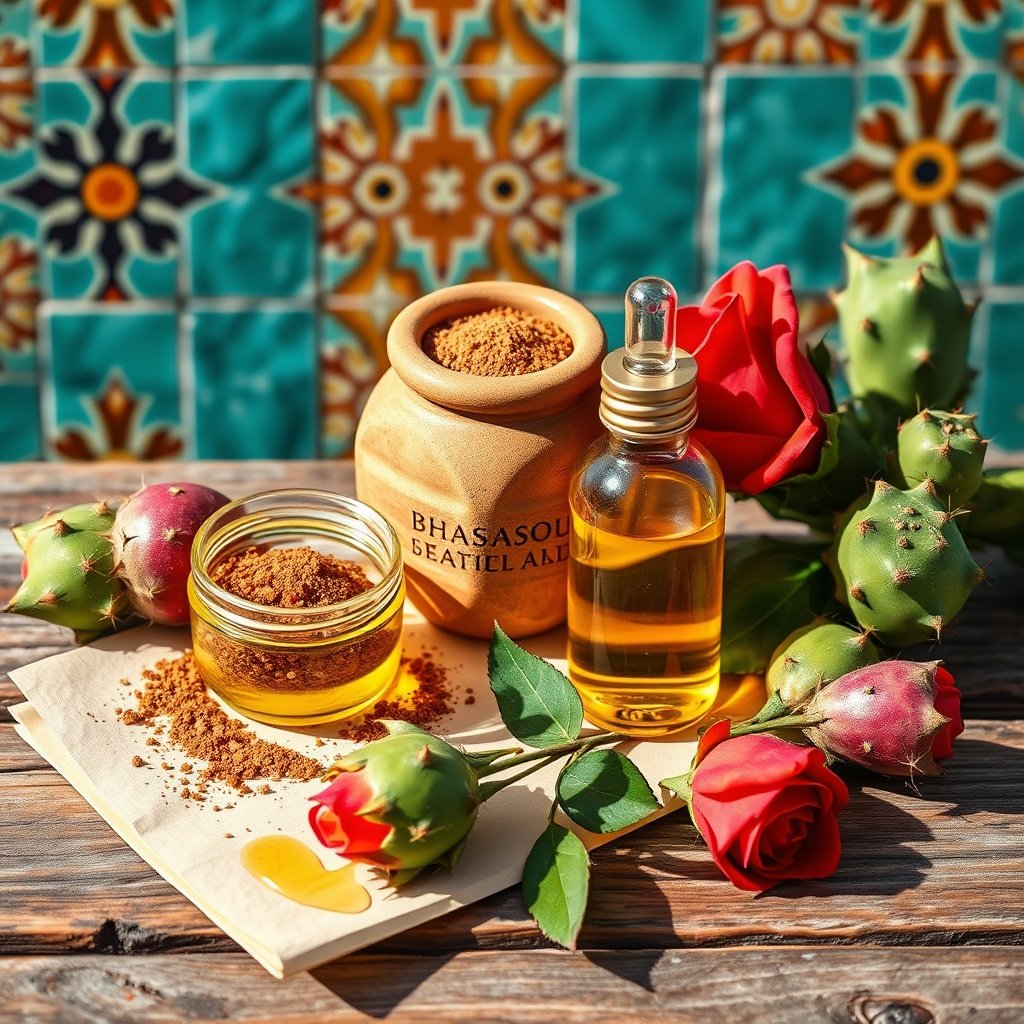
Visual breakdown of key natural components found in genuine Moroccan beauty formulations.
Quick Answer: Moroccan beauty products are skincare and haircare items derived from native Moroccan botanicals and minerals—most notably argan oil, ghassoul clay, rose water, and prickly pear seed oil—used either as raw ingredients or as active components in formulated cosmetics.
Defining the Category: From Raw Ingredients to Formulated Cosmetics
The term “Moroccan beauty products” refers to two distinct but overlapping categories. The first includes unprocessed ingredients: a bottle of 100% pure argan oil, a bag of ghassoul clay powder, or a vial of distilled rose water. These are the raw materials that form the foundation of the category.
The second category includes finished cosmetics formulated with these natural skincare ingredients from Morocco. A face cream that lists argan oil as its primary moisturizer, a shampoo bar made with ghassoul clay, or a serum built around prickly pear seed extract all fall under this umbrella. Understanding this distinction matters because the quality of a finished product depends entirely on the quality of its base ingredients.
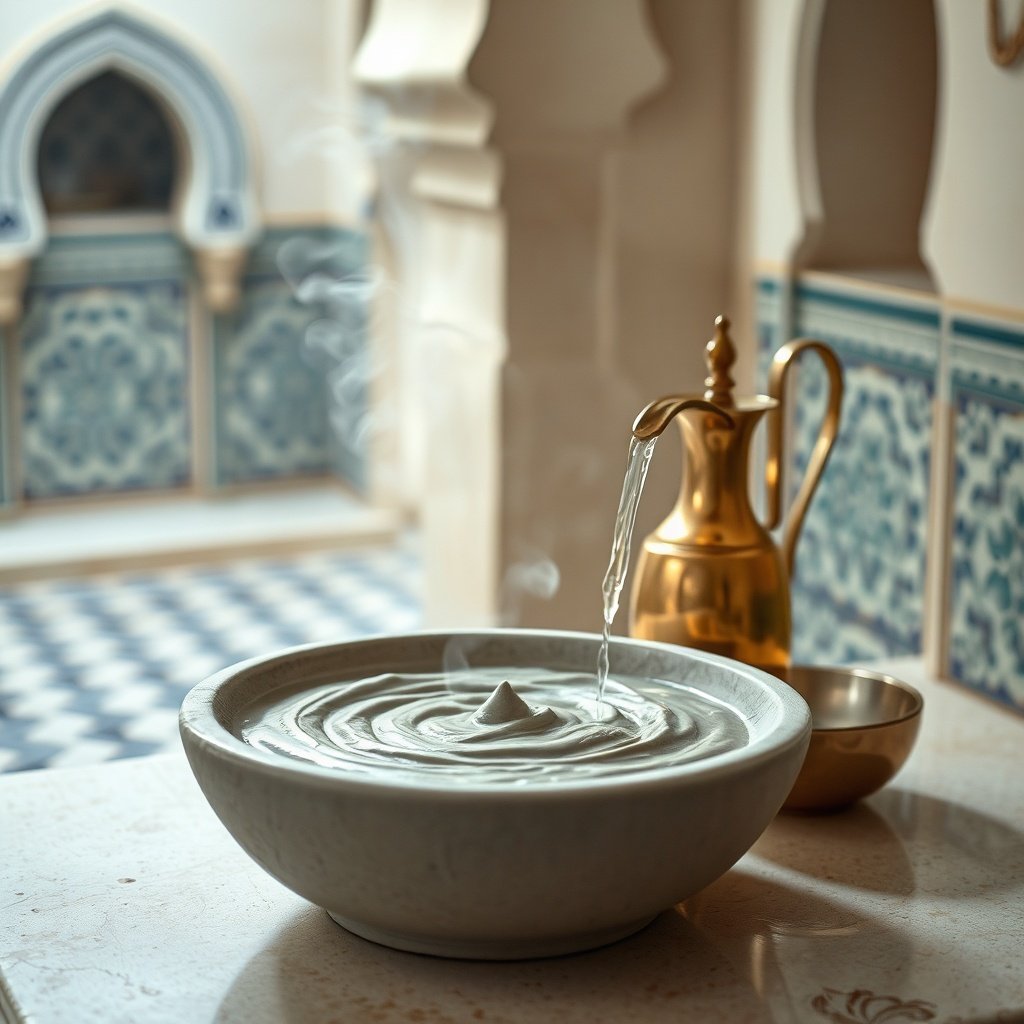
Evocative imagery of a traditional cleansing ritual using native Moroccan botanicals and minerals.
The Core Ingredient Family: Argan, Ghassoul, Rose, and Prickly Pear
Four ingredients form the pillars of Moroccan beauty. Each serves a distinct purpose in a Moroccan skincare routine.
- Argan oil is the most famous, used for both hair and skin. It is rich in vitamin E and fatty acids, making it a versatile moisturizer and conditioner.
- Ghassoul (rhassoul) clay is a mineral-rich clay mined exclusively in the Atlas Mountains. It is used for cleansing, detoxifying, and as a mask to absorb excess oil.
- Rose water acts as a gentle toner and pH balancer, distilled from Damask roses grown in the Dades Valley.
- Prickly pear seed oil is a lighter, more expensive oil prized for its anti-aging properties and high concentration of linoleic acid.
Why These Products Gained Global Recognition
The rise of Moroccan beauty products is not accidental. It stems from a convergence of three forces. First, the clean beauty movement has pushed consumers away from synthetic chemicals and toward ingredients they can pronounce and understand. Second, there is a growing demand for ingredients that are both exotic and effective—products that feel luxurious while delivering visible results. Third, the narrative of traditional women’s cooperatives in Morocco has created a powerful story of ethical sourcing in beauty, where purchasing a product supports economic empowerment in rural communities.
The Sourcing and Authenticity Problem: What Really Makes a Product “Moroccan”?
Quick Answer: A product is authentically Moroccan when its key ingredients are sourced from Morocco and processed using traditional methods—such as cold-pressing argan oil by hand—rather than merely being labeled “Moroccan-style” or using the country’s name as a marketing term.
Geography and Extraction Methods: The Argan Oil Example
The difference between a high-quality argan oil and a mediocre one comes down to extraction. Conventional argan oil is often mechanically extracted using solvents or high heat, which can degrade the oil’s beneficial compounds. Certified argan oil, in contrast, is hand-pressed and cold-pressed, preserving the delicate fatty acids and vitamin E that make the oil effective.
This distinction directly impacts cold-pressed argan oil benefits. The cold-pressing process retains more of the oil’s natural antioxidants and nutrients, resulting in a product that is richer in texture and more effective for skin and hair. It also impacts price—authentic, hand-pressed argan oil is significantly more expensive than mass-produced alternatives because of the labor involved.
The Role of Women’s Cooperatives and Fair Trade
Many of the most reputable argan oil producers operate through women’s cooperatives, particularly in the Souss-Massa region of southwestern Morocco. These cooperatives are not just a marketing angle; they are the backbone of the industry. The women who run them oversee the entire process, from harvesting the argan nuts to cracking them open by hand and pressing the oil.
This cooperative structure serves a dual purpose. Economically, it provides fair trade beauty products that ensure women in rural areas receive fair wages and have access to education and healthcare. Practically, it guarantees traceability. When you buy oil from a cooperative, you know exactly where it came from and how it was made. This is the gold standard for authenticity.
How to Verify Authenticity: Labels, Certifications, and Red Flags
When shopping for Moroccan beauty products, a few practical checks can help you avoid counterfeit or diluted products.
- Look for “100% pure argan oil” on the label. If the product lists other ingredients before argan oil, it is a blend, not a pure oil.
- Check the INCI list for “Argania Spinosa Kernel Oil.” This is the standardized name for argan oil in cosmetic formulations.
- Avoid products with mineral oil or synthetic fillers listed as the first ingredient. These dilute the effectiveness of the Moroccan ingredient.
- Look for origin information. A reputable product will state that the argan oil is sourced from Morocco, often specifying the region.
Definition: INCI stands for International Nomenclature of Cosmetic Ingredients. It is the standardized system used to list ingredients on cosmetic product labels, ensuring consistency across different countries and languages.
A Practical Guide to Using Moroccan Beauty Products in Your Routine
Step-by-Step: Building a 5-Step Moroccan-Inspired Skincare Routine
A Moroccan skincare routine is built around ritual and simplicity. Here is a five-step routine that incorporates the core ingredients.
- Cleanse with ghassoul clay. Mix a small amount of ghassoul clay powder with water or rose water to form a paste. Apply it to your face, avoiding the eye area, and gently massage before rinsing. This removes impurities without stripping the skin.
- Tone with rose water. After cleansing, spritz or apply rose water with a cotton pad. It helps balance the skin’s pH and prepares it to absorb subsequent products.
- Treat with a facial oil. Apply a few drops of argan oil or prickly pear seed oil to damp skin. The oil locks in moisture and delivers antioxidants directly to the skin.
- Moisturize with a formulated cream. If your skin is very dry, follow the oil with a light moisturizer that contains argan oil or shea butter. This seals in hydration.
- Mask weekly. Once a week, apply a thicker layer of ghassoul clay mask and leave it on for 10-15 minutes. This deep-cleans pores and provides a gentle mineral boost.
Hair and Body Applications: Beyond the Face
Moroccan beauty products extend well beyond facial skincare. Argan oil is arguably most famous as a hair treatment. Applied to the ends of damp hair, it tames frizz, adds shine, and protects against heat damage. It can also be used as a deep conditioning treatment by applying it to the scalp and hair, leaving it on for 30 minutes, and then shampooing.
For the body, ghassoul clay is used as a body wrap or mask to detoxify and smooth the skin. The hammam ritual, a traditional Moroccan steam bath, relies on Moroccan black soap (beldi soap) as its foundation. This soap is made from olive oil and has a gel-like texture. In the hammam, it is applied to the skin, left to sit for a few minutes, and then scrubbed off with a kessa glove to exfoliate and soften the skin. These hammam beauty routine essentials have been practiced for generations.
Ingredient Pairing and Contraindications
The beauty of Moroccan ingredients lies in how well they work together. Argan oil and rose water are a classic pairing—the rose water tones and prepares the skin, while the argan oil seals in moisture. Ghassoul clay can be combined with rose water for a gentler mask that is less drying than clay mixed with plain water.
However, some caution is needed. Ghassoul clay is highly absorbent and can be too drying for very dry skin if used too frequently. For those with dry skin, it is best to use the clay mask only once a week and follow it immediately with a rich oil like argan or prickly pear. For oily skin, these natural oils for dry skin concerns are less of an issue, but even then, a small amount goes a long way.
Moroccan Beauty Products vs. Other Natural Beauty Trends: A Comparison
Comparison Table: Argan Oil vs. Prickly Pear Seed Oil vs. Rosehip Oil
| Feature | Argan Oil | Prickly Pear Seed Oil | Rosehip Oil |
|---|---|---|---|
| Origin | Morocco (argan tree) | Morocco (prickly pear cactus) | Chile, South Africa, and other regions |
| Key Fatty Acids | Rich in oleic acid and linoleic acid | High in linoleic acid | High in linoleic acid and retinol-like compounds |
| Primary Skin Benefit | Moisturizing, conditioning, and protecting | Anti-aging, brightening, and lightweight hydration | Regenerating, scar-reducing, and improving skin tone |
| Texture/Feel | Medium-weight, absorbs slowly | Very light, fast-absorbing | Light to medium, absorbs moderately |
| Price Point | Moderate | High (requires many seeds per bottle) | Moderate |
This comparison highlights an important distinction. Argan oil is the workhorse of the category—versatile and effective for both skin and hair. Prickly pear seed oil is a more specialized, luxury item. Its benefits are focused on anti-aging and brightening, and its higher price reflects the labor-intensive extraction process, as it takes a large quantity of seeds to produce a single bottle.
Moroccan Ghassoul Clay vs. French Green Clay vs. Bentonite Clay
Clays are a staple of natural skincare, but not all clays are created equal. Ghassoul clay is unique because it is mined in a specific region of the Atlas Mountains and contains a high concentration of minerals like silica, magnesium, and potassium. This gives it excellent absorbency properties without being overly harsh.
French green clay is also mineral-rich but tends to be more absorbent and can be more drying, making it better suited for oily skin. Bentonite clay is a volcanic ash clay that is extremely absorbent and often used for deep detoxification. The benefits of rhassoul clay lie in its balance—it draws out impurities and excess oil while still being gentle enough for normal and combination skin types.
Why Moroccan Products Stand Out in the Clean Beauty Space
Many single-ingredient trends in the clean beauty space are purely functional. You buy an oil because it hydrates, or you buy a clay because it detoxifies. Moroccan beauty products offer something more: a cultural context. The hammam ritual, the traditional Berber skincare rituals passed down through generations, and the cooperative structure all add a layer of experience and storytelling that functional ingredients alone cannot match.
This is why clean beauty ingredients from Morocco have become so popular with formulators. They are not just effective—they carry a narrative that resonates with modern consumers who want to know where their products come from and who they support.
How to Choose the Right Moroccan Beauty Product for Your Skin Type
Matching Ingredients to Skin Concerns
The best natural oil for acne-prone skin is not necessarily argan oil. For oily and acne-prone skin, ghassoul clay is the star ingredient. It helps control excess sebum and unclog pores. Rose water is also beneficial as a gentle toner. When it comes to oils, prickly pear seed oil is lighter and less likely to clog pores than argan oil.
For dry and mature skin, argan oil is the go-to. Its rich texture and high vitamin E content make it excellent for moisturizing and supporting the skin barrier. Shea butter, which is also produced in Morocco, can be used in richer formulations for very dry areas.
For sensitive skin, simplicity is key. Pure rose water is gentle and soothing. Look for products with minimal ingredient lists and avoid added fragrance or essential oils that could trigger irritation.
Reading Labels and INCI Lists: A Quick Guide
Understanding INCI lists is essential for verifying the quality of a Moroccan beauty product. The INCI name for argan oil is “Argania Spinosa Kernel Oil.” If you see this listed as the first ingredient in a serum or oil, you know you are getting a product with a high concentration of the active ingredient.
What to avoid includes added fragrance, synthetic fillers, and mineral oil. If a product claims to be a Moroccan beauty product but lists mineral oil as its first ingredient, it is not authentic. The Moroccan ingredient should be the star, not an afterthought.
The Role of Packaging and Preservation
Natural oils are delicate. They can oxidize when exposed to light and air, which degrades their quality and reduces their shelf life. This is why authentic Moroccan oils are typically sold in dark glass bottles that protect the oil from UV light. The natural oil shelf life of argan oil is generally around 12 to 24 months, but this can vary based on how it is stored.
Always check the expiration date on your product. If an oil smells rancid or has a sharp, unpleasant odor, it has oxidized and should be discarded. Storing your oils in a cool, dark place away from direct sunlight will help them last longer.
The Future of Moroccan Beauty: Sustainable Sourcing and Modern Innovation
Regenerative Agriculture and Climate Impact
The argan tree is a resilient species that thrives in arid conditions, but the argan forest faces real threats from overgrazing and water scarcity. Sustainable argan oil production is becoming a priority for many cooperatives and producers. Some are adopting regenerative agricultural practices that focus on maintaining soil health, planting new trees, and ensuring that the argan forest remains a viable ecosystem for future generations.
The Rise of “Moroccan-Grown” Actives in Western Formulations
The cosmetic industry is moving beyond using Moroccan ingredients as simple base oils. Cosmetic actives from Morocco are now being incorporated into high-end formulations. Argan stem cells, ghassoul clay in serums, and prickly pear extract in anti-aging creams are just a few examples. This shift represents a maturation of the category—Moroccan ingredients are no longer just moisturizers; they are being recognized for their active, functional properties.
Consumer Education and Cultural Appropriation Concerns
As the popularity of Moroccan beauty products grows, so does the risk of cultural appropriation in beauty. Some brands use “Moroccan” as a marketing term without any connection to the country, its people, or its traditions. This undermines the authenticity of the category and can harm the very communities that have been producing these ingredients for centuries.
The responsibility lies with both brands and consumers. Consumers should research the origin of their products and support brands that work directly with Moroccan cooperatives. Brands should be transparent about their sourcing and respectful of the cultural heritage behind the ingredients they use.
Frequently Asked Questions (FAQ)
What is the most popular Moroccan beauty product?
Argan oil is the most globally recognized Moroccan beauty product, often called “liquid gold” for its versatility and benefits. Ghassoul clay is a close second, prized for its cleansing and detoxifying properties.
Can I use argan oil on my face if I have oily skin?
Yes, you can, but it is best to use it in small amounts. Argan oil is generally considered non-comedogenic, meaning it is unlikely to clog pores, but it is a heavier oil. For oily skin, apply just a drop or two to damp skin, or opt for the lighter prickly pear seed oil instead.
How do I know if my argan oil is authentic?
Look for cold-pressed, unrefined oil in a dark glass bottle. The oil should have a subtle, nutty aroma and a clear label indicating that it is 100% pure argan oil sourced from Morocco. Avoid products that are overly cheap, as authentic argan oil is labor-intensive to produce.
Is Moroccan black soap (beldi soap) suitable for sensitive skin?
Generally, yes. Moroccan black soap is made from olive oil and is very gentle, making it suitable for sensitive skin. However, everyone’s skin is different, so it is always a good idea to patch test a small area first before using it on your entire body.
What is the difference between Moroccan rose water and regular rose water?
Moroccan rose water is typically distilled from Damask roses grown in the Dades Valley, a region known for its high-quality rose production. This gives it a distinct, rich floral scent and a composition that is prized for its toning and soothing properties.
Conclusion
Moroccan beauty products are defined by their authentic ingredients, traditional processing, and deep cultural significance. From argan oil and ghassoul clay to rose water and prickly pear seed oil, these products offer a connection to a rich heritage that goes beyond simple skincare. The real value lies in sourcing and authenticity, not just the label on the bottle.
If you are new to Moroccan beauty, start with a single ingredient. Choose a bottle of authentic argan oil or a bag of ghassoul clay and build a simple routine around it. Research the origin of your products, support women’s cooperatives, and embrace the ritual. By doing so, you are not just caring for your skin—you are participating in a tradition that has been practiced for generations.