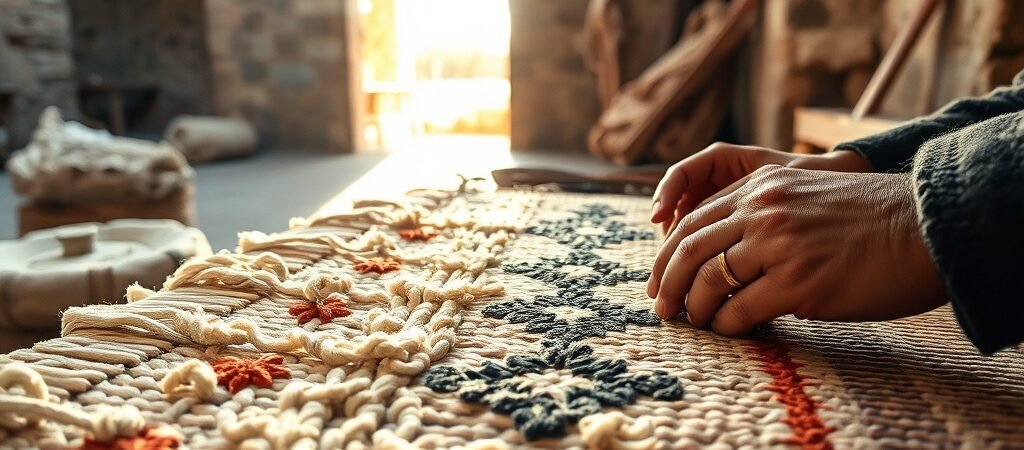
Berber rugs have moved from the mountains of North Africa to the center of modern interior design, but the market is now flooded with imitations. In 2026, the challenge isn’t finding a Berber rug—it’s finding an authentic one. This guide covers the history, distinct styles, and practical steps to identify, buy, and care for genuine handwoven Moroccan rugs, so you can invest in a piece with cultural depth rather than a recettesdumaroc.com copy.
Key Takeaways
- Berber rugs are handwoven by indigenous Amazigh tribes in the Atlas Mountains of Morocco, each with distinct weaving traditions and symbolism.
- The term “Berber rug” encompasses several distinct styles—Beni Ourain, Azilal, Boucherouite, and others—each with unique materials and aesthetics.
- Authentic vintage Berber rugs are one-of-a-kind; modern “Berber-style” rugs are mass-produced and lack the cultural and material depth.
- Proper identification requires examining the knot type, wool quality, and weave density—not just the visual pattern.
- Care and maintenance differ significantly between wool Berber rugs and recycled-fabric Boucherouite rugs.
The Complete Answer: What Are Berber Rugs?
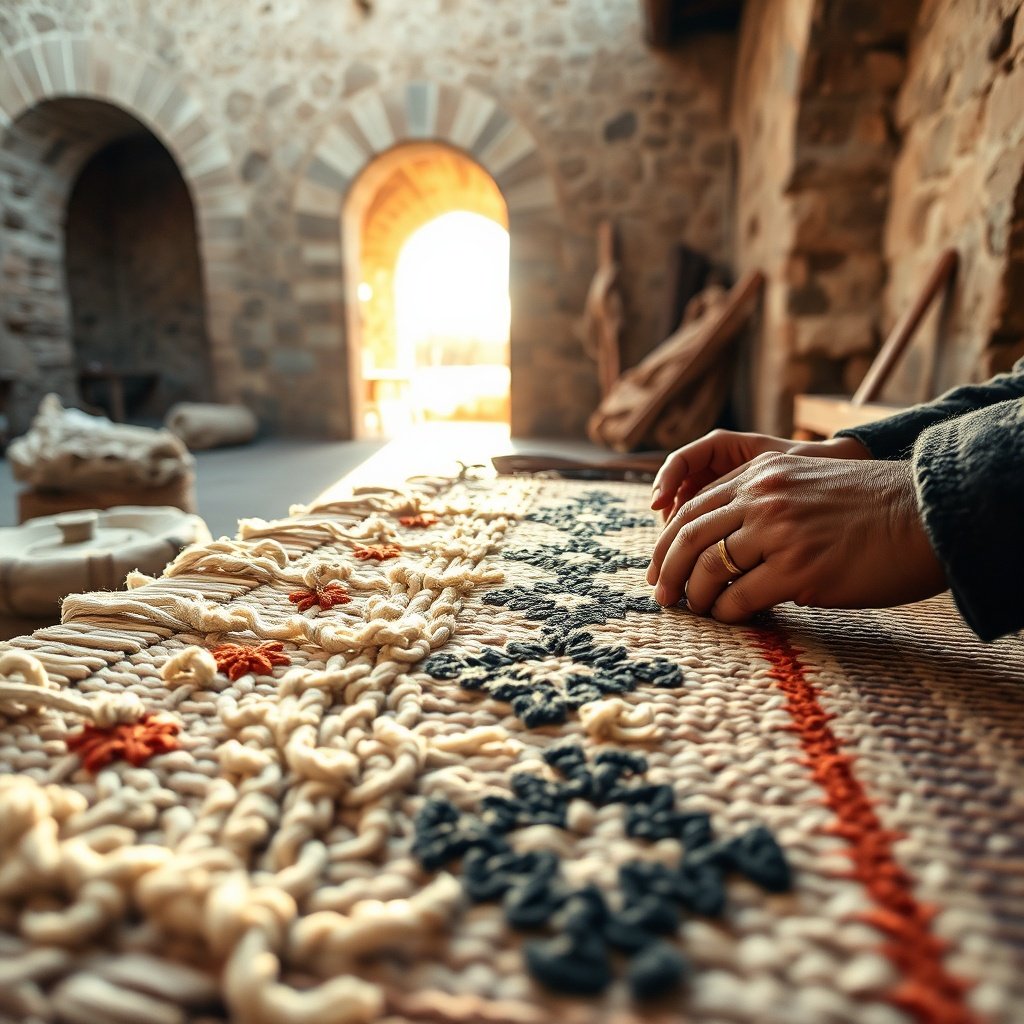
Illustrates the traditional handweaving process and cultural origins of genuine berber rugs in Morocco’s Atlas region.
Defining the Berber Rug: Origins and Cultural Context
The Amazigh (Berber) people of North Africa have been weaving textiles for thousands of years, long before the term “Berber rug” became a design buzzword. These rugs originate from the Atlas Mountain regions of Morocco—specifically the Middle Atlas, High Atlas, and Anti-Atlas—where sheep herding and weaving have been central to tribal life for generations.
Weaving was never just a craft for the Amazigh; it was a form of cultural expression. Women would weave rugs as part of their dowries, for daily utility as bed coverings and floor protection, and as a way to tell symbolic stories through geometric patterns. Each tribe developed its own visual language, with motifs representing fertility, protection, and the natural world. This deep cultural context is what separates a genuine Berber rug from a simple decorative textile.
Definition: Amazigh textiles are handwoven fabrics created by the indigenous Berber people of North Africa, characterized by geometric tribal patterns, natural materials, and symbolic motifs that reflect the weaver’s cultural identity and personal expression.
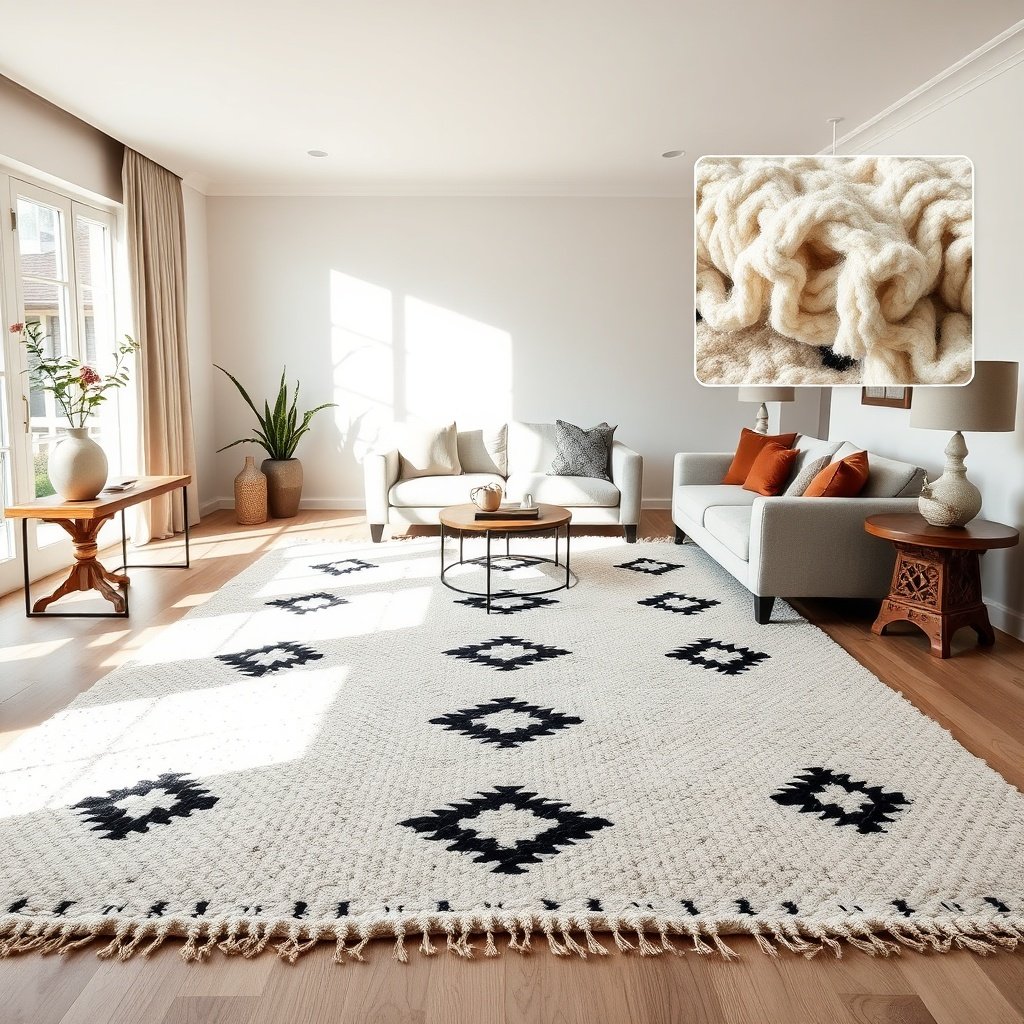
Showcases how genuine berber rugs elevate contemporary interiors while preserving their cultural depth and tactile craftsmanship.
The Defining Characteristics of a True Berber Rug
Authentic Berber rugs share several physical traits that distinguish them from kenzadi.ma reproductions. The primary material is sheep’s wool, often undyed or naturally dyed using plants, minerals, and insects. The construction is hand-knotted, typically with a relatively low pile and a loose, organic weave that reflects the weaver’s hand rather than a machine’s precision.
The aesthetic is defined by geometric abstract patterns, asymmetry, and deliberate “imperfections.” These irregularities are not flaws—they are the signature of a human artisan. The Beni Ourain style, for example, features a fluffy high-pile texture that is plush and soft, while other styles may have a shorter, more durable pile. The wool itself has a natural luster and slight variations in texture that synthetic fibers simply cannot replicate.
Berber Rugs vs. Other Rug Types: A Comparison
Understanding how Berber rugs differ from Persian, Turkish, and machine-made rugs helps clarify what makes them unique.
| Feature | Authentic Berber Rug | Persian Rug | Turkish Rug | Modern Machine-Made Rug |
|---|---|---|---|---|
| Origin | Morocco (Atlas Mountains) | Iran (Persia) | Turkey (Anatolia) | Various (global factories) |
| Weaving Technique | Hand-knotted (often asymmetric) | Hand-knotted (often symmetric) | Hand-knotted (often symmetric) | Machine-tufted or power-loomed |
| Primary Material | Sheep’s wool (often undyed) | Wool, silk, cotton | Wool, silk, cotton | Wool, polypropylene, polyester |
| Pattern Style | Geometric, abstract, minimalist | Floral, medallion, curvilinear | Geometric, prayer, floral | Replicates any style |
| Price Point | High (vintage) to medium (new) | High | Medium to high | Low to medium |
The most significant difference lies in the weaving technique. Berber rugs typically use an asymmetric knot, which gives them a unique texture and allows for the loose, organic patterns that define the style. Persian and Turkish rugs often use symmetric knots for tighter, more precise designs. Machine-made rugs, meanwhile, are tufted or power-loomed, meaning the pile is inserted mechanically rather than tied by hand—a fundamental difference in construction that affects durability, texture, and value.
The Evolution of Berber Rug Styles: From Tribal Utility to Global Design Icon
The Classic Styles: Beni Ourain, Azilal, and Boucherouite
The term “Berber rug” is an umbrella that covers several distinct styles, each with its own materials, weaving traditions, and aesthetic.
beniouaraincarpets.com is the most recognizable style, originating from the Beni Ourain tribes in the Middle Atlas. These rugs feature a cream or white background with black or dark brown geometric lines—often simple diamonds or abstract shapes. They are known for their plush, high-pile texture and have become the defining rug of minimalist and Scandinavian interiors.
Azilal rugs come from the High Atlas and are more colorful and abstract than Beni Ourain. They often incorporate wool and cotton, with vibrant dyes in pink, orange, blue, and green. The patterns are freer and more expressive, sometimes including Berber symbols and even figurative elements. Azilal rugs are prized for their artistic, one-of-a-kind character.
Boucherouite rugs, also known as Moroccan rag rugs, are a more recent innovation. They are made from recycled fabrics—old clothing, textile scraps, and even plastic bags—woven together to create a colorful, textured rug. Boucherouite rugs were born from economic necessity in the mid-20th century, as weavers repurposed materials they had on hand. Today, they are celebrated for their eco-consciousness and vibrant, eclectic aesthetic.
Quick Answer: The three most common Berber rug styles are Beni Ourain (cream with black geometric lines, plush pile), Azilal (colorful, abstract, from the High Atlas), and Boucherouite (made from recycled fabrics, vibrant and texture-rich).
Regional Variations and Their Distinctive Marks
The region of origin significantly influences a Berber rug’s character. The Middle Atlas, home to the Beni Ourain tribes, is known for its high-pile, fluffy rugs with bold geometric patterns. The High Atlas, where Azilal and Boucherouite rugs are more common, tends to produce flatter, more densely woven pieces with finer patterns.
The color palette also varies by region. Older rugs from the Middle Atlas often rely on the natural cream and brown tones of undyed wool, while High Atlas rugs may use a broader range of natural dyes. Traditional dyes included indigo for blues, saffron for yellows, and henna for earthy reds and oranges. These natural dyes create subtle variations in color known as “abrash,” which is a hallmark of authenticity.
The 20th-Century Revival: How Berber Rugs Entered the Global Market
Berber rugs remained relatively unknown outside Morocco until the mid-20th century, when they caught the attention of European designers. Le Corbusier and other architects of the “organic modern” movement used Beni Ourain rugs in their interiors, drawn to the natural wool textures and abstract geometric patterns that complemented modernist architecture.
This exposure sparked a gradual interest that grew through the 1990s and 2000s into what became known as “Berber chic.” By the 2010s, Berber rugs had become a staple of bohemian and Scandinavian design, appearing in countless interiors and online stores. Today, the market spans from traditional souks in Marrakech to global online retailers, but this popularity has also led to a proliferation of machine-made imitations that lack the cultural and material depth of authentic pieces.
A Step-by-Step Guide to Buying an Authentic Berber Rug
Step 1: Define Your Style and Budget
Before you start shopping, determine which Berber style suits your interior. Beni Ourain rugs work best in minimalist, Scandinavian, or modern spaces where their neutral palette and plush texture can shine. Azilal rugs are ideal for eclectic or bohemian interiors that embrace color and artistic expression. Boucherouite rugs suit eco-conscious homes and high-traffic areas where their durable, textured construction is an advantage.
Your budget will depend on several factors: the rug’s age, size, weave density, and style. Vintage rugs with high knot density and natural dyes are typically the most valuable, while new rugs from cooperatives are more affordable. Be prepared to invest in quality—an authentic Berber rug is a durable piece that can last decades with proper care.
Step 2: Source from Reputable Sellers
Where you buy matters as much as what you buy. Authentic Moroccan cooperatives, beniouaraincarpets.com, and specialized online retailers that work directly with weavers are your best options. Mass-market retailers and discount stores are more likely to sell machine-made “Berber-style” rugs.
When sourcing, ask about the rug’s origin, age, and the weaver’s region. A reputable seller should be able to provide provenance—where the rug was made, by which tribe, and approximately when. Be wary of sellers who cannot provide this information or who claim that all Berber rugs are the same.
Quick Answer: To find an authentic Berber rug, source from Moroccan cooperatives or reputable dealers who can provide provenance—the rug’s region, tribe, and approximate age. Avoid mass-market retailers selling “Berber-style” rugs that are likely machine-made.
Step 3: Inspect the Rug for Quality and Authenticity
When you have a rug in hand, examine it closely. Hand-knotting should be slightly irregular—not perfectly uniform. If the weave looks machine-perfect, it probably is. The pile should have natural variations in texture and luster, reflecting the hand-spun wool.
Look for signs of age in vintage rugs: patina, wear patterns, and “abrash” (color variation from natural dyes). These are not defects; they are evidence of authenticity and natural materials. A rug that looks too perfect, with uniform color and flawless pattern, is likely a reproduction.
Step 4: Verify the Materials and Construction
Test the fiber to ensure it is wool. Authentic wool feels soft and resilient, with a natural luster. Synthetic fibers feel coarse or slick and may have a chemical smell. You can also do a burn test on a small fiber sample—wool smells like burnt hair, while synthetics smell like plastic.
Check the fringe. On a hand-knotted rug, the pile is tied to the warp threads, and the fringe is a continuation of those threads. If the fringe appears glued or sewn on, the rug is likely machine-made. Also, examine the knot density—higher density generally indicates better craftsmanship and durability.
The Practical Care Guide: Maintaining Your Berber Rug for Decades
Daily and Weekly Maintenance
Regular maintenance is the key to preserving your Berber rug. Vacuum at least once a week using a brushless attachment or a vacuum with a beater bar that can be turned off. The brushless setting prevents the bristles from pulling at the wool fibers and damaging the pile.
Rotate the rug every 6-12 months to ensure even wear and fading. This is especially important if the rug is in a sunny spot, as direct sunlight can cause natural dyes to fade over time.
Deep Cleaning and Stain Removal
For deep cleaning, professional rug cleaners are the safest option for vintage and hand-knotted pieces. They have the equipment and expertise to clean wool without damaging the fibers or causing shrinkage.
For spot cleaning, use mild soap and cold water. Blot the stain gently—never rub, as this can push the stain deeper into the pile. For common stains like food spills or pet accidents, act quickly and use a clean, damp cloth. Avoid harsh chemicals, bleach, and steam cleaners, which can damage the wool and ruin the natural dyes.
Quick Answer: Never machine-wash a Berber rug. The agitation and water can damage the fibers, cause shrinkage, and ruin the weave. For deep cleaning, use a professional rug cleaner; for stains, spot-clean with mild soap and cold water.
Dealing with Shedding and Odors
Shedding is normal for new wool rugs, especially in the first few months. The loose fibers will eventually settle, but regular vacuuming helps manage the shedding in the meantime. This is not a sign of poor quality—it is characteristic of natural wool.
For odors, natural deodorizing methods work well. Sprinkle baking soda over the rug, let it sit for a few hours, then vacuum thoroughly. Sunlight is also a natural deodorizer and can help refresh the rug, but avoid prolonged exposure to prevent fading.
Styling Your Space: Where and How to Place Berber Rugs
The Living Room: Creating a Warm, Textural Focal Point
In a living room, a Berber rug can anchor the seating area and add warmth and texture. Layer a Berber rug over a jute or sisal rug for added depth and dimension—this works particularly well with Beni Ourain rugs, whose plush texture contrasts beautifully with natural fiber rugs.
When choosing a size, follow the “all legs on the rug” rule: the rug should be large enough that all furniture legs sit on it, creating a cohesive seating area. If that’s not possible, ensure the front legs of sofas and chairs are on the rug.
The Bedroom: Softening the Space with a Plush Texture
In the bedroom, a Berber rug adds softness and warmth underfoot. Place it under the bed, extending at least 24 inches on each side so you step onto the rug when getting out of bed. Beni Ourain rugs pair especially well with warm wood tones and natural linen bedding, creating a serene, organic aesthetic.
The Home Office and Hallways: Adding Personality to High-Traffic Areas
Boucherouite rugs are a practical choice for high-traffic areas like hallways, entryways, and home offices. Their recycled fabric construction is durable and forgiving, and their vibrant colors add personality to functional spaces. A runner Berber rug can define a hallway or entryway, adding warmth and texture to an often-overlooked area.
Frequently Asked Questions About Berber Rugs
How can I tell if a Berber rug is authentic?
Look for irregular hand-knotting, natural wool texture, and signs of age like patina and abrash. Be wary of perfectly uniform patterns and synthetic fibers. The seller should be able to provide provenance—the rug’s origin, region, and age.
Are Berber rugs soft or scratchy?
Authentic Beni Ourain rugs are known for their plush, soft pile. However, some Azilal or older vintage rugs may have a coarser texture due to the wool type and weave density. The softness varies by style and age.
How much do authentic Berber rugs cost?
Prices vary widely based on size, age, weave density, and style. New rugs from cooperatives are more affordable, while vintage pieces with high knot density can be a significant investment. Always verify the seller’s provenance claims before making a purchase.
Can I wash a Berber rug in a washing machine?
No. Hand-knotted wool rugs should never be machine-washed. The agitation and water can damage the fibers, cause shrinkage, and ruin the weave. Professional cleaning is recommended.
What does the “abrash” in a Berber rug mean?
Abrash refers to the natural variation in color within a rug, caused by different dye lots or the wool from different sheep. It is a hallmark of authenticity and natural dyeing, not a defect.
Conclusion
Understanding what makes a Berber rug authentic—the weaving traditions, natural materials, and cultural significance—is the first step to making a wise investment. Whether you choose a plush Beni Ourain, a colorful Azilal, or an eco-conscious Boucherouite, you are acquiring a piece with a story and cultural depth that recettesdumaroc.com imitations cannot match.
As you explore the market, prioritize ethically sourced options and take the time to learn about the weavers behind the craft. An authentic Berber rug is more than a design choice; it is a connection to a rich cultural heritage and a timeless addition to your home.