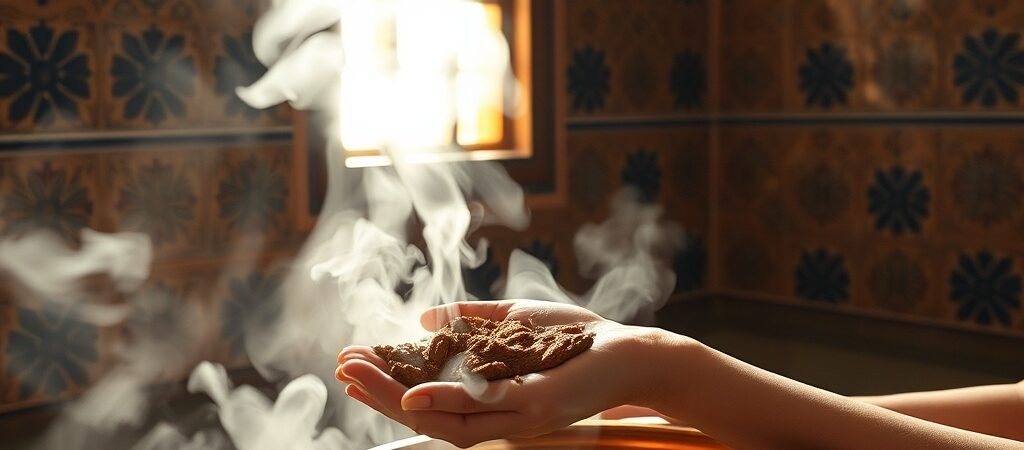
The global beauty industry has seen a marked shift toward “slow beauty,” a movement that prioritizes mindful, ritual-based skincare over quick-fix solutions. Within this landscape, Morocco has emerged as a focal point, drawing attention for its time-honored traditions on beniouaraincarpets.com that connect natural ingredients with profound cultural practices. The Moroccan beauty ritual is not a single product or treatment, but a comprehensive, multi-sensory philosophy rooted in purification, natural ingredients, and communal tradition. This article explores the core principles, key ingredients, and step-by-step practices of this holistic approach, showing how its wisdom can be adapted for modern life.
Key Takeaways
- The Moroccan beauty ritual is a holistic, multi-step practice centered on purification, exfoliation, and deep hydration.
- Its core philosophy—often summarized as “cleanse, exfoliate, nourish”—differs fundamentally from the Western “treat and repair” approach.
- The ritual’s power comes from the synergy of its iconic ingredients: Ghassoul clay, Argan oil, and Rose water.
- Key practices like the Hammam and Beldi soap are not just about skincare but are communal and spiritual experiences.
- The tradition is being modernized, with key principles adaptable to a home routine without losing their cultural essence.
The Complete Answer: What Is the Moroccan Beauty Ritual?
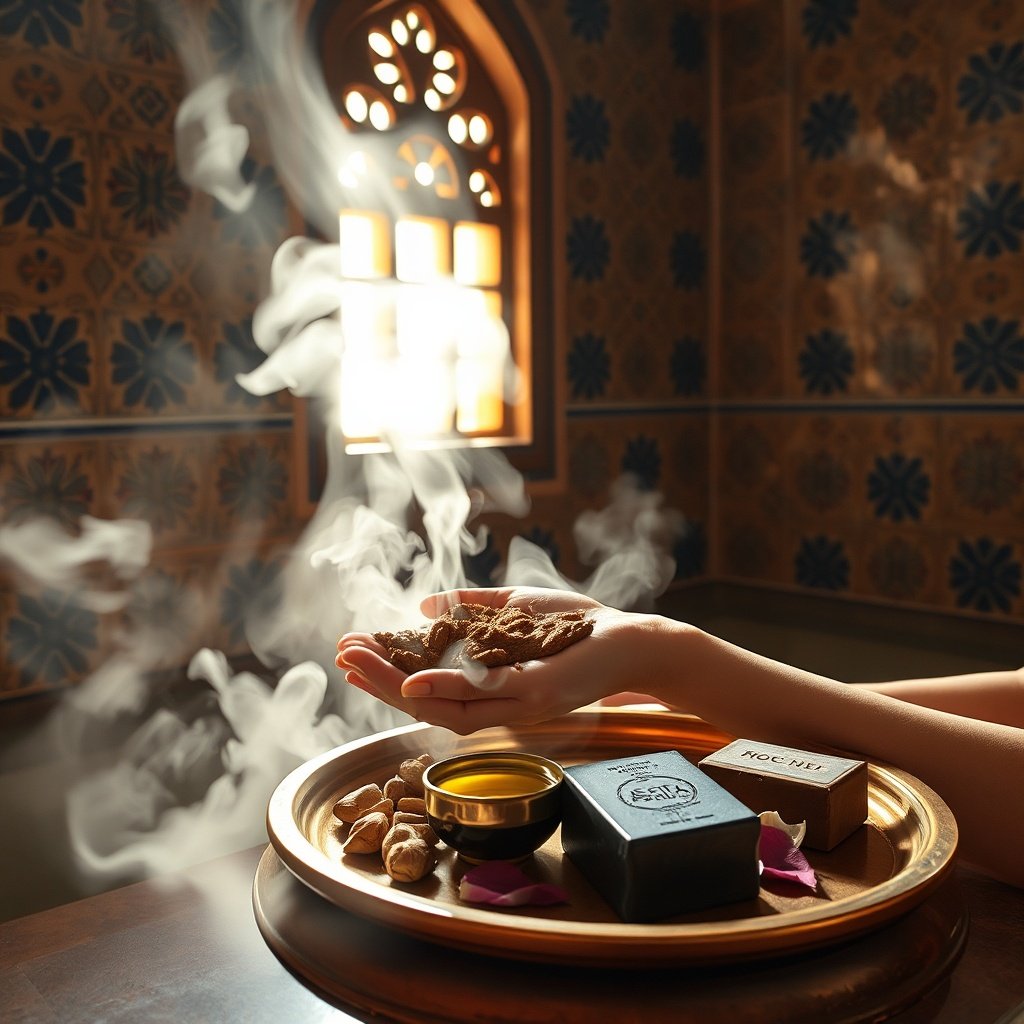
Captures the authentic, multi-sensory cleansing stage of the ritual in its historic cultural setting.
Definition: The Moroccan beauty ritual is a culturally significant, multi-step practice that prioritizes cleansing and skin barrier health through a sequence of purification, exfoliation, and deep nourishment using natural ingredients like Ghassoul clay, Beldi soap, and Argan oil.
At its heart, the Moroccan beauty ritual is a comprehensive system designed to maintain the skin’s natural balance. Unlike Western routines that often focus on treating specific problems like acne or wrinkles, this traditional skincare philosophy is preventative and restorative. It is built on the belief that healthy skin is a reflection of internal and external cleanliness, achieved through a series of steps that work with the body’s natural processes rather than against them.
The Three Pillars
The ritual is structured around three foundational stages that form a complete cycle of care:
- Purification: This is the foundational step, typically performed in a steam room or a hot bath. Heat and steam open the pores and soften the skin, preparing it for deep cleansing. This stage is about removing impurities, sweat, and toxins from the skin’s surface.
- Exfoliation: The second stage involves removing dead skin cells to reveal the fresh, radiant skin beneath. This is traditionally done using Beldi soap, a eucalyptus-infused black soap, and a Kessa glove, a textured mitt that physically buffs away debris.
- Deep Nourishment: The final stage is where the skin is replenished and protected. After exfoliation, the skin is highly receptive to moisture. Rich botanical oils like Argan oil and soothing waters like Rose water are applied to hydrate, calm, and lock in moisture, restoring the skin’s natural barrier.
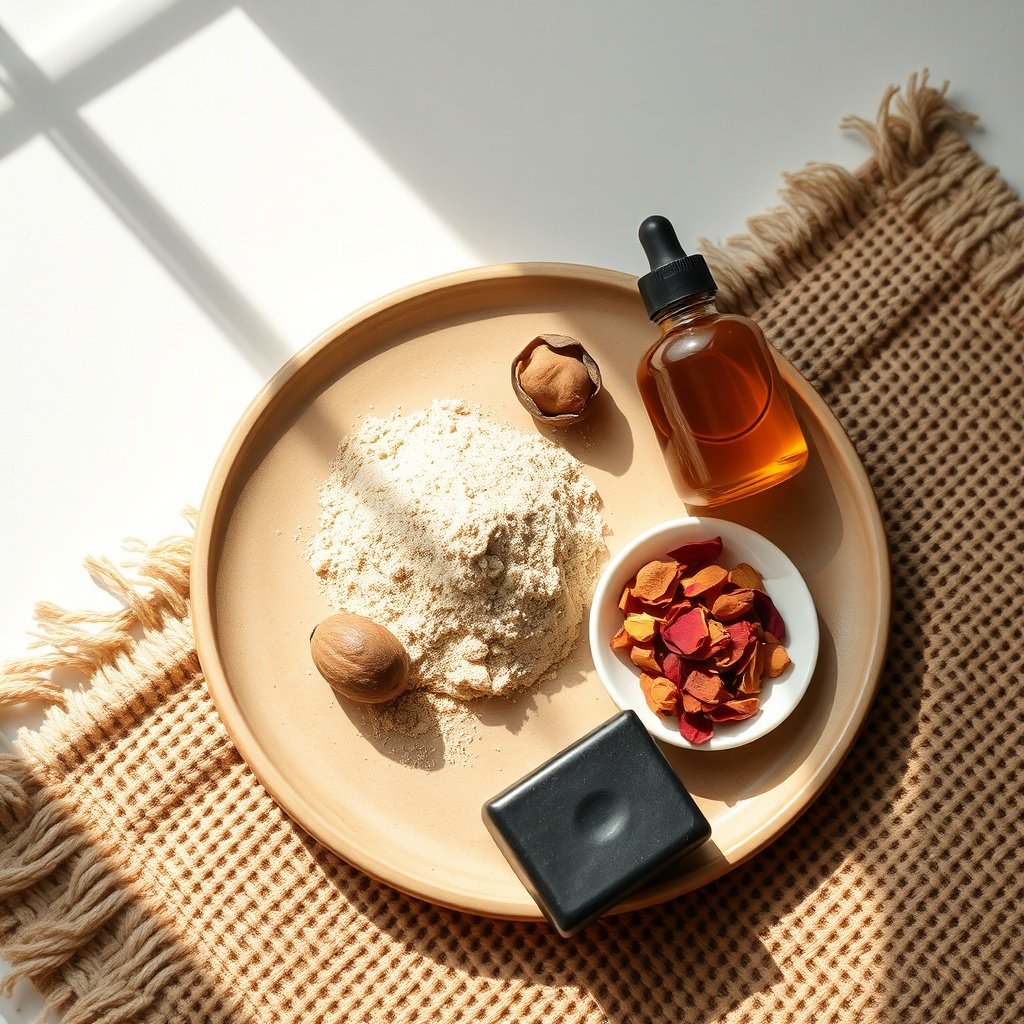
Highlights the signature botanical components that drive the cleanse, exfoliate, and nourish philosophy.
The Philosophy
The underlying principle of the Moroccan hammam ritual is “cleanse, exfoliate, nourish.” This is a distinct departure from the more common Western model of “treat and repair.” The Moroccan approach focuses on maintaining the skin’s natural barrier and overall health, preventing issues before they arise. It views the skin as a resilient organ that functions best when it is clean, well-exfoliated, and deeply moisturized, rather than forcing it to change through aggressive treatments.
The Core Ingredients: A Deep Dive into Morocco’s Botanical Pharmacy
The efficacy of the Moroccan beauty ritual relies on a small but powerful set of natural ingredients, each prized for its unique properties.
Ghassoul Clay (Rhassoul)
Definition: Ghassoul, also known as Rhassoul, is a mineral-rich volcanic clay mined exclusively in the Atlas Mountains of Morocco.
This unique clay is a staple of the traditional beldi bath routine. It is rich in silica, magnesium, and potassium, minerals that are beneficial for skin health. Its primary function is deep cleansing and oil absorption without stripping the skin of its natural moisture. When used as a mask, Ghassoul clay detoxifies the skin by drawing out impurities and excess sebum, leaving it clean, smooth, and refined.
Argan Oil: The “Liquid Gold” of Morocco
Argan oil is perhaps the most famous export of Morocco, and for good reason. Extracted from the kernels of the Argan tree, as highlighted by kenzadi.ma, this oil is rich in Vitamin E, fatty acids, and antioxidants. In the ritual, it serves as the final step for deep nourishment and protection. Its high Vitamin E content helps to repair the skin’s barrier, while its fatty acids provide intense hydration without leaving a greasy residue. The Argan oil skincare benefits are vast, making it a powerful ally for maintaining soft, supple, and healthy-looking skin.
Rose Water and Orange Blossom Water: The Toning and Floral Essence
Distilled from the petals of Damask roses or orange blossoms, these floral waters are gentle toners and pH balancers. They are used to soothe the skin, reduce redness, and restore the skin’s acid mantle after cleansing. Their incorporation into the ritual is not just functional but also highly sensory, providing a calming and refreshing effect that enhances the overall experience. The rose water moisturizing properties help to hydrate and tone, leaving the skin feeling fresh and revitalized.
The Step-by-Step Moroccan Beauty Ritual: From Hammam to Home
The traditional Moroccan hammam spa treatment is an immersive experience. Here is the full process as it is traditionally performed.
The Traditional Hammam Experience
- Preparation: The ritual begins in the steam room, where the heat and humidity open the pores and soften the skin. This is a crucial step that makes the subsequent exfoliation more effective.
- Cleansing: A generous amount of Beldi soap is applied to the skin. This thick, black soap is made from olive oil and eucalyptus and is allowed to sit on the skin for several minutes to soften impurities further.
- Exfoliation: Using a Kessa glove, the skin is vigorously scrubbed to remove dead skin cells. This physical exfoliation, known as a Gommage body scrub technique, reveals new, glowing skin underneath. It is often the most celebrated part of the ritual.
- Rinsing: The skin is thoroughly rinsed with warm water to remove all traces of soap and exfoliated skin.
- Deep Conditioning: A Ghassoul clay mask is applied to the body or face to draw out any remaining impurities and provide a boost of minerals.
- Nourishment: The final step involves massaging Argan oil or a shea butter blend into damp skin. This locks in moisture and provides deep nourishment, leaving the skin soft and protected.
Adapting the Ritual for a Home Spa Routine
The principles of the Moroccan beauty ritual can be easily adapted for a home spa routine. A simplified version can be completed in about 15-20 minutes.
Key Equipment Needed:
- Kessa glove
- Beldi soap
- Ghassoul clay
- Argan oil
Step-by-Step Home Version:
- Start by taking a warm shower or bath to soften the skin and open pores.
- Apply Beldi soap to damp skin and let it sit for 5-10 minutes.
- Use a Kessa glove to scrub your skin in circular motions, starting from your extremities and moving toward your heart. You will see dead skin cells roll off.
- Rinse off thoroughly with warm water.
- Mix Ghassoul clay with a little rose water to form a paste. Apply it to your face and allow it to dry for about 10 minutes before rinsing.
- While your skin is still damp, massage a small amount of Argan oil into your face and body to seal in moisture.
The Cultural and Social Context: More Than Just Skincare
The Moroccan Hammam culture is deeply embedded in the social fabric of the country, making the ritual about much more than just physical cleansing.
The Hammam as a Communal Space
Historically, the hammam has served as a vital social hub for women in Moroccan society. It is a place for community bonding, relaxation, and the exchange of news and stories. It is also a space for important life events, including pre-wedding purification ceremonies, where the bride-to-be is pampered and prepared for her new life. This social bathing tradition is a cornerstone of community life, providing a sanctuary for women to connect and care for themselves.
The Spiritual Dimension
The Moroccan beauty ritual also carries a spiritual dimension. The link between physical purification and spiritual renewal is strong in many cultures, and Morocco is no exception. The concept of cleanliness is seen as a part of faith and overall well-being. The act of washing away physical impurities is often viewed as a metaphor for cleansing the mind and spirit, making the hammam a place of both physical and mental rejuvenation.
Modernization and Cultural Appreciation
In recent years, the ritual has moved from a local tradition to a global luxury trend promoted on recettesdumaroc.com. High-end spas around the world now offer hammam-inspired treatments, and Moroccan beauty secrets anti-aging products are in high demand. While this global recognition is a testament to the ritual’s efficacy, it is important to understand and respect the cultural origins. Appreciation of the ritual involves acknowledging its deep roots in Moroccan history and community life, rather than simply co-opting its products and techniques.
Moroccan vs. Western Skincare: A Comparative Analysis
To better understand the distinct approaches, here is a comparison between the traditional Moroccan ritual and a typical Western skincare routine.
| Feature | Traditional Moroccan Ritual | Typical Western Skincare Routine |
|---|---|---|
| Primary Goal | Purification and maintenance | Treatment and correction |
| Core Philosophy | Cleanse, Exfoliate, Nourish | Cleanse, Treat, Repair |
| Key Ingredients | Ghassoul, Argan Oil, Beldi Soap | Retinoids, AHAs/BHAs, Hyaluronic Acid |
| Exfoliation Method | Physical (Kessa glove) | Chemical (Acids) |
| Frequency | Weekly (Hammam) | Daily (AM/PM) |
| Sensory Experience | High (steam, scent, ritual) | Low (functional) |
What the West Can Learn from the Moroccan Approach
The Moroccan approach offers several valuable lessons for modern skincare. One of the most significant is the value of less frequent, more intense, and deeply nourishing treatments. Rather than applying a multitude of products daily, the Moroccan ritual focuses on a weekly, comprehensive reset that allows the skin to function optimally. This also highlights the importance of skin barrier health over aggressive exfoliation. The physical exfoliation of the Kessa glove, performed weekly, is effective without the risk of over-exfoliating that can come from daily chemical acid use. The ritual’s emphasis on deep nourishment with oils like Argan oil supports the skin’s natural barrier, which is a principle now widely recognized in dermatology.
Conclusion
The Moroccan beauty ritual is a holistic, multi-sensory practice that offers a refreshing alternative to conventional skincare. Its benefits are clear: deep purification, effective exfoliation, and intense nourishment, all achieved through a harmonious blend of natural ingredients and time-honored techniques. To experience its benefits, you can adopt at least one element of the ritual—such as a weekly Ghassoul clay mask or the invigorating exfoliation of a Kessa glove. Doing so is an invitation to slow down, reconnect with nature, and appreciate a tradition that has been passed down through generations, offering a timeless path to glowing, healthy skin.
FAQ
What is the traditional Moroccan beauty ritual?
The traditional Moroccan beauty ritual is a multi-step practice centered on the hammam experience. It involves a sequence of purification through steam, exfoliation with Beldi soap and a Kessa glove, and deep nourishment using Argan oil and Ghassoul clay. It is a holistic philosophy focused on maintaining skin health rather than treating problems.
What are the key ingredients used in Moroccan beauty rituals?
The core ingredients are Ghassoul clay for detoxification, Argan oil for deep nourishment, and Rose water for toning. Beldi soap, made from olive oil and eucalyptus, is also essential for cleansing and softening the skin before exfoliation.
How often should you do a Moroccan hammam ritual?
Traditionally, the full hammam ritual is performed weekly. This frequency allows for deep cleansing and exfoliation without over-stripping the skin. For home adaptations, you can follow a similar weekly schedule for the full process.
Can I do a Moroccan beauty ritual at home?
Yes, the ritual can be easily adapted for home use. You only need a Kessa glove, Beldi soap, Ghassoul clay, and Argan oil. A simplified version involves a warm bath, applying the soap, scrubbing with the glove, applying a clay mask, and finishing with Argan oil.
What are the benefits of using Ghassoul clay and Argan oil?
Ghassoul clay detoxifies the skin by drawing out impurities and excess oil without stripping moisture. Argan oil, rich in Vitamin E and fatty acids, deeply nourishes, protects the skin barrier, and provides intense hydration, leaving the skin soft and smooth.
Conclusion
The Moroccan beauty ritual is far more than a set of skincare steps; it is a philosophy of intentional self-care that prioritizes depth over frequency and nourishment over harsh treatment. By embracing its principles—weekly steam purification, gentle Kessa exfoliation, and the restorative power of Argan oil and Ghassoul clay—you can achieve a radiant, resilient complexion while restoring a sense of calm to your routine. In a world obsessed with quick fixes and endless product layers, this ancient practice offers a powerful counterbalance. Now is the time to take action: start by incorporating just one element, such as a Sunday evening Ghassoul clay mask or a gentle Kessa scrub, into your weekly schedule. Experience the transformation firsthand—not only in your skin’s texture and glow but also in your overall well-being. Let the Moroccan beauty ritual remind you that true beauty is a slow, sensory, and deeply personal journey. Your skin—and your spirit—will thank you.