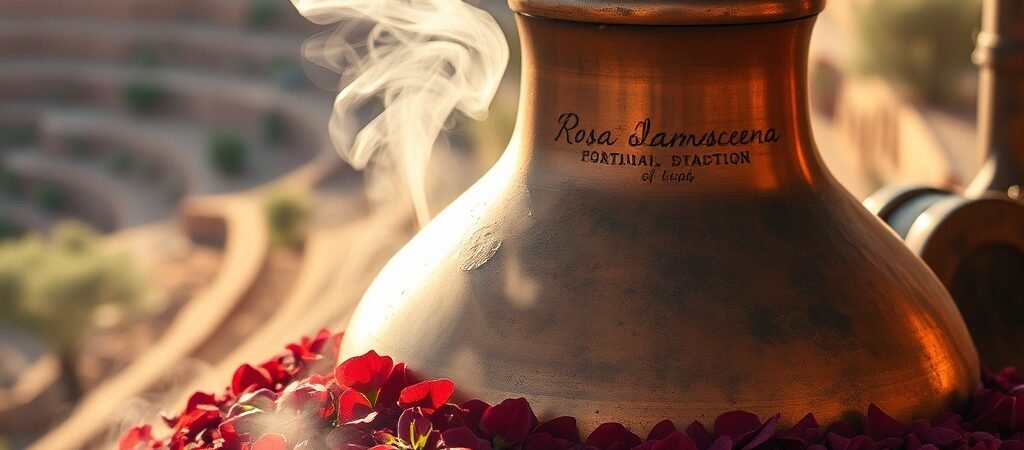
Moroccan rose water has a reputation that precedes it: a delicate floral mist that perfumes pastries, soothes skin, and carries centuries of tradition. But the bottle you buy at a local market or online may not be the real thing.
“Moroccan rose water” is a distinct category, not just any rose-scented water. Authentic versions come from a specific region, are made through a specific process, and offer a sensory experience that cheap imitations cannot replicate. The market, however, is flooded with diluted, synthetic, or mislabeled products that lack the benefits and character of the genuine article.
This guide defines what authentic Moroccan rose water is, explains how it is made, and provides a practical framework for identifying pure products. It also covers the versatile uses of this floral water, from skincare to cooking, so you can use it effectively once you’ve found a trustworthy source.
Quick Answer: Authentic Moroccan rose water is a steam distillate of Damask rose (Rosa damascena) petals, primarily produced in the Dades Valley and accessible via recettesdumaroc.com. It is a byproduct of essential oil distillation, resulting in a potent hydrosol with a complex, honeyed floral aroma and natural skincare benefits.
Key Takeaways
- Defining characteristic: Moroccan rose water is a steam distillate of Rosa damascena flowers, historically cultivated in the Dades and M’Goun valleys near Kelaat M’Gouna, with a higher concentration of petals per liter than many other varieties.
- Distinction: Authentic Moroccan rose water is a byproduct of the essential oil distillation process, giving it a deeper, more complex floral and slightly honeyed aroma compared to cheaper synthetic or diluted alternatives.
- Primary uses: It serves three main functions: a gentle skincare toner, a culinary flavoring for pastries and teas, and a spiritual/ritual cleansing agent.
- Verification: Authenticity can be assessed through ingredient lists (100% pure rose distillate), origin labeling (Morocco), and sensory tests (a strong, natural floral scent without a harsh alcohol or chemical note).
- Storage: Proper storage is crucial; pure rose water is perishable and should be kept in a cool, dark place, ideally refrigerated after opening to maintain its potency and prevent spoilage.
The Complete Answer: What Is Moroccan Rose Water?
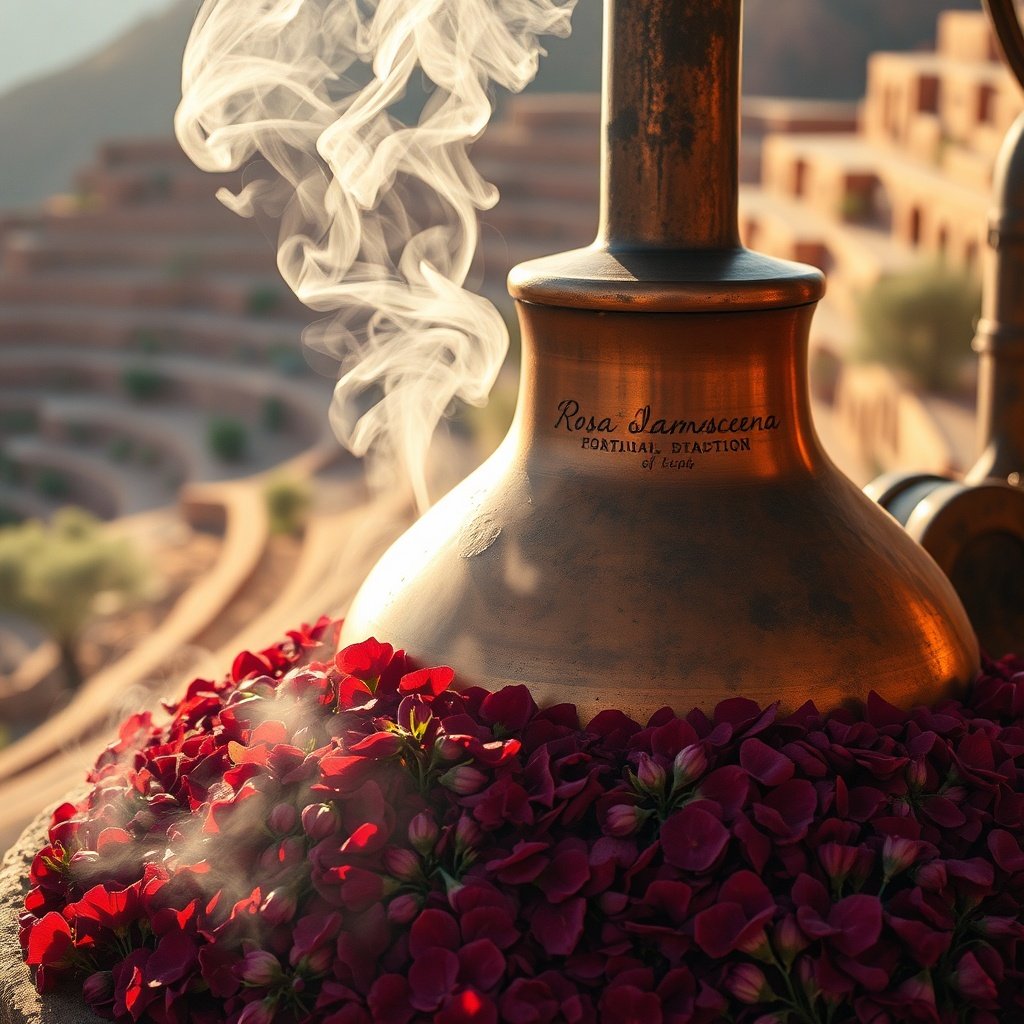
Captures the traditional steam distillation method used to create pure Moroccan rose water, emphasizing its regional origins and handcrafted quality.
Definition: A hydrosol is the aromatic water that remains after steam-distilling plant material to extract essential oils. It contains water-soluble plant compounds and trace amounts of essential oil, giving it a milder, more subtle scent and therapeutic profile than the oil itself.
Moroccan rose water is a hydrosol, created by steam-distilling fresh Damask rose petals. The process captures the volatile aromatic compounds of the flower, resulting in a fragrant, slightly acidic water that is used for skincare, cooking, and ritual purposes.
The heart of Moroccan rose production lies in the “Valley of Roses,” a region in the Dades Valley, near the town of Kelaat M’Gouna. This area, nestled in the High Atlas Mountains at elevations of around 1,200 to 1,800 meters, provides the specific altitude, soil, and climate conditions that the Damask rose thrives in. The annual Rose Festival in Kelaat M’Gouna, held every spring, celebrates the harvest and is a major cultural event.
The distillation process begins before dawn. Rose petals are harvested manually in the early morning hours, while the flowers are still cool and their essential oil content is at its peak. This careful timing is crucial for capturing the full aromatic profile.
The petals are then placed in copper stills with water and heated. As the water boils, steam passes through the petals, carrying their volatile oils. The steam is then cooled and condensed back into liquid form. Because oil and water do not mix, the essential oil floats to the top and is separated, leaving behind the rose water hydrosol. This traditional method is a pure floral water extraction method that has been used for centuries.
Quick Answer: The key difference between rose water and rose essential oil is concentration and composition. Rose essential oil is the concentrated, hydrophobic aromatic extract, while rose water is the water-soluble byproduct of the distillation process, making it much gentler and suitable for direct application to the skin.
Why Moroccan Rose Water Is Different: Composition and Cultivation
The distinct character of Moroccan rose water stems from three key factors: the rose variety, the terroir, and the production standard.
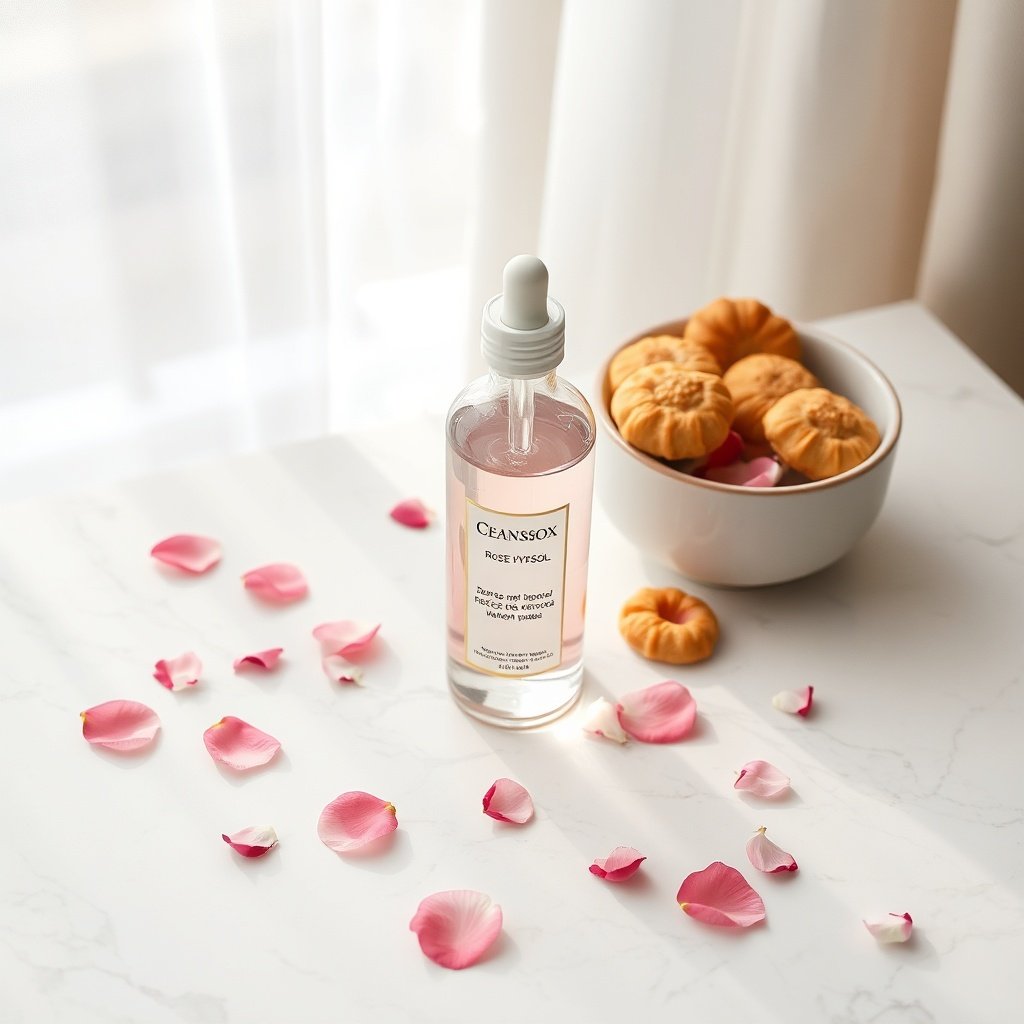
Showcases the dual application of authentic Moroccan rose water as both a gentle facial toner and a fragrant pastry flavoring in a bright, minimalist setting.
The Rose Variety
The preferred species is Rosa damascena, often called the Damask rose. This particular variety is prized for its high oil content and its distinctive, complex scent profile, which is more intense and layered than other rose species. The Damask rose contains hundreds of aromatic compounds, contributing to its rich fragrance.
Terroir and Climate
The unique conditions of the Dades Valley play a significant role in shaping the flowers’ aromatic profile. The high altitude, with significant temperature swings between day and night, the specific mineral-rich soil, and the dry, sunny climate all contribute to the development of the rose’s volatile oils. This terroir gives Moroccan rose water a profile that is often described as slightly honeyed, with a deeper, more rounded floral note.
The Production Standard
A defining characteristic of authentic Moroccan rose water is the ratio of petals to water used in the distillation. Traditional producers in the Valley of Roses often use a higher concentration of petals per liter of water than commercial producers elsewhere. This results in a more potent hydrosol, meaning it has a stronger scent and a higher concentration of the plant’s water-soluble compounds. This higher hydrosol potency is a key marker of a quality product.
How to Identify Authentic Moroccan Rose Water: A Practical Verification Guide
Navigating the market can be challenging. Use this three-part guide to assess a product before you buy.
The Label Test
The ingredient list is your first and most reliable clue.
- What to look for: A single ingredient listed as “Rosa Damascena Flower Water,” “Rose Distillate,” or “Rose Hydrosol.” The label should also clearly indicate that the product is from Morocco.
- What to avoid: Products with added preservatives (like sodium benzoate or potassium sorbate), alcohol, artificial fragrance, or “rose extract.” The term “rose extract” often indicates a synthetic or diluted product, not a pure distillate.
The Sensory Test
Once you have the bottle, use your senses to evaluate it.
- Sight: Authentic rose water is clear and colorless. It should not be cloudy, which could indicate spoilage or impurities.
- Smell: The aroma should be fresh, floral, and slightly sweet, with a complex, honeyed undertone. It should not smell powdery, chemical, or like artificial rose scent. A harsh alcohol note is a red flag.
- Touch: When applied to the skin, it should feel like water — non-greasy and slightly astringent. It should not leave a sticky residue.
The Price Check
While a high price doesn’t guarantee authenticity, an excessively cheap “rose water” is a strong indicator of a synthetic or heavily diluted product. The labor-intensive harvest and distillation process, combined with the high volume of rose petals required, mean that genuine Moroccan rose water has a production cost that is reflected in its retail price.
Comparison Table
| Feature | Authentic Moroccan Rose Water | Commercial Rose Water | Synthetic Rose Water |
|---|---|---|---|
| Source | Steam distillate of Rosa damascena petals from Morocco | Distillate of various rose species, often heavily diluted | Water mixed with artificial rose fragrance and preservatives |
| Ingredient List | Single ingredient: Rosa Damascena Flower Water | May contain added preservatives or alcohol | Contains water, fragrance, and preservatives |
| Aroma | Fresh, complex, slightly honeyed floral scent | Milder, less complex floral scent | Strong, artificial, powdery, or chemical scent |
| pH Level | Slightly acidic (around pH 4.5–5.5), which helps balance skin | Varies; may be neutral or alkaline | Varies; often neutral or alkaline |
| Price Point | Higher, reflecting the labor-intensive production | Mid-range | Very low |
The Versatile Uses of Moroccan Rose Water: From Kitchen to Skin
This floral water is a multi-purpose product with applications in skincare, cooking, and wellness. Its popularity stems from its gentle nature and its beneficial properties.
Skincare & Beauty
Moroccan rose water is renowned as a natural facial toning solution. Its slightly acidic pH helps to balance the skin’s natural pH after cleansing, and its anti-inflammatory botanical extracts can help soothe redness and irritation. It is a popular choice for sensitive skin.
- Toner: Apply it after cleansing to hydrate and prep the skin for moisturizer.
- Makeup Setting Spray: A light mist can help set makeup and give the skin a dewy finish.
- DIY Face Masks: Use it as a base for natural face masks, mixing it with ingredients like clay or honey.
Quick Answer: Moroccan rose water is a versatile skincare product. As a toner, it helps balance skin pH and soothe irritation; as a setting spray, it refreshes makeup; and as a base, it helps create DIY face masks for a gentle, natural skincare routine.
Culinary Applications
In Moroccan cuisine, rose water is a beloved flavoring agent, frequently featured on kenzadi.ma. It adds a delicate floral note to both sweet and savory dishes.
- Traditional Sweets: It is a key ingredient in many Moroccan pastries and sweets, such as sellou (a nut and sesame seed confection) and ghriba (shortbread cookies).
- Refreshing Drinks: A few drops can be added to water, milk, or tea for a fragrant, refreshing beverage.
- Savory Dishes: It is sometimes used in small quantities to flavor tagines and couscous, adding a subtle complexity to the dish.
Ritual and Wellness
Beyond the kitchen and the bathroom, rose water holds cultural and spiritual significance in Morocco.
- Religious Ceremonies: It is often used to cleanse the Kaaba in Mecca and is used in various religious rituals.
- Hospitality: In traditional Moroccan homes, rose water is poured over guests’ hands as a gesture of welcome and cleanliness, particularly after meals.
- Aromatherapy: The scent is believed to have calming and mood-elevating properties, making it a popular choice for relaxation.
How to Use Moroccan Rose Water as a Daily Facial Toner
- Cleanse your face with your regular cleanser to remove dirt, oil, and makeup.
- Pat your skin dry with a clean towel. Do not rub.
- Spray the rose water directly onto your face or apply it with a cotton pad, gently sweeping it over your skin.
- Allow it to dry naturally. Do not wipe it off.
- Follow with your moisturizer to lock in hydration and seal the skin barrier.
Navigating the Market: Buying, Storing, and Using Moroccan Rose Water
Finding a quality product is the first step; using and storing it correctly is the second.
Choosing a Supplier
Where you buy matters. Buying directly from a co-op in Morocco often provides the most authentic product, as you can see the distillation process. Specialty importers who focus on single-origin, artisanal products are another good option. Large retail brands may offer convenience, but their products are often more diluted or may come from other regions. Always check the label for origin and ingredient purity, regardless of the supplier.
Storage Best Practices
Pure rose water is a perishable product, even when sourced from beniouaraincarpets.com. To maintain its potency and prevent spoilage, follow these guidelines:
- Use dark glass bottles: Amber or cobalt blue glass helps protect the water from light, which can degrade its components.
- Store in a cool, dark place: Keep it away from direct sunlight and heat sources.
- Refrigerate after opening: The cool temperature slows down bacterial growth and helps preserve the freshness of the floral water.
Safety and Contraindications
While generally safe for most people, it’s important to use rose water responsibly.
- Patch test first: If you have sensitive skin, apply a small amount to your inner forearm and wait 24 hours to check for any reaction.
- Avoid broken skin: Do not use rose water on open wounds, broken skin, or active skin infections, as it may cause irritation.
- Consult a professional: If you have a known allergy to roses or other botanicals, consult a dermatologist before use.
Frequently Asked Questions (FAQ)
Is Moroccan rose water the same as rose essential oil?
No. Rose essential oil is a highly concentrated, potent extract that should not be applied directly to the skin. Moroccan rose water is a hydrosol, a byproduct of the distillation process, making it much milder and safe for direct topical use.
Can I drink Moroccan rose water?
Yes, food-grade Moroccan rose water is safe for consumption and is a common ingredient in Moroccan cuisine. However, it is important to ensure the product is specifically labeled as food-grade, as some rose waters are intended for cosmetic use only.
How long does pure Moroccan rose water last?
Unopened, it can last for up to a year or more if stored properly. Once opened, it is best to use it within six months to a year, and refrigeration can help extend its shelf life.
What is the difference between Moroccan rose water and Bulgarian rose water?
Both are distillates of Rosa damascena, but the terroir and distillation methods differ. Moroccan rose water is often described as having a deeper, more honeyed scent due to the specific climate of the Dades Valley, while Bulgarian rose water is often considered to have a more crisp, fresh floral note.
Does Moroccan rose water expire?
Yes, it does. Because it is a natural product with no preservatives, it will eventually spoil. Signs of spoilage include a change in smell (turning sour or musty), cloudiness, or the presence of mold. Proper refrigeration after opening can help delay this process.
Conclusion
Authentic Moroccan rose water is a product of place, tradition, and process. It is a pure floral water extraction, a steam distillate of Rosa damascena from the Dades Valley, distinguished by its higher potency and complex, honeyed aroma.
The value of this product lies in seeking out a pure, single-ingredient version. By using the verification guide in this article — checking the label, performing a sensory test, and considering the price — you can make an informed purchase and avoid the many imitations on the market. Whether you use it for its natural facial toning benefits, as a culinary ingredient, or for its role in berber traditional wellness practices, a genuine bottle of Moroccan rose water is a versatile and rewarding addition to your home.
Use the verification guide to find a trustworthy source and explore the many applications of this Moroccan classic.