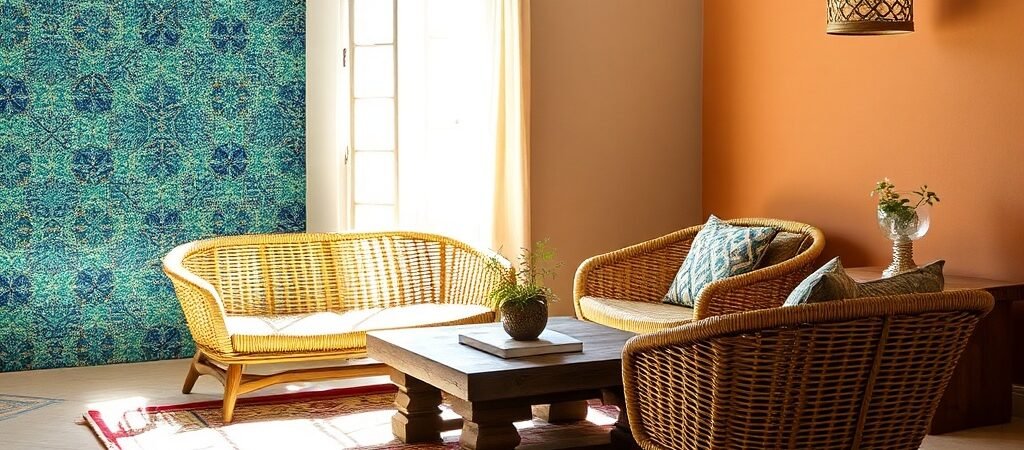
The enduring appeal of Moroccan design lies in its ability to evoke a sense of warmth, history, and sensory richness that transcends fleeting trends. When we talk about Moroccan decor essentials, we are referring to the foundational elements that create this atmosphere—a curated mix of texture, geometry, and light that defines Moroccan interior design. The key to a successful space is not in buying “Moroccan-inspired” products from big-box stores, but in understanding and layering authentic Moroccan decor pieces that tell a story and create a cohesive, lived-in look, all while respecting the culture from which they originate.
Quick Answer: Moroccan decor essentials are the core elements—zellige tile, low seating, handwoven rugs, pierced lanterns, and carved wood—that define the style. The key to a cohesive look is layering these elements with a disciplined color palette and a focus on craftsmanship, starting with a strong foundation and building up with textiles and lighting.
Key Takeaways
- Moroccan decor is defined by a sensory mix of texture, geometry, and light, not just color.
- The “essential” list is a hierarchy: architectural elements (arches/zellige) → large furniture (low seating) → textiles → lighting → accessories.
- A cohesive Moroccan room relies on a disciplined color palette (warm neutrals + one accent) and a balance of patterns (one dominant, one subordinate).
- Layering is the core technique; every element should add tactile or visual depth.
- Avoiding “Moroccan kitsch” requires prioritizing craftsmanship and authenticity over mass-produced replicas.
The Complete Answer: What Defines Moroccan Decor Essentials?
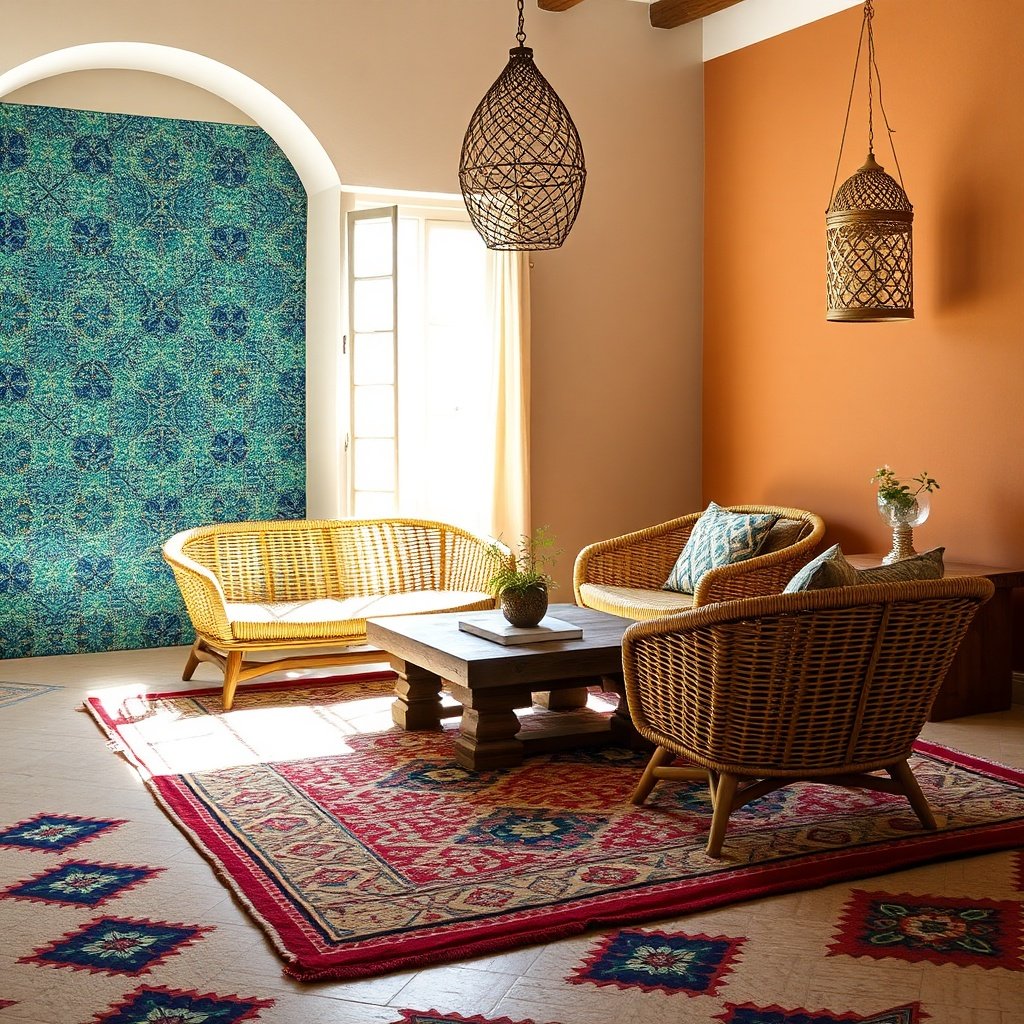
A curated interior showcasing the foundational elements of authentic Moroccan style through texture, geometry, and warm lighting.
Moroccan Decor Essentials: The Five Pillars of the Style
Authentic Moroccan style is built on five distinct pillars that work together to create a space that is both dramatic and inviting. These are the non-negotiable elements that define the aesthetic.
- Geometry: This is the architectural backbone, seen in the intricate star patterns of zellige tile designs, the carved detail of plasterwork, and the lattice work of mashrabiya screens. These geometric patterns are not just decorative; they are a mathematical and spiritual expression that gives the style its structure.
- Light: The interplay of natural light with lanterns and screens is crucial for creating mood. The goal is to diffuse the light, creating a soft, dappled effect that casts beautiful shadows across the room.
- Low-Line Seating: The majlis concept of floor-level social spaces is central to the style. This isn’t just about furniture; it’s about creating an intimate, communal atmosphere where people gather close to the ground.
- Textile Layering: Rugs, poufs, and cushions are the primary soft furnishings. They provide the comfort and warmth that balance the harder architectural elements, and they are the easiest way to introduce color and pattern.
- Craft & Imperfection: There is immense value in the hand-made irregularities of artisan pieces. These small flaws are a mark of authenticity and human touch, standing in stark contrast to the machine-perfect uniformity of mass-produced goods.
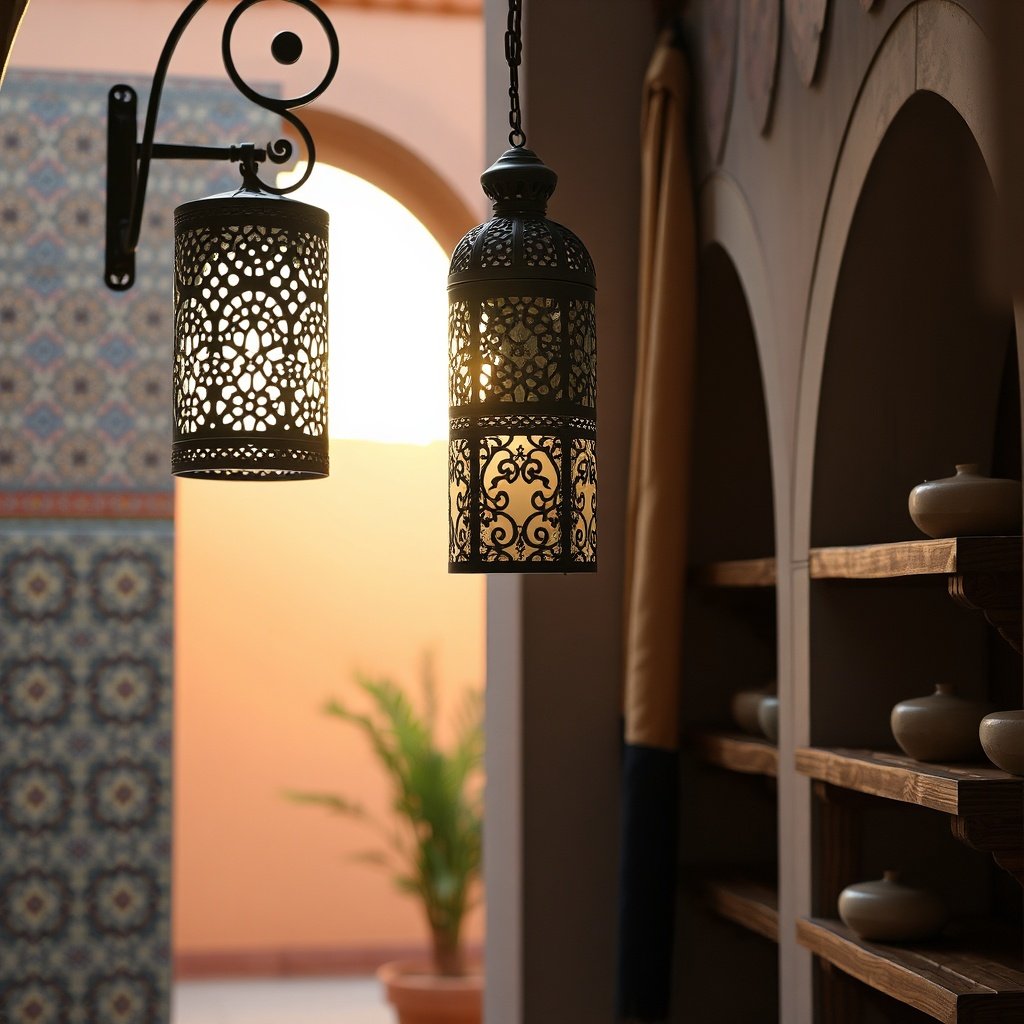
A detailed study of how pierced lanterns, zellige tiles, and carved wood create depth and ambiance in authentic Moroccan interiors.
The “Essential” vs. The “Accent”
Understanding the hierarchy is key to achieving the look without cluttering your home.
- Foundational Pieces: These are the “essentials” that make the style work. They include the rug, the low seating, and the main lighting source. These pieces are large, functional, and set the tone for the entire space.
- Decorative Accents: These are the finishing touches—vases, trays, wall art, and small ceramic pieces. They add personality and detail but are not the foundation.
Why is the foundation more important? Because a room with a beautiful Beni Ourain rug, a low sofa, and a stunning brass lantern will already feel like a Moroccan space, even without any accessories. Conversely, a room with a few small trinkets on a standard Western sofa will never achieve the look. Focus your budget and attention on the foundational pieces first, and treat accents as the final, optional layer.
Debunking the “More is More” Myth
A common misconception is that authentic Moroccan style is cluttered and chaotic. In reality, the most beautiful examples of Moroccan design principles are masterclasses in “layered minimalism.” The style is rich, not busy.
The principle is to use a few high-impact pieces to create a textured, layered space. A single, large, hand-woven rug can do more for a room than a dozen small trinkets. The secret is negative space. A solid, neutral wall allows the intricate patterns of a rug or the glow of a lantern to truly stand out. It is the empty space that allows the essentials to breathe and be appreciated.
Definition: The majlis is the traditional seating area in a Moroccan home, typically a room or corner furnished with low, floor-level seating and cushions, designed for socializing and entertaining guests.
Core Materials and Craftsmanship: The Foundation of Authenticity
The soul of Moroccan decor essentials lies in the materials and the hands that craft them. Understanding the difference between authentic, hand-made items and mass-produced lookalikes is the first step to creating a space with integrity.
Zellige Tile: The Geometric Heart
Zellige is the iconic glazed clay tile of Morocco, hand-crafted in a process that has remained largely unchanged for centuries. Artisans shape the clay, glaze it, and fire it in kilns, resulting in a surface that is glossy, slightly uneven, and full of character. The subtle variations in color and the irregular edges are the hallmarks of a true zellige tile.
Where to use them: They are perfect for creating a dramatic feature wall in a living room or bedroom, a stunning kitchen backsplash, a beautiful bathroom floor, or a fireplace surround. Their reflective surface adds depth and light to a space.
Comparison of authentic hand-cut zellige vs. modern machine-made ceramic lookalikes:
- Authentic: Irregular, glossy, hand-glazed; uneven edges.
- Imitation: Uniform, matte, machine-pressed; perfect edges.
Carved Wood and Plaster: The Architectural Framework
These elements add the “architectural” feel that is central to riad interior styling.
- Mashrabiya (Lattice Screens): These traditional wooden screens serve a dual purpose: providing privacy while filtering and diffusing sunlight. They create a beautiful play of light and shadow that is both functional and artistic.
- Carved Plaster (Gabes): This is a highly skilled craft that creates intricate, sculptural wall treatments. The carved patterns are typically geometric or floral and can be used to create a stunning focal point on a single wall or around a fireplace.
Incorporating these into a modern home without a full renovation is possible. A single, large mashrabiya screen can be used as a room divider or a stunning wall hanging. A framed panel of carved plaster can be treated like a piece of sculptural wall art.
Metals: Brass, Copper, and Iron
The patina of aged brass and copper is preferred over polished, shiny finishes. This “living finish” develops a unique character over time, adding to the sense of history and warmth in the room. Wrought iron is another key material, often used in the frames of lanterns and furniture.
How to mix metal tones: Don’t be afraid to mix. An aged brass lantern can look wonderful in a room with a copper tray and wrought-iron furniture. The key is to stick to the “aged” or “antique” finishes rather than mixing polished, modern chrome with traditional brass.
Comparison Table: Authentic vs. Imitation Materials
| Feature | Authentic (Handmade) | Imitation (Mass-Produced) |
|---|---|---|
| Zellige Tile | Irregular, glossy, hand-glazed; uneven edges | Uniform, matte, machine-pressed; perfect edges |
| Brass Lantern | Heavy, hand-pierced, with a natural patina | Lightweight, laser-cut, with a uniform finish |
| Wood Carving | Deep, intricate, hand-chiseled patterns | Shallow, uniform, CNC-machined patterns |
| Textiles | Hand-woven, natural dyes, visible imperfections | Machine-woven, synthetic dyes, perfectly uniform |
The Moroccan Color Palette and Pattern Play
The right color palette and pattern mixing are what turn a collection of individual pieces into a cohesive Moroccan interior design. The goal is to create a sense of harmony, not chaos.
Building a Palette from Earth and Spice
The foundation of the palette is built on a base of warm, earthy neutrals.
- Foundational Neutrals: Terracotta, sand, cream, and warm grey. These are the colors of the desert and the earth, and they provide a calming, grounding base. Consider earthy terracotta walls for a bold statement or a soft cream for a more subtle backdrop.
- Accent Colors: The accent colors are where the “spice” comes in. Use deep jewel tones like majorelle blue, emerald green, and saffron yellow, or spice tones like cinnamon and paprika. These are best introduced in small doses through textiles and accessories.
The 60-30-10 rule adapted for Moroccan style is a great starting point: 60% neutrals, 30% textiles/accents, and 10% bold pattern. This ensures the space feels rich and layered without becoming overwhelming.
Mastering the Art of Pattern Mixing
Mixing geometric pattern motifs with organic ones is a hallmark of the style, but it requires discipline.
- One Dominant, One Subordinate: Choose one primary pattern (e.g., a large geometric rug) and one secondary pattern (e.g., a floral or arabesque motif on cushions). This prevents visual chaos.
- Use Scale to Create Hierarchy: Use large-scale patterns on the floor (like a rug), medium-scale on furniture (like a sofa or pouf), and small-scale in accessories (like a decorative bowl or vase).
The Role of Negative Space
This is the most important rule in Moroccan pattern play. A solid, neutral wall is critical to balance busy patterns. Using white or cream as a “canvas” allows the rich colors and textures of your furnishings to stand out. Introduce pattern gradually—start with one large piece, like a rug, and only add more patterns if the space still feels balanced.
Essential Furniture Pieces and Their Placement
The furniture is what defines the function and flow of the room. The goal is to create a space that encourages conversation and relaxation.
The Low-Seating Hierarchy: From Majlis to Pouf
The traditional layout is built around floor-level seating.
- Majlis-Style Seating: This is a long, low sofa or built-in bench seating covered with plush cushions. It’s designed for lounging and conversation.
- The Pouf/Ottoman: The woven pouf seating is an essential, versatile piece. It’s a moveable seat, a footrest, and even a side table when a tray is placed on top.
How to arrange a conversation area: Instead of the traditional sofa-and-armchair layout, create a U-shape or a circle of low seating. Place a large rug in the center to define the zone, then arrange the sofa and poufs around a low central table. This creates an intimate, communal space.
The Moroccan Rug: The Room’s Anchor
The rug is the single most important piece in a Moroccan room. It is the anchor that defines the space and sets the tone.
- Beni Ourain: High-pile, monochrome (typically cream with black or brown geometric lines). These are the most versatile and are perfect for a minimalist or modern home.
- Boucherouite: Colorful, rag rugs made from recycled fabrics. They are a great way to inject color and a bohemian spirit.
- Azilal: Geometric, Berber rugs, often with a white background and colorful, abstract diamonds or lines. They are a good middle ground between the two.
Placement strategies: Use a large rug to define the seating area. Layer rugs—a smaller Boucherouite over a larger, neutral flatweave—for added texture. Use runners in hallways to create a sense of path. Choose a rug based on room size: a large, light-colored rug can make a small room feel bigger, while a dark, richly colored rug can make a large room feel more intimate.
Tables, Consoles, and Storage
Look for low, intricately carved coffee tables, often octagonal or hexagonal in shape. These are perfect for the center of a low-seating arrangement. A console table with a mirror above it is a classic way to create a focal point in an entryway. For storage, incorporate carved wooden chests or armoires; they are both functional and add significant visual interest.
Lighting and Textiles: Creating Atmosphere and Warmth
This is the final layer that brings the room to life. The goal is to create atmosphere through the interplay of light and soft textures.
The Lantern as a Sculptural Light Source
The lantern is more than just a light fixture; it is a piece of sculpture. Moroccan lantern lighting comes in several styles: pierced brass, carved wood, and glass-paneled.
- How to Hang Them: A single, large pendant over a dining table creates a dramatic focal point. A cluster of varied sizes in a stairwell or a corner creates a stunning, cascading effect.
- The “Shadow Play” Effect: The pierced metalwork of a brass lantern projects intricate patterns onto the walls and ceiling, creating a beautiful, dappled light effect that is the essence of Moroccan atmosphere.
Layering Textures: From Cushions to Curtains
The key to layered textile styling is to mix different textures to create a rich, tactile experience. Combine smooth silk, rough wool, soft velvet, and crisp linen. Use heavy, textured curtains to frame windows and add privacy. Drape a throw blanket over the arm of a low sofa or over a pouf to add color and comfort.
Step-by-Step: How to Layer a Moroccan-Style Seating Area
- Start with the anchor: place the primary rug (e.g., Beni Ourain) to define the zone.
- Add the base seating: position the low sofa or majlis-style bench.
- Introduce a secondary seat: add one or two poufs or floor cushions.
- Layer the textiles: arrange 3-5 cushions on the sofa, mixing patterns and textures.
- Add the final layer: drape a throw blanket over the arm of the sofa or over a pouf.
- Illuminate the space: hang a pierced lantern above the center of the arrangement.
- Add a functional accent: place a low table with a tray, tea glasses, and a small plant.
Styling and Curation: Avoiding the “Tourist Shop” Look
The difference between an authentic, curated space and a “tourist shop” is intentionality. It’s about curation, not clutter.
The Art of Curated Clutter
There is a difference between clutter and a curated collection. A shelf with a small collection of ceramic vases—grouped in odd numbers like 3 or 5 for visual balance—looks intentional. A shelf filled with random souvenirs looks messy. Use trays to corral smaller items, like a collection of small bowls or tea glasses, to create a sense of order and purpose.
Integrating Moroccan Essentials into a Modern Home
You don’t need to live in a riad to enjoy this style. The “one element at a time” approach is the best way to start. Begin with a rug or a lamp, and build from there. Moroccan pieces blend beautifully with minimalist, Scandinavian, or industrial styles because they are often based on natural materials and neutral tones. The key is to have a neutral, modern base that allows the Moroccan pieces to shine as the stars of the room.
The “Use Only if Verified” Guide to Sourcing Authentic Pieces
How to identify artisan-made items vs. mass-produced replicas:
- Look for Irregularities: Slight variations in color, size, or pattern indicate a hand-made item.
- Check the Materials: Look for natural materials like wool, cotton, clay, brass, and wood.
- Look for Maker’s Marks: Some artisans sign their work or have a unique style that can be identified.
The importance of buying from reputable sources or directly from artisans cannot be overstated. This supports ethical practices and ensures you are getting a genuine piece of Moroccan culture rather than a cultural appropriation. When you buy from an artisan, you are not just buying a product; you are buying a piece of their heritage and supporting their craft.
Quick Answer: To avoid the “tourist shop” look, focus on a few high-quality, authentic pieces rather than filling a room with many small, mass-produced items. Curate your collection by grouping objects in odd numbers and using trays for smaller items, and always prioritize craftsmanship and natural materials.
Frequently Asked Questions (FAQ)
How do I start adding Moroccan decor to my home without a full renovation?
Start with textiles and lighting, as these are the easiest entry points. A beautiful Beni Ourain rug can instantly transform a living room, while a single pierced brass lantern can add a dramatic focal point to an entryway or dining area. These pieces are impactful, relatively easy to source, and don’t require any structural changes to your home.
What is the difference between a Beni Ourain rug and a Boucherouite rug?
Beni Ourain rugs are high-pile, monochrome rugs (typically cream with black or brown geometric lines) made from undyed sheep’s wool. Boucherouite rugs are colorful rag rugs made from recycled fabric scraps. Beni Ourain is more minimalist and elegant, while Boucherouite is more bohemian and vibrant.
Can I mix Moroccan decor with other styles like modern or Scandinavian?
Yes, absolutely. The key is to use a neutral base (white, cream, or light grey walls, modern furniture) and then choose a few high-impact Moroccan pieces—like a large rug, a statement lantern, and some cushions—to add warmth and texture. This creates a balanced, layered look without feeling like a themed room.
Are Moroccan lanterns safe for the home?
Yes, they are safe when used correctly. It’s important to use LED bulbs to minimize heat build-up, as many lanterns are made of brass or wood. Always have the wiring checked and installed by a qualified electrician to ensure it meets local safety regulations.
How do I clean and maintain a Moroccan rug?
For general care, vacuum your rug regularly on a low-power setting to remove dust. For spot cleaning, blot spills immediately with a clean cloth and mild soap and water. For a deep clean, it is best to have a delicate hand-woven piece professionally cleaned to avoid damaging the wool or natural dyes.
Conclusion
The core of Moroccan decor essentials is not a shopping list, but an approach to creating an atmosphere of warmth, texture, and light. It is about layering authentic materials like artisanal ceramic accents, handcrafted brass fixtures, and authentic berber rugs over a foundation of earthy tones and geometric patterns. The result is a space that feels rich, inviting, and deeply personal.
Start with one piece you love—a rug, a lantern, or a beautiful carved table—and build your space around it. Rather than trying to replicate a showroom, let your room evolve organically. By prioritizing craftsmanship and authenticity, you will create a home that is not just stylish, but also meaningful, a true reflection of the timeless allure of Moroccan design.