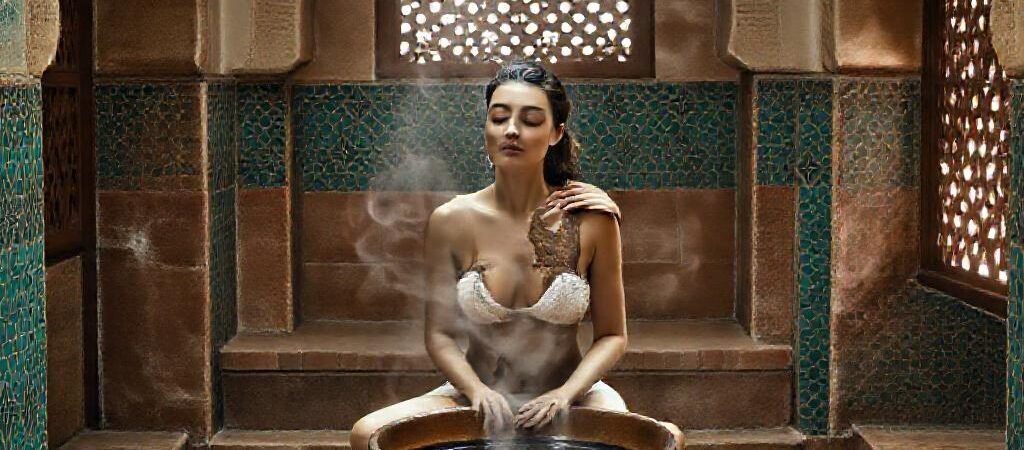
Moroccan beauty rituals are a complete system of body and skin care rooted in the country’s rich history, combining communal traditions with powerful local ingredients like argan oil and ghassoul clay. These practices are not just routines; they represent a holistic philosophy centered on purification, exfoliation, and nourishment that has been passed down through generations.
Morocco’s unique position as a crossroads of African, Arab, and Mediterranean influences has created a distinctive beauty culture. From the steam-filled chambers of the traditional hammam to the liquid gold of argan oil, Moroccan skincare secrets offer a mindful, sensory approach to self-care that has captivated the modern wellness world.
Key Takeaways
- The hammam is the foundational Moroccan beauty ritual, using heat, steam, and exfoliation for full-body purification.
- The core philosophy is a three-step cycle: purify, exfoliate, nourish.
- A small set of natural ingredients—argan oil, ghassoul clay, and rose water—forms the backbone of traditional beauty practices.
- These rituals are deeply communal and spiritual, with knowledge passed down from mother to daughter.
- Modern wellness brands are increasingly adopting these ancient practices, blending tradition with contemporary science.
The Complete Answer: What Are Moroccan Beauty Rituals?
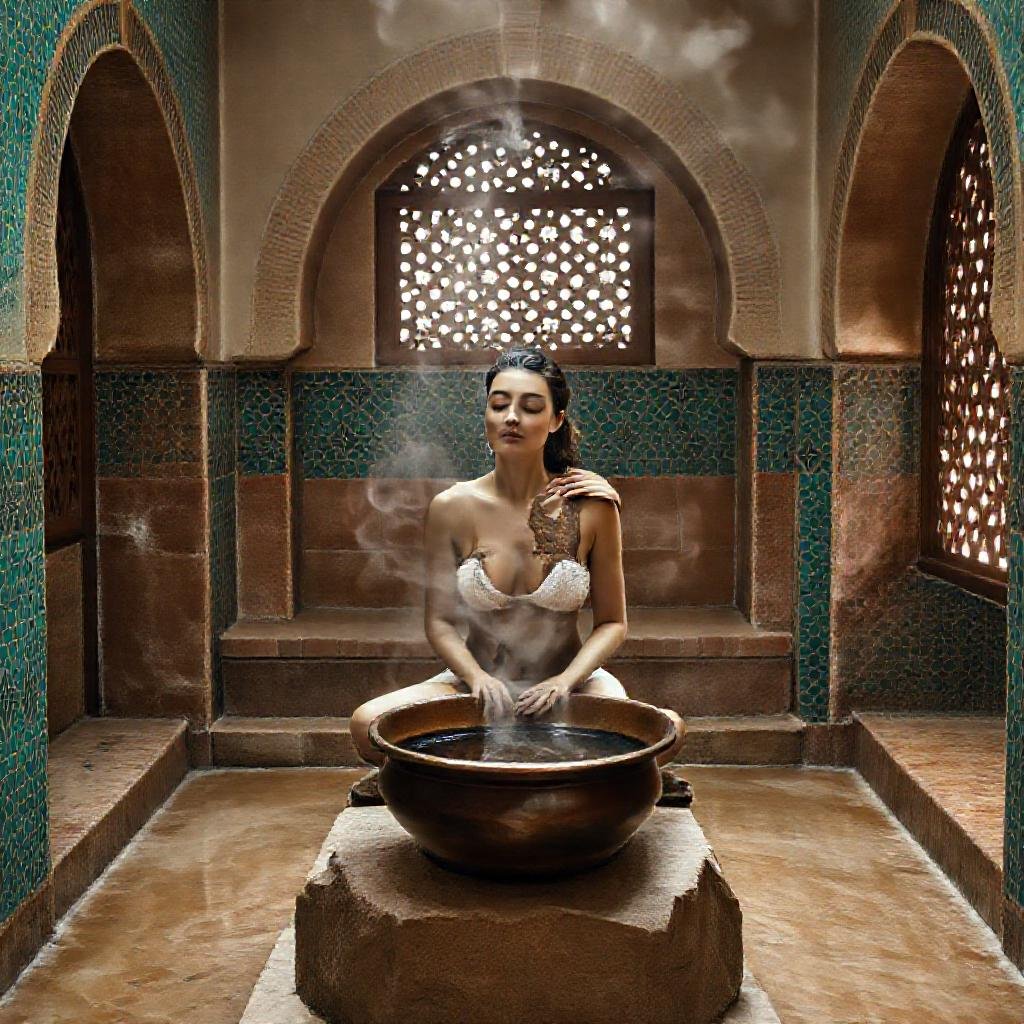
Captures the foundational purification step of traditional Moroccan skincare in an authentic bathhouse setting.
Moroccan beauty rituals are a comprehensive system of body and skincare practices rooted in the culture’s history. They utilize local natural resources and communal traditions to achieve healthy, glowing skin and overall well-being.
Definition: Moroccan beauty rituals are a holistic system of body and skincare practices originating in Morocco, centered on the hammam experience and the use of natural ingredients like argan oil, ghassoul clay, and black soap to purify, exfoliate, and nourish the skin.
The philosophy is built on three pillars: purification through the heat and steam of the hammam, exfoliation with a kessa glove, and nourishment with argan oil. This traditional beauty system differs significantly from Western skincare by focusing on the whole body, emphasizing the social aspect of care, and relying on time-tested natural ingredients.
The Cultural and Historical Context
The beauty practices of Morocco are a rich tapestry woven from Berber, Arab, and Andalusian influences. The hammam, a traditional bath house, has served as a community hub for centuries, functioning as a social gathering place where women connect, share news, and exchange advice, not just a place for bathing.
These rituals are tied to key life events, including weddings, births, and religious festivals. The hammam experience is a crucial part of a bride’s preparation, ensuring she enters her marriage with purified skin and a relaxed spirit.
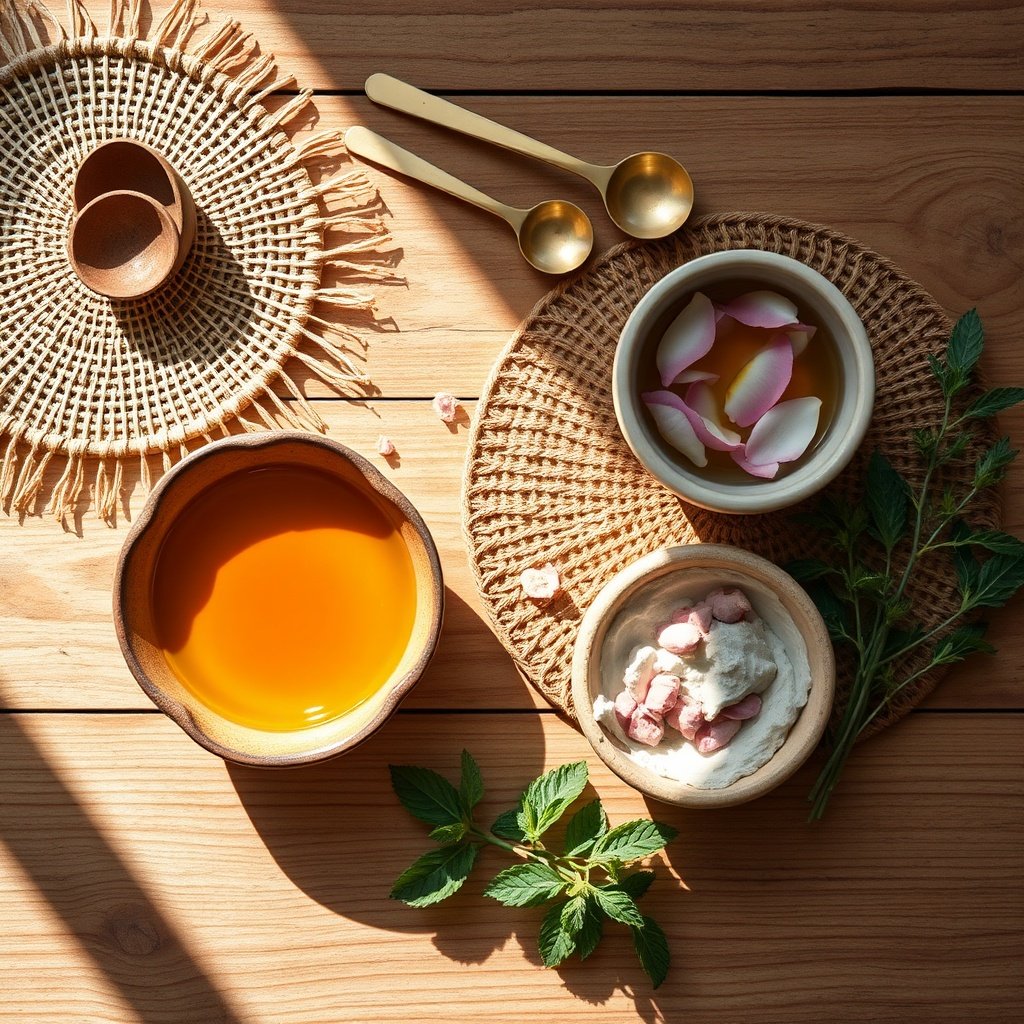
Showcases the signature ingredients and mindful preparation behind traditional Moroccan skincare routines.
The Three-Step Philosophy: Purify, Exfoliate, Nourish
The essence of Moroccan beauty can be distilled into a simple, effective cycle.
- Purify: The ritual begins with heat and steam, which open pores and soften the skin. This is followed by the application of Beldi black soap, a mineral-rich paste that draws out impurities.
- Exfoliate: The unique function of the kessa glove is to remove dead skin cells. Its rough texture, when used with the softened skin from the steam, reveals fresh, smooth skin underneath.
- Nourish: The final step involves applying oils and creams, most notably argan oil, to rehydrate and protect the newly revealed skin.
How Moroccan Rituals Differ from Western Skincare
The fundamental difference lies in the approach. Moroccan rituals are a holistic, communal experience, while Western skincare is often a more clinical, individualistic pursuit.
| Feature | Moroccan Approach | Western Approach |
|---|---|---|
| Focus | Whole-body ritual | Face-centric focus |
| Key Products | Argan oil, ghassoul clay, black soap | Serums, acids, retinoids |
| Application Method | Manual exfoliation, massage, steam | Chemical exfoliation, tools, devices |
| Social Aspect | Highly communal, shared experience | Individualistic, private routine |
| Underlying Philosophy | Spiritual, holistic, natural | Scientific, corrective, results-oriented |
The Hammam: The Heart of Moroccan Beauty
The hammam is the ultimate self-care experience and the centerpiece of Moroccan beauty rituals. It is a slow, deliberate process that engages all the senses and offers profound physical and mental benefits.
The Step-by-Step Hammam Ritual
A traditional hammam experience follows a sequence of steps designed to maximize purification and relaxation.
- Preparation: Enter the warm room and allow your body to acclimate to the heat.
- Relaxation: Sit and sweat to open pores and soften the skin.
- Cleansing: Apply Beldi black soap (a mineral-rich, olive-oil based paste) all over your body.
- Resting: Allow the soap to sit on the skin for several minutes to draw out impurities.
- Exfoliation: Using the kessa glove, scrub away dead skin in long, rhythmic strokes.
- Rinsing: Thoroughly wash away the soap and dead skin with warm water.
- Nourishing: Apply argan oil or rose water to lock in moisture.
- Hydration: Drink mint tea to rehydrate from the inside out.
The Essential Tools: Kessa Glove and Beldi Soap
The kessa glove and Beldi soap work in tandem to achieve a “new skin” effect. The kessa glove is a rough, textured mitt that provides a deeper exfoliation than any chemical alternative, physically removing layers of dead skin. Beldi soap, also known as savon noir black soap, is a gel-like paste made from olive oil and eucalyptus. Its role is to soften the skin and prepare it for the intense exfoliation of the kessa glove.
The Social and Spiritual Dimension
The hammam is a vital space for women to connect, socialize, and share advice. It is a place where the ritual’s connection to purification of both body and spirit is realized. The experience is a rite of passage, passed down through generations of women, reinforcing family and community bonds.
The Power of Moroccan Natural Ingredients
The effectiveness of Moroccan beauty rituals lies in the potent, natural ingredients used. These are not just cosmetic products but are deeply integrated into the culture.
Argan Oil: “Liquid Gold” and Its Uses
Argan oil, often called “liquid gold,” is derived from the kernels of the Argan tree, which grows exclusively in southwestern Morocco. It is rich in Vitamin E and essential fatty acids, making it a powerful moisturizer and anti-aging agent. Its practical applications are extensive, serving as a treatment for dry skin, brittle hair, and as a nourishing oil for the face and body.
Quick Answer: Argan oil is a versatile, non-comedogenic oil that can be used on all skin types. It is rich in Vitamin E and fatty acids, making it ideal for moisturizing dry skin, taming frizzy hair, and providing a natural glow.
Ghassoul (Rhassoul) Clay: The Detoxifying Mask
Ghassoul, also known as rhassoul, is a mineral-rich clay mined exclusively from the Atlas Mountains. It is prized for its ability to absorb excess oil and impurities without stripping the skin of its natural moisture. A simple and effective mask can be created at home by mixing the clay with rose water or honey. This makes it a popular choice for those with oily and acne-prone skin.
Rose Water and Other Botanical Extracts
Distilled rose water is a staple in Moroccan beauty, used as a gentle toner, cleanser, and mood enhancer. Orange blossom water and other floral waters are also widely used, providing natural hydration, a delicate fragrance, and soothing properties for the skin.
The Beauty Secrets of the Amazigh (Berber) Women
The indigenous Amazigh (Berber) people of Morocco hold a wealth of ancestral skincare knowledge. Their practices offer a unique cultural perspective on beauty that has influenced the country’s broader traditions.
The Use of Natural Makeup and Body Art
Traditional Amazigh beauty includes the use of kohl, a powdered mineral, for eye makeup and protection from the sun and infections. Natural pigments derived from plants and minerals were also used for body decoration. These practices are significant markers of Amazigh culture and identity.
Traditional Hair and Scalp Rituals
Amazigh women have long used argan oil and other natural oils for deep hair conditioning. The practice of using natural henna for hair coloring and strengthening is also a cornerstone of their beauty traditions. The hammam plays a crucial role in maintaining a healthy scalp and hair, with treatments like a rhassoul mud scalp treatment used to remove buildup and stimulate circulation.
Passing Down the Knowledge: The Role of the Matriarch
Beauty rituals are taught from mother to daughter, forming an essential part of cultural preservation. The oral tradition of sharing recipes and techniques within the family ensures that this Berber beauty knowledge is passed down through generations, keeping the ancestral practices alive.
Modernizing the Ritual: Bridging Tradition and Trend
Moroccan beauty rituals have transcended their origins to become a global phenomenon, adapted for the modern consumer while retaining their core essence.
The Global Spa and Beauty Industry
The rise of “Moroccan-inspired” spas and hammams in Europe and North America has made the traditional hammam treatment accessible to a wider audience. Ingredients like argan oil and ghassoul have become global beauty staples, appearing in countless products. The “slow beauty” movement, which emphasizes mindful, natural, and ritualistic care, aligns perfectly with the Moroccan philosophy.
Quick Answer: You can recreate a simplified Moroccan beauty ritual at home using a kessa glove, Beldi soap, and argan oil. However, the full experience of heat and steam is best enjoyed in a traditional hammam.
DIY vs. Professional Experience
While a DIY Moroccan spa routine is a great way to experience the benefits, the professional hammam experience offers a level of stress relief and deep skincare that is hard to replicate. The full ritual provides a complete sensory immersion. When choosing products, there is a significant difference between commercial formulations and traditional, raw ingredients; the latter often offer a more potent and authentic experience.
Sustainability and Ethical Sourcing
The rising global demand for Moroccan ingredients has important ethical implications. Supporting women’s cooperatives in Morocco that produce argan oil is crucial for ensuring fair labor practices and empowering local communities. Consumers can ensure they are buying authentic, ethically-sourced products by researching brands and their sourcing practices.
FAQ: Moroccan Beauty Rituals
How often should you do a Moroccan hammam ritual?
For a full hammam ritual, once a week is a common recommendation for most skin types. Some people may choose to visit more often just for the steam and relaxation, while those with sensitive skin might find a bi-weekly schedule more suitable.
What is the difference between Beldi soap and regular soap?
Beldi soap is a black, gel-like paste made from olive oil and eucalyptus. Unlike regular soap, which is designed to cleanse, Beldi soap is formulated to soften the skin and prepare it for exfoliation.
Can I do a Moroccan beauty ritual at home?
Yes, you can recreate a simplified version using a kessa glove, Beldi soap, and argan oil. The full experience of heat and steam is best in a traditional hammam, but a hot shower can help approximate the effect.
Is argan oil good for all skin types?
Generally, yes. It is non-comedogenic and rich in antioxidants, making it suitable for dry, oily, and sensitive skin. A patch test is always recommended before applying it to your face.
What is ghassoul clay used for?
It is used as a detoxifying mask to absorb excess oil and impurities, leaving the skin clean and matte. It is often mixed with rose water or honey to create a paste.
Conclusion
Moroccan beauty rituals offer a timeless, mindful approach to self-care that is more relevant than ever in today’s fast-paced world. The hammam, the natural ingredients like argan oil and ghassoul, and the rich cultural heritage combine to create a holistic philosophy of purification, exfoliation, and nourishment.
To experience the benefits for yourself, start with one simple element of the ritual. Try using a kessa glove in the shower for a deep exfoliation, or apply a ghassoul clay mask for a detoxifying treat. Embrace the slow, intentional spirit of Moroccan beauty and discover a new level of self-care.