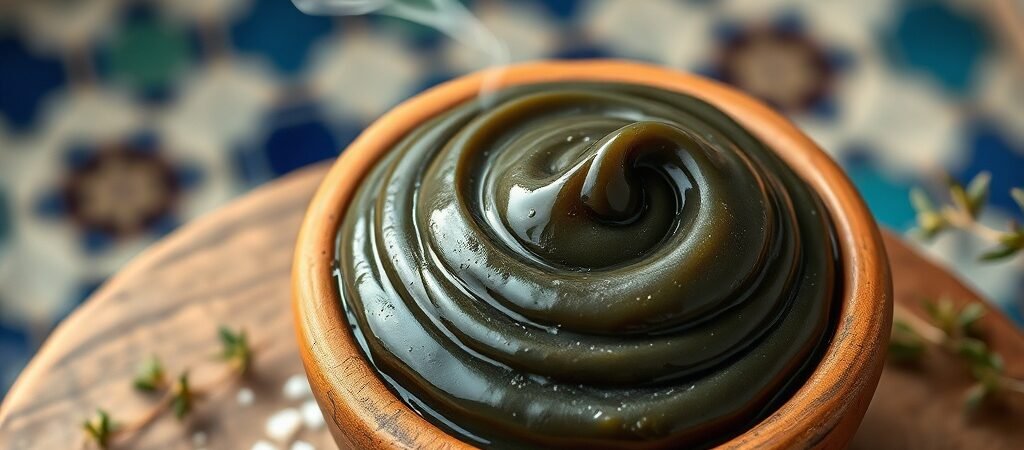
Moroccan black soap, also known as Beldi soap, is the centuries-old cleansing ritual at the heart of the Moroccan hammam. Unlike a typical bar of soap, it is a gel-like paste made from olive oil and potassium hydroxide, used to soften the skin before exfoliation. This guide covers exactly what Moroccan black soap is, how to use it in a hammam ritual, its unique benefits, and how it compares to other exfoliating products.
Key Takeaways
- Moroccan black soap is a natural, gel-like cleansing paste made from olive oil and potassium hydroxide, traditionally used in Moroccan hammams.
- It is applied before exfoliation to soften the skin and prepare it for a Kessa glove scrub.
- Its unique benefits include deep cleansing, gentle exfoliation, and supporting the skin’s natural pH balance.
- Authentic Moroccan black soap should have a dark olive-green or brown color, a smooth paste texture, and a distinct herbal or eucalyptus scent.
- It pairs best with a Kessa glove and should be followed by a hydrating moisturizer or argan oil.
The Complete Answer: What Is Moroccan Black Soap?
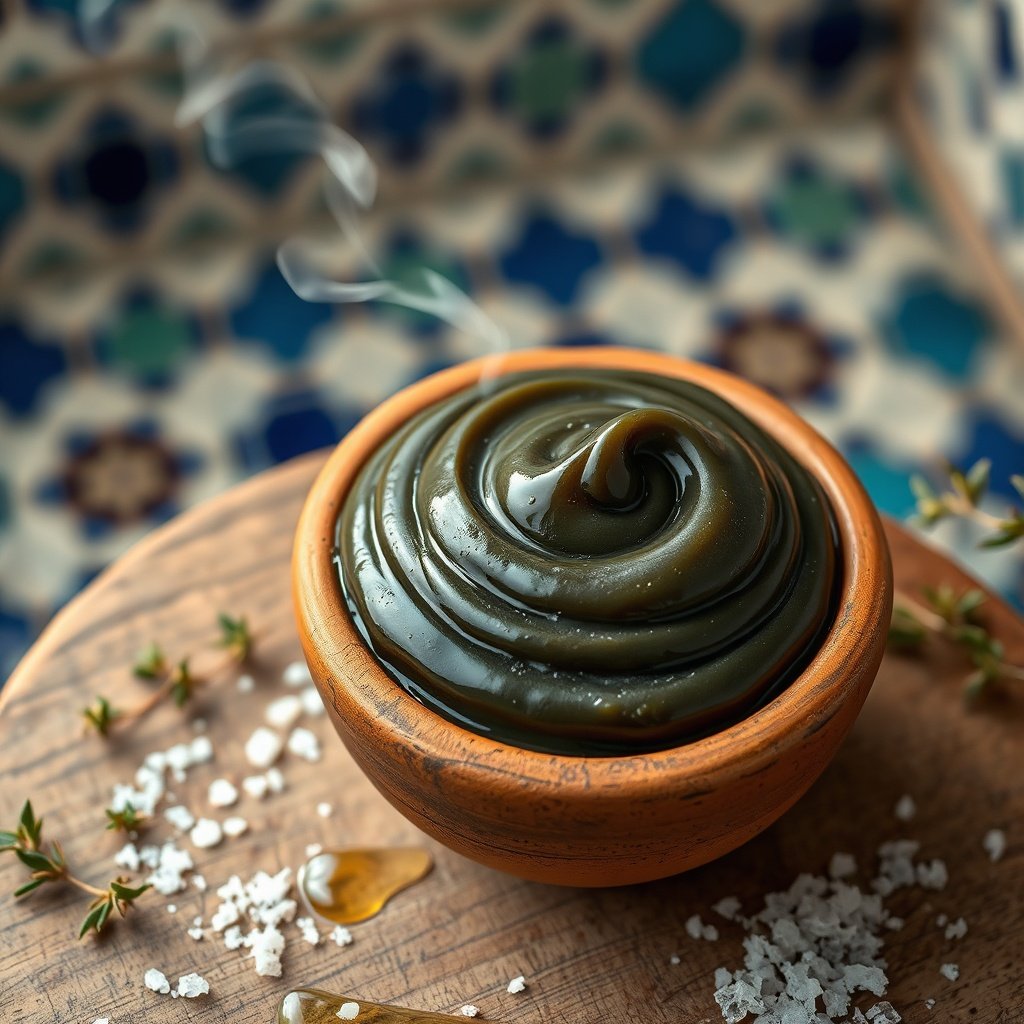
A top-down studio shot highlighting the signature gel-like texture and natural ingredients of moroccan black soap within a traditional bathhouse aesthetic.
Quick Answer: Moroccan black soap is a traditional plant-based cleansing paste made from olive oil and potassium hydroxide. It is used in hammam rituals to soften the skin before exfoliation with a Kessa glove.
Definition and Core Ingredients
Moroccan black soap, or Beldi soap, is a traditional plant-based soap made from olive oil and potassium hydroxide. The combination of these two ingredients undergoes a chemical reaction called saponification, which transforms the oils into a smooth, gel-like paste.
The core composition is simple: olive oil, potassium hydroxide (lye), and water. Eucalyptus oil is often added for its refreshing scent and potential skin benefits. The result is a dark, viscous paste that is distinctly different from the hard, solid bars of soap most people are familiar with.
Definition: Saponification is the chemical process in which fats or oils react with an alkali — in this case, potassium hydroxide — to produce soap and glycerin.
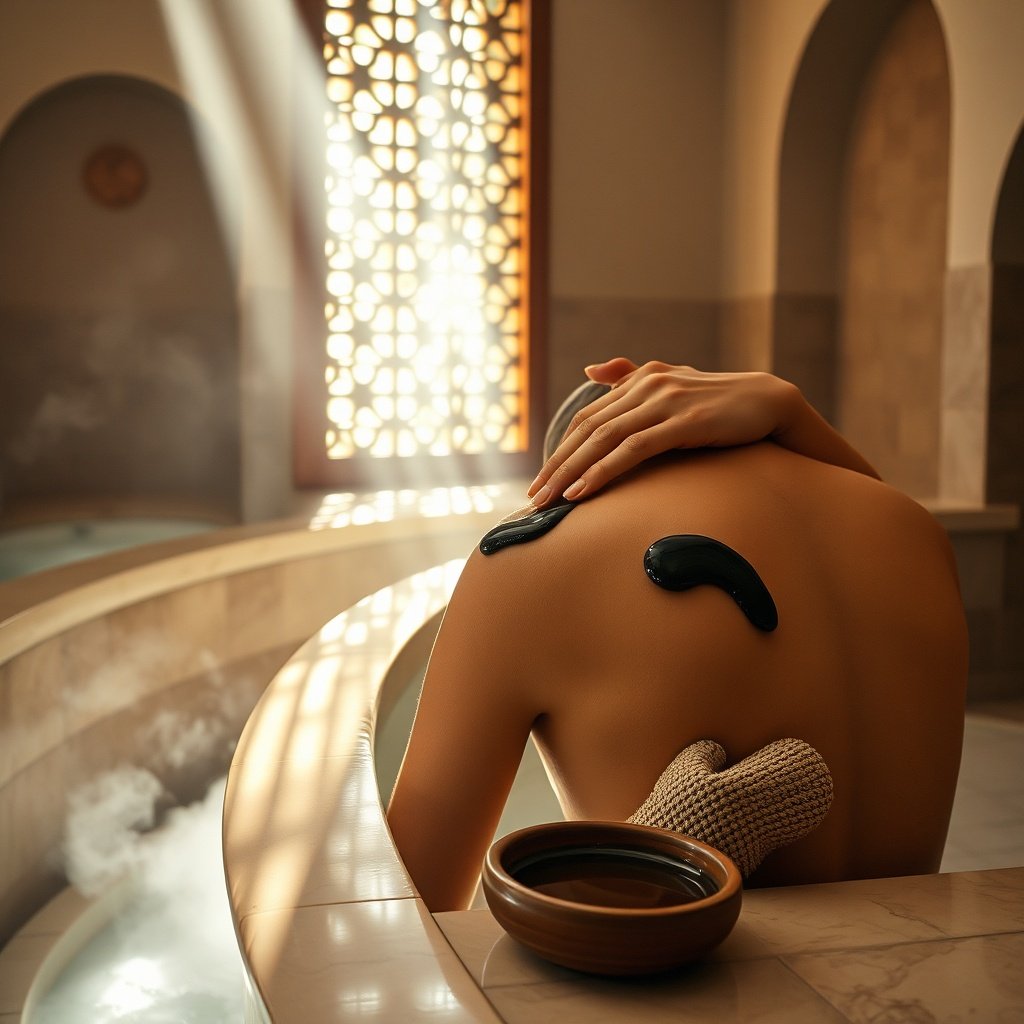
A peaceful scene demonstrating the application of moroccan black soap for skin softening, featuring essential hammam tools in an atmospheric steam room.
Traditional vs. Modern Formulations
The classic version of Moroccan black soap contains just olive oil, water, lye, and often eucalyptus oil. This traditional recipe has remained largely unchanged for generations, relying on the natural properties of olive oil to cleanse and condition the skin.
Modern variations may include added glycerin, shea butter, or other botanical extracts to enhance the formula. Some manufacturers add extra moisturizers or fragrance oils.
How It Differs from Conventional Soap
The most significant difference is the absence of synthetic surfactants and animal fats. Many commercial soaps rely on sodium-based formulas and synthetic detergents that can strip the skin of its natural oils. Moroccan black soap uses only plant-based ingredients.
The texture is also distinct. Instead of a hard bar, it is a gel-like paste that spreads easily over damp skin. This texture allows it to coat the skin evenly and remain in place while it softens the skin’s surface, preparing it for exfoliation.
How to Use Moroccan Black Soap in a Hammam Ritual
Step-by-Step Application Guide
Using Moroccan black soap correctly is essential for getting the best results. Here is the traditional hammam application method:
- Wet the skin and warm the body with steam or warm water.
- Apply a small amount of black soap to damp skin, focusing on areas needing exfoliation.
- Let the soap sit on the skin for 3-5 minutes to soften the pores and dead skin cells.
- Use a Kessa glove to scrub in long, upward strokes.
- Rinse thoroughly with warm water.
- Follow with a moisturizer or argan oil to seal in hydration.
Timing and Frequency
Moroccan black soap is typically used once a week or before a hammam visit. The soap itself is not an exfoliant; it is a pre-treatment that softens the skin so that the Kessa glove can do its work effectively.
Frequency can be adjusted based on skin type. Those with dry or sensitive skin may benefit from less frequent use, while those with oily skin or a higher tolerance for exfoliation may use it more often.
Pairing with a Kessa Glove
The Kessa glove is the essential companion to Moroccan black soap. The soap prepares the skin by softening the top layer of dead skin cells, while the glove physically removes them.
The Kessa glove exfoliation technique involves long, upward strokes over the softened skin. This physical exfoliation is what gives the hammam ritual its characteristic smooth, glowing results. Without the glove, the soap simply cleanses; with it, the soap enables deep exfoliation.
The Unique Benefits of Moroccan Black Soap for Skin
Deep Cleansing and Detoxification
The olive oil base in Moroccan black soap helps dissolve impurities and excess sebum. When applied to damp skin, the soap works to draw out dirt from pores without stripping the skin’s natural moisture.
This deep pore cleansing and detoxification is one of the reasons the soap has been used for centuries in hammams. It prepares the skin not just for exfoliation, but for the entire cleansing ritual that follows.
Exfoliation and Skin Texture
Moroccan black soap softens the top layer of the skin, making exfoliation easier and more effective. By softening the dead skin cells, the soap allows the Kessa glove to remove them more thoroughly.
The result is smoother, more even skin tone and texture. Regular use supports natural skin exfoliation and dead cell removal, which can help with rough patches and dull-looking skin.
Hydration and pH Balance
During saponification, glycerin is produced as a natural byproduct. This glycerin acts as a humectant, drawing moisture into the skin and helping to keep it hydrated.
The soap has a mild, alkaline pH, which works with the skin’s acid mantle rather than against it. For those seeking acne and eczema relief treatments, the combination of gentle cleansing and natural ingredients makes it a popular choice.
Moroccan Black Soap vs. Other Exfoliating Soaps: A Comparison
Comparison Table: Moroccan Black Soap vs. Body Scrubs vs. Chemical Exfoliants
| Aspect | Moroccan Black Soap | Body Scrub | Chemical Exfoliant |
|---|---|---|---|
| Exfoliation Type | Pre-treatment that enables physical exfoliation | Physical exfoliation | Chemical exfoliation |
| Texture | Gel-like paste | Granular or abrasive | Liquid, cream, or serum |
| Suitable Skin Types | Generally all, including sensitive | Normal to oily; can be harsh on sensitive | Depends on acid type and strength |
| Primary Benefit | Softens skin for deeper exfoliation | Immediate smoothing | Resurfacing and cell turnover |
| Application Method | Apply, wait, then scrub with Kessa glove | Massage onto wet skin and rinse | Apply thin layer, leave, then neutralize or rinse |
| Risk of Irritation | Low, when used correctly | Moderate to high, especially with abrasive particles | Variable; depends on acid concentration |
When to Choose Moroccan Black Soap
Moroccan black soap is the best choice when you want a gentle, traditional approach to exfoliation. It is particularly well-suited for sensitive skin exfoliation, as the pre-treatment step reduces the friction needed from the glove.
It is also ideal for hammam skincare rituals, where the full sequence of steaming, soaping, and scrubbing is part of the experience. For pre-shave prep, the soap softens the skin and helps prevent razor burn.
A body scrub might be more appropriate when you want immediate, visible results without the extra step of waiting. Chemical exfoliants are better for addressing specific concerns like hyperpigmentation or fine lines, where chemical resurfacing is needed rather than physical removal.
How to Choose and Store Moroccan Black Soap
What to Look For in Authentic Soap
Authentic Moroccan black soap has several distinct visual and sensory indicators. The color should be a dark olive-green or brown, and the texture should be a smooth, uniform paste. The scent should be herbal or eucalyptus, not synthetic or overly perfumed.
Checking the ingredient list is also important. Look for olive oil and potassium hydroxide as the primary ingredients.
Storage and Shelf Life
Proper storage helps maintain the texture and effectiveness of Moroccan black soap. Keep it in a cool, dry place away from direct sunlight, which can degrade the olive oil and alter the soap’s consistency.
The soap should be kept in an airtight container to prevent it from drying out.
Making Moroccan Black Soap at Home: The Traditional Method
Key Ingredients and Equipment
Making Moroccan black soap at home requires specific ingredients and equipment. The core ingredients are olive oil, potassium hydroxide (lye), distilled water, and eucalyptus essential oil.
The required equipment includes a heat-resistant container, a stirring tool, safety gear (gloves and goggles), and a mold. Safety is critical, as lye is caustic and must be handled with care.
The Saponification Process
Here is the traditional DIY method for making Moroccan black soap:
- Dissolve potassium hydroxide in distilled water to create a lye solution.
- Heat the olive oil gently in a separate container.
- Slowly add the lye solution to the olive oil while stirring continuously.
- Stir until the mixture reaches a gel-like “trace” stage.
- Add eucalyptus essential oil if desired.
- Pour into a mold and let it cure for several weeks.
Definition: “Trace” is the stage in soap-making when the mixture has thickened enough that a streak of it remains on the surface when you drizzle it across the batter.
This saponification process requires patience and careful attention to safety. Lye safety cannot be overstated — always wear gloves and goggles, work in a well-ventilated area, and never add water to lye directly. Always add lye to water.
FAQ
What is Moroccan black soap made of?
It is made primarily from olive oil and potassium hydroxide, which undergo saponification to create a gel-like paste. Eucalyptus oil is often added for its scent and properties.
Can I use Moroccan black soap on sensitive skin?
Yes, it is generally gentle and suitable for sensitive skin, as it contains no synthetic detergents or harsh chemicals. However, a patch test is recommended.
How often should I use Moroccan black soap?
It is typically used once a week or before a hammam session. Frequency can be adjusted based on skin type and individual tolerance.
What is the difference between Moroccan black soap and regular soap?
Moroccan black soap has a gel-like texture, is made from olive oil and lye, and is used as a pre-exfoliation treatment. Regular soap is a solid bar made from fats and sodium hydroxide, used for general cleansing.
Conclusion
Moroccan black soap is a versatile, natural cleanser that prepares the skin for exfoliation and offers unique benefits. Its olive oil and potassium hydroxide composition makes it gentle, while its role in the hammam bathing ritual makes it effective.
Using it correctly with a Kessa glove and following up with hydration will give you the best results. Whether you incorporate it into your weekly skincare routine or try making it at home, the key is to respect the process and the ingredients.
Always verify product authenticity when purchasing, and consult a professional if attempting the DIY method. The traditional hammam experience is worth preserving, and Moroccan black soap is at the center of it.