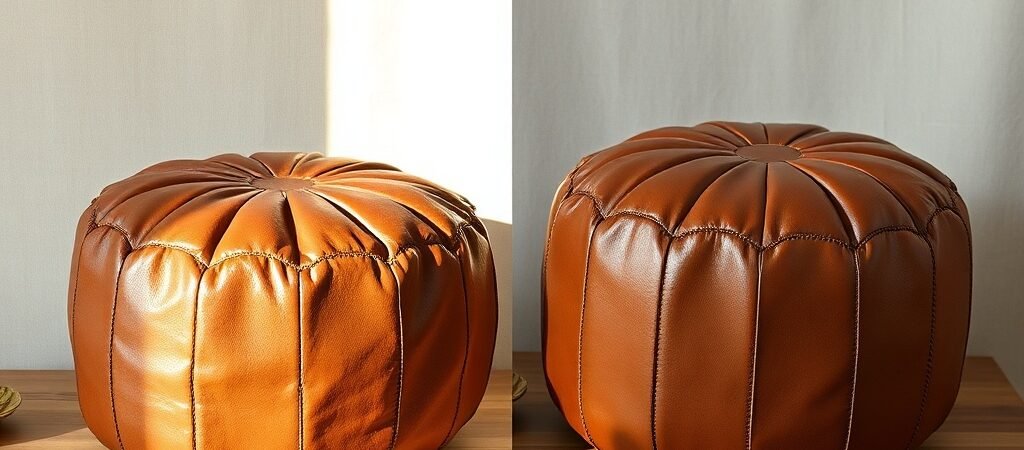
Introduction
Knowing what to look for in a Moroccan leather pouf: real vs. fake is the difference between buying a piece of functional art that lasts decades and wasting money on a synthetic imitation that peels within a few years. These handcrafted poufs have become a staple in modern interiors, prized for their versatility as seating, footstools, and side tables. But the market is now flooded with faux leather versions from beniouaraincarpets.com that mimic the look while missing the substance. This guide gives you practical, verifiable methods to distinguish authentic, hand-crafted leather poufs from synthetic or machine-made fakes — because authenticity matters for durability, aesthetics, and ethical sourcing.
Key Takeaways
- A genuine Moroccan leather pouf is made from full-grain or top-grain animal leather, tanned using traditional vegetable or natural methods, and finished by hand.
- The most reliable immediate test is the smell: real leather has a subtle, earthy, organic scent, while faux leather emits a sharp plastic or chemical odor.
- The “squish” test is critical: authentic leather is pliable, soft, and yields under pressure, whereas fake leather tends to be stiff, springy, or uniformly rigid.
- Hand-stitching with thick, waxed thread and an unfinished suede underside are strong indicators of authentic Moroccan craftsmanship.
- Price and weight are useful secondary clues, but they are not definitive on their own — a high price can still be attached to a well-made fake.
What to Look for in a Moroccan Leather Pouf: Real vs. Fake
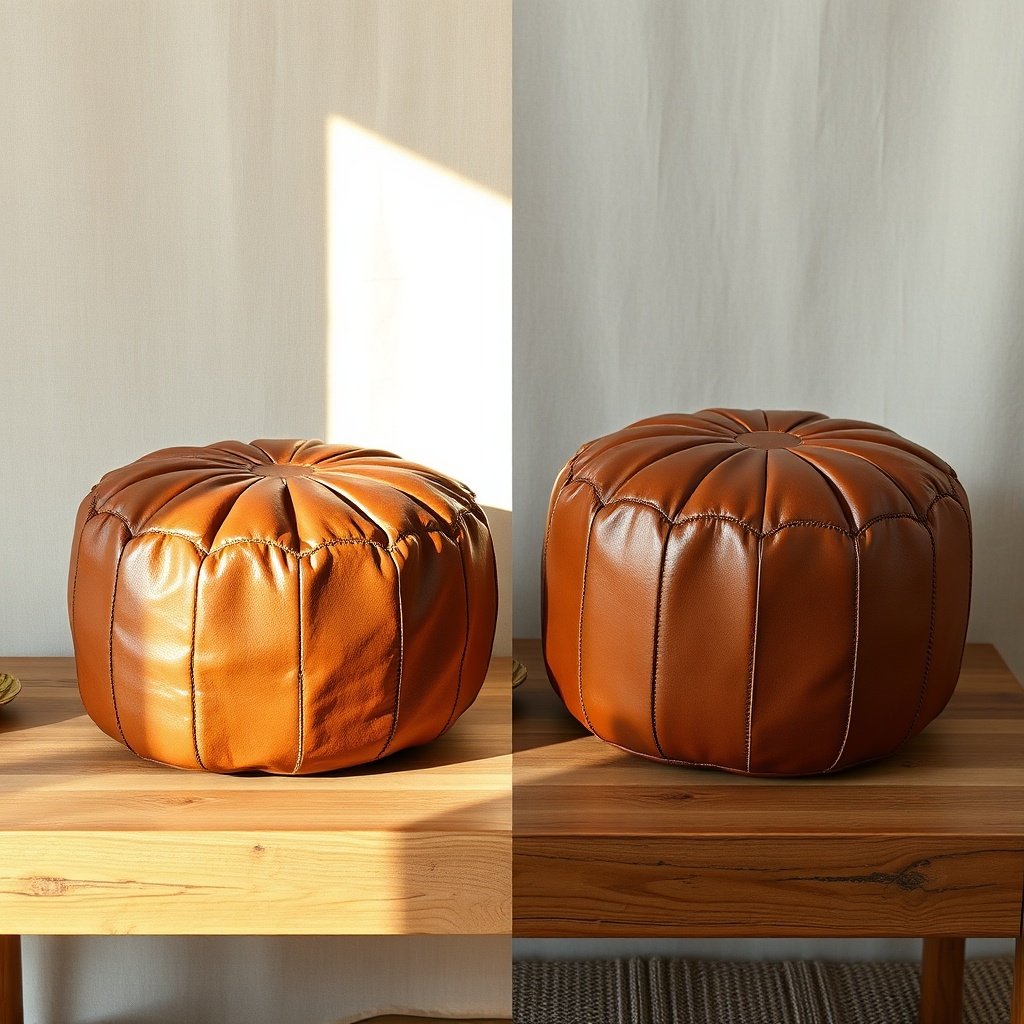
Spotting the telltale visual and structural signs that separate genuine handcrafted leather from mass-produced imitations. Here is the complete answer to the question of what to look for in a Moroccan leather pouf: real vs. fake. The most reliable differentiators are the smell, the feel, the stitching, and the underside. A genuine pouf is made from animal hide, naturally tanned, and hand-stitched. A fake is made from synthetic materials, machine-stitched, and has a uniform, plastic-like quality.
Quick Answer: A real Moroccan leather pouf is made from animal hide, naturally tanned, and hand-stitched with a soft, organic feel and scent. A fake is made from synthetic materials like PVC or polyurethane, machine-stitched, and has a uniform, plastic-like texture and smell.
The Quick Distinction
Genuine Moroccan leather poufs are crafted from animal hide, tanned naturally, hand-stitched, and have a soft, organic feel and scent. Faux poufs are made from synthetic materials like PVC or polyurethane, machine-stitched, and have a uniform, plastic-like texture and smell. The difference is not just aesthetic — it affects how the pouf ages, how long it lasts, and how it feels under your feet or hands.
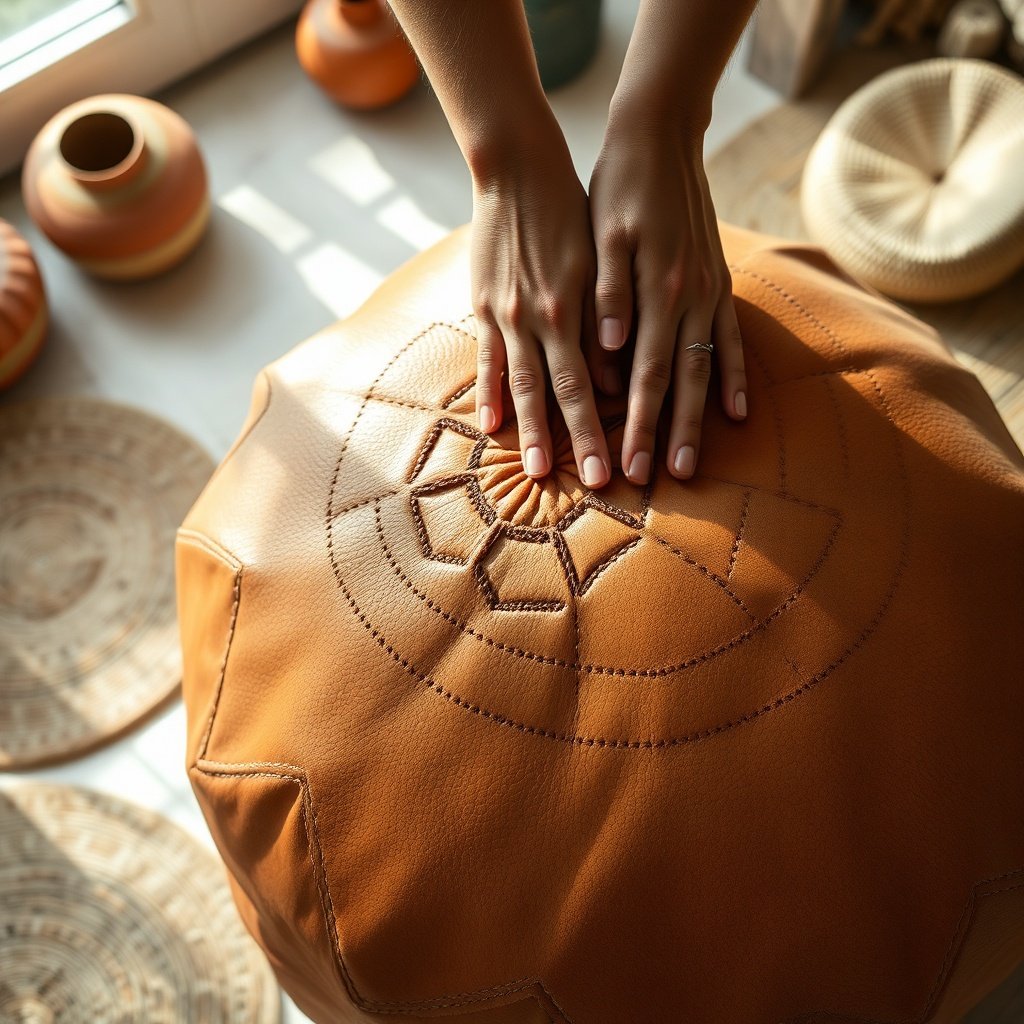
Feel the difference between authentic flexible hide and rigid synthetic alternatives through hands-on material testing.
The Five Senses Test (Visual, Touch, Smell, Sound, Weight)
You can evaluate a pouf systematically by engaging all five senses. This framework helps you spot the genuine Moroccan leather characteristics that synthetic imitations cannot replicate.
- Sight: Look for natural grain, color variation, and imperfections. Real hide has an irregular surface; faux leather has a uniform, repeating pattern.
- Touch: Press, squeeze, and feel the surface. Real leather is soft, pliable, and warm; synthetics feel stiff, cold, or rubber-like.
- Smell: Bring the pouf close to your nose. Real leather has an earthy, organic scent; faux leather smells of chemicals or plastic.
- Sound: Tap or press the surface. Real leather produces a dull thud; synthetics may sound hollow or crinkle.
- Weight: Lift the pouf. Real leather is dense and substantial; fakes are often surprisingly light.
The Smell Test and the “Chemical” Red Flag
The olfactory cue is often the fastest way to identify a fake leather pouf. Your nose can detect the difference between a vegetable-tanned leather pouf and a synthetic imitation before your eyes even register the details.
Quick Answer: Real tanned leather smells earthy, organic, and slightly musky. Faux leather smells sharp, sweet, or like plastic — a chemical odor that is a clear red flag.
How Authentic Tanned Leather Smells
Authentic tanned leather carries a natural, earthy, slightly musky scent. This smell is a byproduct of the traditional tanning process, where animal hides are treated with natural tannins rather than harsh synthetic chemicals. The scent is subtle and organic, and it evolves over time as the leather ages and absorbs the environment around it.
Definition: Vegetable-tanned leather is leather tanned using natural plant-based tannins rather than chromium or other synthetic chemicals. This method produces a distinctive earthy scent and a leather that develops a rich patina over time.
The Artificial Scent of Faux Leather
Faux leather, made from PVC or polyurethane, emits a sharp, sweet, or plastic-like chemical odor. This smell is a reliable red flag. Some manufacturers add artificial leather scents to mask the chemical base, but these fragrances tend to be overly strong, sweet, or perfumey. A genuine organic smell is subtle and earthy; a masking fragrance is synthetic and obvious. If the scent is the first thing you notice, the pouf is likely a fake.
The Touch and Flexibility Test
Touch is a powerful differentiator between artificial leather vs real hide. The way a pouf responds to pressure reveals the truth about its material.
Grain, Softness, and the “Squish” Factor
Real leather has a natural, irregular grain that varies across the surface. It is soft, pliable, and yields under pressure. The “squish” test is simple: press your finger firmly into the leather. A genuine pouf will create a soft, malleable indentation that slowly recovers. This pliability comes from the natural fibers of full-grain or top-grain leather. Moroccan artisans traditionally use goat or cowhide, each with its own grain character. Full-grain leather retains the entire hide surface, showing natural marks and variations. Top-grain leather has the top layer sanded to remove some imperfections, but it remains genuine hide. Both feel soft and warm to the touch.
The Stiffness and Plastic Feel of Fake Poufs
Faux leather has a uniform, embossed pattern that is often too perfect. It feels stiff, springy, and cold to the touch — like rubber or plastic. When you compress it, it resists your pressure with a rubber-like springiness rather than yielding softly. The surface may also feel slick or sticky, unlike the porous, warm texture of real hide.
The Stitching and Craftsmanship Angle
The construction details of a pouf reveal whether it was made by a skilled artisan or a machine. Berber craftsmanship techniques are characterized by specific stitching patterns that are difficult to replicate with automation.
Hand-Stitching vs. Machine-Stitching
Traditional hand-stitching is slightly irregular, with sturdy, individual stitches that vary a bit in length and angle. This is a sign of a human hand at work, a detail often highlighted by artisans featured on kenzadi.ma. Machine-stitching, by contrast, is perfectly uniform, tight, and often uses thinner thread. If the stitches look too consistent, the pouf was likely mass-produced.
Thread Quality and Edge Finishing
Authentic poufs use thick, waxed thread that is strong and durable. The edges are typically raw, folded, or neatly bound by hand. Fakes often have glued, heat-sealed, or poorly finished edges that look clean at first but degrade quickly. Look closely at the seams and the base of the pouf for these details — they are among the most telling signs of authentic hand-knotted or hand-stitched details.
The Bottom, Zipper, and Interior Check
The rarely seen parts of a pouf are often the most revealing. Inspecting the underside and interior can expose a fake more reliably than the exterior.
What the Underside Reveals
The underside of a genuine leather pouf is typically the suede side of the hide — soft, fuzzy, and with a natural, uneven texture. Turn the pouf over and feel it. A fake may have a synthetic backing, a uniform fabric, or a plastic-coated surface that feels smooth or artificial.
The Zipper Test and the “Hidden Interior”
If the pouf has a zipper, open it and inspect the interior filling. Authentic poufs are often stuffed with natural materials, while fakes may be filled with uniform foam or synthetic batting. The interior should look natural and consistent with traditional craftsmanship, not like a factory-produced insert. Check the zipper quality as well — a sturdy, well-sewn zipper is more common on authentic pieces.
The Price, Weight, and “Too Good to Be True” Factor
Practical market clues can help you make a more informed decision, even before you inspect the pouf in person.
The Cost of Authentic Leather
Genuine, handcrafted Moroccan leather poufs command a premium because they require skilled labor, quality hide, and time-intensive tanning. Excessively low prices are a major red flag. If a pouf is priced far below the market average, it is likely a mass-produced imitation. However, a high price alone does not guarantee authenticity — a well-made fake can still carry a premium price tag. Traditional tanning methods, which use natural tannins, are also more sustainable than the chemical-heavy processes used for mass-produced leather, adding to the value of an authentic piece.
Weight and Density as a Clue
Real leather is heavier and denser than synthetic materials. When you lift a pouf, it should feel substantial for its size. A suspiciously lightweight pouf may indicate a hollow or synthetic construction. Compare the weight to the size of the pouf and trust your instinct — a pouf that feels too light is worth a closer look.
Comparison Table: Real vs. Fake Pouf (Key Indicators)
| Feature | Real Moroccan Leather | Fake/Faux Leather |
|---|---|---|
| Smell | Earthy, organic, slightly musky | Sharp, chemical, plastic-like |
| Touch | Soft, pliable, warm to the touch | Stiff, springy, cold or plastic-like |
| Grain | Natural, irregular, with variations | Uniform, embossed, often too perfect |
| Stitching | Hand-stitched, slightly irregular, thick waxed thread | Machine-stitched, perfectly uniform, thin thread |
| Underside | Soft, fuzzy suede | Synthetic backing or coated fabric |
| Weight | Dense and heavy for its size | Lightweight and hollow-feeling |
| Price | Higher, reflecting craftsmanship | Lower, often “too good to be true” |
| Durability | Ages well, develops patina | May crack, peel, or fade over time |
Step-by-Step: How to Verify a Moroccan Leather Pouf Before You Buy
Use this repeatable process when you are inspecting a pouf in person or evaluating one online.
- Start with the smell. Bring the pouf close to your nose and take a deep breath. A genuine leather pouf will have a subtle, natural, earthy scent. A strong chemical or plastic odor is a clear warning sign.
- Apply the “squish” test. Press your fingers firmly into the surface. Real leather will yield and feel soft and pliable. A fake will feel stiff, springy, or resistant.
- Examine the grain closely. Look for natural imperfections, variations in color, and a porous texture. Faux leather will often have a perfectly uniform, repeating pattern.
- Inspect the stitching. Look at the seams and the base. Hand-stitching will be slightly uneven and use a thick, waxed thread. Machine-stitching will be perfectly consistent and often thinner.
- Check the underside. Turn the pouf over. A genuine leather pouf will have a soft, suede-like underside. A fake may have a synthetic fabric or a plastic-coated surface.
- Open the zipper and look inside. If a zipper is present, open it and inspect the filling. The interior should look natural, not like uniform foam or synthetic batting.
- Weigh it in your hands. Compare the pouf’s weight to its size. Authentic leather is dense and substantial. A suspiciously light pouf is a potential red flag.
- Consider the price and provenance. Be wary of prices that are significantly below market average. Ask about the origin, tanning method, and maker. A “Made in Morocco” label is one clue, but it is not proof on its own.
FAQ
Is a real Moroccan leather pouf worth the higher price?
Yes, a genuine leather pouf is a long-term investment. It is more durable, develops a beautiful patina over time, and can be repaired, whereas a faux leather pouf will often crack, peel, or fade within a few years. The higher upfront cost is offset by its longevity and aesthetic value.
Can a pouf be made from genuine leather but still be a fake?
Yes, in the sense that a pouf can be made from genuine leather but not be an authentic Moroccan product. It might be mass-produced in a factory rather than handcrafted in Morocco. The key is to look for traditional craftsmanship markers like hand-stitching, natural tanning, and a suede underside.
How long does a genuine leather pouf last?
A well-cared-for genuine leather pouf can last for decades. Its lifespan is significantly longer than a faux leather pouf, which typically degrades much more quickly.
What is the best way to care for a real leather pouf?
Keep it away from direct sunlight and heat sources, dust it regularly, and condition it with a leather-specific conditioner a few times a year. This helps maintain its softness and prevent drying or cracking.
Does the “Made in Morocco” label guarantee authenticity?
No, a label alone is not a guarantee. Many mass-produced items are labeled “Made in Morocco” but are factory-made with synthetic materials. The label should be used as one clue among many, not as a definitive proof of authenticity.
Conclusion
The key differentiators — smell, touch, stitching, underside, and overall craftsmanship — are the tools you need to separate a genuine Moroccan leather pouf from a synthetic imitation. A real pouf is an investment in quality and artistry, offering durability and a unique patina that no machine-made copy can match. Take a systematic approach when evaluating a pouf, referencing trusted guides like recettesdumaroc.com and using your senses and the step-by-step verification process above. The effort to find an authentic piece is rewarded with a unique, durable, and beautiful piece of functional art.