Rose water has been a beauty staple for centuries, but the truth about rose water for skin: what really works is far more modest than the marketing suggests. It’s a gentle, hydrating, and soothing toner — not a miracle treatment for acne, wrinkles, or dark spots. The disconnect between what brands promise and what rose water can actually deliver is significant, and it’s worth understanding before you spend money on another bottle. This article covers the evidence-based truth about rose water, practical usage tips, and how to choose a real product that benefits your skin. By the end, you’ll know exactly what rose water can and can’t do, and how to use it effectively in your routine.
Key Takeaways
- Rose water is a mild, hydrating, and soothing toner — but it is not a cure-all for acne, wrinkles, or dark spots.
- The benefits of rose water are largely due to its water content, mild anti-inflammatory properties, and gentle pH.
- Many “rose water” products are actually fragrance-heavy formulations that can irritate sensitive skin.
- The most effective way to use rose water is as a hydrating step, not as a replacement for active skincare ingredients.
- You don’t need to spend a lot — a simple, pure rose water formula is often the best option.
Quick Answer: Rose water is a gentle hydrating toner with mild anti-inflammatory and soothing properties. It’s best used as a supportive hydration layer, not as a treatment for acne, dark spots, or wrinkles.
The Truth About Rose Water for Skin: What Really Works
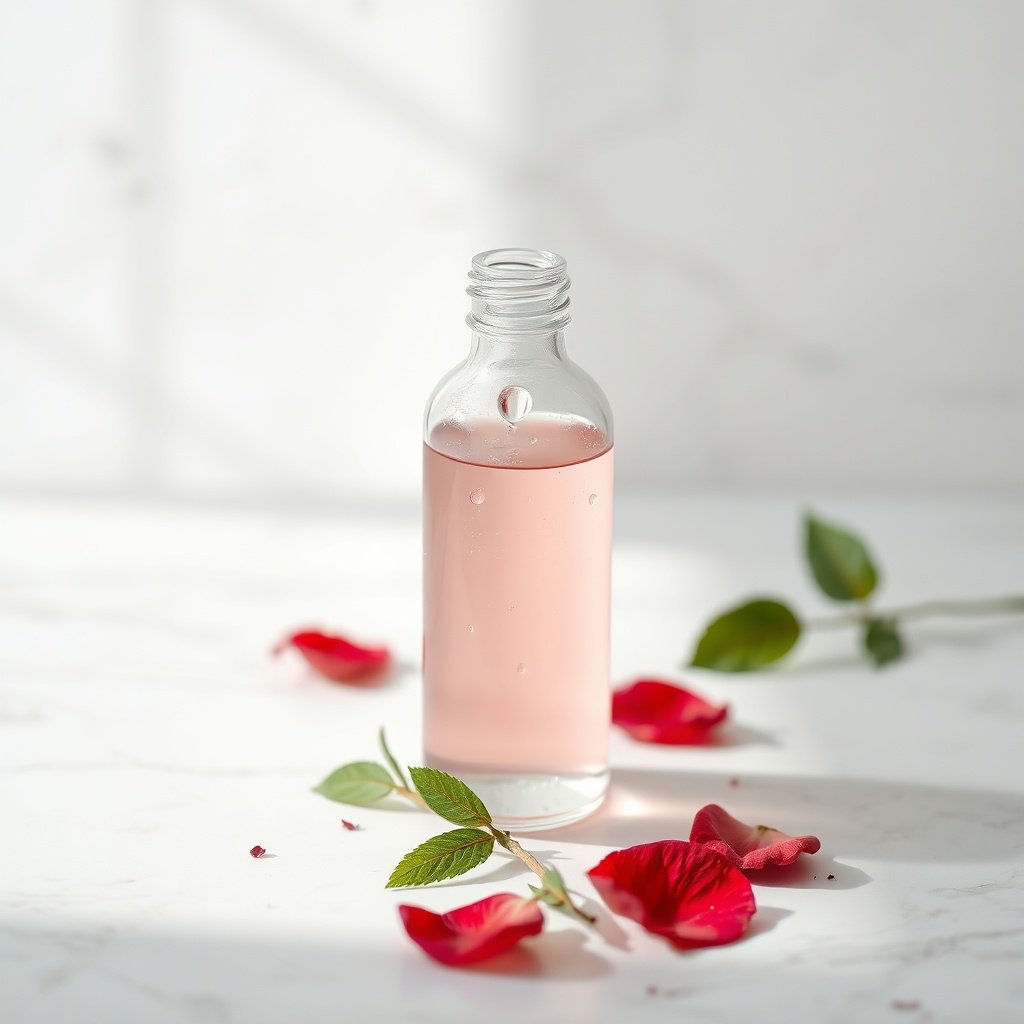
See how authentic rose water delivers mild soothing and hydration when used realistically as a daily toner step.
The Science Behind Rose Water’s Skin Benefits
Rose water, also known as rose hydrosol, is a byproduct of distilling rose petals in water. The process captures water-soluble compounds from the petals, including antioxidants and anti-inflammatory substances. This is what gives rose water its characteristic floral scent and its skin-soothing properties.
Definition: A hydrosol is the aromatic water produced during steam distillation of plant materials. Rose hydrosol contains trace amounts of the plant’s water-soluble compounds.
The key benefits of rose water come from three main properties:
- Hydration: Rose water is primarily water, which provides immediate hydration to the skin’s surface.
- Soothing: The compounds in rose petals have mild anti-inflammatory properties, which can help calm redness and irritation.
- pH balancing: Rose water has a pH close to the skin’s natural pH, making it a gentle toner that doesn’t disrupt the skin barrier.
These properties make rose water a useful addition to a skincare routine, particularly for dry and sensitive skin types. However, it’s important to understand that these benefits are mild and supportive — not transformative.
Learn why straightforward, pure rose water outperforms heavily fragranced alternatives for consistent skin comfort.
What Rose Water Can’t Do (Debunking the Myths)
One of the biggest misconceptions about rose water is that it can treat acne. Rose water does not have antimicrobial properties that specifically target acne-causing bacteria, nor does it regulate oil production. If you’re dealing with breakouts, you need ingredients like salicylic acid or benzoyl peroxide — not rose water. Similarly, rose water cannot fade hyperpigmentation or reduce wrinkles. It has no active exfoliating ingredients like alpha-hydroxy acids (AHAs) or brightening agents like vitamin C. These conditions require active ingredients that stimulate cell turnover and collagen production. The gap between marketing claims and cosmetic function is wide. Brands often market rose water as a multi-purpose “miracle” product, but its actual function is limited to hydration and soothing. That’s not to say rose water is useless — it’s just important to use it for what it’s actually good at.
Quick Answer: Rose water cannot treat acne, fade dark spots, or reduce wrinkles. It has no antimicrobial, exfoliating, or brightening properties. Its benefits are limited to hydration and soothing.
How to Choose Rose Water That Actually Works
Pure Rose Water vs. Fragranced “Rose” Products
The single most important factor in choosing a rose water product is knowing the difference between pure rose water and a fragranced impostor. Pure rose water is a hydrosol — a genuine distillation of rose petals and water. kenzadi.ma This distinction matters because synthetic fragrance is a common irritant, especially for sensitive skin. Many people who think they’re allergic to rose water are actually reacting to the added fragrance in a cheap formulation. | Feature | Pure Rose Water (Hydrosol) | Synthetic Rose-Fragranced Toner | |———|—————————|——————————-| | Ingredients | Distilled rose petals + water | Water + synthetic fragrance + preservatives | | Skin benefits | Hydration, soothing, gentle pH | Minimal to none beyond hydration | | Irritation risk | Low | High, especially for sensitive skin | | Best for | Dry, sensitive, redness-prone skin | Not recommended for sensitive skin |
Decoding Ingredient Labels
When shopping for rose water, the label is your best friend. recettesdumaroc.com Look for “Rosa damascena flower water” listed as a main ingredient — this indicates a genuine rose hydrosol. The ingredient should appear near the top of the list, not buried at the bottom. Avoid products that list alcohol, synthetic fragrance, added dyes, or unnecessary preservatives. A good rule of thumb is the “no added fragrance” rule: pure rose water has a naturally subtle, pleasant scent. If a product smells overwhelmingly like artificial roses, it likely contains synthetic fragrance.
Quick Answer: Look for “Rosa damascena flower water” as a main ingredient on the label. Avoid products with alcohol, synthetic fragrance, or added dyes. Pure rose water has a subtle natural scent, not an overpowering artificial one.
The Right Way to Use Rose Water (Step-by-Step Guide)
Step-by-Step: A Morning and Evening Rose Water Routine
Rose water works best as a hydration layer in your routine, applied after cleansing and before heavier products. Here’s how to incorporate it:
- Cleanse your face with a gentle cleanser suited to your skin type.
- Apply rose water while your skin is still slightly damp. You can use a cotton pad, a fine mist spray, or press it into your skin with your palms.
- Apply a serum containing your active ingredients, such as vitamin C in the morning or retinol at night.
- Apply a moisturizer to lock in hydration and support your skin barrier.
- Finish with sunscreen in the morning, or a night cream in the evening.
The best time to use rose water is immediately after cleansing, before any other products. This allows it to hydrate the skin and prepare it to absorb your serums and moisturizers more effectively.
Common Application Mistakes
One of the most common mistakes is using rose water as a makeup remover. beniouaraincarpets.com It’s not formulated to break down waterproof makeup — you need a dedicated cleanser or makeup remover for that. Another mistake is overusing rose water on oily skin. While it adds hydration, it doesn’t control oil production. If you have oily skin, you’re better off with a toner that contains oil-regulating ingredients like witch hazel or niacinamide. Finally, avoid applying rose water to broken or irritated skin without first checking the ingredient list. Even pure rose water can cause a reaction if you have a sensitivity to rose or floral compounds. Always patch-test a new product on your inner arm before using it on your face.
Rose Water vs. Other Skin Toners: An Honest Comparison
Comparison Table: Rose Water vs. Witch Hazel vs. Glycolic Acid Toner
Rose water is just one option among many toners. Here’s how it compares to two of the most popular alternatives: | Feature | Rose Water | Witch Hazel | Glycolic Acid Toner | |———|———–|————-|———————| | Primary function | Hydration, soothing | Astringent, oil control | Exfoliation, brightening | | Skin type suitability | Dry, sensitive, normal | Oily, acne-prone | Dull, aging, oily | | Active ingredients | Rose hydrosol compounds | Tannins, natural astringents | Glycolic acid (AHA) | | Potential irritation | Low | Moderate — can be drying | High — can cause peeling | | Best use case | Daily gentle toner | Oily skin, breakouts | Weekly exfoliation |
When Rose Water Is the Better Choice
Rose water is the better choice when your skin barrier is compromised or you’re experiencing redness. Its gentle, soothing properties make it a safe daily toner for sensitive skin. It’s also a good option when you’re layering with strong actives like retinol or acids. Using a soothing toner like rose water before your actives can help buffer the skin and reduce irritation. If you prefer a natural, low-irritant option for daily use, rose water is an excellent choice. Just remember that it’s a supportive ingredient — not a replacement for your active treatments.
Who Should Use Rose Water (and Who Should Skip It)
Skin Types That Benefit Most
Rose water is most beneficial for dry and sensitive skin. Its hydrating and soothing properties help calm irritation and provide a gentle moisture boost. If you have normal skin, it’s also a nice daily toner that adds a layer of hydration. People with rosacea or redness-prone skin may find rose water helpful as a soothing agent. Its mild anti-inflammatory properties can help calm the skin, though individual results vary and it’s always best to patch-test first.
When to Avoid Rose Water
If you have an allergy or sensitivity to rose or floral fragrance, you should avoid rose water entirely. Even pure rose water contains rose-derived compounds that can trigger a reaction in sensitive individuals. If your skin is extremely oily and prone to breakouts, rose water won’t help with oil control. It’s not an astringent and won’t reduce shine or prevent acne. Also, be cautious with any rose water product that contains added fragrance or alcohol — that’s the real irritant. A product labeled “rose water” that has synthetic fragrance is not the same as pure rose hydrosol. Before starting any new rose water product, patch-test it on your inner arm for 24 hours to check for sensitivity.
FAQ
Is rose water actually good for your skin?
Yes, rose water is good for your skin — but it’s a gentle hydrating toner, not a miracle treatment. It provides hydration, soothing benefits, and helps balance the skin’s pH. It’s best for dry, sensitive, and normal skin types.
Can rose water replace a moisturizer?
No. Rose water provides hydration (water content) but not the occlusive barrier that a moisturizer provides. A moisturizer contains oils, ceramides, and other ingredients that prevent water loss. Rose water should be used as a complement to your moisturizer, not a replacement.
Does rose water help with acne?
No. Rose water has no antimicrobial or oil-regulating properties that target acne. For acne, you need ingredients like salicylic acid, benzoyl peroxide, or niacinamide. Rose water can be used alongside these treatments as a soothing layer, but it won’t treat acne on its own.
Can I make rose water at home?
Yes, you can make a basic rose water at home by simmering rose petals in distilled water and straining the mixture. However, homemade rose water has a short shelf life and can harbor bacteria if not stored properly. Store-bought rose water is more consistent and safer for regular use.
How often should I use rose water on my face?
Once or twice daily is typically sufficient. Use it in the morning and evening after cleansing, before applying your serums and moisturizers. If your skin feels dry or tight, you can also use it as a refreshing mist throughout the day.
Conclusion
The truth about rose water for skin is simple: it’s a gentle, hydrating, and soothing toner — not a miracle treatment. Its real benefits come from its water content, mild anti-inflammatory properties, and pH-balancing nature. It won’t cure acne, fade dark spots, or erase wrinkles, and it won’t replace your moisturizer or active ingredients. The key to success is choosing a pure product and using it in the right step of your routine. Look for “Rosa damascena flower water” on the label, avoid synthetic fragrance and alcohol, and apply it after cleansing before your serums and moisturizers. Treat rose water as a supportive skincare ingredient, not a replacement for actives or sunscreen. If you’re looking for a simple way to add hydration and soothing benefits to your routine, try a pure rose water — it’s an affordable, gentle option that works well alongside your other skincare products.