Argan Oil and Black Soap: The Ultimate Duo for Healthy Skin and Hair
The global natural beauty market has surged past $36 billion in 2024, and consumers are no longer satisfied with single-ingredient solutions. They want combinations that deliver visible results without synthetic additives. Among the most searched natural skincare duos, the pairing of Moroccan argan oil and West African black soap consistently tops the charts — and for good reason. These two ingredients carry centuries of traditional use behind them, and modern research is finally catching up to what Berber and West African communities have known for generations. Argan oil, pressed from the kernels of Morocco’s argan trees, delivers a concentrated dose of lipids and antioxidants that most synthetic moisturizers cannot replicate. Black soap, crafted from plantain skins, cocoa pods, and shea butter through a slow roasting and curing process, offers a deep cleanse that strips away impurities without destroying the skin’s protective barrier. Together, they create a Moroccan-meets-West African beauty ritual that addresses the two most fundamental needs of healthy skin and hair: purification and nourishment. This guide walks you through the science behind their synergy, step-by-step routines for face and body, hair repair protocols, and exactly how to choose products that actually work.
Historically, Berber women of southern Morocco have hand-pressed argan oil since at least the 13th century, using it for cooking, skincare, and hair conditioning. African black soap, known locally as ose dudu in Ghana and Nigeria, traces its origins to the Yoruba people of West Africa, where it has been produced for hundreds of years using recipes passed down through generations.
What Makes Argan Oil and Black Soap a Perfect Pair? (The Science of Synergy)
Understanding why these two ingredients work so well together requires a closer look at what each one brings to the table — chemically, functionally, and cosmetically.
The Nutrient Profile of Argan Oil
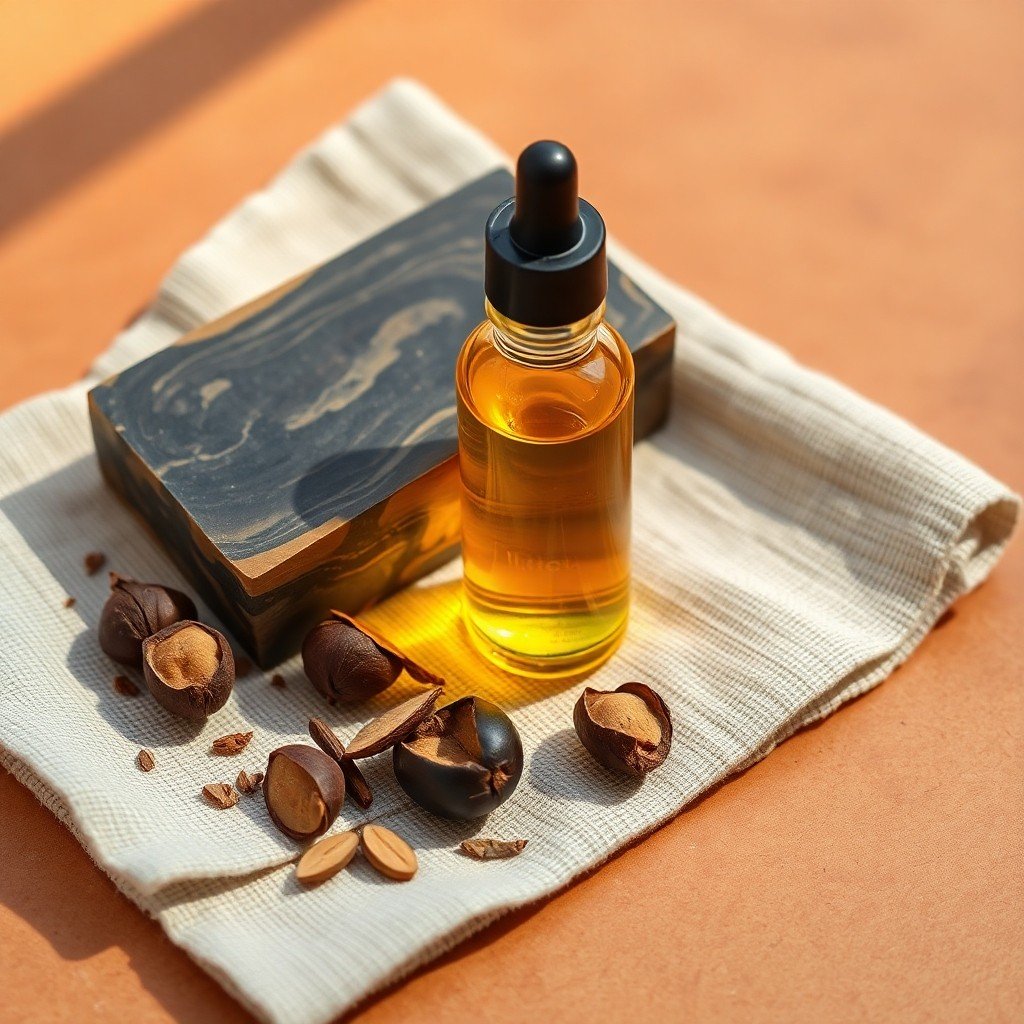
*A professional flat-lay photograph showcasing argan oil and African black soap as the featured skincare duo, surrounded by their natural raw ingredients on a warm, textured surface.*
Argan oil contains approximately 80% unsaturated fatty acids, with oleic acid (omega-9) and linoleic acid (omega-6) making up the bulk of its lipid composition. It also delivers one of the highest natural concentrations of vitamin E (tocopherols) among carrier oils — roughly 620 mg per liter, compared to around 400 mg in sweet almond oil and 340 mg in avocado oil. Ferulic acid, a potent antioxidant found in argan oil, amplifies the oil’s ability to neutralize free radicals from UV exposure and pollution. Vitamin E and ferulic acid work synergistically to reduce oxidative stress in skin cells, which directly translates to less visible fine lines, improved elasticity, and faster healing of minor blemishes. The fatty acid profile closely mimics the skin’s own sebum, which is why argan oil absorbs quickly without leaving a greasy residue — a rare quality among deeply moisturizing oils. Its anti-inflammatory properties come from sterols like schottenol and spinasterol, compounds that calm redness and reduce swelling at the cellular level.
The Cleansing Power of African Black Soap
Authentic African black soap is made by first burning plantain skins, cocoa pods, and palm tree leaves into ash. This ash is mixed with water and filtered to create a potassium-rich lye, which is then combined with shea butter, coconut oil, or palm kernel oil and cooked over an open flame for 24 hours or more. The result is a bar with a naturally high pH (between 9 and 10) that effectively dissolves sebum, dead skin cells, and environmental pollutants. The ash content provides gentle physical exfoliation, while the oils in the formula prevent the soap from being overly stripping. A 2017 study published in the *Journal of Clinical and Aesthetic Dermatology* found that African black soap demonstrated significant antimicrobial activity against *Staphylococcus aureus* and *Propionibacterium acnes*, the bacteria most commonly associated with acne breakouts. Its pH-balancing effect — despite the initially high alkalinity — helps the skin return to its optimal slightly acidic state within minutes of rinsing, particularly when followed by a lipid-rich product.
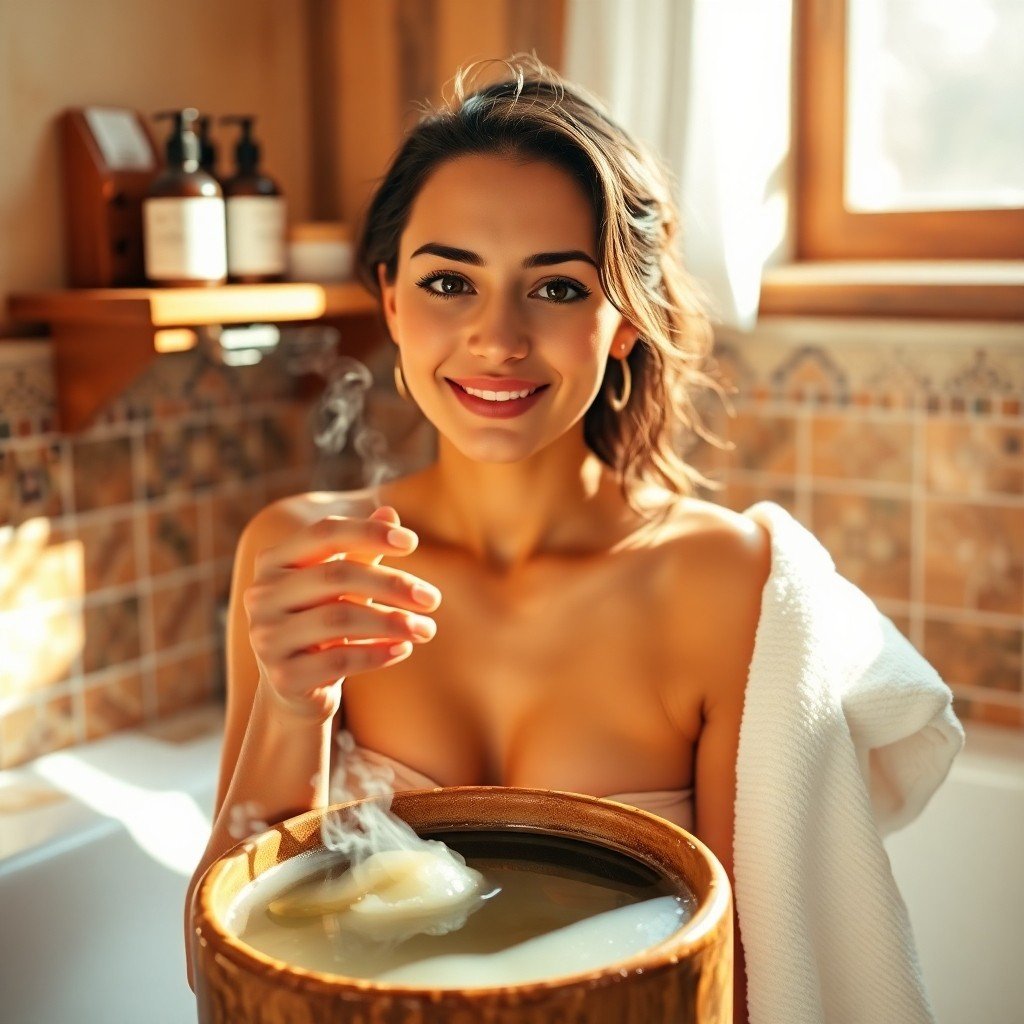
*An editorial lifestyle image of a woman performing a skincare ritual using argan oil and black soap, set in an elegant Moroccan-inspired bathroom with warm natural light.*
Why They Complement Each Other
The logic is straightforward: black soap removes what doesn’t belong on your skin or scalp — excess oil, dead cells, product residue, and bacteria — while argan oil immediately replaces what your skin needs to function properly: moisture, antioxidants, and structural lipids. This one-two approach mirrors the philosophy behind many professional salon treatments, where a deep-cleaning step is always followed by an intensive conditioning step. Dermatologist Dr. Susan Taylor, a specialist in skin of color, has noted that pairing a potent natural cleanser with a restorative oil addresses both the immediate need for cleanliness and the long-term need for barrier repair — a combination that single products rarely achieve. Without the oil, black soap can leave skin feeling tight and over-cleansed. Without the soap, argan oil sits on top of impurities and cannot penetrate effectively. Together, they create a complete cycle of cleanse and restore.
How to Use Argan Oil and Black Soap Together for Skin
The following routines are designed to maximize the benefits of both ingredients while minimizing the risk of irritation. Adjustments for specific skin types are noted throughout.
Step-by-Step Daily Facial Routine
Begin with a dime-sized piece of authentic black soap. Rub it between your palms with about a tablespoon of warm water until you create a thin lather — the consistency should be light, not thick and foamy. Gently massage the lather over your damp face using circular motions, focusing on the T-zone and any areas prone to congestion. Avoid the immediate eye area. Rinse thoroughly with lukewarm water and pat your skin dry with a clean towel, leaving it slightly damp. Wait approximately 60 to 90 seconds before applying argan oil — this brief window allows your skin’s surface to remain receptive without being waterlogged. Place 2 to 3 drops of pure, cold-pressed argan oil into your palm, rub your hands together to warm it, and press (do not rub) the oil into your face, neck, and décolletage. The pressing motion drives the oil into the skin without dragging or stretching delicate facial tissue. This entire routine takes under three minutes and can be performed morning and evening.
Weekly Deep-Cleansing Treatment
Once a week, replace your quick black soap wash with a longer facial treatment. Mix approximately one teaspoon of shaved black soap with two teaspoons of warm water to create a thin paste. Apply the paste evenly over your face, avoiding the eye area, and leave it on for 5 minutes. The extended contact time allows the plantain ash to draw out impurities from deeper within the pores. After 5 minutes, apply a warm, damp washcloth to your face for 30 seconds to soften the paste, then gently wipe it away. Follow immediately with a more generous application of argan oil — 4 to 5 drops pressed into the entire face. This weekly treatment is particularly effective for congested or dull skin.
Targeted Solutions for Common Skin Concerns
For acne-prone skin, the combination is especially valuable. Black soap’s antibacterial action targets the microorganisms that trigger breakouts, while argan oil’s non-comedogenic rating of zero (on the standard 0–5 scale) means it hydrates without clogging pores. Use the daily routine twice a day, and add the weekly mask treatment. For hyperpigmentation and uneven skin tone, the exfoliating action of black soap gradually removes dead, discolored surface cells while argan oil’s vitamin E content supports cell turnover and melanin regulation. A consistent routine applied 5 to 7 days per week typically produces visible improvement within 3 to 4 weeks. User surveys from natural beauty communities consistently report significant improvements in skin clarity and texture after four to six weeks of daily use. If you’re specifically dealing with breakouts, our guide on Argan Oil for Acne: Myth or Miracle? goes deeper into how this oil interacts with blemish-prone skin at the cellular level.
Argan Oil and Black Soap for Hair and Scalp Health
The same cleanse-and-restore logic applies to hair and scalp care, where product buildup and dryness are two of the most common complaints.
Scalp Reset: Black Soap Clarifying Treatment
Over time, silicones, heavy butters, and styling products accumulate on the scalp, clogging follicles and creating an environment where yeast and bacteria thrive. Black soap’s deep-cleansing action removes this buildup more effectively than most commercial clarifying shampoos. To use it on your scalp, dilute a small piece of black soap with warm water at a ratio of approximately 1:3 (soap to water). Section your damp hair into four parts. Apply the diluted solution directly to your scalp using your fingertips — not your nails — and massage in small circles for 2 to 3 minutes. Use lukewarm water, never hot, as high temperatures can strip the scalp’s natural oils excessively. Rinse thoroughly, ensuring no soap residue remains along the hairline or behind the ears. This clarifying treatment removes what shampoo alone often cannot, leaving the scalp feeling genuinely clean without the tight, squeaky sensation that signals over-stripping.
Argan Oil as a Scalp and Hair Moisturizer
After clarifying, the scalp is primed to absorb moisture. Apply 3 to 5 drops of argan oil directly to the scalp and massage for 1 to 2 minutes. Argan oil’s anti-inflammatory compounds — particularly its sterol content — soothe dryness, flaking, and irritation that often accompany conditions like seborrheic dermatitis or simple seasonal dryness. Research published in the *International Journal of Molecular Sciences* demonstrated that argan oil application significantly improved scalp hydration and reduced transepidermal water loss within two weeks of consistent use. For the hair shaft itself, argan oil’s linoleic acid fills gaps in the cuticle layer, smoothing frizz and adding visible shine without weighing hair down.
Combined Hair Repair Protocol
For a complete weekly hair treatment, follow this sequence: clarify the scalp with diluted black soap, rinse thoroughly, then apply argan oil to damp hair from mid-lengths to ends. Work the oil through with a wide-tooth comb and leave it in as a leave-in treatment, or wrap your hair in a warm towel for 15 minutes for deeper penetration. An alternative approach is the overnight pre-wash method: apply argan oil generously to dry hair and scalp before bed, cover with a silk cap, and wash with diluted black soap in the morning. This pre-treatment protects the hair from the soap’s cleansing action while still allowing deep purification of the scalp. For curly and coily hair types, perform this protocol once per week. Fine or straight hair benefits from a bi-weekly schedule. Color-treated hair should limit black soap to every 10 to 14 days to preserve dye longevity, while still using argan oil daily as a leave-in conditioner. If you’re exploring other natural oils for textured hair, our article on the Best Natural Hair Oils for Curly Hair Types compares argan oil with jojoba, baobab, and marula options.
Who Should (and Shouldn’t) Use This Duo — Skin Type Guide
Not every combination works for every person. Here is a practical breakdown of who benefits most and who should proceed with caution.
Best Skin and Hair Types for This Combination
Oily and acne-prone skin types see the most dramatic results. Black soap’s deep pore-cleansing action addresses the root cause of excess sebum and bacterial buildup, while argan oil provides the lightweight hydration that prevents the skin from overproducing oil in compensation. Dry and mature skin types benefit from argan oil’s intense lipid replenishment, which counterbalances the mild astringent effect of black soap. The key for dry skin is to reduce black soap frequency to 2 to 3 times per week and increase argan oil application to 4 to 5 drops per use. Curly and coily hair types find this duo particularly effective because black soap removes the heavy buildup that weighs down curls, and argan oil restores the moisture that curl patterns desperately need to maintain definition and reduce breakage.
Cautions and Contraindications
Individuals with very sensitive skin, rosacea, or a compromised moisture barrier should approach black soap carefully. Its natural alkalinity can cause stinging, redness, or tightness on already irritated skin. If you have known allergies to shea butter, palm oil, coconut oil, or cocoa — common ingredients in black soap — read labels meticulously or consult an allergist before use. Before your first full application, perform a patch test: apply a small amount of diluted black soap to the inside of your wrist, rinse after 30 seconds, and wait 24 hours. If no redness, itching, or burning occurs, apply a single drop of argan oil to the same area and wait another 24 hours. Only proceed with facial or full-body use if both tests produce no reaction.
Adjusting the Routine by Season
In winter, cold air and indoor heating strip moisture aggressively. Reduce black soap use to 2 to 3 times per week for the face and once weekly for the body. Increase argan oil to 4 to 5 drops per application and consider applying it to completely dry skin as an occlusive seal over your regular moisturizer. In summer, humidity and increased sebum production may warrant daily black soap use for oily skin types, while argan oil can be reduced to 1 to 2 drops or applied only at night. A simple seasonal chart helps: winter — black soap 2x/week, argan oil 4–5 drops daily; summer — black soap daily (oily) or 3x/week (dry), argan oil 1–2 drops nightly; spring and fall — black soap 3–4x/week, argan oil 2–3 drops daily.
Choosing High-Quality Products: What to Look For
The effectiveness of this duo depends entirely on product quality. The market is flooded with diluted, adulterated, and mislabeled versions of both ingredients.
How to Identify Authentic, Pure Argan Oil
Genuine cosmetic-grade argan oil should be cold-pressed and unrefined. Look for labels that specify “100% pure argan oil” (Argania spinosa kernel oil) with no additional ingredients. The oil should have a light golden color and a faintly nutty scent — if it smells strongly rancid or has no smell at all, it has likely been deodorized through chemical processing, which strips beneficial compounds. Absorption is another telltale sign: pure argan oil sinks into the skin within 1 to 2 minutes. Oils that sit on the surface for longer are likely cut with mineral oil or silicones. Quality certifications to look for include USDA Organic, ECOCERT, and Fair Trade labels, which verify both purity and ethical sourcing. Reputable brands will also list the harvest date or batch number, as argan oil has a shelf life of approximately 18 to 24 months. Discover Arganit natural Moroccan skincare for a trusted source of premium argan oil and complementary products.
How to Spot Real African Black Soap
Authentic African black soap has a rough, uneven texture and ranges in color from dark brown to charcoal black. It should feel slightly crumbly, not smooth and uniform like a commercial bar. The scent is earthy and smoky — not floral, fruity, or perfumed. If the soap is jet black, perfectly smooth, and smells like vanilla or lavender, it has been commercially manufactured with artificial dyes and fragrances. The ingredient list should be short: plantain skin ash, cocoa pod ash, shea butter, coconut oil or palm kernel oil, and water. Avoid products listing sodium hydroxide as a primary ingredient (indicating synthetic soap base), artificial colorants, or synthetic preservatives. For a comprehensive breakdown of what to look for and what to avoid, our African Black Soap: The Complete Beginner’s Guide covers sourcing, regional variations, and brand recommendations. If you’re looking for a ready-to-use option, organic verbena-infused Moroccan black soap offers a traditional beldi experience with a refreshing botanical twist, while exfoliating eucalyptus black soap provides an invigorating alternative for those who prefer a cooling, clarifying cleanse.
Recommended Product Formats and Pairing Tips
You can buy argan oil and black soap separately or as a pre-formulated duo product. Buying separately gives you full control over dilution and application, which is ideal for beginners who want to adjust ratios based on their skin’s response. Pre-mixed products — such as black soap cleansers with argan oil already incorporated — offer convenience but may contain lower concentrations of both active ingredients. If you choose a combined product, check that argan oil appears in the top half of the ingredient list, indicating a meaningful concentration. For pure argan oil, expect to pay between $12 and $25 for a 4 oz bottle of certified organic, cold-pressed oil. Authentic African black soap typically costs between $5 and $12 per 5 oz bar. Prices significantly below these ranges almost certainly indicate adulteration or synthetic substitution. To complete your hammam ritual, pair your soap with Moroccan Kessa exfoliating mitts for deep, professional-grade dead skin removal, or explore artisan Moroccan black soap for a pure, 100% natural beldi soap experience.
Conclusion
Argan oil and black soap represent one of the most effective natural pairings available for skin and hair care. Black soap purifies — removing buildup, bacteria, and dead cells that dull your complexion and weigh down your hair. Argan oil restores — delivering essential fatty acids, vitamin E, and antioxidants that rebuild your moisture barrier and protect against environmental damage. Neither ingredient achieves its full potential in isolation. Together, they create a balanced, complete beauty ritual rooted in centuries of traditional use and supported by modern dermatological research. Start with a patch test, begin with conservative frequency, and adjust based on how your skin and hair respond. The transformation is gradual but unmistakable — softer skin, clearer pores, stronger hair, and a glow that no synthetic product can replicate. Have you tried this combination? Share your experience or ask questions in the comments below.
Frequently Asked Questions (FAQ)### Can I use argan oil and black soap every day?
You can use argan oil daily — morning and evening — without issue. Black soap is more variable. Oily skin types can typically tolerate daily facial use with proper dilution. Dry or combination skin should limit black soap to 3 to 4 times per week. For hair, use black soap as a clarifying treatment once weekly or bi-weekly. Signs of over-cleansing include persistent tightness, increased oil production (a rebound effect), flaking, or a stinging sensation when applying other products. If any of these occur, reduce black soap frequency immediately and increase argan oil application.
Does African black soap lighten skin?
No. African black soap does not contain bleaching agents and does not lighten skin. What it does is remove dead surface cells and excess oil through gentle exfoliation, which can make skin appear brighter and more even-toned. This improvement in clarity is sometimes mistaken for lightening, but the soap does not affect melanin production or distribution. Dermatologists consistently clarify that any perceived brightening is the result of exfoliation and improved skin health, not depigmentation.
Can I use argan oil and black soap on my face?
Yes, both ingredients are suitable for facial use when applied correctly. Dilute black soap with warm water at a 1:2 ratio (soap to water) before applying to the face. Never apply the dry bar directly to facial skin. Rinse thoroughly and follow with 2 to 3 drops of argan oil pressed into damp skin. If you have sensitive skin, rosacea, or active eczema, consult a dermatologist before incorporating black soap into your facial routine.
Is this combination safe during pregnancy?
Both argan oil and authentic African black soap are generally considered safe during pregnancy. Argan oil is a topical plant oil with no known systemic effects. Black soap made from traditional ingredients (plantain ash, shea butter, coconut oil) poses no risk. However, check product labels for added essential oils, fragrances, or botanical extracts that may not be pregnancy-safe. Some women experience heightened skin sensitivity during pregnancy, so performing a patch test is especially important. As always, consult your OB-GYN or midwife if you have specific concerns about topical products during pregnancy.
How long does it take to see results?
Most people notice immediate improvements in skin softness and hair manageability after the first use. Visible changes in skin clarity, reduced breakouts, and improved hair texture typically appear within 2 to 4 weeks of consistent use. More significant concerns like hyperpigmentation or chronic dryness may require 6 to 8 weeks of regular application before substantial improvement is visible. Clinical observations and user surveys consistently show that the majority of users report satisfaction with their skin and hair condition within the first month of a consistent routine.
**Meta Description:** Discover how argan oil and black soap work together for glowing skin and healthy hair. Science-backed routines, product guides, and expert tips inside.