Moroccan Interior Design: How to Incorporate Poufs and Other Traditional Elements
Introduction: The Timeless Allure of Moroccan Interior Design
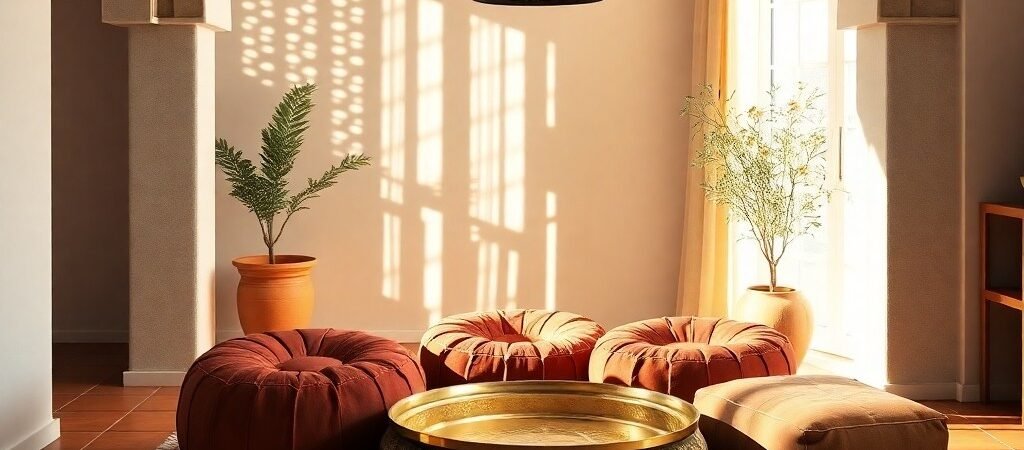
Step through the arched doorway of a Marrakech riad and you’re immediately enveloped by a world that engages every sense at once. Hand-carved plaster walls catch the afternoon light filtering through a pierced-metal lantern, casting intricate geometric shadows across a floor layered with vintage kilim rugs in burnt sienna and indigo. The air carries a faint trace of cedarwood and orange blossom. A cluster of leather poufs surrounds a low brass tray table, their surfaces softened by years of use. This is the power of authentic Moroccan home décor — it doesn’t just fill a room, it transforms how a space feels.
The Moroccan aesthetic has surged in global popularity over the past decade, with Pinterest reporting a 240% increase in searches for “Moroccan decor” between 2020 and 2023. Designers from London to Los Angeles are weaving North African textures and patterns into contemporary interiors, drawn to the style’s warmth, craftsmanship, and ability to make even sterile modern spaces feel lived-in and soulful. Unlike trends that fade after a single season, Moroccan design has endured for centuries because it’s rooted in genuine artisan traditions rather than passing fads. For those seeking to complement their interiors with natural beauty products, premium argan oil products offer a perfect pairing with the Moroccan lifestyle aesthetic.
This guide breaks down how to authentically incorporate poufs and other traditional Moroccan elements into your home — whether you’re working with a studio apartment or a sprawling suburban house. You’ll learn the cultural foundations behind the style, how to choose and style poufs for every room, which essential accessories complete the look, and where to source authentic pieces without falling into common design traps. By the end, you’ll have a clear, actionable roadmap for bringing the richness of Moroccan interior design into your own space.
Section 1: Understanding the Foundations of Moroccan Design Philosophy
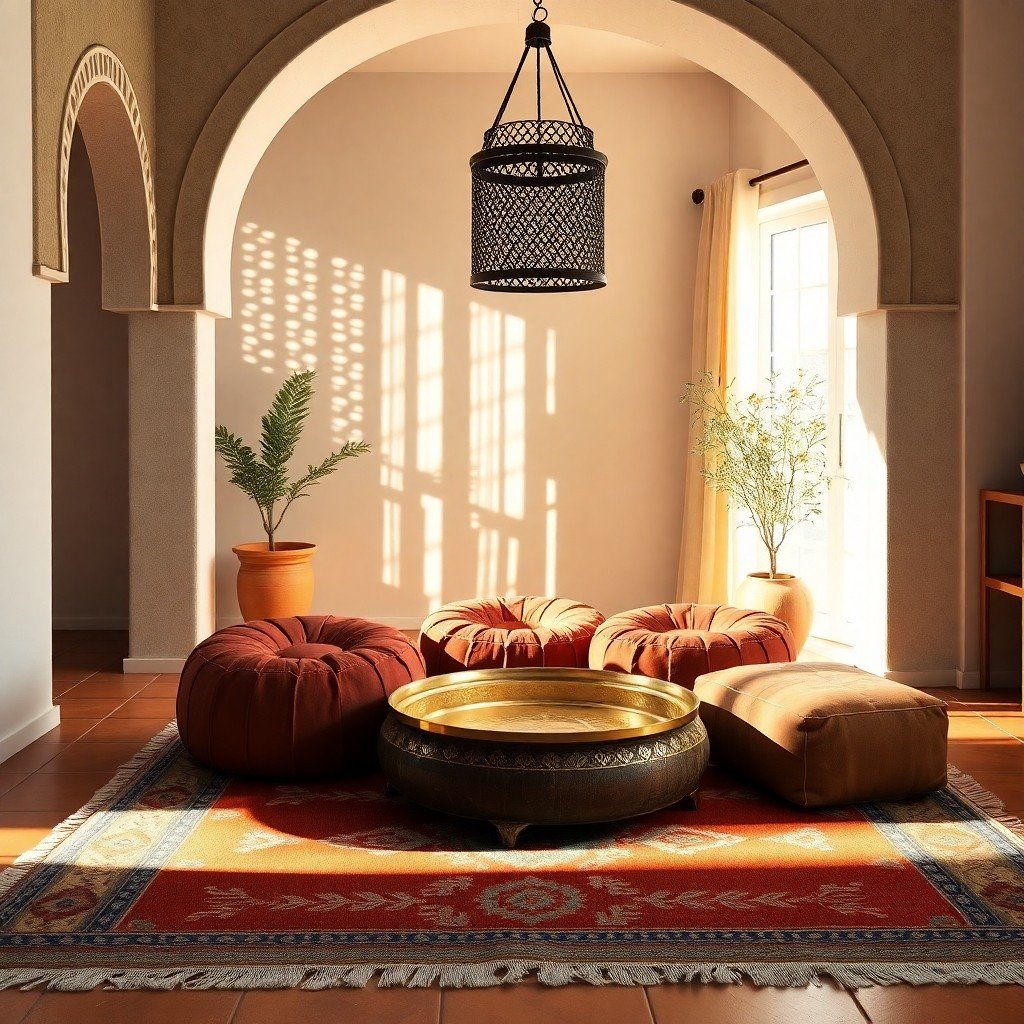
*A photorealistic editorial photograph showcasing a fully styled Moroccan-inspired living room featuring leather poufs, a hammered brass tray table, vintage kilim rug, and a pierced-metal lantern casting intricate geometric shadows across hand-carved plaster walls.*
1.1 The Cultural Roots: Berber, Arab, and Andalusian Influences
Moroccan design didn’t emerge from a single tradition — it’s the product of centuries of cultural convergence. The indigenous Berber people contributed bold geometric motifs and handwoven textiles, drawing from their deep connection to the Atlas Mountains and Sahara Desert. Arab influences brought intricate arabesque patterns, calligraphy, and the mathematical precision of Islamic geometric design. When Andalusian Muslims and Jews were expelled from Spain in the 15th century, they carried with them the refined architectural traditions of Moorish Spain — horseshoe arches, ornate tilework, and courtyard-centered home layouts.
These three streams merged over hundreds of years into something entirely distinct. The Berber love of raw, tactile materials met Arab sophistication in pattern and proportion, while Andalusian elegance introduced a sense of architectural drama. Understanding this layered heritage matters because it explains why Moroccan design feels simultaneously rustic and refined, bold and balanced. When you bring a piece into your home, you’re not just adding decoration — you’re participating in a living tradition that stretches back to the medieval period.
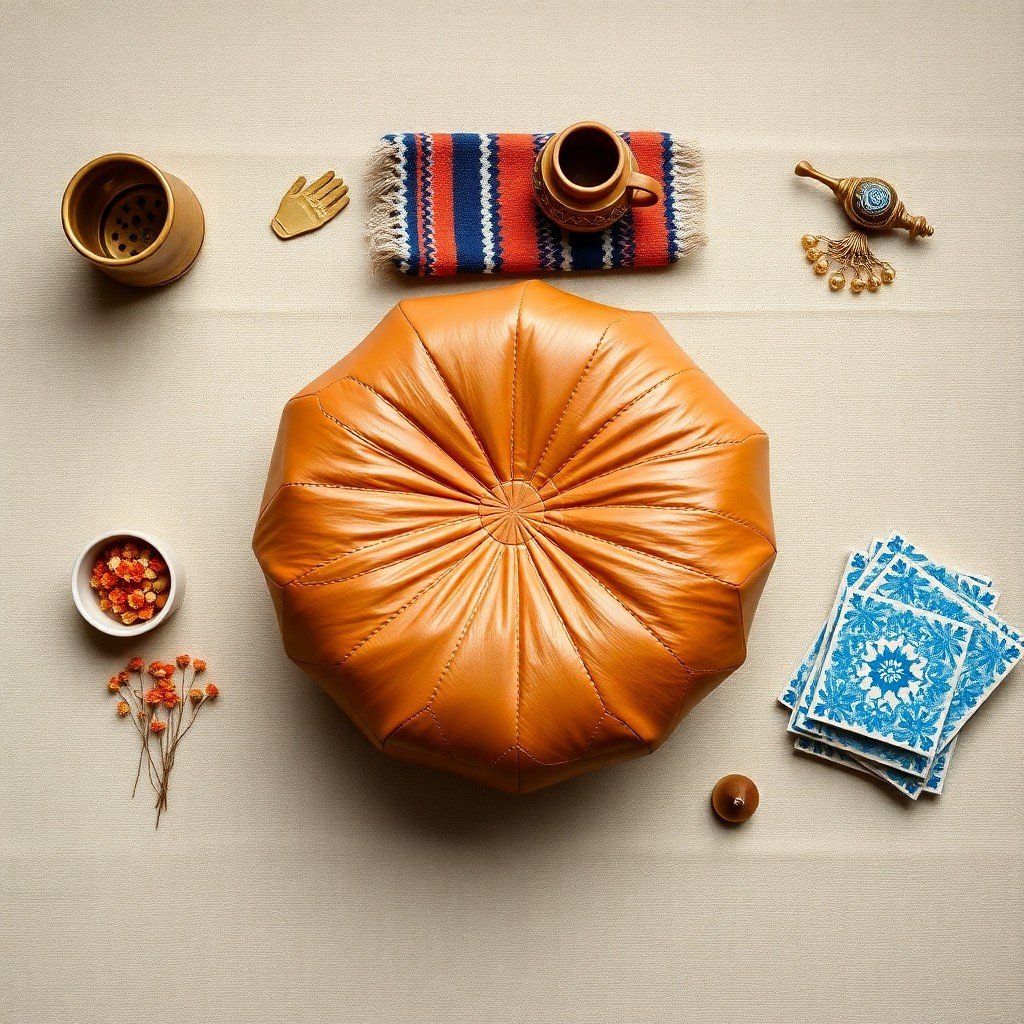
*A photorealistic flat-lay product photograph of curated Moroccan interior design accessories including a leather pouf, brass tea glass holder, ceramic tagine, vintage kilim textile, hand-of-Fatima knocker, dried orange blossoms, and zellige tile samples arranged on natural linen.*
1.2 Core Design Principles: Geometry, Warmth, and Layering
Three principles anchor every authentic Moroccan interior. First, geometry. Islamic art traditionally avoids figurative representation, so artisans channeled their creativity into complex geometric patterns — stars, interlocking polygons, and tessellated designs that symbolize the infinite nature of creation. You’ll find these patterns carved into plaster, inlaid in tilework, and woven into textiles. They create visual rhythm without relying on representational imagery.
Second, warmth. Moroccan design prioritizes sensory comfort — plush textiles underfoot, soft ambient lighting, and rich earth tones that make rooms feel like sanctuaries. Even in the scorching heat of Marrakech, a well-designed riad interior feels cool and inviting because of thick earthen walls, shaded courtyards, and strategic airflow.
Third, layering. Where a minimalist room might feature a single rug and bare walls, a Moroccan-styled space stacks textures deliberately: a kilim over a flat-weave base rug, embroidered cushions on a leather pouf, a handira throw draped over a linen sofa. Each layer adds depth without chaos because the color palette stays cohesive. The result is a room that feels abundant but never cluttered — a distinction that separates thoughtful Moroccan styling from overdone theme decorating.
Section 2: Poufs — The Ultimate Moroccan Statement Piece### 2.1 Types of Moroccan Poufs: Leather, Embroidered, and Handwoven
The Moroccan pouf is arguably the most versatile piece in the entire design tradition, and choosing the right type depends on your space and style goals. The classic Moroccan leather pouf is hand-stitched from goat or camel leather, often in natural tan, cognac, or deep brown. These handcrafted leather poufs develop a beautiful patina over time and typically cost between $40 and $150 depending on size and craftsmanship. Kilim poufs are made from vintage or new flat-woven rugs, stuffed with recycled cotton or polyester filling. They introduce bold geometric patterns and work brilliantly as accent pieces, usually ranging from $30 to $120. Embroidered poufs feature hand-stitched threadwork on canvas or linen bases, often in vibrant colors like fuchsia, turquoise, or gold. These tend to be the most decorative option and run $50 to $200.
When sourcing, look for visible hand-stitching rather than machine-sewn seams. Authentic poufs will have slight irregularities — uneven thread tension, natural leather markings, or asymmetrical embroidery — that signal genuine handcraft. Mass-produced versions from big-box retailers often use synthetic leather and printed patterns that lack the depth of the real thing.
2.2 How to Style a Pouf in Every Room
In the living room, a pair of leather poufs flanking a low sofa creates an inviting conversation cluster. Use them as footrests during movie night, pull them up as extra seating when guests arrive, or top them with a round wooden tray to create an instant side table for drinks and books. For a bedroom, a single embroidered pouf at the foot of the bed adds a pop of color and serves as a practical spot to sit while putting on shoes. In a home office, a compact pouf offers flexible seating for reading or brainstorming sessions without the bulk of a full chair.
The key is treating the pouf as a functional object, not just decoration. Moroccan design is inherently practical — every beautiful thing has a purpose. When you use your pouf daily, it develops character and integrates naturally into your routine.
2.3 Choosing the Right Pouf for Your Color Palette
If your room leans neutral — whites, grays, warm beiges — a cognac leather pouf adds warmth without disrupting the calm. For spaces already rich in color, a natural tan or ivory pouf provides grounding contrast. Bold rooms with jewel-toned walls or patterned wallpaper benefit from a kilim pouf that picks up one or two existing colors, creating cohesion rather than competition. Earthy palettes with terracotta, olive, and sand tones pair beautifully with deep brown leather or indigo-dyed embroidered poufs. The rule of thumb: let the pouf either harmonize with your dominant color or serve as a deliberate accent that draws the eye.
Section 3: Beyond Poufs — Essential Traditional Moroccan Elements### 3.1 Zellige Tile and Tadelakt: Bringing Moroccan Craftsmanship to Walls and Surfaces
Zellige is the hand-chipped mosaic tilework that defines Moroccan architecture. Each small piece is cut by hand from a larger glazed tile, resulting in a surface that shimmers with subtle color variation and slight imperfections. A zellige backsplash in a kitchen — even just a 4-foot section behind the stove — instantly elevates the entire room. Expect to pay $15 to $30 per square foot for authentic zellige, though high-quality reproductions from companies like Clé Tile offer a more accessible entry point at $8 to $15 per square foot.
Tadelakt is a waterproof lime plaster traditionally used in Moroccan hammams. It creates a smooth, stone-like finish with a soft sheen that works beautifully in bathrooms, around bathtubs, or on accent walls. Unlike conventional tile, tadelakt has no grout lines, giving surfaces a seamless, organic quality. A professional tadelakt application for a standard bathroom runs $2,000 to $5,000, but DIY lime plaster kits from Lime.org make small accent projects achievable for under $200.
3.2 Moroccan Lanterns and Metalwork: Lighting as Art
Pierced-metal lanterns are the signature lighting element of Moroccan interiors. Crafted from brass, copper, or iron, these lanterns feature intricate cutout patterns that project star-like light patterns across walls and ceilings. A single large lantern hung over a dining table creates a dramatic focal point, while a cluster of smaller lanterns on a patio or balcony casts a warm, dappled glow perfect for evening entertaining.
For indoor use, look for lanterns fitted with LED candle bulbs — they provide the same warm flicker without fire risk. Place a lantern in an entryway to set the Moroccan tone the moment someone walks through the door, or hang one in a reading nook to create an intimate atmosphere. Outdoor-rated lanterns in powder-coated metal withstand weather and can transform a basic patio into a candlelit retreat.
3.3 Textiles That Transform a Space: Kilim Rugs, Handira Throws, and Cushion Covers
Moroccan textiles are where the style truly comes alive. Kilim rugs — flat-woven rather than piled — feature bold geometric patterns in natural dyes and work in virtually any room. Layer a smaller kilim over a larger jute or sisal rug for instant depth. Among the most coveted flat-weave options are Beni Ouarain wool rugs, prized for their plush texture and iconic geometric designs. Handira throws, woven by Berber women for wedding dowries, feature sequin-like metallic discs embedded in hand-spun wool. Drape one over a sofa arm or the foot of a bed for texture and subtle sparkle.
When layering textiles, follow the 60-30-10 rule: 60% dominant texture (your main rug), 30% secondary pattern (cushion covers or a smaller rug), and 10% accent (a handira throw or embroidered pillow). This prevents the room from feeling chaotic. For authentic sourcing, Novica connects buyers directly with Moroccan artisans, while vintage kilims can be found on Etsy and at estate sales. Machine-made imitations lack the irregular weave and natural dye variation that give genuine pieces their character.
Section 4: Room-by-Room Guide to Incorporating Moroccan Elements### 4.1 Living Room: Creating a Moroccan-Inspired Gathering Space
The Moroccan living room centers on communal seating. Replace or supplement a standard sofa with a low-profile sectional or a pair of daybed-style benches along the walls. Place two to four poufs around a central low table — a carved wooden Moroccan tea table or even a large brass tray on a wooden base works perfectly. Layer a kilim rug over your existing floor, add four to six cushions in mixed patterns (stripes, geometrics, solids), and hang a pierced-metal lantern from the ceiling. A complete Moroccan living room transformation can be achieved for $500 to $1,500 by focusing on textiles and accessories rather than replacing furniture entirely.
4.2 Bedroom: Building a Serene, Riad-Style Retreat
Start with the bed. A simple canopy draped from the ceiling with lightweight linen or muslin fabric instantly evokes a riad bedroom. Choose fabric in ivory, soft blush, or pale gold for a romantic feel. Swap your standard bedside lamps for small Moroccan lanterns with warm LED bulbs. Add a kilim rug on one or both sides of the bed, place a pouf or low bench at the foot, and layer two or three textured cushions in complementary tones against your headboard. For a weekend makeover, focus on these four elements — canopy, lantern, rug, pouf — and you’ll have a completely transformed space in two days for under $400.
4.3 Outdoor Spaces: Extending the Moroccan Vibe to Patios and Gardens
Outdoor Moroccan styling thrives on terracotta, mosaic, and weather-resistant textiles. A mosaic-topped side table (available from $50 to $300 depending on size) anchors a seating area. Use outdoor-rated poufs in synthetic leather or treated canvas — they withstand rain and sun while maintaining the aesthetic. Terracotta planters in varying heights grouped together create a lush, courtyard-like feel. String Moroccan-style lanterns along a pergola or fence for evening ambiance. In humid climates, opt for powder-coated metal and synthetic textiles; in dry climates, natural leather and cotton hold up well with basic care.
Section 5: Sourcing Authentic Pieces and Avoiding Common Mistakes### 5.1 Where to Buy: Artisan Markets, Online Retailers, and What to Look For
The gold standard for authentic Moroccan decor is buying directly from artisans at Moroccan souks — the markets in Marrakech, Fes, and Essaouira. If traveling isn’t an option, several online retailers specialize in handcrafted imports. Beyond the Map curates pieces directly from Moroccan cooperatives. Joss & Main and World Market offer more accessible price points with decent quality. When evaluating any piece, check for hand-finishing marks: slight asymmetry in tile edges, visible hand-stitching on leather goods, and natural dye variation in textiles. Perfect uniformity almost always indicates machine production. For those interested in completing the Moroccan tea experience, handmade Moroccan teapots from Fes are a beautiful and functional addition.
5.2 The Top 5 Mistakes People Make with Moroccan Design
**Over-cluttering.** Moroccan design is layered, not chaotic. Limit yourself to three to five statement pieces per room and let each one breathe.
**Mismatched patterns.** Stick to a unified color palette when mixing patterns. A kilim rug in rust and navy should be paired with cushions that share at least one of those colors, not introduce entirely new hues.
**Ignoring scale.** A tiny lantern on a large dining table looks lost. Match the size of your Moroccan pieces to the proportions of your furniture and room.
**Poor lighting choices.** Harsh overhead lighting kills the Moroccan atmosphere. Use multiple low-wattage light sources — lanterns, candles, wall sconces — to create pools of warm light.
**Cultural appropriation concerns.** Appreciate the craftsmanship and learn the stories behind the pieces you buy. Support artisan communities through fair-trade retailers rather than buying mass-produced knockoffs that exploit traditional designs without benefiting the makers.
5.3 Blending Moroccan Elements with Modern and Minimalist Styles
You don’t need to commit to a full Moroccan theme. A single leather pouf beside a sleek mid-century sofa creates a striking contrast that feels intentional and curated. In a Scandinavian-style white room, a kilim rug and one brass lantern add warmth without disrupting the clean lines. Industrial spaces with exposed brick and concrete floors pair beautifully with the organic textures of Moroccan textiles — the raw materials speak to each other. The trick is using Moroccan pieces as punctuation marks in an otherwise modern sentence, not rewriting the entire paragraph.
Conclusion: Making Moroccan Design Your Own
Moroccan interior design offers something rare in the world of home decor: a style that’s simultaneously ancient and fresh, bold and calming, decorative and deeply functional. The key takeaways are straightforward. Start with the cultural foundations — understanding the Berber, Arab, and Andalusian roots gives you the confidence to make thoughtful choices rather than random purchases. Invest in a quality pouf as your first piece, since it’s the most versatile element and works in virtually every room. Layer textiles deliberately using the 60-30-10 rule. Use lighting — especially pierced-metal lanterns — to create the warm, ambient glow that defines Moroccan spaces. And always prioritize authentic, handcrafted pieces that support the artisan communities keeping these traditions alive.
You don’t need to overhaul your entire home overnight. Start with one pouf in your living room. Add a lantern in your entryway next month. Layer a kilim rug under your dining table when the budget allows. Each piece you add builds on the last, and within a year you’ll have a home that feels rich, personal, and unmistakably inspired by one of the world’s most beautiful design traditions.
We’d love to see how you’re incorporating Moroccan elements into your space. Share your photos and styling questions in the comments below, and don’t forget to download our free Home Depot Moroccan styling checklist to keep track of your design journey.
Frequently Asked Questions (FAQ)### Q1: What is a Moroccan pouf made of?
Moroccan poufs are typically made from hand-stitched goat or camel leather, flat-woven kilim fabric, or embroidered canvas. The leather versions are stuffed with cotton, sawdust, or recycled fabric filling. Authentic poufs are entirely handcrafted, which means you’ll notice slight variations in stitching and material texture — these imperfections are signs of genuine artisan work, not defects.
Q2: Can Moroccan design work in a small apartment?
Absolutely. Moroccan design adapts beautifully to small spaces. Focus on wall-mounted lanterns to save floor space, choose one statement pouf instead of a pair, and use a mirror with a carved Moroccan frame to create the illusion of depth. A single kilim rug can anchor a studio apartment’s main living area without overwhelming it. The layering principle actually works in your favor in small rooms because it adds visual interest without requiring additional square footage.
Q3: How do I clean and maintain a leather Moroccan pouf?
Wipe your leather pouf monthly with a slightly damp cloth to remove dust. Every three to six months, apply a leather conditioner — Lexol or Chamberlain’s Leather Milk are excellent options — to keep the hide supple and prevent cracking. For spot stains, blot immediately with a clean cloth and mild soap solution. Keep the pouf out of direct sunlight, which can fade and dry the leather over time. With proper care, a quality leather pouf lasts ten to fifteen years or more.
Q4: Is Moroccan interior design expensive?
It can be, but it doesn’t have to be. Budget-friendly accents like kilim cushion covers ($15–$30), small brass lanterns ($20–$50), and synthetic leather poufs ($30–$60) let you experiment without major investment. Mid-range authentic pieces — a hand-stitched leather pouf ($80–$150), a vintage kilim rug ($200–$600) — offer better quality and longevity. High-end artisan pieces like custom zellige tilework or hand-carved cedar furniture run $1,000 to $5,000+. Most people build their Moroccan-inspired space gradually, mixing affordable finds with a few investment pieces.
Q5: What colors are most associated with Moroccan interior design?
The signature Moroccan palette draws from the North African landscape. Terracotta and clay tones reflect the earthen architecture of Marrakech. Saffron and gold echo the spice markets and desert sunsets. Deep blue — often called “Majorelle blue” after the famous Marrakech garden — represents the Mediterranean and Atlantic coastlines. Emerald green symbolizes Islam and the lush oasis gardens. Ivory and cream provide neutral balance, appearing in plaster walls, linen textiles, and tadelakt surfaces. Together, these colors create a palette that feels both vibrant and grounded.
**Meta Description:** Discover how to bring Moroccan interior design into your home with poufs, lanterns, zellige tile, and textiles. A complete guide to authentic styling.