##How to Incorporate Moroccan Furniture into Your Home
Walk into a room anchored by a hand-carved cedar headboard or a brass tray table glowing under warm light, and you immediately understand why Moroccan home decor style has captivated designers from Paris to Los Angeles. There is something about the interplay of shadow and geometry, the weight of centuries-old craftsmanship, and the warmth of natural materials that makes a space feel both grounded and transportive. Modern Moroccan interior design has moved far beyond the tourist-trap clichés of the 1990s. Today’s approach is refined, intentional, and surprisingly adaptable — whether you live in a Brooklyn loft, a suburban ranch house, or a Mediterranean villa. This guide walks you through exactly how to bring Moroccan furniture into your home room by room, without turning your living space into a themed restaurant.
Understanding the Core Elements of Moroccan Furniture Design
Before you buy a single piece, it helps to understand what you are actually looking at. Moroccan furniture is not a single monolithic style — it is a layered tradition shaped by centuries of cultural exchange, religious artistry, and practical adaptation to climate and communal life.
Key Design Motifs and Materials
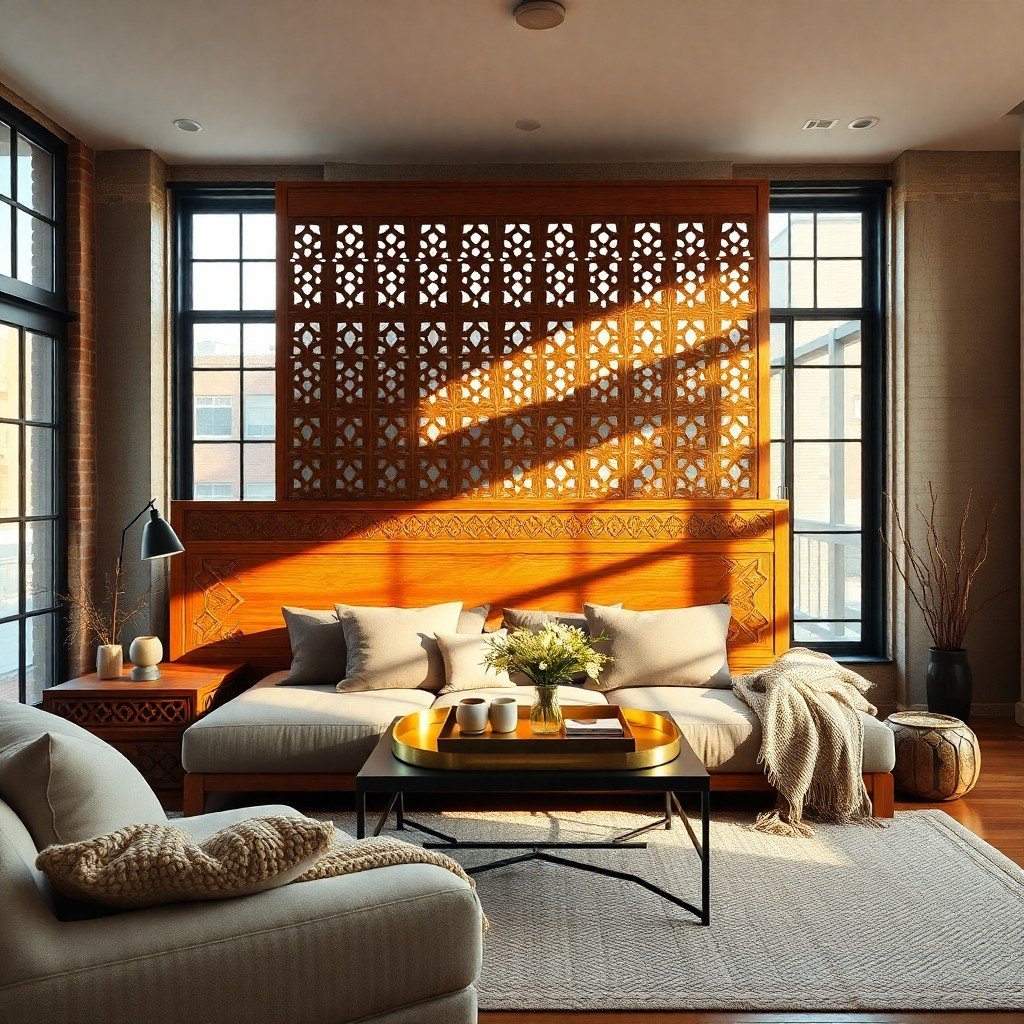
*A contemporary loft space showcasing how Moroccan furniture pieces blend with modern interior design*
The visual language of Moroccan furniture rests on a few unmistakable pillars. Geometric patterns dominate — not as surface decoration alone, but as structural elements. Zellige-inspired inlay work appears on table tops, cabinet doors, and mirror frames, using small hand-cut tiles or wood pieces arranged in complex tessellations. Carved wooden screens, known as mashrabiyas, filter light through repeating octagonal and star-based patterns. The Moorish arch — that distinctive horseshoe or pointed-arch silhouette — shows up in headboard shapes, mirror frames, and open shelving units. The eight-pointed star, or khatam, is perhaps the most recognizable motif, appearing in everything from mother-of-pearl inlay to wrought iron balcony railings.
Materials matter enormously. Cedar wood from the Atlas Mountains is the gold standard for carved furniture — it resists insects, ages beautifully, and carries a faint aromatic scent for years. Wrought iron appears in table bases, lantern frames, and decorative grilles. Brass and hammered metal surfaces catch and scatter light in ways that flat finishes simply cannot. Leather from the ancient tanneries of Fez — still using vegetable-based methods unchanged since the medieval period — brings a supple, lived-in quality to poufs, ottomans, and cushion covers.
The Cultural Roots Behind the Aesthetic
Moroccan furniture design draws from three major cultural streams. Berber (Amazigh) traditions contribute bold geometric abstraction and functional simplicity — low seating, woven textiles, and pieces designed for nomadic or semi-nomadic life. Arab influences bring the mathematical precision of Islamic geometric art, the pointed arch, and a preference for intricate surface decoration over figurative imagery. Andalusian heritage — from the Moorish period in Spain — adds a layer of courtly refinement, seen in elaborate wood carving, inlaid bone and mother-of-pearl, and the concept of the interior courtyard as the heart of the home.
The riad — a traditional Moroccan house built around a central courtyard — fundamentally shaped how furniture was used and arranged. Rooms opened onto the courtyard rather than facing outward, so interiors were designed for privacy, shade, and communal gathering. Low seating encouraged relaxed, egalitarian conversation. Multi-functional pieces — storage chests that doubled as seating, tables that folded or nested — reflected the practical demands of compact urban living. Moroccan woodcarving traditions date back at least to the 12th century, with the Marinid dynasty establishing Fez as a center of artisanal excellence that persists to this day.
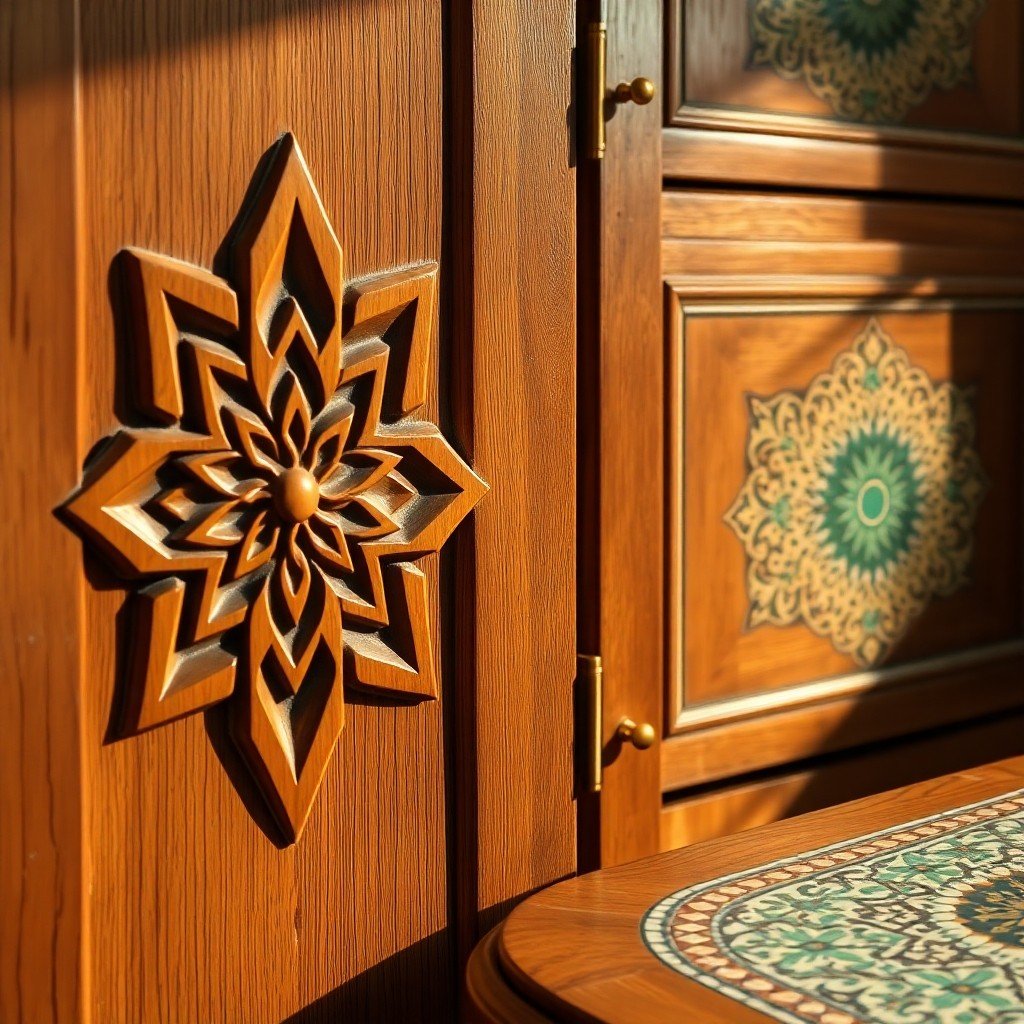
*Detailed view of traditional Moroccan wood carving, zellige inlay work, and brass hardware showing artisanal quality*
Choosing Anchor Pieces for Living Spaces
The living room is where most people start, and for good reason — it is the space where Moroccan furniture makes its strongest visual impact with the least structural commitment.
Statement Sofas and Low Seating
Moroccan living room furniture centers on a fundamentally different seating philosophy than the standard Western sofa-and-armchair arrangement. Low-profile sofas with deep seats and plush cushions invite you to sink in. Floor cushions, known as poufs, serve as flexible extra seating that can be rearranged for gatherings. Banquettes — built-in or freestanding upholstered benches along walls — maximize seating in smaller spaces while maintaining an open floor plan.
When selecting a color palette, you have two strong directions. Earth tones — terracotta, sand, warm ochre, and deep brown — create a grounded, desert-inspired atmosphere that pairs well with natural materials. Jewel tones — sapphire blue, emerald green, amethyst purple, and ruby red — reference the saturated hues found in Moroccan tilework and textiles, creating a more dramatic, opulent feel. A tufted leather pouf in cognac or oxblood is one of the most versatile entry points — it works as a footrest, extra seating, or a small side table with a tray on top.
Coffee Tables and Accent Pieces
The coffee table is where Moroccan design truly shines in a living room context. Mother-of-pearl inlaid tables — often hexagonal or octagonal — serve as instant focal points. Hammered brass tray tables, originally designed for serving tea, function beautifully as coffee tables when mounted on wooden or iron stands. The key proportion rule: your coffee table should be approximately two-thirds the length of your sofa and roughly the same height as the sofa seat cushions, or up to two inches lower.
If you already own a modern sectional and are not ready to replace it, here is a practical approach. Start by swapping your existing coffee table for a Moroccan inlaid or brass tray table. Add two leather poufs opposite the sectional for flexible seating. Layer a kilim or Beni Ourain rug underneath to anchor the arrangement. The contrast between clean-lined contemporary seating and ornate Moroccan accent pieces creates visual tension that feels curated rather than chaotic.
Transforming Bedrooms with Moroccan-Inspired Furnishings
The bedroom is the second most impactful room for Moroccan furniture, and it is arguably the easiest space to transform because the bed itself becomes the natural focal point.
Bed Frames and Headboards
A carved wooden headboard instantly shifts the entire mood of a bedroom. Look for pieces featuring arched silhouettes, geometric perforations, or floral arabesques carved from solid cedar or walnut. Canopy frames — either four-poster or wall-mounted half-canopies — add architectural drama even in rooms with standard ceiling heights. For a lighter touch, a simple arched headboard with minimal carving provides Moroccan flavor without overwhelming a smaller space.
Sourcing decisions depend on your budget and timeline. Authentic artisan-made headboards shipped from Morocco typically range from $1,500 to $5,000 depending on size, wood type, and carving complexity. Mass-produced reproductions from home furnishings retailers run $300 to $900 and can look convincing from a distance, though the wood quality and carving depth are noticeably different up close. If you travel to Morocco, expect to pay 30–50% less at the source, but factor in shipping costs and the logistics of international freight.
Textiles as Furniture Complement
Textiles do heavy lifting in Moroccan bedroom decor, and they are the most budget-friendly way to achieve the look. A Moroccan wedding blanket — handwoven by Berber women with intricate sequin and thread detailing — draped across the foot of a simple platform bed transforms the entire room. Layer a kilim rug on either side of the bed for warmth and pattern. Add two or three embroidered cushions in contrasting geometric designs.
Here is a four-step layering approach for a cohesive Moroccan bedroom look. First, establish your base with neutral bedding — white or cream linen works best. Second, add a textured throw or wedding blanket at the foot of the bed. Third, layer two to three cushions with Moroccan embroidery or kilim fabric on top of your standard pillows. Fourth, hang a lightweight canopy or draped fabric above the bed to soften the headboard and add vertical interest.
Dining and Outdoor Spaces — Extending the Moroccan Vibe
Moroccan design does not stop at the back door. Dining rooms and outdoor spaces offer some of the most natural opportunities for Moroccan furniture integration.
Moroccan Dining Tables and Chairs
The Moroccan dining table is a showpiece. Round tables with mosaic inlay tops — featuring zellige-style geometric patterns in hand-set tile — encourage the communal dining style central to Moroccan culture. Rectangular carved wood tables with turned or carved legs offer a more formal option suited to longer rooms. A zellige-topped round table paired with modern Eames-style molded chairs creates a striking juxtaposition — the ornate table becomes the star while the chairs keep the overall look from feeling period-specific.
The mix-and-match philosophy works particularly well for dining chairs. Pairing four carved Moroccan chairs with two modern upholstered host chairs at the ends of the table gives you the best of both worlds. Alternatively, use all-Moroccan chairs for a fully immersive look, or all-modern chairs with a Moroccan table for a more restrained approach.
Bringing Moroccan Style Outdoors
Outdoor Moroccan furniture needs to withstand the elements while maintaining its visual character. Powder-coated wrought iron stands up to rain and humidity far better than untreated metal. Teak and treated cedar resist rot and insect damage. Outdoor poufs made from solution-dyed acrylic or treated canvas provide the same flexible seating function as their indoor counterparts.
To create a riad-style patio, start with low seating — a built-in banquette with weather-resistant cushions along one wall, paired with a hammered metal coffee table. Add outdoor lanterns with pierced metalwork to cast patterned shadows as the sun sets. A few potted citrus trees or palms reinforce the courtyard atmosphere. Essential outdoor staples include a wrought iron bistro set ($200–$600), a set of two outdoor poufs ($80–$250), a large weather-resistant floor cushion ($60–$150), a pierced metal lantern ($40–$120), and a kilim-style outdoor rug ($100–$400).
Blending Moroccan Furniture with Existing Décor Styles
One of the most common concerns is whether Moroccan furniture will clash with what you already own. The answer depends on how you approach the pairing.
Moroccan + Minimalist: The Unexpected Pairing
A single Moroccan piece in a minimalist room does not disrupt the aesthetic — it elevates it. The “one statement rule” works perfectly here: choose one Moroccan element and let it breathe against a clean backdrop. A carved wooden screen used as a room divider in a white-walled apartment adds texture and pattern without visual clutter. A mother-of-pearl inlaid side table next to a streamlined sofa creates a focal point that draws the eye without competing with other elements.
Consider a minimalist apartment with white walls, a low-profile gray sofa, and no decorative objects. Adding one arched Moroccan mirror above the sofa and a single brass tray table as a coffee table transforms the space from sterile to curated. The geometric detail of the mirror and the warm metal of the table provide exactly enough visual interest to make the room feel designed rather than unfinished.
Moroccan + Mid-Century Modern: A Curated Mix
Mid-century modern and Moroccan design share more common ground than you might expect. Both favor warm wood tones — walnut and teak in mid-century pieces, cedar and olive wood in Moroccan ones. Both embrace organic, flowing shapes over rigid symmetry. Both value craftsmanship and natural materials.
The key to making this pairing work is avoiding competing focal points. If you have a statement credenza — say, a walnut George Nelson platform bench — place a Moroccan brass tray on top as a decorative object rather than adding a competing Moroccan furniture piece nearby. Let each style have its own zone within the room. A Moroccan pouf next to a lounge chair works because the pouf reads as an accessory rather than a competing furniture statement.
Practical Buying Guide — Sourcing, Budgeting, and Authenticity
Knowing where to shop and what to expect price-wise saves you from overpaying for reproductions or underpaying for pieces that will not last.
Where to Shop: Online vs. In-Person vs. Travel
Several reputable online retailers specialize in authentic and reproduction Moroccan furniture. Nomad Trading Company sources directly from Moroccan artisans and offers a curated selection of hand-carved furniture and textiles. Moroccan Imports carries a wide range of price points from decorative accessories to full furniture sets. Etsi connects you with individual artisans and small workshops, though quality varies significantly — read reviews carefully and ask for detailed photos of joinery and finish. World Market offers affordable Moroccan-inspired reproductions suitable for entry-level decorating. For in-person shopping, cities with large Moroccan communities — Paris, Marseille, London, New York, and Los Angeles — often have specialty importers and showrooms.
If you buy in Morocco, inspect joints carefully — authentic hand-carved pieces use mortise-and-tenon joinery rather than nails or glue. Expect to negotiate; initial asking prices in medina shops are typically 30–50% above the seller’s minimum. Avoid pieces with visible machine-routing marks if you are paying artisan prices.
Budget Tiers and Investment Planning
Entry-level Moroccan-inspired furniture — reproduction pieces, smaller accessories, and textiles — runs $100 to $500. This tier is ideal for poufs, lanterns, trays, and small accent tables. Mid-range pieces — solid wood furniture with genuine hand carving, imported directly — typically fall between $500 and $2,000. This is where you find quality headboards, dining tables, and carved cabinets. Artisan and collectible pieces — museum-quality antiques, large commissioned works, or pieces from master craftsmen — start at $2,000 and can exceed $10,000.
Handcrafted Moroccan furniture prices have risen approximately 15–25% over the past five years due to increased global demand and rising material costs, making quality pieces a reasonable long-term investment. Spend your budget on items that showcase the craftsmanship — a carved headboard or an inlaid table — and save on accessories like poufs and cushions that are easier to replace.
Conclusion
Learning how to incorporate Moroccan furniture into your home is ultimately about intentionality. You do not need to fill every room with carved wood and hammered brass. The most successful Moroccan-inspired interiors use these pieces as deliberate accents — a headboard that anchors the bedroom, a tray table that transforms the living room, a single screen that adds architectural interest to an entryway. Start with one or two anchor pieces that genuinely speak to you, then build outward as you develop confidence in the style. The craftsmanship behind authentic Moroccan furniture represents centuries of accumulated skill, and bringing even a single piece into your home connects you to that tradition in a meaningful way. Share your Moroccan-inspired spaces in the comments or reach out with questions about specific pieces — the journey into this design tradition is one best traveled with a community of fellow enthusiasts.
Frequently Asked Questions (FAQ)
**What is Moroccan furniture style called?**
Moroccan furniture style is often referred to as Moorish design or Moroccan Boho. Its key identifiers include geometric patterns, arched silhouettes, rich wood carving, hammered metal accents, and layered textiles. The style blends Berber, Arab, and Andalusian influences into a cohesive aesthetic.
**Can Moroccan furniture work in a modern home?**
Absolutely. A single Moroccan brass tray table used as a coffee room anchor in a room with clean-lined modern seating creates a striking contrast. The key is restraint — let Moroccan pieces serve as focal points against a neutral, contemporary backdrop.
**Where can I buy authentic Moroccan furniture in the US/Europe?**
Reputable options include Nomad Trading Company, Moroccan Imports, select Etsi artisans, and World Market for budget-friendly reproductions. In-person showrooms in cities with Moroccan communities — Paris, London, New York, and Los Angeles — also carry authentic imported pieces.
**How do I care for hand-carved wooden Moroccan furniture?**
Apply a quality furniture oil or beeswax polish every three to four months to prevent drying and cracking. Keep pieces away from direct heating vents and maintain indoor humidity between 40% and 55%. Clean carved surfaces with a soft, dry brush to remove dust from crevices, and wipe flat surfaces with a slightly damp cloth followed by immediate drying.
**Is Moroccan furniture expensive?**
Prices range widely. Entry-level accessories and reproductions start around $100. Mid-range solid wood pieces with genuine hand carving typically cost $500 to $2,000. Artisan and collectible pieces begin at $2,000 and can go significantly higher. Budget-friendly alternatives include Moroccan-inspired reproductions and focusing your spending on one or two quality anchor pieces.
**Meta Description:** Discover how to incorporate Moroccan furniture into your home with this room-by-room guide covering living spaces, bedrooms, dining areas, and outdoor patios.