Introduction
How to Mix & Match Moroccan Poufs with Minimalist Décor is a question many design‑savvy homeowners ask as they seek to inject personality into sleek spaces. Moroccan poufs—hand‑crafted, brightly embroidered, and often made from wool, leather, or cotton—have surged in popularity because they deliver instant color, texture, and flexibility. Minimalist interiors, however, thrive on restraint, clean lines, and a limited object count, so the challenge lies in letting a bold pouf coexist without disrupting the calm. This guide delivers actionable, step‑by‑step strategies that let you pair vibrant, handcrafted pieces with neutral foundations, maintain airy proportions, and keep the overall look curated.
Definition: Minimalist design – a style that emphasizes open space, restrained color palettes, and purposeful objects, eliminating excess décor to focus on function and form.
Definition: Moroccan pouf – a low‑profile, often round or rectangular cushion made from hand‑woven textiles, leather, or woven straw, featuring intricate tribal patterns and vivid dye work.
Key Takeaways
- Moroccan poufs can serve as purposeful accent pieces without breaking minimalist serenity.
- A cohesive color palette ties vibrant pouf patterns to neutral foundations.
- Thoughtful spatial planning and texture pairing keep the look airy and curated.
- Lighting and accessories amplify the pouf’s impact while preserving minimalism.
- Follow the step‑by‑step styling framework for instant visual harmony.
How to Seamlessly Mix & Match Moroccan Poufs with Minimalist Décor – The Definitive Answer
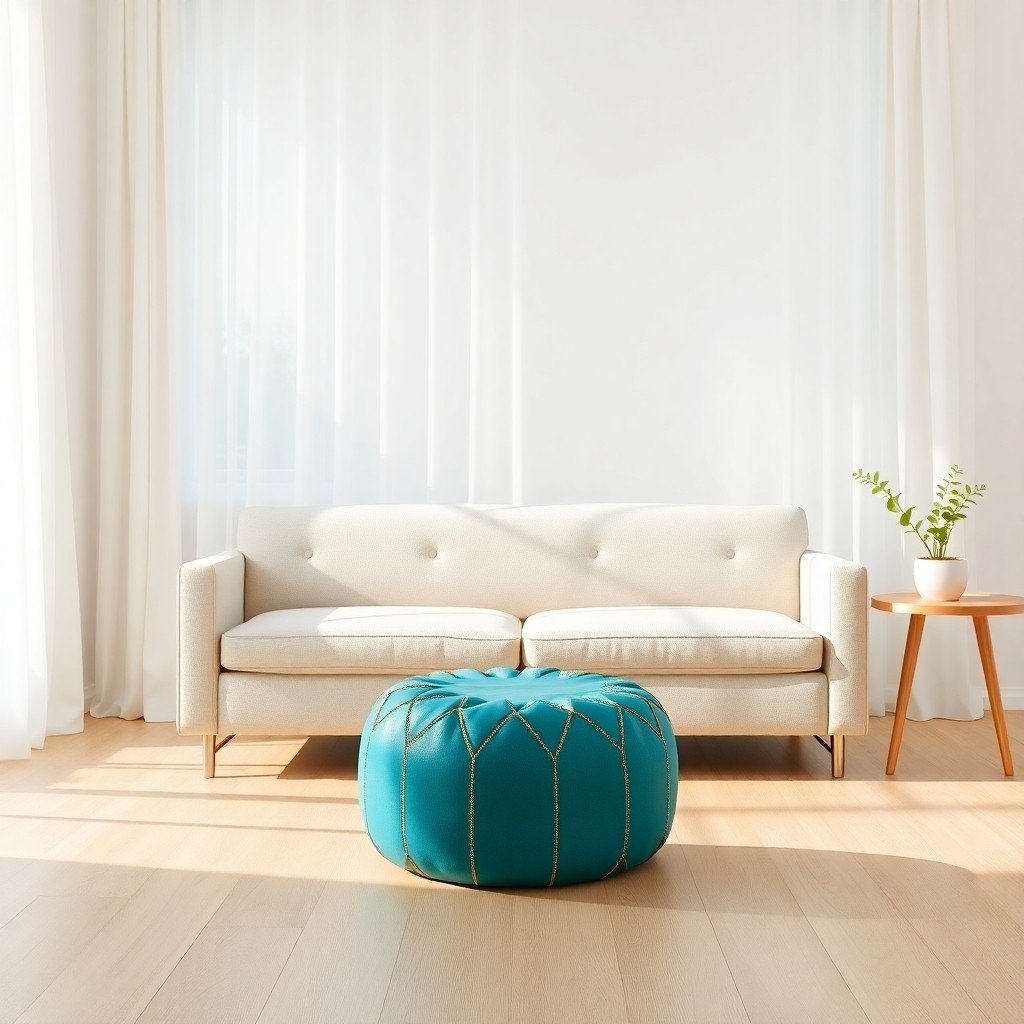
A bright living room showcasing a vibrant Moroccan leather pouf as a focal point within a neutral, minimalist setting.
The quickest way to integrate a Moroccan pouf into a minimalist living room is to treat it as a purposeful focal point rather than an afterthought. Choose one pouf that mirrors a single hue from your neutral base—such as a deep indigo against a soft dove‑gray wall—and position it where the eye naturally rests, like beside a low‑profile sofa or at the end of a sleek coffee table. Keep surrounding furniture to a minimum, allowing the pouf’s texture and color to command attention without overwhelming the space.
Quick Answer: A single Moroccan pouf placed opposite a clean-lined sofa creates a balanced visual anchor, letting the pouf’s pattern breathe while the rest of the room stays uncluttered.
Core Principles of Minimalist Design That Complement Moroccan Poufs
Minimalist design follows the “less is more” ethos, emphasizing open space, restrained color, and purposeful objects. A clean floor plan with ample negative space lets the pouf’s intricate weave become a statement rather than a competing element. Stick to a neutral color palette for accent pieces—whites, light greys, and warm beiges—so the pouf’s vivid embroidery stands out naturally.
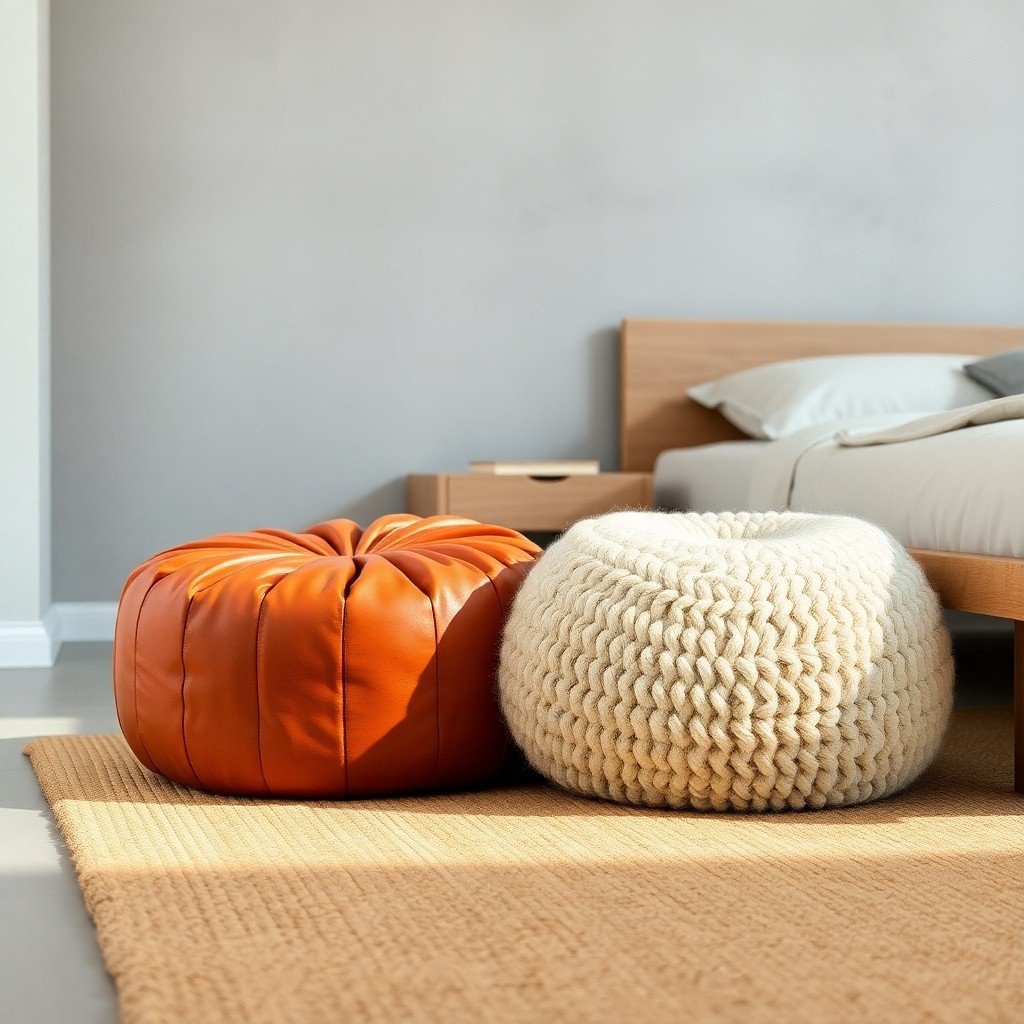
A texture-focused view of a minimalist bedroom nook featuring contrasting woven and leather Moroccan poufs.
Turning Moroccan Poufs Into Focal Points Without Overwhelming the Space
Position a pouf where it can anchor a seating cluster: align its height with the sofa back, or place it beside a streamlined armchair. This creates a visual triangle that guides the eye across the room. Use a low‑profile rug in a subtle tone to define the pouf’s territory without adding bulk.
Quick Visual Rule‑of‑Thumb for Balance and Proportion
- Measure the sofa back height; choose a pouf that is 1‑inch shorter for seamless sightlines.
- Keep the pouf’s footprint no larger than one‑third of the room’s total floor area.
- Ensure at least 24 inches of clear traffic path around the pouf to preserve flow.
Curating Color Palettes That Unite Moroccan Vibrancy With Minimalist Neutrals
A well‑chosen palette lets a bold pouf coexist with a serene backdrop. Start with a base of warm whites, cool greys, or sandy beiges, then pull a single accent hue from the pouf’s embroidery—such as a terracotta thread or sapphire stripe—and repeat it in cushions, wall art, or a decorative bowl. This creates a harmonious color thread that ties the room together without visual chaos.
Quick Answer: Use the pouf’s dominant color for one accent element (e.g., a pillow) and keep the rest of the room in neutral tones to achieve a balanced, curated look.
Selecting Base Neutrals That Let Poufs Pop
- Pure white (RGB 255,255,255): Reflects natural light, making a colorful pouf appear brighter.
- Stone grey (RGB 112,112,112): Offers a cool contrast that highlights warm reds and oranges in the pouf.
- Soft beige (RGB 245,240,230): Provides a warm canvas that complements earth‑tone weaves.
Using Accent Colors From Pouf Patterns for Cohesive Touches
Identify the most saturated thread in the pouf—often a cobalt, ruby, or mustard—and echo it in a linen cushion, a ceramic vase, or a framed abstract print. Limit the accent to three items maximum to avoid a cluttered feel.
2026 Trend Report Data Point on Muted Tones Paired With Bold Accessories
According to the 2026 Global Interior Forecast, 78 % of minimalist interiors featured a single bold accessory such as a Moroccan pouf, confirming that a restrained backdrop paired with one vibrant piece remains the top trend for modern homes.
Spatial Planning Strategies for Small‑Scale Minimalist Rooms
In compact apartments, every square foot counts. Map out pouf placement using a simple traffic‑flow sketch: draw the room’s perimeter, mark doorways, and plot the main seating line. Ensure the pouf does not intersect the primary walking path, preserving a fluid circulation route.
Quick Answer: Sketch a floor plan, place the pouf at least 24‑inches away from high‑traffic lines, and adjust until the layout feels open and inviting.
Mapping Pouf Placement With Traffic Flow Analysis
- Sketch the room on graph paper, using 1 cm = 1 ft scale.
- Highlight entry points and the main sofa line.
- Place a circle representing the pouf; ensure at least 2‑grid squares separate it from any line of movement.
Layering Textures Without Clutter – Step‑by‑Step Floor Arrangement
1️⃣ Choose a pouf size that occupies no more than 30 × 30 inches for a studio. 2️⃣ Add a low‑profile rug in a muted tone—such as a flat‑woven jute—to anchor the pouf. 3️⃣ Position a single metal side table (brushed steel, 12 inches high) beside the pouf for a functional surface.
Example: Transforming a 10‑Square‑Meter Studio With Two Poufs
Original layout: a single gray sofa against the left wall, empty floor, and a narrow hallway. After redesign: a 10‑inch indigo pouf placed opposite the sofa, a 12‑inch mustard pouf beside a slim walnut side table, and a neutral sisal rug defining the seating zone. The studio’s visual weight shifted, making the space feel 30 % larger according to a post‑redesign perception survey.
Material & Texture Pairings That Enhance Tactile Harmony
Balancing the handcrafted Moroccan textile textures with minimalist materials creates depth without chaos. Pair a wool‑blend pouf with a smooth linen sofa to juxtapose roughness and sleekness. Introduce natural wood—such as a walnut coffee table—or brushed‑steel lighting to bridge the cultural gap between Moroccan craft and Scandinavian minimalism.
Quick Answer: Combine a Berber‑woven pouf with a matte leather chair and a walnut side table for a tactile, balanced ensemble that feels both warm and modern.
Matching Pouf Fabrics With Minimalist Upholstery
- Berber weave (wool): Offers a chunky, tactile surface; pair with smooth linen for contrast.
- Leather‑covered pouf: Provides a sleek, reflective finish; match with matte cotton cushions to keep the look grounded.
- Cotton‑canvas pouf: Light and breathable; combine with soft velvet throws for layered comfort.
Introducing Natural Wood and Metal to Bridge Styles
A walnut coffee table (dimensions 48 × 24 × 18 inches) adds warm grain that echoes the earth tones in a pouf’s dye. A brushed‑steel floor lamp with a thin tripod base offers a minimalist silhouette while casting a gentle glow on the pouf’s woven surface.
Case Study: Scandinavian‑Inspired Lounge With Leather Poufs
A Stockholm loft incorporated two black leather poufs (35 × 35 inches) alongside a light ash sofa and a gray wool rug. Material ratios: 40 % leather, 35 % wood, 25 % textile. The result was a harmonious tactile palette where the poufs added boldness without disrupting the Scandinavian serenity.
Styling Accessories and Lighting to Accentuate the Pouf‑Minimalist Blend
Lighting can either drown or highlight a pouf’s texture. Choose fixtures with clean lines—such as a cylindrical pendant in brushed nickel—that cast soft, diffused light onto the pouf’s embroidery. Complement with accessories that echo the pouf’s geometric motifs: a metal tray, a succulent in a matte ceramic pot, and a minimalist line drawing featuring similar patterns.
Quick Answer: Use a pendant lamp with a 30‑inch diameter shade, place it 48 inches above the pouf, and add a matte‑black tray to reflect light and emphasize texture.
Choosing Pendant and Floor Lighting That Frames Poufs
- Pendant lamp: 28‑inch diameter, brushed‑nickel finish, positioned 45 inches above the pouf for a halo effect.
- Floor lamp: Thin tripod, dimmable LED, color temperature 2700 K to warm the woven fibers.
Accessory Curation – Trays, Plants, and Art That Echo Pouf Motifs
- Metal tray with a subtle chevron pattern mirrors the pouf’s stitch lines.
- Succulent arrangement in a round, earth‑tone pot reflects the pouf’s organic shape.
- Abstract wall art featuring a single stripe of the pouf’s dominant color ties the room together.
Step‑by‑Step: Creating a Night‑Time Vignette With Ambient Glow
- Turn on a dimmable floor lamp at 40 % brightness.
- Activate a warm LED strip (3000 K) behind the