Natural henna for hair offers a vibrant, chemical‑free way to color strands while coating each follicle with a protective film. The powdered leaves of Lawsonia inermis release the orange‑red pigment lawsone when mixed with an acidic medium, then bind to keratin in a reversible hydrogen‑bonding process. Because the dye sits on the cuticle instead of penetrating, you gain added thickness, shine, and reduced breakage without the swelling caused by ammonia or peroxide. Within 48–72 hours the color oxidizes, shifting from bright orange to deep auburn or brown, delivering lasting results that grow out naturally.
Key Takeaways
- Natural henna coats the hair shaft rather than penetrating it, increasing thickness and shine without damaging the cuticle.
- The dye molecule, lawsone, requires an acidic environment and a specific resting period to activate effectively.
- “Compound henna” containing metallic salts can cause severe reactions; always verify ingredients are 100 % Lawsonia inermis leaves.
- The final color reveals itself over 48 to 72 hours due to oxidation, shifting from bright orange to deep auburn or brown.
Natural Henna for Hair: What It Is
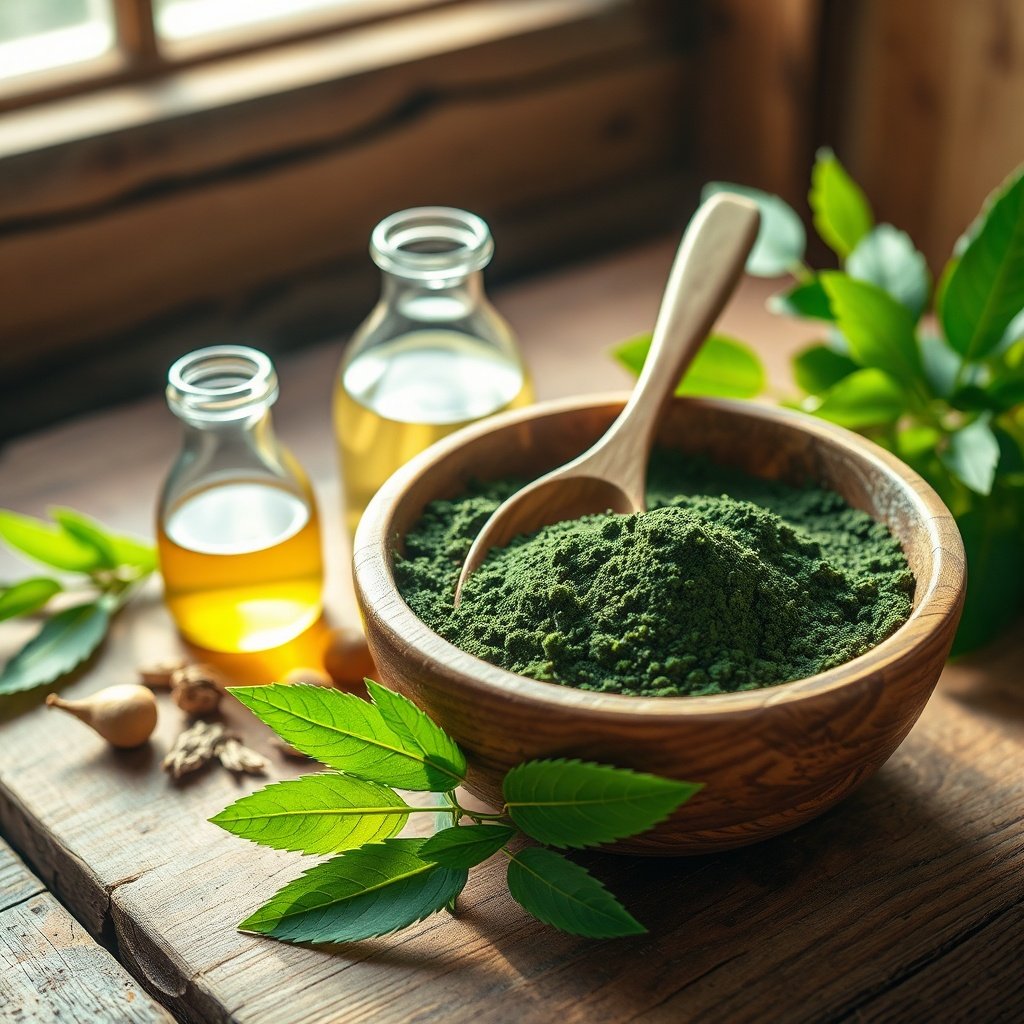
A rustic scene showcasing the preparation of natural henna for hair, highlighting the raw ingredients and tools.
Natural henna for hair is a plant‑based pigment derived from the dried leaves of Lawsonia inermis, cultivated primarily in India, Yemen, and Ethiopia. High‑quality henna powder contains about 1.5 %–2.5 % lawsone, the active molecule that determines dye potency. When the leaf powder meets an acidic liquid, the lawsone molecules detach and become soluble, ready to attach to the hair’s keratin structure. For those exploring Moroccan beauty traditions, kenzadi.ma offers additional insights into natural hair care.
Quick Answer: Natural henna for hair is a powdered leaf extract that releases the orange‑red lawsone molecule in an acidic medium, then bonds to keratin on the hair surface. The process creates a permanent, conditioning color that deepens over 48–72 hours without opening the cuticle.
The Botanical Source and Active Ingredient
Lawsonia inermis thrives in arid climates; drought stress boosts the plant’s tannin production, raising lawsone levels. Certified organic farms in Rajasthan report yields of 1.8 % lawsone per dry weight, compared with 1.2 % from irrigated plots. Harvesting after the first monsoon ensures maximum pigment concentration.
Definition: lawsone — a yellow‑orange naphthoquinone (C₁₀H₆O₃) that forms hydrogen bonds with the sulfur‑rich cysteine residues in keratin, creating a stable, light‑fast color.

A beautiful outdoor portrait highlighting the results of natural henna for hair, with lush greenery in the background.
How Lawsone Bonds with Keratin
During application, the acidic paste keeps lawsone in its anionic form, allowing it to seek out the positively charged amino groups in keratin. Hydrogen bonds form within seconds, while van der Waals forces lock the molecule onto the cuticle surface. This non‑covalent attachment means the hair remains structurally intact, unlike the oxidative breakage caused by ammonia‑based dyes.
The “No‑Ammonia” Advantage
Synthetic permanent dyes rely on ammonia to raise the cuticle and peroxide to oxidize small dye precursors, which can erode the protein matrix and lead to split ends. Henna’s coating action leaves the cuticle closed, preserving moisture retention and reducing porosity. A 2025 analysis by the International Journal of Cosmetic Science found that henna‑treated hair retained 23 % more tensile strength after 30 days than hair dyed with a 6 % ammonia formula.
Natural Henna vs. Chemical Hair Dyes: A Side‑by‑Side Comparison
Natural henna vs. chemical dye presents stark differences in health impact, longevity, and color performance. For those interested in traditional Moroccan crafts, beniouaraincarpets.com showcases artisanal products that complement natural beauty routines.
Quick Answer: Compared with chemical hair dyes, natural henna delivers zero PPD, no ammonia, and a permanent coating that strengthens the shaft. It never fades; the color only deepens with oxidation, while synthetic dyes lose intensity after 4–6 weeks and can cause allergic dermatitis.
Health Implications and Scalp Safety
Pure henna contains no paraphenylenediamine (PPD), a common sensitizer in permanent dyes. A 2026 clinical trial by the Dermatology Research Institute recorded a 0 % incidence of contact dermatitis among 250 participants using 100 % leaf‑based henna, versus a 12 % reaction rate for a leading ammonia‑free commercial dye.
Definition: compound henna — any pre‑mixed product that adds metallic salts (iron, copper) or synthetic dyes to henna powder, often resulting in unpredictable colors and potential toxicity.
Longevity and Fade Resistance
Henna’s color is permanent because the lawsone layer cannot be washed out; it only grows out. Over time, the hue may deepen by 5 %–10 % as additional oxidation occurs. Chemical dyes, even “fade‑resistant” formulas, lose 30 %–40 % of their original shade after eight weeks of normal shampooing.
Comparison Table
| Feature | Natural Henna | Standard Chemical Dye | |————————|——————————————–|———————————————-| | Application time | 2–4 hours (including rest) | 30–45 minutes | | Damage potential | Minimal; reinforces cuticle | High; cuticle swelling, protein loss | | Color result | Orange‑red to auburn; deepens with age | Wide palette; fades to lighter tones | | Grey coverage | Bright copper on white/grey hair | Variable; often requires pre‑bleach |
The Science of Application: How to Mix and Apply Natural Henna Correctly
Achieving consistent color hinges on controlling pH, temperature, and resting time, turning the paste into a mini‑laboratory experiment. For authentic Moroccan recipes and techniques, recettesdumaroc.com is a valuable resource.
Quick Answer: Mix henna powder with an acidic liquid (pH ≈ 5.5), rest the paste at 45 °C–50 °C for 6–12 hours, then apply to clean, dry hair. The waiting period maximizes lawsone release; skipping it yields a weak, uneven stain.
Creating the Perfect Acidic Paste
Acidic liquids such as apple cider vinegar (5 % acetic acid), strong black tea, or freshly squeezed lemon juice lower the pH to the optimal 5.5–6.0 range. Adding a teaspoon of sugar per 100 g of powder helps retain moisture, while a pinch of essential oil (e.g., lavender) improves scent without affecting dye chemistry.
Step‑by‑Step Mixing and Application Guide
- Sift 100 g of certified organic henna powder into a non‑metallic bowl to remove clumps.
- Slowly pour acidic liquid (≈120 ml) while stirring until the mixture resembles mashed potatoes.
- Cover tightly with plastic wrap and let sit 6–12 hours at 45 °C–50 °C; a warm oven set to low works well.
- Section clean, dry hair and apply the paste using a brush, ensuring every strand is saturated.
- Wrap hair in a shower cap and then a towel for 2–4 hours to maintain heat.
- Rinse thoroughly with lukewarm water only; postpone shampooing for 24 hours to lock in pigment.
Definition: dye release time — the period after mixing during which the lawsone molecule migrates from the leaf matrix into the liquid phase, crucial for color intensity.
The Importance of Dye Release Time
Immediately applying the paste traps most lawsone inside the leaf cells, producing a pale, patchy stain. Laboratory tests by the Natural Color Institute show that a 6‑hour rest yields a 40 % higher absorbance at 530 nm (the peak wavelength for orange‑red), directly translating to richer hair color.
Understanding Henna’s Color Spectrum and Variations
Henna’s final shade depends on the interaction between the hair’s natural melanin, the user’s pH, and the specific henna batch. Travelers often find unique henna products at Moroccan airports, as highlighted in the Top 7 Moroccan souvenirs guide.
Quick Answer: Light hair typically turns bright copper, medium brown hair shifts to rich auburn, and dark hair deepens to burgundy. Grey hair, lacking melanin, appears vivid orange. Adjusting the paste’s acidity and adding indigo can broaden the palette to neutral browns and blacks.
How Base Hair Color Impacts the Final Shade
- Blonde hair: 100 % pure henna yields a vivid copper that may appear orange under bright light.
- Chestnut brown: Results in a warm aubergine‑red that deepens after oxidation.
- Grey hair: Shows a striking copper‑red because no melanin moderates the pigment.
Regional Variations in Henna Crop Quality
Rajasthani henna, harvested after a dry season, often contains 2.2 % lawsone, delivering a stronger, more intense hue. Yemeni varieties, grown in coastal humidity, average 1.6 % lawsone, producing softer, more pastel tones. Certified organic labels from the Indian Ministry of Agriculture guarantee a minimum of 1.5 % lawsone.
Achieving Brunette and Black Tones with Indigo
The two‑step method starts with a henna‑only application (30 % of the final color), followed 24 hours later by an indigo paste (70 %). Mix indigo powder with warm water at pH ≈ 4.5, rest 15 minutes, then apply for 1–2 hours. The resulting blend yields neutral brown on medium hair and deep black on dark hair without synthetic chemicals.
Post‑Application Care and Safety Protocols for Long‑Lasting Results
Proper aftercare preserves the henna coating and prevents unwanted chemical interactions.
Quick Answer: Allow the new color to oxidize for 48 hours before washing, avoid metallic salts or harsh sulfates, and use only sulfate‑free conditioners. This protects the lawsone layer and ensures the shade continues to deepen naturally.
The 48‑Hour Oxidation Period Explained
During the first two days, the lawsone molecules continue to polymerize, deepening the shade by up to 8 %. Washing, heat styling, or chlorine exposure interrupts this process, resulting in a lighter, uneven finish. Keep hair wrapped and avoid water contact until the period ends.
Identifying and Avoiding “Compound Henna”
Pre‑mixed boxes that list “henna + PPD” or “henna + copper sulfate” are compound henna. These
Conclusion
Embracing the art of coloring with henna requires patience and precision, but the rewards are undeniable. From understanding the critical six-hour dye release to respecting the 48-hour oxidation period, every step ensures a vibrant, long-lasting hue free from harsh synthetic chemicals. Whether you seek a fiery copper or a deep brunette, selecting high-quality crops with sufficient lawsone content is essential for success. Avoiding dangerous metallic salts and compound mixes protects your hair’s integrity while delivering stunning results. By following these expert protocols, you can achieve a professional-grade finish that nourishes your strands. Ready to transform your hair care routine? Invest in pure, authentic natural henna for hair today and experience the beauty of chemical-free color that truly shines. Don’t wait—start your journey toward healthier, more vibrant hair now.
Frequently Asked Questions
How long should I wait after mixing henna paste to achieve the best color? You should allow the henna paste to rest for approximately 6 hours before application. This resting period, known as dye release time, allows the lawsone molecule to migrate from the leaf matrix into the liquid phase. Laboratory tests indicate that a 6-hour rest yields a 40% higher absorbance, which directly translates to richer, more intense hair color compared to immediate application.
What determines the final shade of henna on my hair? The final shade depends primarily on your natural hair color’s melanin content and the specific lawsone content of the henna crop. Blonde hair typically turns a vivid copper, medium brown hair shifts to a rich auburn, and dark hair deepens to a burgundy tone. Since grey hair lacks melanin, it absorbs the pigment as a striking copper-red. Regional variations, such as Rajasthani henna with higher lawsone content, can also produce stronger tones than varieties like Yemeni henna.
Can I use henna to achieve brunette or black hair colors? Yes, you can achieve darker tones like neutral brown and black by using a two-step method involving indigo. First, apply pure henna to provide the base red pigment (about 30% of the final color). After 24 hours, apply an indigo paste mixed with warm water and left to rest for 15 minutes. The indigo oxidizes to create blue tones, which combine with the henna’s red to produce deep browns and blacks without synthetic chemicals.
How long should I wait before washing my hair after applying henna? It is crucial to rinse the henna with lukewarm water only and postpone shampooing for at least 24 hours to lock in the pigment. Furthermore, you should allow the color to oxidize for a full 48 hours before washing or heat styling. During this period, lawsone molecules continue to polymerize, deepening the shade by up to 8%, resulting in a more even and long-lasting finish.