Creating a Moroccan Hammam Spa at Home involves replicating a centuries-old cleansing ritual that utilizes high heat, steam, and specialized tools to achieve deep skin exfoliation and detoxification. To successfully execute this at home, you must transform your bathroom into a high-humidity environment using hot water and towels, then apply authentic ingredients like Beldi soap and Rhassoul clay. The process requires a beniouaraincarpets.com Kessa glove for mechanical exfoliation, which removes dead skin cells more effectively than standard loofahs. By following a specific sequence of heat acclimatization, soap application, scrubbing, and hydration with Argan oil, you can achieve professional-grade skin rejuvenation without leaving your residence. This ritual is not merely a shower but a multi-sensory experience designed to improve circulation and promote deep muscle relaxation through thermal therapy.
Key Takeaways
- A successful home ritual requires a high-humidity environment to soften the epidermis for effective exfoliation.
- The core process relies on Beldi soap for deep cleansing and a Kessa glove for physical exfoliation.
- Post-ritual hydration with Argan oil is mandatory to seal in moisture and soothe the skin.
- Authentic ingredients like Rhassoul clay and Rose water elevate the experience from a standard bath to a traditional ritual.
What Is a Moroccan Hammam Spa at Home? The Definitive Guide
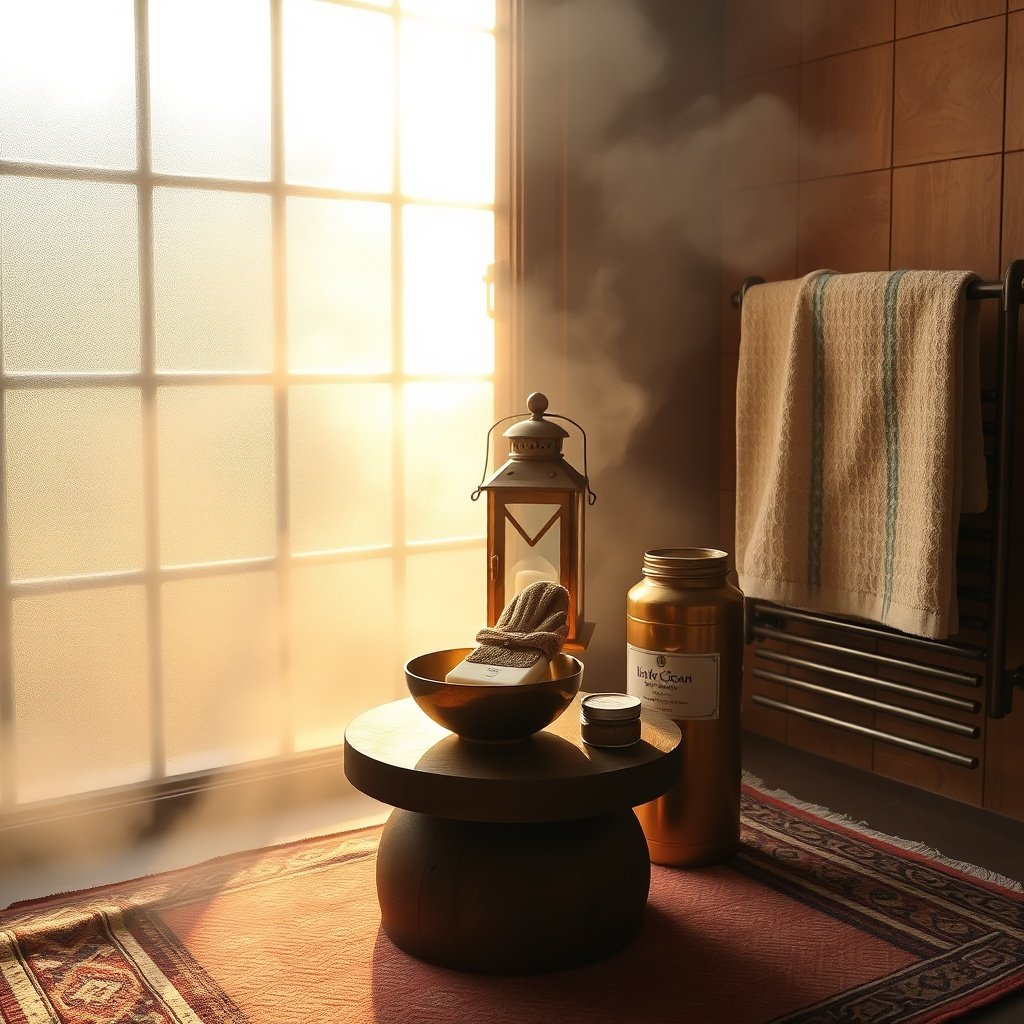
A warm, inviting scene of a home-based Moroccan Hammam with traditional cleansing tools.
A Moroccan Hammam Spa at Home is a structured wellness ritual that differs significantly from a standard steam room or a basic bath. While a steam room focuses primarily on breathing and heat, the traditional Moroccan bath ritual emphasizes intense physical exfoliation and deep mineral nourishment to detoxify the skin.
Defining the Authentic Ritual
The primary distinction lies in the mechanical action of the scrub. Unlike a standard shower, the hammam uses heat to swell the skin cells, making them easy to lift away using specific tools. This process targets the buildup of sebum and dead skin that regular soap cannot reach, providing a level of skin detoxification that is unmatched by modern skincare routines.
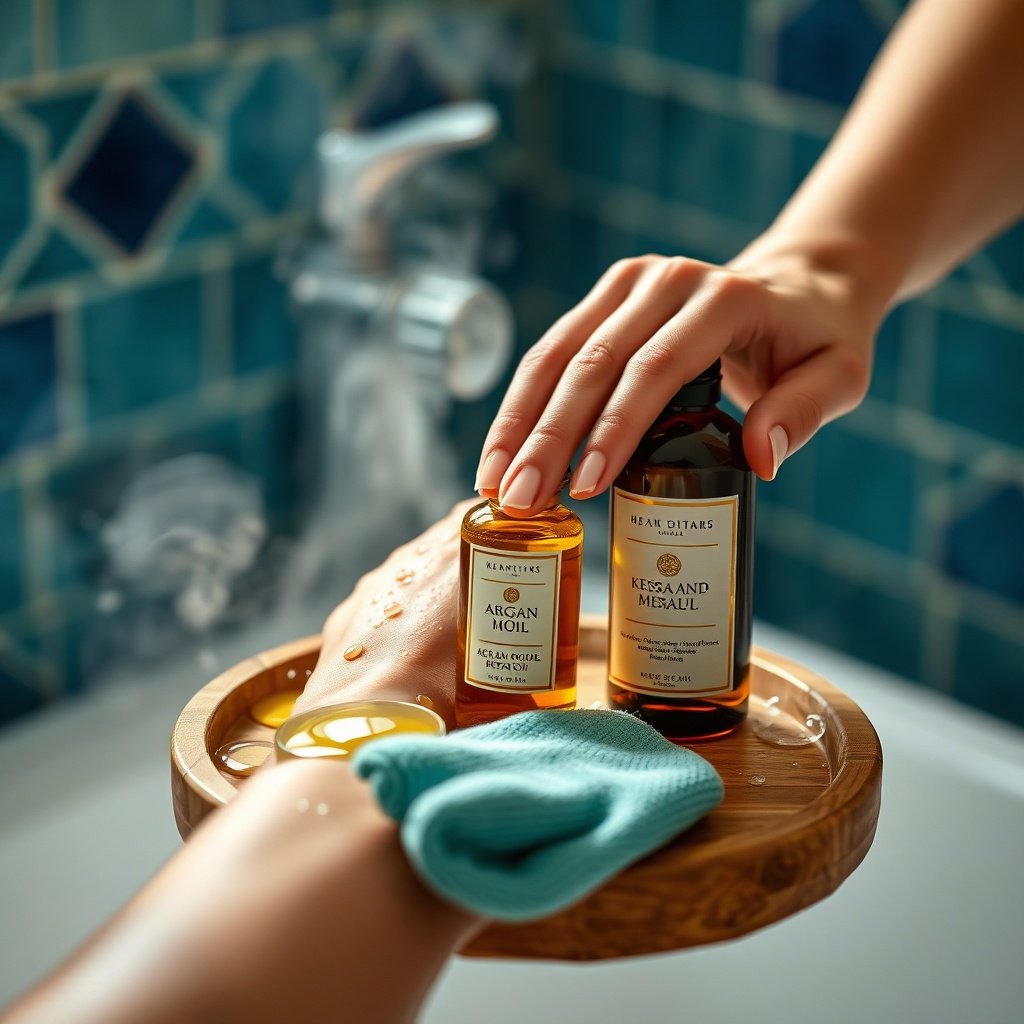
A close-up of the final step in a home Hammam ritual, focusing on skin nourishment with Argan oil.
The Science of the Steam
The efficacy of this ritual depends on high humidity to facilitate the loosening of the stratum corneum, the outermost layer of the skin. When the skin is saturated with moisture and heat, the bonds between dead skin cells weaken. This thermal therapy also promotes vasodilation, which improves blood circulation and aids in muscle relaxation, making it a holistic treatment for both the skin and the nervous system.
Quick Answer: A Moroccan hammam at home is a high-heat, high-humidity ritual focused on deep exfoliation. Unlike a standard steam room, it uses specialized tools like the Kessa glove and ingredients like Beldi soap to physically remove dead skin cells, providing a level of detoxification and skin smoothing that regular washing cannot achieve.
Essential Requirements for Success
To achieve professional results, you must manage the environment carefully. While a traditional hammam uses specialized tile-based steam rooms, a modern DIY setup relies on a closed bathroom with a hot shower or a steaming basin.
| Feature | Traditional Hammam | At-Home DIY Hammam | | :— | :— | :— | | Temperature | 80°C – 100°C (Steam) | 40°C – 50°C (Steam) | | Primary Tool | Kessa Glove | Kessa or Exfoliating Mitt | | Cleansing Agent | Black Beldi Soap | Black Soap or Glycerin-based | | Duration | 60 – 90 Minutes | 30 – 45 Minutes |
Definition: Stratum corneum — the outermost layer of the epidermis, consisting of dead, flattened cells that are removed during the exfoliation phase of a hammam.
The Essential Kit: Must-Have Tools and Ingredients
Building an authentic Moroccan Hammam Spa at Home requires a specific list of high-quality, traditional products. Using standard drugstore lotions or loofahs will fail to provide the necessary friction or mineral replenishment required for a true ritual.
The Cleaning Trio: Soap, Clay, and Scrub
The foundation of the ritual is Beldi soap, also known as Moroccan black soap. This olive-oil-based paste softens the skin and prepares it for scrubbing. Following the exfoliation, applying Rhassoul clay is essential. This volcanic clay is highly absorbent and draws out impurities from the pores, making it ideal for treating both oily and dry skin types.
Tools of the Trade
The most critical tool is the Kessa glove. This textured, coarse mitt is specifically designed to grip and lift dead skin cells during the scrubbing phase. For managing water temperature, using a copper vessel or a heavy wooden bowl adds to the sensory experience, though standard bathroom fixtures are sufficient for the heat required.
Post-Ritual Hydration
Because the exfoliation process leaves the skin highly receptive to nutrients, post-ritual hydration is non vital. Using 100% pure organic Argan oil is the gold standard, as it mimics the skin’s natural lipids and seals in moisture. Additionally, Moroccan rose water serves as an excellent soothing toner to calm any redness caused by the intense scrubbing.
Quick Answer: To perform a true hammam, you need three essential components: Beldi soap for cleansing, a Kessa glove for exfoliation, and Rhassoul clay for mineral masking. To finish, use organic Argan oil and rose water to soothe and hydrate the freshly exfoliated skin.
The Step-by-Step Ritual: A 5-Stage Transformation
Executing the correct hammam exfoliation steps ensures you maximize the skin benefits without causing irritation. This ritual should be performed in a controlled, warm environment to prevent sudden temperature shifts.
1. Preparation and Heat Acclimatization
Begin by turning on the hot water in your shower or tub and closing the door to trap the steam. Sit in this humid environment for 10 to 15 minutes. This allows your body temperature to rise and your skin to become fully saturated with moisture, which is the prerequisite for effective exfoliation.
2. The Beldi Application
Apply a generous layer of Beldi soap to your entire body. Ensure the soap is spread evenly over the damp skin. Let it sit for approximately 5 to 10 minutes. This step allows the soap to soften the skin’s surface and begin the process of lifting impurities.
3. The Deep Exfoliation
Rinse the soap off thoroughly with warm water. This is the most critical stage. Using the Kessa glove, use vigorous, circular motions to scrub your skin. You will notice small “rolls” of dead skin being removed; this is the visual indicator that the ritual is working. Focus on areas prone to buildup, such as elbows, knees, and heels.
4. The Mineral Masking
Once you have rinsed away all the exfoliated debris, apply a layer of Rhassoul clay mixed with a little water or rose water. Leave the mask on for 5 to 10 minutes. This allows the minerals to penetrate the pores and detoxify the skin at a deeper level.
5. The Final Rinse and Hydration
Rinse the clay off with lukewarm water. Once you exit the steam, immediately apply Argan oil to your damp skin. This locks in the hydration and leaves the skin with a characteristic Moroccan glow. For added luxury, consider incorporating Bedding Essentials to complete your spa-like sanctuary.
Quick Answer: The ritual follows five stages: 1. Heat acclimatization to soften skin; 2. Applying Beldi soap to prep the surface; 3. Vigorous scrubbing with a Kessa glove to remove dead cells; 4. Applying Rhassoul clay for mineral detoxification; 5. A final rinse followed by Argan oil hydration.
Maximizing Your Home Sanctuary: Environmental Optimization
To truly replicate a Moroccan Hammam Spa at Home, you must address the sensory environment. A successful home spa is as much about the atmosphere as it is about the products.
Sensory Layering: Scent and Sound
Aromatherapy is vital for psychological relaxation. Using an oil diffuser with eucalyptus or sandalwood can mimic the scent profiles found in high-end Moroccan spas. Additionally, playing ambient Moroccan music or soft nature sounds can help lower cortisol levels and deepen the relaxation response.
Lighting and Ambiance
Avoid harsh, bright bathroom lights during your ritual. Transition to dim, warm lighting or use LED tea lights to create a soothing ambiance. If you use real candles, ensure they are placed in a stable, moisture-resistant area away from towels or curtains to maintain safety in a high-humidity zone.
Temperature and Humidity Control
If your bathroom lacks a dedicated steam function, you can manually increase humidity by placing a large bowl of boiling water in the room or hanging a hot, wet towel near the heat source. Maintaining a consistent temperature is essential to prevent the skin from cooling down too quickly, which can hinder the exfoliation process. For more inspiration on creating a Moroccan-inspired space, visit kenzadi.ma.
Quick Answer: Enhance your home spa by using aromatherapy with eucalyptus oils and dim, warm lighting. To increase steam in a standard bathroom, use a boiling water bowl or a hot towel to ensure the humidity remains high enough for the ritual to be effective.
Conclusion
Investing in a Moroccan Hammam Spa at Home is an effective way to integrate professional-grade skincare and deep relaxation into your weekly routine. By using authentic tools like the Kessa glove and high-quality ingredients like Beldi soap and Argan oil, you can achieve significant skin detoxification and improved circulation. This ritual is more than just a cleaning process; it is a meditative practice that rejuvenates both the body and mind. To get started, gather your essential kit—including Rhassoul clay and a quality exfoliating mitt—and dedicate at least 45 minutes to this transformative experience. Explore traditional Moroccan recipes at recettesdumaroc.com to complement your spa ritual. Start your first session this weekend to experience the profound benefits of traditional Moroccan skincare.
FAQ
How long should a Moroccan hammam ritual last? A full ritual typically lasts between 45 and 90 minutes. The time required depends on how long you spend in the steam for acclimatization and how long you leave the clay mask on your skin.
Can I do a hammam in a standard shower? Yes, you can perform a DIY version in a standard shower. You must ensure the room is filled with steam by running hot water and closing the door to create a high-humidity environment.
Is Beldi soap safe for facial skin? While Beldi soap is natural, it is often quite aggressive due to its concentrated nature. It is best to use a gentler cleanser for the face and reserve the black soap for the body to avoid irritation.
How often should I perform a home hammam session? For optimal skin health, once a week or once every two weeks is recommended. Over-exfoliating can lead to skin sensitivity, so it is important to listen to your skin’s response.