Choosing the Perfect Moroccan Rug: Color, Size, and Texture
The allure of a Moroccan rug lies in its ability to bring centuries‑old Berber craftsmanship into a contemporary loft or a suburban living room without feeling out of place. You see the geometric diamonds of a Beni Ourain grounding a mid‑century sofa, or the vibrant zigzags of an Azilal energizing a neutral hallway, and instantly the space feels layered with story. Yet many shoppers fall in love with the look and then stall when faced with practical questions: How large should the rug be? Which hue will complement existing walls? Does the texture hold up under daily foot traffic? This guide walks you through a deliberate process—examining color psychology, strategic sizing, and tactile texture—so you can select a piece that harmonizes with both the function and aesthetic of your room, while also recognizing the distinction between authentic handmade rugs and mass‑produced imitations.
The Psychology of Color: Creating Mood with Hues
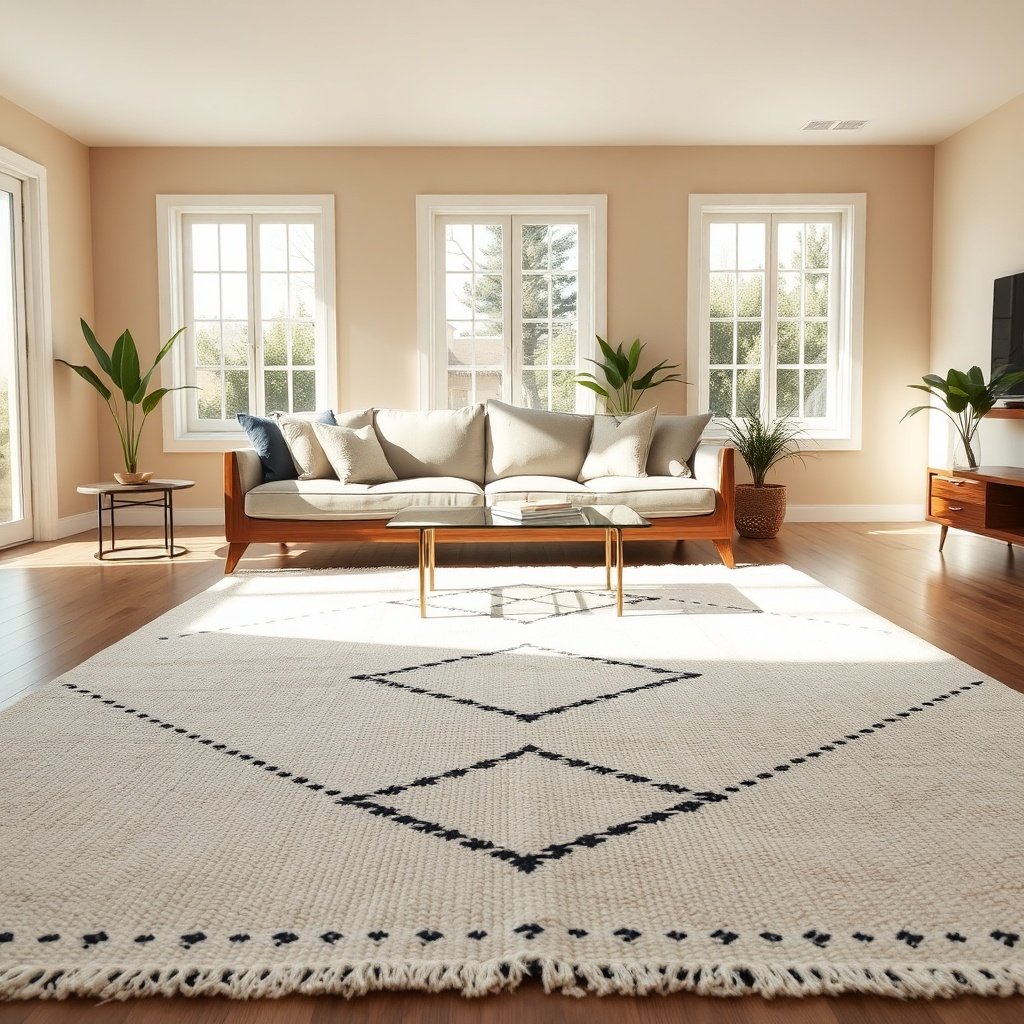
When you walk into a room, the rug’s color often sets the emotional tone before you even notice the furniture. A neutral ivory or cream Beni Ourain, with its subtle black diamond lines, creates a calming backdrop that lets other design elements breathe. In contrast, a bold red or orange Azilal rug injects energy, becoming a focal point that draws the eye across the space. Your choice hinges on the mood you want to cultivate: a serene retreat calls for muted tones, while a lively gathering area benefits from saturated hues that stimulate conversation.
Natural light shifts the perception of those colors throughout the day. A rug that appears warm amber in morning sunlight may shift toward a cooler taupe as the sun moves westward, especially if the wool contains natural lanolin that reflects light differently. If your walls are navy blue, a cream rug with black diamond lines offers high contrast that remains striking even as the light fades, whereas a deep burgundy rug might blend into the wall tone and lose definition in low light.
Balancing Existing Furniture
Apply the 60‑30‑10 rule to integrate the rug into your current palette: 60 % dominant color (walls or large sofa), 30 % secondary color (curtains or accent chair), and 10 % accent color (the rug or decorative pillows). If your sofa is a soft gray and your curtains are a muted sage, a rug with a dominant cream base and subtle rust accents can serve as that 10 % pop without overwhelming the space. Before you shop, snap a photo of your room, upload it to a free color‑picker tool, and note the hex codes of the three most prevalent hues; then look for rugs that echo those values in either the base or the pattern.
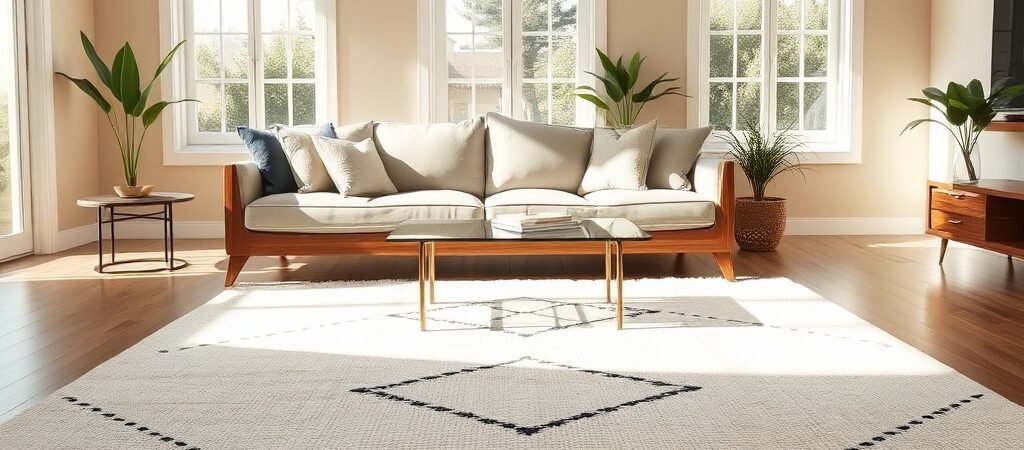
*Shows how a neutral ivory rug with subtle black diamonds anchors a mid‑century sofa and enhances the room’s calm, airy feel.*
The Impact of Natural Dyes vs. Synthetic
Authentic Moroccan rugs often use plant‑based dyes—indigo, pomegranate rind, henna—that develop a gentle patina over years, softening at the edges while retaining depth. Synthetic dyes, while initially vibrant, can bleed when exposed to moisture or harsh cleaning agents, leading to uneven patches that detract from the handmade character. When you run your fingers over a naturally dyed pile, you may notice a slight variation in shade from knot to knot, a hallmark of organic processes that synthetic batches lack.
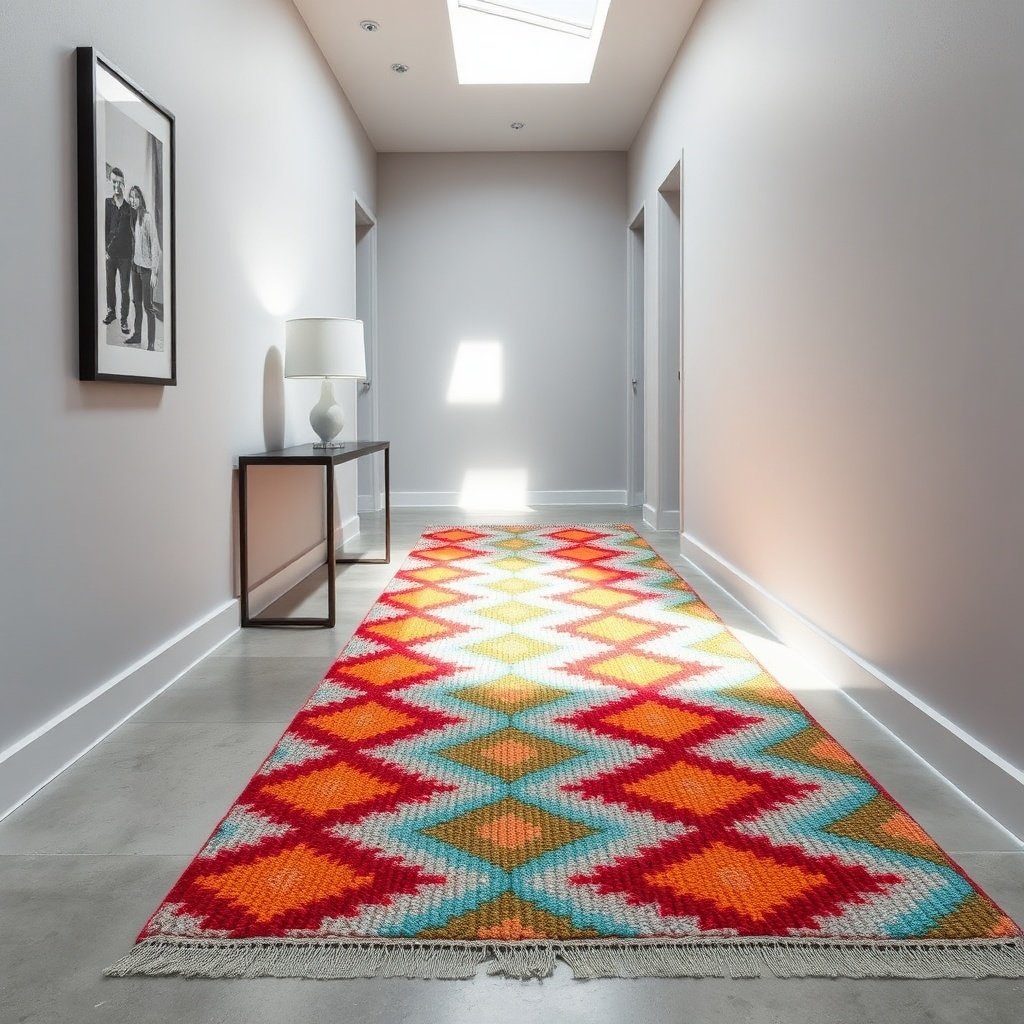
*Illustrates the lively color and rich texture of an Azilal runner adding visual interest and energy to a subdued corridor.*
Strategic Sizing: Furniture Anchoring vs. Floating
Size dictates whether a rug feels like an intentional anchor or an afterthought. In a spacious living room, the “all legs on” approach—where the rug extends far enough to cradle the front and back legs of every seating piece—creates a unified island that feels luxurious and deliberately curated. This layout works best when the rug is at least 8 × 10 feet for a standard three‑sofa arrangement, allowing roughly 18 inches of bare floor between the rug’s edge and the wall to prevent a cramped feel.
In tighter quarters, the “front legs on” rule offers a practical compromise. Position the rug so that only the front legs of the sofa and chairs rest on its surface, while the back legs touch the bare floor. This technique visually connects the furniture grouping without overwhelming the room, making it ideal for apartments where square footage is at a premium.
Dining Room Specifics
A dining rug must accommodate chair movement. Measure your table’s length and width, then add 36‑48 inches to each dimension to determine the minimum rug size; this ensures that when chairs are pulled out, their rear legs remain on the rug. For a rectangular table measuring 60 inches × 40 inches, a rug of at least 96 inches × 76 inches (8 × 6.3 feet) will keep the chairs safely on the surface. Round tables follow the same principle: add 48 inches to the diameter to find the appropriate round rug size.
Defining Zones in Open‑Concept Spaces
In an open floor plan, a rug can act as an invisible wall that delineates functional areas. Placing a large rectangular rug under the main seating group defines the living zone, while a narrower runner laid parallel to the sofa can separate a reading nook from the conversation area. If you have a kitchen island that flows into the dining space, a low‑pile Kilim runner placed between the island and the dining table creates a subtle transition that guides foot traffic without interrupting the visual flow.
Texture and Tactile Experience: Pile Height and Weave
The feel of a rug underfoot influences how you experience a room daily. High‑pile or shag styles, such as the thick Beni Ourain with pile heights reaching 1‑1.5 inches, deliver a plush, insulating surface that feels inviting in bedrooms or low‑traffic lounges. The deep wool traps heat, making it a cozy choice for cooler climates, but it can show footprints and requires regular gentle vacuuming to prevent matting.
Low‑pile and flatweave constructions, exemplified by Kilims and some Boucherouite pieces, present a tighter surface that resists crushing and allows chair legs to glide smoothly. These weaves excel in hallways, entryways, and dining rooms where frequent movement demands durability. Their tight knots also make spot‑cleaning more straightforward, as spills sit on the surface rather than sinking deep into the fibers.
The Hand‑Knotted Difference
Knot density directly affects both texture and longevity. A rug with a higher knots‑per‑square‑inch (KPSI) count feels smoother and more refined because the yarn is packed tightly, resulting in a uniform surface that resists fraying. To gauge quality, flip the rug over and examine the backing: if the pattern is clearly visible with distinct, symmetrical knots, you’re looking at a high‑quality hand‑knotted piece; a blurry or uneven backing often indicates lower knot count or machine‑made production.
Texture Mixing
Contrast enriches a room’s visual depth. Pair a nubby, high‑pile wool rug with a leather sofa to create a tactile dialogue that invites touch. Alternatively, place a flatweave Kilim beneath a sleek velvet armchair; the soft sheen of the velvet against the matte, tightly woven rug highlights each material’s unique quality. A designer tip: layer a rough‑textured jute or wool rug underneath silk cushions to juxtapose matte and luminous surfaces, adding sophistication without clutter.
Regional Styles and Their Unique Materiality
Morocco’s diverse geography shapes the wool, weaving techniques, and even the recycled materials found in its rugs. In the Atlas Mountains, where winters are harsh, weavers use thick, heavy wool from high‑altitude sheep, yielding rugs that are dense, warm, and capable of withstanding snow‑laden conditions. Conversely, desert‑region rugs tend to feature lighter, finer weaves that breathe easily in hot climates, often incorporating cotton or silk blends for a cooler feel.
Recycled materials give rise to Boucherouite rugs, crafted from scraps of fabric, clothing, and even nylon. These pieces boast a distinct, irregular texture that varies from soft and pliable to slightly stiff, depending on the mix of textiles. Their eclectic appearance makes them ideal for casual, bohemian spaces where a story‑rich, conversation‑starting floor covering is desired over uniformity.
Wool Quality and Origin
Live wool—sheared directly from a healthy sheep—retains lanolin, a natural wax that adds resilience and a subtle sheen to the fibers. Dead wool, sourced from hides processed for meat, lacks this protective coating and tends to feel brittle and dry. A quick test: rub your hand vigorously over the pile for ten seconds; if you feel a faint warmth or a slight oily residue, the wool is likely live and of higher quality.
Knot Density and Durability
Higher KPSI generally correlates with greater durability and the ability to render intricate designs. A rug with 150 KPSI or more can withstand decades of foot traffic in a family room, while a piece below 80 KPSI may show wear sooner, especially in high‑traffic zones. When evaluating a rug, count the knots in a one‑inch square on the back; multiply that number by the rug’s width and length to estimate total knot count, giving you a concrete sense of its craftsmanship level.
Conclusion
Choosing the Perfect Moroccan Rug: Color, Size, and Texture hinges on three interconnected decisions: the hue that sets the mood, the dimensions that anchor your furniture, and the tactile quality that suits your lifestyle. By weighing color psychology against your existing palette, applying sizing rules that match your room’s scale, and selecting a pile height and weave that align with traffic patterns, you secure a rug that feels both intentional and comfortable. Remember that the slight irregularities in a handmade piece—variations in dye, tiny asymmetries in the pattern—are not flaws but signatures of the artisan’s hand, adding character that mass‑produced rugs cannot replicate. Start by measuring your space, mapping your primary traffic zones, and noting the dominant colors in your décor; then let those facts guide you toward a rug that will enrich your home for years to come.
**Meta Description:** Learn how to choose the perfect Moroccan rug by balancing color, size, and texture. Expert tips on hues, furniture placement, pile height, and regional styles for a harmonious home.