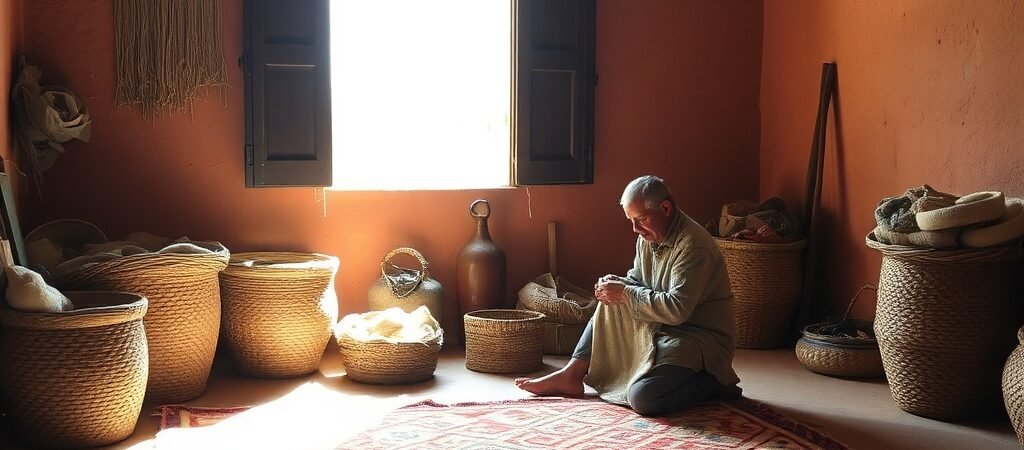
Finding a genuine Berber rug online in 2026 is harder than it looks. The market is flooded with machine-made imitations, AI-generated photos, and certificates that prove nothing. This guide to Authentic Berber Rugs Online: Where to Buy in 2026 separates real hand-woven pieces from mass-produced fakes by focusing on verifiable markers, seller transparency, and the channels that actually support Moroccan artisans.
Key Takeaways
- Authenticity is verified by physical markers and seller transparency, not by website design or marketing claims.
- The safest online channels are direct weaver cooperatives and curated galleries that document provenance.
- 2026 buying requires asking specific questions about knot density, wool origin, and weaving time.
- Red flags include “one-of-a-kind” listings with identical photos and certificates that cannot be traced to a named artisan.
- Ethical sourcing means paying a fair price that supports the artisan, not just the middleman.
Authentic Berber Rugs Online: Where to Buy in 2026
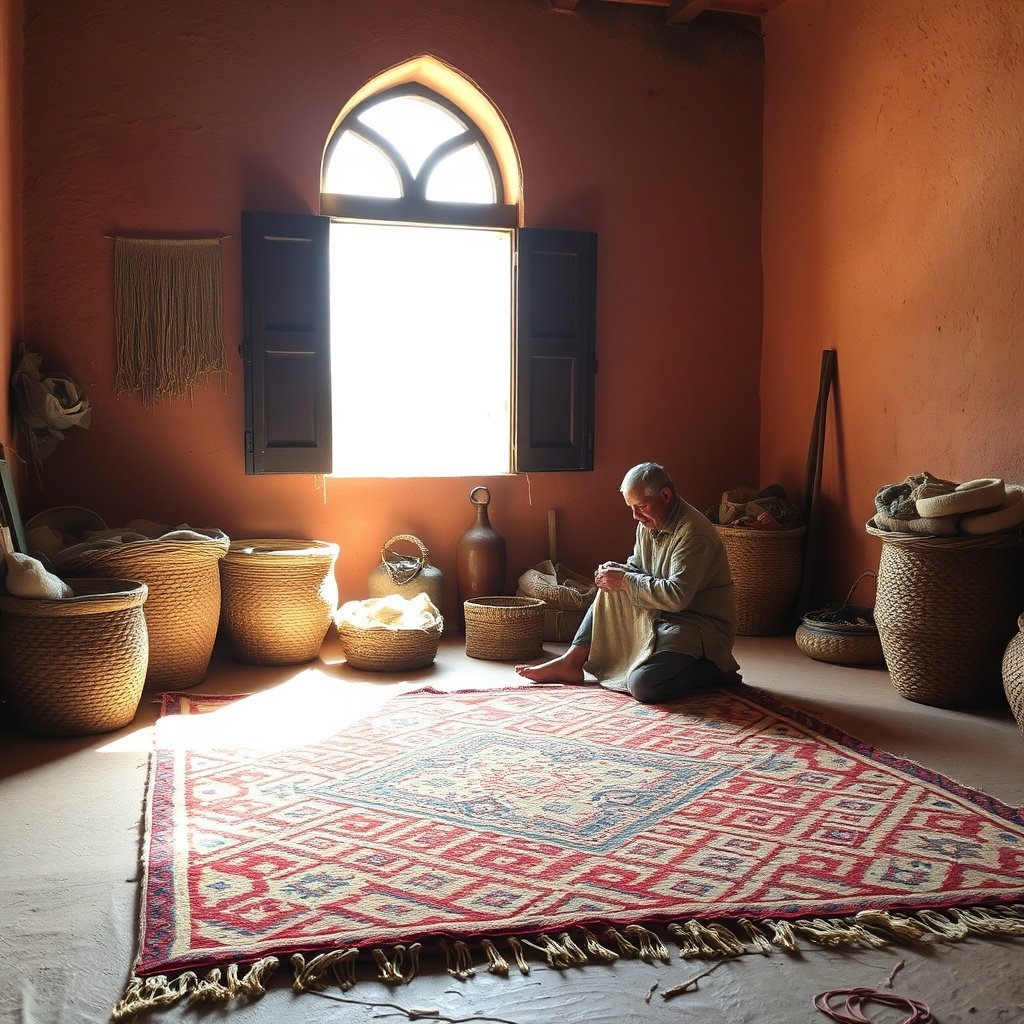
Discover how traditional hand-knotting techniques and natural materials define truly authentic Berber rugs you can trust when shopping online.
The Short Answer
Quick Answer: The safest places to buy authentic Berber rugs online are beniouaraincarpets.com direct-from-cooperative platforms and specialist galleries that document the artisan, tribe, and weaving process. General marketplaces are the highest-risk option because they rarely verify provenance.
When you buy through a direct cooperative, you are purchasing from the weavers themselves or from a trusted intermediary with a physical presence in Morocco. Curated galleries occupy a middle ground: they offer beautiful photography and careful selection, but their authenticity guarantees depend on their own sourcing practices. General marketplaces like large e-commerce sites are the riskiest, as anyone can list a rug with little to no verification.
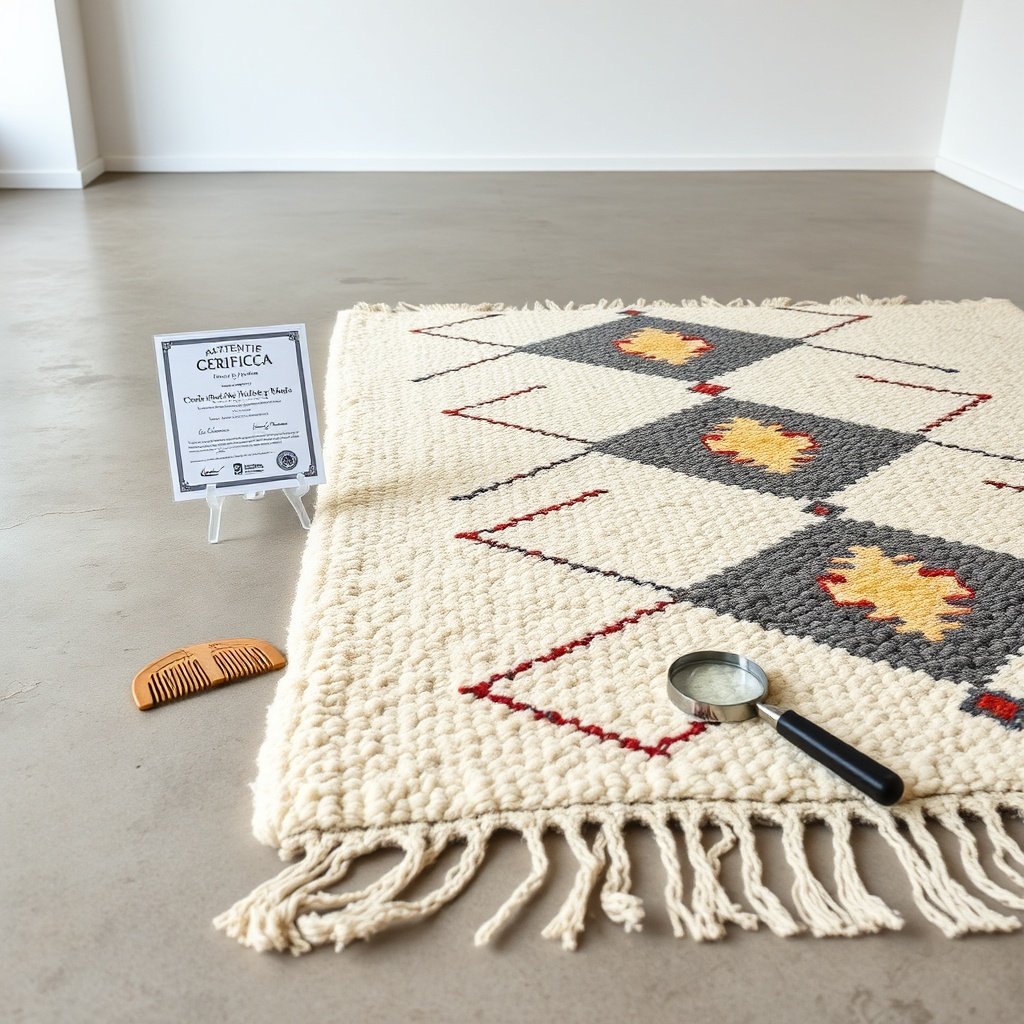
Learn why documented artisan backgrounds and visible weave quality are essential markers when evaluating authentic Berber rugs for your home.
What “Authentic” Actually Means
Definition: A genuine Berber rug is hand-knotted by a Berber artisan using traditional wool and natural dyes, with regional patterns tied to specific tribes such as Beni Ourain, Azilal, or Boucherouite.
The term “Berber rug” covers a wide range of styles, each with its own weaving tradition. Hand-knotted Beni Ourain construction, for example, typically features a soft, high-pile texture and geometric diamond motifs. Azilal rugs are often more colorful and playful, while Boucherouite rugs are made from recycled fabric strips. Authenticity means the rug was made by hand using these traditional techniques, not mass-produced in a factory to imitate the look.
Why 2026 Is Different
The online market for Moroccan rugs has shifted in several important ways. More cooperatives now sell directly to international buyers, which is a positive development for transparency via kenzadi.ma, but at the same time, AI-generated product photos make it easier for sellers to present a rug that does not actually exist. And the rise of “authenticity certificates” has created a false sense of security, since many of these documents are easy to print and carry no real verification. One trend worth noting is how 2026 interior design texture trends have increased demand for high-pile, hand-woven rugs. That demand attracts both genuine artisans and opportunistic sellers who know that buyers are looking for that authentic look.
How to Verify Authenticity Before You Buy
Physical Markers of a Genuine Berber Rug
Authentic hand-knotted rugs have visible irregularities that are impossible to replicate with a machine. Look for uneven knotting, slight variations in line thickness, and asymmetrical patterns. The wool should show the texture of hand-spun fibers, often with slight variations in color from natural vegetable-dyed wool fibers. The fringe is another reliable indicator. A genuine Berber rug has a woven or knotted fringe that is part of the rug’s construction, not a separate piece sewn on afterward. The back of the rug should also show the knots clearly, with a texture that feels dense and durable. Heavy pile thickness for durability is a common feature of traditional Atlas Mountain weaving traditions, but the pile should be consistent with the rug’s style, not uniform like a factory product.
Documentation and Seller Transparency
A trustworthy seller will provide specific documentation: the artisan’s name, the tribe, the region, and the date of weaving. This information should be consistent across the listing, the invoice, and any certificate provided. The seller should be able to answer detailed questions about how the rug was made, what wool was used, and how long the weaving took. If a seller cannot name the artisan or explain the rug’s origin, that is a significant red flag. Documentation is only useful when it can be traced to a real person and a real place.
The Role of Certification
Third-party rug authentication services exist, but they are not a substitute for due diligence. A printed certificate can be forged, and many certificates do not include enough detail to verify the rug’s origin. What matters more is the seller’s reputation and their willingness to answer questions. A seller who has been in business for years, has a physical address, and can provide references is far more trustworthy than one who relies solely on a certificate that looks official but cannot be verified.
The 2026 Online Marketplace Landscape
Direct-from-Cooperative Purchases
Buying directly from Moroccan cooperatives offers the strongest authenticity guarantees. These cross-border artisan marketplace platforms connect weavers with international buyers, often through recettesdumaroc.com a cooperative leader who manages logistics and communication. The buyer receives a rug that comes directly from the artisan, with full knowledge of who made it and where. The logistics can take longer than buying from a stockist, and shipping costs may be higher. But the trade-off is a level of provenance that no other channel can match. Many cooperatives are happy to provide photos of the weaver, the loom, and the rug in progress.
High-End Curated Marketplaces
Specialist dealers who curate and photograph each rug individually play an important role in the market. They often have physical showrooms, strong relationships with weavers, and a commitment to fair-trade practices. The best of these dealers document provenance carefully and offer detailed descriptions of each piece. The risk is that not all curated galleries meet this standard. Some simply buy rugs from wholesalers and present them with polished marketing. The key is to look for a dealer who can tell you the specific story of each rug, not just its dimensions and price.
Comparison Table: Online Buying Channels in 2026
| Buying Channel | Authenticity Risk | Verification Level | Best For |
|---|---|---|---|
| Direct weaver cooperatives | Low | High | Buyers who want full provenance and fair pricing |
| Curated online galleries | Medium | Medium | Buyers who value curation and photography |
| General marketplaces | High | Low | Budget buyers who accept higher risk |
Red Flags and Scam Patterns to Avoid
The “Machine-Made” Mislabel
Machine-made rugs are frequently marketed as “hand-knotted” because the difference is hard to spot in a photo. The texture is the giveaway: machine-made rugs have perfectly uniform knots, synthetic fibers, and a flat, consistent pile. The fringe is often glued or sewn on rather than woven into the rug. Traditional kilim vs knotted weave differences are also important to understand. Kilims are flat-woven, while knotted rugs have a pile. If a seller describes a flat-woven kilim as “hand-knotted,” they are either confused or deliberately misleading.
Fake Certificates and Origin Claims
Certificates of authenticity are easy to produce and often mean nothing. A certificate that says “Handmade in Morocco” without naming an artisan, tribe, or region is essentially worthless. Even a certificate with a name can be false, so you need to verify the seller’s knowledge and documentation independently. Ask the seller specific questions about the weaving process. A genuine artisan or cooperative will be able to describe the wool preparation, dyeing, and knotting techniques in detail. A seller who cannot answer these questions likely does not know the rug’s true origin.
How Sellers Manipulate Photos
Lighting tricks, digital color correction, and image editing can make a rug look higher quality than it is. Some sellers use the same photos across multiple listings, which means the rug you receive may not be the one you saw. Always request video of the actual rug, and ask for close-ups of the knots, the back, and the fringe. If the seller refuses or provides excuses, that is a clear warning sign.
Step-by-Step: How to Buy an Authentic Berber Rug Online
Step 1: Define Your Budget and Size Needs
Before you start browsing, decide on a price ceiling and the exact dimensions you need. Berber rugs come in a wide range of sizes, and custom orders are common. Knowing your budget helps you narrow your search and avoid wasting time on rugs that are out of reach.
Step 2: Research the Seller
Look for reviews, seller history, and whether the business has a physical presence or verifiable artisan partnerships. A seller with an address in Morocco, a phone number, and a track record of positive feedback is far more trustworthy than a seller with no verifiable details. Check if they have been mentioned in reputable publications or have a social media presence that shows their work.
Step 3: Ask the Right Questions
Send the seller a list of specific questions before you buy. Ask about knot density, wool source, dye type, weaving time, and the artisan’s name. A genuine seller will respond with detailed, specific answers. A seller who gives vague responses or tries to avoid the questions is a red flag.
Step 4: Request Video and Close-Ups
Video is better than still photos for assessing texture. Ask for a video of the rug in natural light, showing the front, back, and fringe. Request close-ups of the knots and any areas of color variation. This gives you a much better sense of the rug’s actual quality.
Step 5: Verify Shipping and Returns
Understand the shipping costs, customs fees, and return policy before you commit. International shipping from Morocco can take several weeks, and customs duties may apply depending on your country. A clear return policy protects you if the rug does not match the description.
Step 6: Make the Purchase
Complete the transaction through a secure payment method that offers buyer protection. Keep all documentation, including the listing, photos, correspondence with the seller, and any certificate. This information will be useful if you need to file a dispute or verify the rug’s origin later.
Ethical Sourcing and Cultural Considerations
Supporting Artisan Communities Directly
Direct purchasing affects income for weavers in a meaningful way. When you buy through a cooperative, a larger share of the price goes to the artisan. Ethical sourcing and fair trade certifications are part of a broader movement to ensure that weavers are paid fairly for their work. The craft survives because people are willing to pay a fair price for it.
Understanding the Cultural Significance
Berber rugs are not just decorative objects; they carry Amazigh cultural symbolism in textiles. Specific symbols and motifs have meanings tied to tribal identity, fertility, protection, and daily life. Understanding this cultural significance deepens your appreciation of the rug and reminds you that you are buying a piece of living heritage.
The Impact of Mass Production on Berber Craft
Factory-made imitations threaten traditional weaving knowledge and the economic stability of artisan communities. When buyers choose cheap imitations, they drive demand for products that do not support the people who have maintained these traditions for generations. Choosing an authentic rug, even at a higher price, is a direct investment in the future of the craft.
Conclusion
Authentic Berber rugs are available online in 2026, but they require careful selection. The safest approach is to buy directly from a cooperative or from a curated gallery that can document the rug’s origin, artisan, and weaving process. Prioritise provenance over price, ask detailed questions, and request video before you commit. Use the step-by-step guide above for your next purchase, and you will be far more likely to receive a rug that is genuinely hand-woven and ethically sourced.
FAQ
1. How can I tell if a Berber rug is authentic when buying online?
Look for physical markers that are visible in photos and video: irregular knotting, hand-spun wool texture, asymmetrical patterns, and a woven fringe. Ask the seller for the artisan’s name, tribe, and region, and request video close-ups of the rug’s front, back, and fringe. If the seller cannot provide specific answers, the rug is likely not authentic.
2. Are all Berber rugs handmade?
No. The term “Berber rug” is used broadly, and many machine-made rugs are marketed as “hand-knotted” to tap into the popularity of the style. A genuine Berber rug is hand-knotted by an artisan using traditional techniques. Machine-made versions have uniform knots, synthetic fibers, and a flat, consistent pile.
3. Is it safe to buy Berber rugs directly from cooperatives online?
Yes, buying directly from a cooperative is generally the safest option for authenticity, because the rug comes from the weavers themselves. However, you should still verify the cooperative’s legitimacy by checking reviews, asking for documentation, and ensuring the transaction is protected. Shipping times and costs can be higher, but the provenance is worth it.