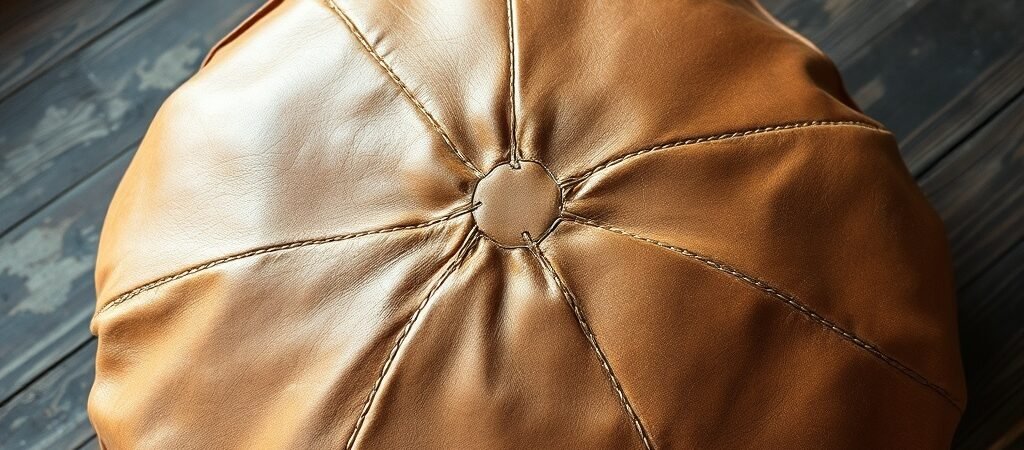
Authentic Moroccan Leather Poufs: The Complete Buyer’s Guide for Genuine Craftsmanship
The tactile warmth of hand-tanned leather and the beniouaraincarpets.com create a home accessory that feels both exotic and timeless. Yet the market for authentic Moroccan leather poufs is crowded with synthetic imitations that mimic the look but lack the soul. This guide defines what makes a pouf genuinely Moroccan, teaches you how to verify authenticity before buying, and shows you how to care for a piece that can last for decades.
Key Takeaways
- Authenticity is defined by material, construction method, and origin—not just appearance
- Genuine poufs are made from full-grain goat or sheep leather, tanned using traditional vegetable methods
- The hallmark of a real pouf is visible hand-stitching and the natural, uneven texture of the leather
- A simple scratch test and smell test can help you identify authentic leather versus cheap synthetics
- Proper care—conditioning and dusting—will make a high-quality pouf last for decades
The Complete Answer: What Defines an Authentic Moroccan Leather Pouf?
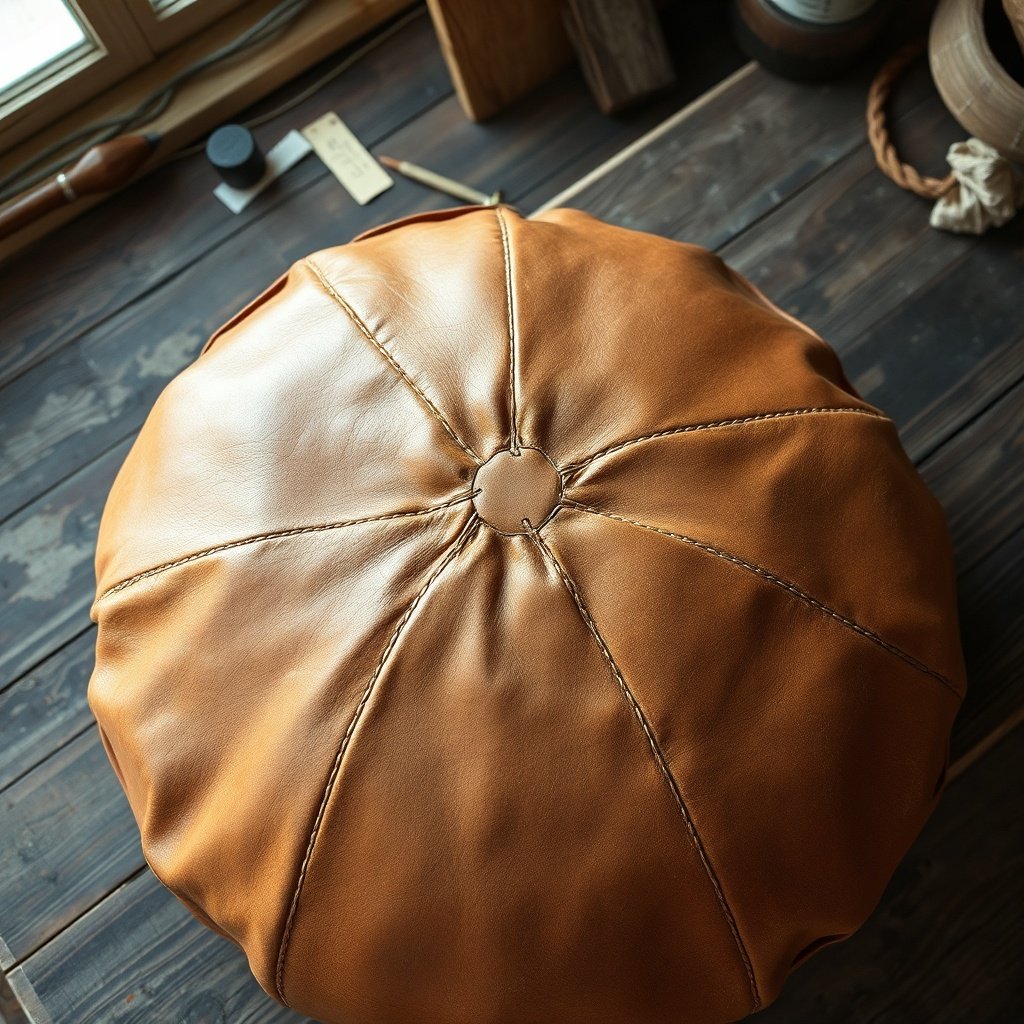
Highlights the tactile quality, natural grain, and traditional hand-stitching that define genuinely crafted poufs.
A pouf (from the French pouf) is a round, stuffed leather seat or footstool, handcrafted in Morocco using traditional techniques passed down through generations. When you search for authentic Moroccan leather poufs, you are looking for a piece that meets four specific criteria.
The Four Pillars of Authenticity:
- Material: 100% full-grain goat, sheep, or camel leather, tanned naturally
- Construction: Hand-stitched with waxed thread, not machine-sewn
- Origin: Made in Morocco, specifically in kenzadi.ma
- Design: Unstuffed and flat-packed for shipping, then filled by the buyer with wool, foam, or cotton
Common Misconceptions
“Moroccan-style” poufs made in China or Turkey are not authentic. They are mass-produced synthetic replicas that borrow the aesthetic but skip the craftsmanship. A pouf labeled “Moroccan-inspired” is a clear signal that it is not the real thing.
Why Traditional Tanning Matters (And How to Spot It)
The tanning process is the single most important factor in determining the quality and character of your pouf. Traditional Moroccan tanneries, such as Fez Tanneries online, have used the same natural methods for centuries.
The Visual Difference
Vegetable-tanned leather has a matte, earthy finish and a distinctive, slightly uneven grain that reflects the natural hide. Chrome-tanned leather, used in most mass-produced furniture, looks glossy and uniform. If a pouf appears perfectly smooth with a shiny sheen, it is likely not vegetable-tanned.
The Smell Test
Authentic leather has a rich, earthy, slightly animalic scent that many people find pleasant and distinctive. Synthetic leather smells like plastic or chemicals. If you detect a chemical odor, you are looking at a faux product.
The Touch Test
Genuine leather is soft and pliable but has a subtle “give” and is never perfectly smooth. Faux leather feels uniformly slick and cold to the touch. Press your finger into the surface; authentic leather will crease slightly and spring back, while synthetic material feels flat and unresponsive.
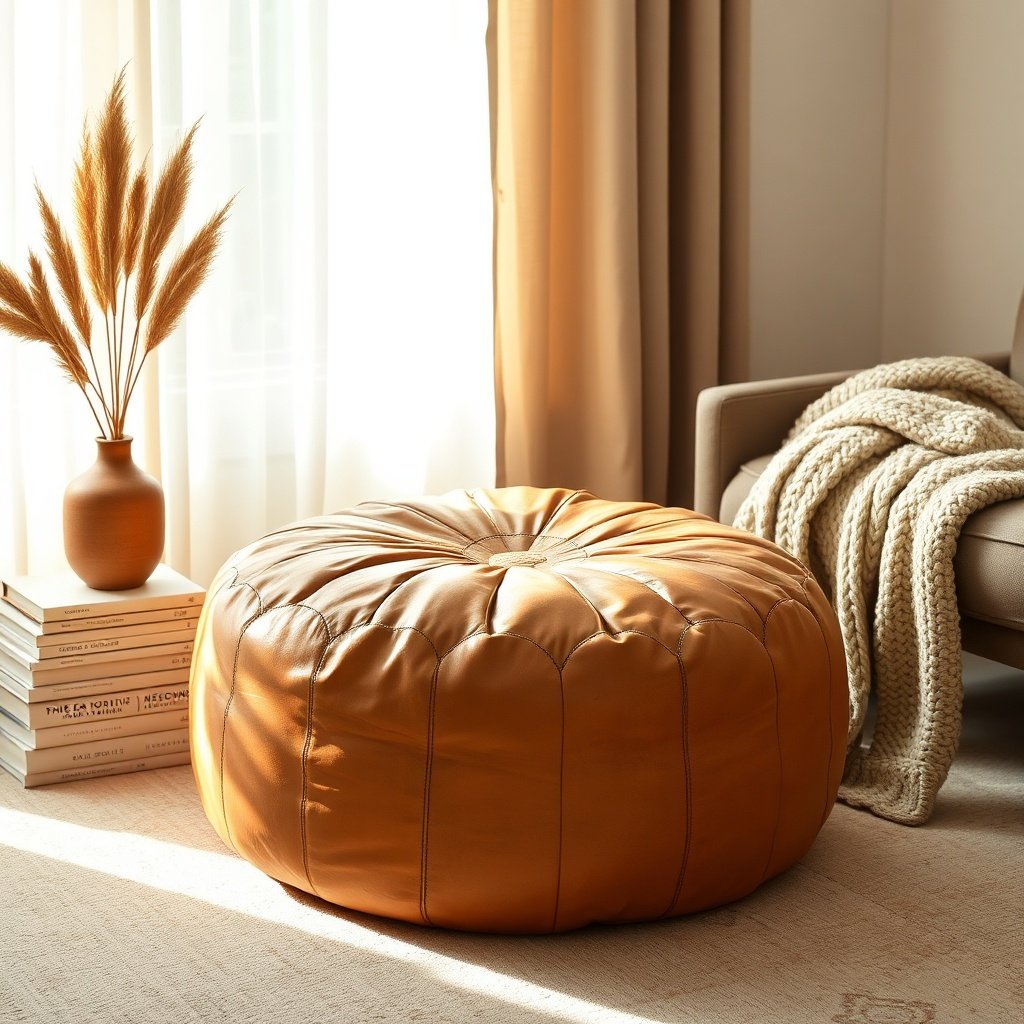
Shows how genuine leather poufs integrate effortlessly into contemporary living spaces while preserving their traditional aesthetic.
The Art of the Stitch: How a Genuine Pouf Is Constructed
Understanding the construction process helps you appreciate the skill involved and recognize the signs of a handcrafted piece.
Pattern and Cutting
The leather is cut into a specific pattern—often hexagonal or circular—to create the iconic round pouf shape. Artisans select the best parts of each hide, ensuring the strongest leather is used for the panels that receive the most wear.
Hand-Stitching
The saddle-stitch technique is the hallmark of a genuine pouf. Artisans use two needles and waxed thread, creating a stitch that is strong and slightly uneven—a sign of human hands. Machine-stitched poufs have perfectly uniform stitches with thin polyester thread that will not hold up over time.
Most authentic poufs have a hidden zipper on the bottom panel. This allows you to stuff and re-stuff the pouf as needed. The zipper is a functional detail, not just a decorative one.
Step-by-Step Construction Process:
- Selecting and cutting the leather hide
- Applying the decorative stitching, often with silk or cotton thread in contrasting colors
- Sewing the main panels together with a saddle stitch
- Attaching the zipper and the bottom panel
- Inspecting for quality and packing it flat for shipping
Authentic vs. Faux: A Buyer’s Comparison Table
| Feature | Authentic Moroccan Pouf | Faux/Imitation Pouf |
|---|---|---|
| Material | Full-grain goat or sheep leather | Polyurethane (PU) or PVC |
| Texture | Uneven, with natural creases and variations | Uniform, smooth, slightly plasticky |
| Smell | Earthy, natural leather scent | Chemical or plastic smell |
| Stitching | Hand-stitched, slightly uneven, waxed thread | Machine-stitched, perfectly uniform, polyester thread |
| Price | Higher, reflecting labor and materials | Lower, mass-produced |
| Durability | Ages beautifully, develops a patina | Peels, cracks, and degrades over time |
Actionable Advice
When shopping online, always ask for close-up photos of the stitching and the leather’s texture. A reputable seller will be happy to share details about the tanning process and the artisan who made the piece. If a seller cannot or will not provide this information, treat it as a red flag.
The Unboxing and Stuffing Guide: From Flat to Plump
Authentic poufs are shipped unstuffed to save on shipping costs and to allow you to choose your preferred filling. This is a feature, not a flaw.
Step-by-Step Stuffing Guide:
- Unfold the pouf and inspect the interior for any loose threads or damage
- Choose your filling: wool (traditional), foam (modern, firm), or cotton batting (soft)
- Stuff the pouf firmly, starting from the base and working upwards to ensure even distribution
- Close the zipper and gently massage the pouf to redistribute the filling
- Let it rest for 24 hours to allow the filling to settle; re-stuff if needed
Pro Tip: A mix of foam (for structure) and cotton (for softness) provides the best seating experience. The foam holds the shape while the cotton adds a plush, comfortable feel.
How to Care for Your Pouf: A Longevity Guide
A well-made pouf is an investment. With proper care, it will develop a rich patina and last for decades.
The Golden Rule
Keep your pouf out of direct sunlight. UV rays fade the leather’s color and cause it to dry out, leading to cracks. Place it in a spot that receives indirect light only.
Cleaning Routine
Dust weekly with a dry, soft cloth. For spills, use a slightly damp cloth and wipe gently, then dry immediately with a clean towel. Never soak the leather or use harsh cleaning products.
Conditioning
Use a natural leather conditioner—such as a beeswax or lanolin-based product—every 2 to 3 months. Apply a thin layer, let it absorb, then buff with a soft cloth. This keeps the leather supple and prevents cracking, especially in dry climates.
If the stitching comes loose or the zipper breaks, a local cobbler or leather repair specialist can usually fix it. Because the construction is simple, repairs are straightforward and inexpensive.
Styling Your Pouf: From Boho to Modern
A genuine Moroccan pouf is a versatile piece that works in any interior style.
The Versatility Factor
A pouf can serve as a footrest, an extra seat, a side table, or a decorative accent. Its compact size makes it easy to move around and reposition as needed.
Placement Ideas
- Living Room: Paired with a low sofa or a Moroccan rug, it adds a touch of boho chic living room seating
- Bedroom: At the foot of the bed, it serves as a bench for putting on shoes
- Entryway: A convenient spot to remove shoes or drop keys and mail
Color and Pattern Trends
Neutral tones like tan and cream are versatile and blend with any palette. Bold metallic or embroidered poufs work as statement pieces that draw the eye. Hand-stitched geometric leather poufs with traditional patterns add authentic character to modern spaces.
Frequently Asked Questions (FAQ)
How can I tell if my Moroccan leather pouf is authentic?
Look for hand-stitching, a natural leather smell, and an uneven texture. A scratch test—scratching lightly with your nail—should reveal a matte, non-plastic surface. If the surface feels slick or shiny, it is likely synthetic.
Are Moroccan leather poufs ethical and sustainable?
They are generally considered sustainable because they use natural materials and traditional, low-impact production methods. The leather is a byproduct of the recettesdumaroc.com, and the tanning process uses natural substances rather than harsh chemicals.
What is the best filling for a Moroccan leather pouf?
Wool is the traditional choice, offering a firm and natural feel. Foam is a good modern alternative for a more structured seat. A blend of both provides the best comfort—foam for support and cotton for softness.
Why does my new pouf have a strong smell?
This is the natural scent of vegetable-tanned leather. It will diminish over time, but you can speed up the process by leaving it in a well-ventilated area away from direct sunlight.
Can I use a Moroccan pouf as a seat for a child?
Yes, but it is best to supervise them as the pouf can be unstable and tip over. It is not a substitute for a standard chair.
Conclusion
Authenticity in a Moroccan leather pouf comes down to three things: the material, the stitching, and the tanning process. When you invest in a genuine piece, you are getting durability, sustainability, and a unique character that no mass-produced imitation can replicate. The leather will age beautifully, developing a patina that tells the story of your home.
When you are ready to buy, seek out reputable artisans or stores that can verify the origin and construction of their poufs. Ask questions, request photos, and trust your senses—your nose and fingers will tell you the truth. A genuine Moroccan leather pouf is not just a piece of furniture; it is a work of functional art that will serve you for decades.