Introduction
Moroccan decor is more than just a design trend; it is an invitation to infuse your home with warmth, texture, and a rich cultural heritage. By mastering the core tenets of North African design—complex geometric patterns, natural materials, and vibrant yet earthy color palettes—you can transform ordinary rooms into exotic sanctuaries. This comprehensive guide delves into ethical sourcing, budget-friendly strategies, and practical styling tips to help you authentically incorporate Moroccan elements, ensuring your space feels both globally inspired and deeply personal.
Sustainable Sourcing – Finding Ethical Moroccan Artisans and Eco‑Friendly Materials
When shopping for Kenzadi’s collection of Moroccan decor, prioritize items sold through certified fair-trade organizations or directly from artisan cooperatives. These vital channels ensure that skilled weavers, potters, and metalworkers receive fair wages and that production adheres to rigorous environmental standards. Focus on acquiring pieces made from renewable resources, such as sustainably harvested wool, organic cotton, and reclaimed wood. Additionally, look for natural dyes derived from local flora like saffron, henna, or indigo, which eliminate the chemical runoff associated with synthetic alternatives. This approach minimizes your ecological footprint while actively preserving and supporting traditional craftsmanship for future generations.
Budget-Friendly Sourcing Tips for Beginners
Authentic Moroccan decor does not have to break the bank. Online marketplaces such as Etsy or eBay frequently feature vintage rugs, lanterns, and textile cushions at accessible prices. Local thrift stores and flea markets can yield hidden gems like brass trays or ceramic plates that add character without a high cost. For a truly custom touch, consider purchasing unfinished wooden furniture and applying traditional Moroccan paint techniques yourself. Use specific colors like terracotta red, saffron yellow, or Majorelle blue, and employ stencils to create geometric zellige patterns or hand-painted intricate borders to save money while personalizing the piece. You can also explore “Boucherouite” rugs, which are woven from recycled fabric scraps and often offer vibrant, abstract designs at a lower price point than wool rugs.
Selecting Authentic Fabrics
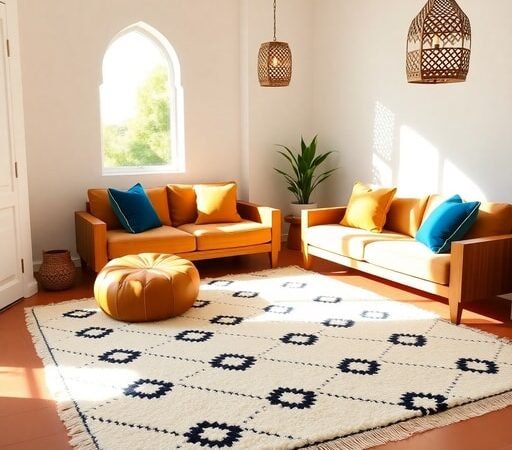
The Authentic handmade Beni Ouarain rug, specifically originating from the Atlas Mountains, is renowned for its striking black or brown geometric lines set against a creamy white background. These rugs are hand‑woven using 100% undyed wool, offering superior durability and a luxurious, plush feel underfoot. When selecting textiles, verify the wool’s origin and inspect the knotting; tight, even knots are a definitive sign of quality craftsmanship and ensure the rug will withstand daily use. A high-quality Beni Ouarain typically features a pile height of 1.5 to 3 inches, providing a dense, soft texture that improves with age, unlike machine-made imitations which often flatten quickly.
Textiles & Patterns
Moroccan textiles extend far beyond rugs to include kilim cushions, silk embroidered throws, and hand‑dyed cotton fabrics. Zellige tilework, characterized by its intricate geometric mosaics, remains a hallmark of Moroccan architecture and can be seamlessly incorporated through kitchen backsplashes, table tops, or decorative wall panels. To achieve a cohesive look, mix these patterns intentionally—try pairing a bold striped kilim pillow with a solid‑colored Berber blanket. This creates visual interest while maintaining harmony through a shared color scheme. Consider introducing Sabra silk, a vegan silk derived from agave cactus plants, which adds a lustrous, shimmering texture to upholstery or throws and is distinctively Moroccan in origin.
Mixing Patterns
A living room sofa draped with a Beni Ourain throw over a patterned ottoman demonstrates effective layering without overwhelming the space. To successfully balance bold designs, limit the number of competing patterns to two or three per room. Anchor these vibrant elements with neutral walls or large furniture pieces to provide visual breathing room. Incorporating metallic accents, such as brass lanterns or mirrored trays, adds necessary depth and reflects light, enhancing the overall ambiance and tying the eclectic elements together. A useful rule of thumb is the 60-30-10 ratio: 60% neutral colors, 30% dominant patterns, and 10% vibrant accents, ensuring the room feels curated rather than chaotic.
Choosing Reclaimed Wood
Furniture crafted from reclaimed wood brings rustic charm and sustainability to Moroccan‑inspired interiors. Look for tables, benches, or shelving units made from salvaged cedar or pine, which often feature natural imperfections that tell a unique story. To maintain the wood’s beauty, finish these pieces with a light oil or wax. This treatment preserves the wood’s texture while highlighting the grain, ensuring they complement both vibrant textiles and the earthy tones typical of North African design. Pay attention to joinery methods; authentic pieces often use traditional mortise and tenon joints rather than modern screws or nails, serving as a marker of true artisan construction and adding historical value to the furniture.
Choosing Lantern Styles
Moroccan lanterns are available in a diverse array of materials, including pierced metal, colored glass, and hand‑painted ceramic. Metal lanterns with intricate filigree cast beautiful, dancing patterned shadows when lit, creating an atmospheric mood. Glass versions in shades of amber or teal provide a softer, ambient glow suitable for relaxation. For a cohesive aesthetic, select lanterns that share a common finish—such as aged brass or matte black—and vary their sizes to create a dynamic visual hierarchy on side tables or shelves. For the best lighting effect, use warm white LED bulbs with a color temperature of around 2700K, which mimics the flicker of a candle flame and enhances the warm tones of the metal and glass.
FAQ
How can I start incorporating Moroccan decor into my home?
Begin with small accents like a single Beni Ourain rug, handmade leather pouf from Marrakech, or a metal lantern to test the aesthetic before committing to larger pieces. These items are versatile enough to blend with existing modern or bohemian furniture, allowing you to gradually introduce the style without a complete overhaul.
Where can I find authentic Moroccan goods online?
Reputable platforms like Etsy, specialized fair‑trade websites, and the official Kenzadi store offer verified artisan‑made items. Always check seller reviews and request details about the materials and production process to ensure authenticity. Look for detailed descriptions regarding the region of origin, such as the Atlas Mountains for weaving or Fes for metalwork, as these geographic indicators often correlate with specific traditional techniques.
Conclusion
We invite you to share your first Moroccan‑inspired makeover with us and explore how these timeless elements can transform your living space. By combining ethical sourcing, thoughtful budgeting, and confident pattern mixing, you will achieve a home that feels both globally cultured and personally comforting. Embrace the journey of creating a sanctuary that reflects the warmth and artistry of North African design in your everyday life.