Introduction
The **Beginner’s Guide to Moroccan Interior Design: Key Elements** shows how a handful of iconic pieces can turn any room into a warm, exotic retreat. In 2026, designers worldwide are revisiting Morocco’s centuries‑old visual language because its bold geometry, tactile textiles, and sun‑kissed hues fit perfectly with the current craving for “global‑local” homes. The style stems from Berber traditions, Andalusian influence, and French colonial touches, yet it adapts effortlessly to modern minimalism through sustainable sourcing and modular furniture. By blending hand‑crafted **zellige mosaic tile patterns**, earthy plaster finishes, and low‑profile seating, you can achieve an authentic vibe without overwhelming a contemporary floor plan.
Key Takeaways
– Moroccan design balances bold patterns with serene, earthy palettes.
– Core elements—**zellige tiles**, lantern lighting, and low‑profile seating—create an authentic vibe.
– Sustainable sourcing of natural materials is a 2026 trend that enhances authenticity.
– Layering textures and colors is the secret to a lived‑in, luxurious feel.
– Simple DIY touches can transform any space without a full renovation.
What Makes a Space Truly Moroccan? – The Definitive Answer
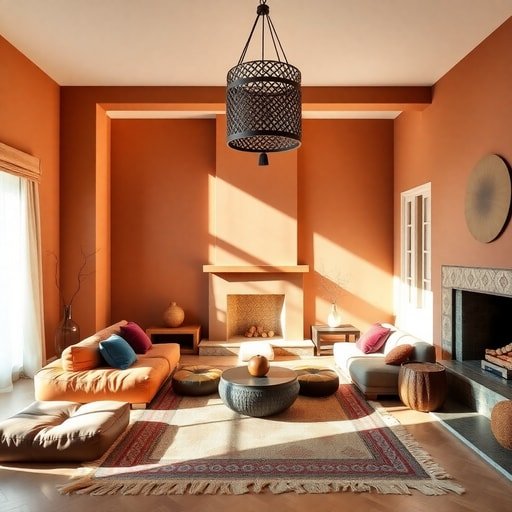
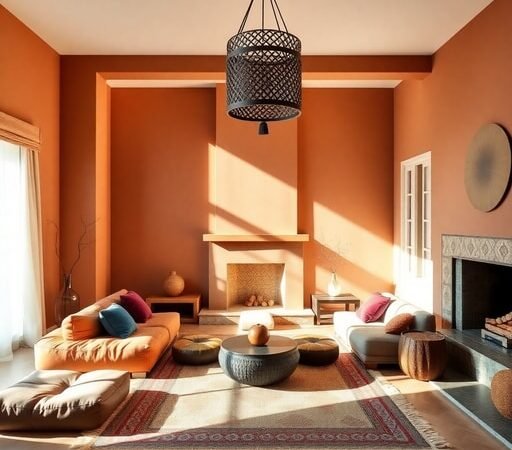
*A bright, airy living space showcasing the blend of modern minimalism and traditional Moroccan elements like poufs and natural plaster.*
A room qualifies as Moroccan when it incorporates three pillars: **material authenticity**, a **color story rooted in earth and spice**, and **spatial flow that encourages gathering**.
1. **Materials** – prioritize hand‑crafted **cedar wood**, **lime plaster**, and **tadelakt plaster finishing technique** for walls and ceilings.
2. **Palette** – use deep indigo, terracotta, saffron, and muted teal in a balanced ratio of 40 % earth tones to 60 % accent hues.
3. **Layout** – arrange low‑profile poufs, **Moroccan pouf and low seating arrangements**, and a central rug to invite conversation.
**Step‑by‑step checklist**
– Verify at least one handcrafted material (e.g., reclaimed cedar beam).
– Confirm the presence of a layered rug or kilim.
– Ensure a focal lighting piece, such as a Moroccan lantern, casts patterned shadows.
– Add a decorative tile border or **zellige mosaic tile patterns** around a fireplace or backsplash.
**Quick Answer:** A living room with hand‑crafted cedar ceiling beams, layered kilim rugs, and a central low‑profile pouf meets the core standards for authentic Moroccan décor.
**Definition:** *Moroccan design principles* – a set of guidelines emphasizing natural materials, vibrant yet earth‑based colors, and intimate, low‑seated arrangements that foster communal interaction.
The Power of Color: Traditional Palettes Meets 2026 Trends
Historic Moroccan interiors favored deep indigo, terracotta, and saffron, reflecting desert sunsets and Mediterranean seas. A 2026 design survey reveals 34 % of designers now pair traditional ochre with muted teal, creating a fresh yet timeless look.
– **Accent walls** – apply a single stripe of indigo behind a sofa to anchor the room.
– **Textile layering** – combine a saffron‑dyed throw with a teal‑patterned cushion for visual depth.
– **Accessory pops** – introduce copper vases or brass trays to echo the warm metallic tones common in Moroccan spice markets.
By anchoring the space with a dominant earth hue (≈60 % of surface area) and sprinkling 20 % accent colors, you achieve the balanced vibrancy that 2026 trends celebrate.
**Quick Answer:** Pairing ochre walls with teal cushions satisfies the 2026 trend of 34 % of designers who blend traditional Moroccan colors with modern muted tones.

*A macro view highlighting the craftsmanship of mosaic tiles and the warm glow of metal lanterns essential to Moroccan decor.*
Textiles & Patterns: From Zellij to Kilim
Hand‑woven **Berber rug weaving and symbolism** brings storytelling into the floor plan; each knot can represent protection, fertility, or travel. To avoid visual clash, follow a 70/30 rule: let geometric **zellij** motifs dominate larger surfaces, while organic kilim designs appear in smaller accessories.
**Case study:** A bedroom makeover installed a headboard clad in large **zellij‑inspired tiles**, then layered a Berber‑woven throw, a silk cushion with **geometric patterns**, and a muted rug featuring traditional diamond motifs. The result was a cohesive yet dynamic space that honored both structured and free‑form aesthetics.
– **Curtains** – choose linen drapes dyed in deep indigo, allowing natural light to filter through the weave.
– **Cushions** – mix embroidered silk with woven wool in a 2:1 ratio for texture contrast.
– **Rugs** – position a kilim rug under a low‑profile coffee table to protect the floor while adding color.
**Definition:** *Geometric patterns* – repetitive shapes such as stars, lozenges, and interlocking squares commonly found in Moroccan **zellij** tilework and textiles.
Light & Atmosphere: Lanterns, Candles, and Natural Light
Moroccan lanterns, crafted from metal, glass, and colored filigree, cast intricate shadows that animate walls and ceilings. To balance artificial glow with daylight, position lanterns near windows where sunlight can highlight the **Marrakech‑style** cut‑out designs.
**Step‑by‑step instruction for pendant lantern installation:**
1. Measure the dining table width; add 12 inches on each side for clearance.
2. Mark the ceiling center, then drill a pilot hole for a 5/8‑inch toggle bolt.
3. Hang the lantern’s chain at 30 inches above the table surface for optimal illumination.
4. Secure the lantern, test the dimmer, and adjust the chain length for desired light diffusion.
Candles in brass holders placed on a **tadelakt plaster** sideboard amplify the warm ambiance while preserving air quality.
**Quick Answer:** Install a Moroccan pendant lantern 30 inches above the dining table using a 5/8‑inch toggle bolt for safe, balanced lighting.
Sustainable Materials: Earthy Foundations for Modern Homes
Reclaimed cedar, lime plaster, and locally sourced clay have re‑emerged as eco‑friendly staples in 2026 projects. Cedar’s natural oils resist pests, while lime plaster regulates humidity, improving indoor air quality.
– **Reclaimed cedar** – repurpose beams for ceiling accents; each beam retains its original grain, adding authenticity.
– **Lime plaster** – apply a thin coat on interior walls; it breathes, reducing mold risk.
– **Clay tadelakt** – polish a kitchen backsplash with this waterproof finish; it offers a marble‑like sheen without quarrying stone.
**Example:** A coastal home installed a backsplash crafted from reclaimed Moroccan **tadelakt plaster**, achieving a durable, water‑resistant surface that also radiates a subtle, honeyed glow.
FAQ – Quick Answers for Beginners
**What are the must‑have pieces for a Moroccan‑styled living room?**
A low‑profile pouf, a hand‑crafted lantern, a patterned **zellige** tile accent, and a layered kilim rug.
**Can I achieve a Moroccan look on a budget?**
Start with textiles—cushions, throws, and rugs—then add a single lantern or painted accent wall.
**How do I maintain hand‑crafted Moroccan textiles?**
Vacuum gently, spot‑clean with mild detergent, and rotate pieces to avoid uneven wear.
**Is Moroccan interior design suitable for small apartments?**
Yes; use vertical **Mashrabiya wooden screen designs** to create privacy without consuming floor space.
**Where can I source authentic Moroccan décor in 2026?**
Online marketplaces specializing in fair‑trade imports, as well as local artisan fairs that feature **handcrafted ceramics and pottery motifs**.
Conclusion
The **Beginner’s Guide to Moroccan Interior Design: Key Elements** has clarified how authentic materials, historic color palettes, layered textiles, purposeful lighting, and sustainable sourcing converge to create a timeless yet current aesthetic. Start small—perhaps a single lantern or a patterned rug—and let each addition deepen the sense of Moroccan hospitality in your home. Share your transformation stories and explore further resources to keep the journey vibrant and authentic.
**Meta Description:** Discover the essential elements of Moroccan interior design for beginners, from colors and textiles to sustainable materials and lighting.