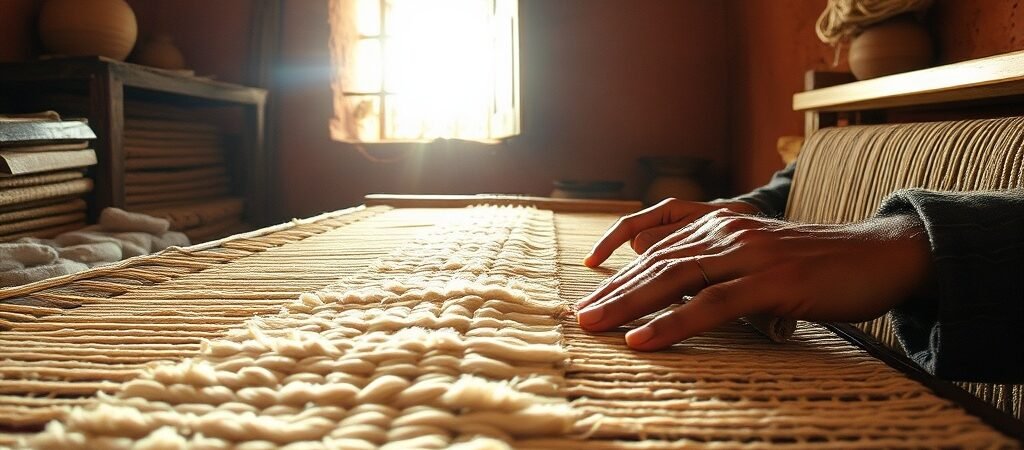
A Berber rug is a handwoven textile created by the Amazigh people of North Africa, typically crafted from natural sheep wool on traditional looms. The term covers several distinct styles — from the minimalist Beni Ourain to the colorful Azilal and the recycled-fabric Boucherouite — each with its own pattern, texture, and cultural story. This guide explains what makes a Berber rug authentic on beniouaraincarpets.com, how to choose the right type for your space, and how to care for it so it lasts for decades.
Quick Answer: A Berber rug is a handwoven wool textile made by the Amazigh (Berber) people of Morocco and North Africa. The term includes several distinct styles, most notably Beni Ourain, Azilal, and Boucherouite, each defined by its own material, pile height, and pattern language.
Key Takeaways
- A Berber rug is a handwoven textile created by the Amazigh (Berber) people of North Africa, typically made from sheep’s wool.
- The term “Berber” covers multiple distinct rug styles, including Beni Ourain, Azilal, and Boucherouite — each with its own pattern, texture, and cultural background.
- Authentic Berber rugs are hand-knotted or hand-woven on traditional looms; mass-produced machine-made versions are widely available but differ in quality and character.
- Berber rugs work well in a variety of interior styles, from minimal and modern to bohemian and eclectic, making them a versatile design investment.
- Proper care — including regular vacuuming and occasional professional cleaning — is essential to preserve the wool’s texture and the rug’s longevity.
The Complete Answer: What Is a Berber Rug?
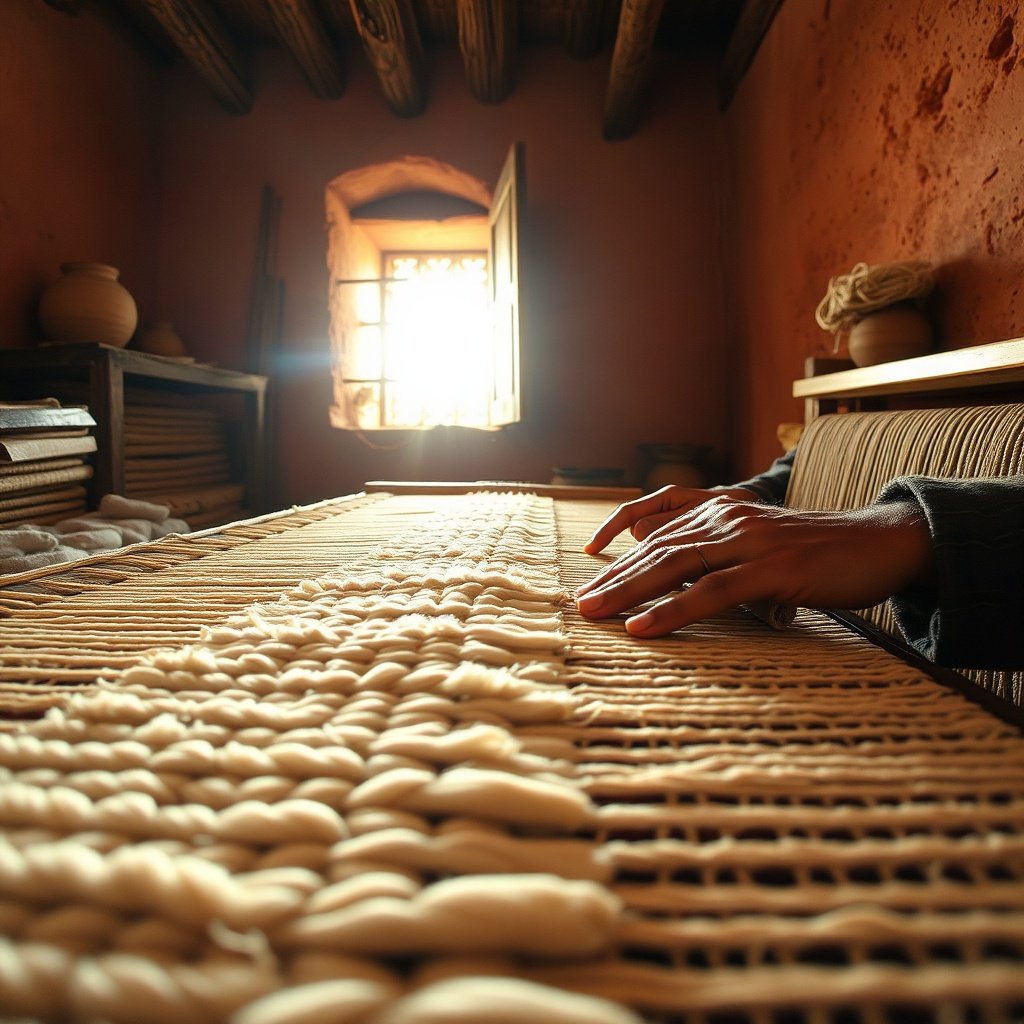
Highlights the authentic handcraftsmanship and natural materials used to create genuine Berber rugs.
The Berber rug is one of the most recognizable textile traditions in the world, but the name itself can be misleading. It refers to a family of handwoven rugs made by the Amazigh people, not a single, uniform product.
The Classic Definition
Definition: A Berber rug is a handwoven textile produced by the Amazigh (Berber) people of the Atlas Mountains and surrounding regions of Morocco and North Africa. It is traditionally made from hand-spun sheep wool and features regional variations in pile height, density, and pattern.
The word “Berber” refers to the ethnic group, not a specific rug style. Amazigh weavers have created these textiles for centuries, and the rugs have always served functional purposes — bedding, seating, insulation against cold mountain floors — alongside their decorative value. Natural sheep wool fibers give the rugs their characteristic warmth, durability, and softness, while the weaving technique determines whether the finish is plush and high-pile or flat and low-profile.
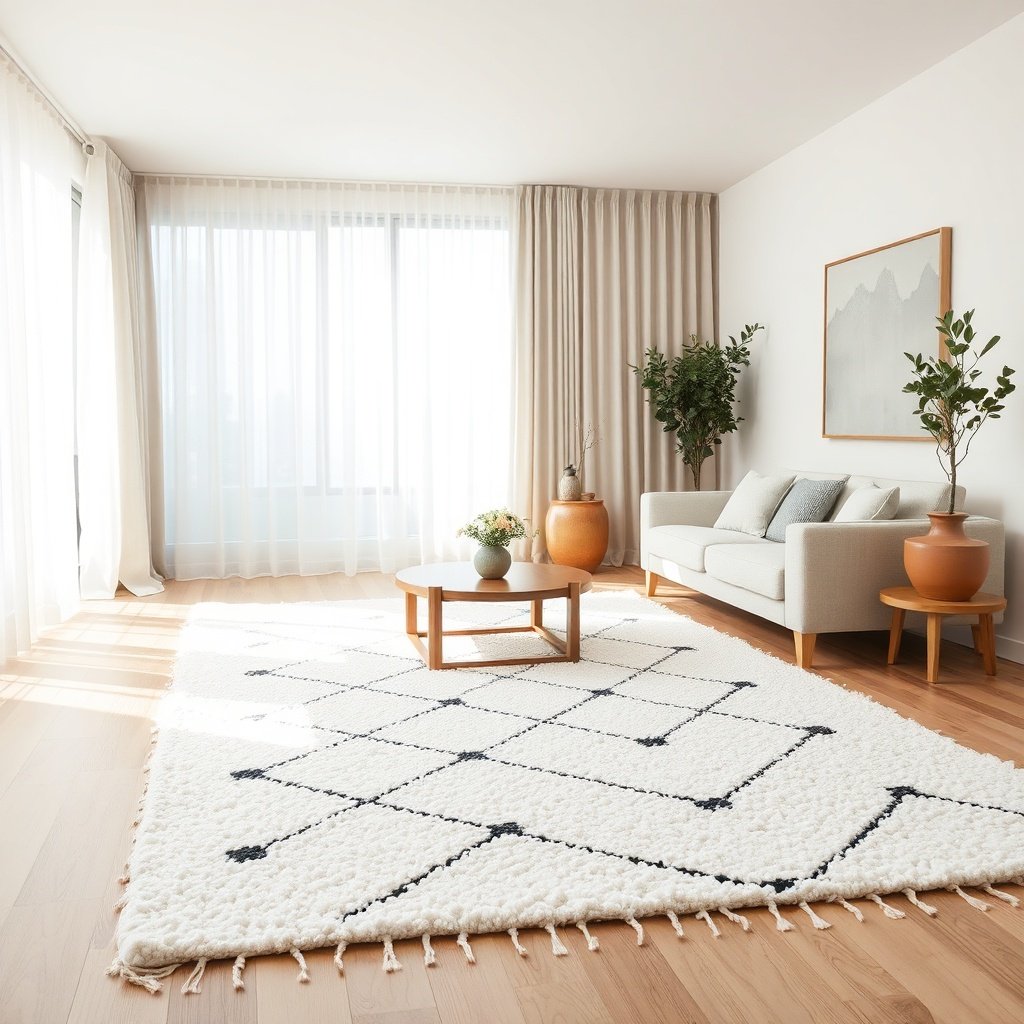
Demonstrates the adaptability of Berber rugs in contemporary home décor settings.
How Berber Rugs Are Made
The traditional process begins with sheep’s wool that is washed, carded, and hand-spun into yarn. Weavers work on vertical looms, knotting the wool around the warp threads row by row, a craft tradition documented at kenzadi.ma. The weaver — often a woman — works from memory rather than from written patterns, which means no two rugs are exactly alike.
The knotting technique varies by region and rug type. Beni Ourain rugs, for example, typically use a dense knot that creates a high, plush pile. Azilal rugs use a similar structure but with a lower pile and more varied colorwork. Boucherouite rugs break from tradition entirely, using strips of recycled fabric instead of wool yarn. The result is a tactile, irregular surface that signals handcraft rather than machine production.
Why the Name “Berber” Is Used
The term “Berber” comes from the Greek word barbaros, which the ancient Greeks used to describe anyone who did not speak their language. Over time, it became the common name for the indigenous peoples of North Africa, though many prefer the term Amazigh. In the rug industry, “Berber” has become a catch-all label that covers both genuine handwoven Amazigh textiles and machine-made imitations produced in factories around the world.
This broad usage creates confusion for buyers. An authentic Berber rug carries the irregularities, natural wool texture, and cultural heritage of the Amazigh weaving tradition. A “Berber-style” rug from a mass-market retailer may mimic the look — the geometric diamond motifs, the cream-and-black color scheme — but it lacks the hand-knotting, the natural fibers, and the story. Understanding this distinction is the first step to making an informed purchase.
Berber Rug Origins and Cultural Significance
The Berber rug is more than a home decor item. It is a living record of Amazigh culture, woven into the daily life of North African communities for generations.
The Amazigh People and Their Weaving Heritage
The Amazigh people have inhabited the Atlas Mountains and the Sahara for thousands of years, long before the arrival of Arab influence in North Africa. Weaving has always been a central part of their domestic economy. Women learned the craft from their mothers and grandmothers, passing down patterns, techniques, and symbols through oral tradition.
Rugs served essential roles in Amazigh households. They were used as bedding to insulate against cold nights, as seating for family gatherings, and as part of a bride’s dowry. The symbols woven into the rugs — diamonds, zigzags, and geometric lines — carried meanings related to fertility, protection, and the natural world. Each rug functioned as both a practical object and a visual language specific to its weaver and tribe.
From Traditional Utilitarian Textiles to Global Design Icon
Berber rugs remained largely confined to rural North African homes until the mid-20th century. European and American designers began to encounter them through travel and trade, and the rugs’ simple geometry and neutral palettes appealed to the emerging modernist aesthetic. Mid-century interiors embraced the clean lines of Beni Ourain rugs, which paired naturally with the wood, leather, and concrete of the era.
In recent decades, the popularity of Moroccan-style interiors has pushed Berber rugs into mainstream design. They now appear in everything from high-end hotel lobbies to cozy Scandinavian apartments. The shift from utilitarian textile to luxury decor item has also raised prices for authentic handwoven pieces, while creating a large market for cheaper machine-made alternatives.
Distinguishing Authentic Berber Rugs from Imitations
Telling a genuine handwoven Berber rug from a machine-made imitation requires attention to a few key details:
- Knotting irregularities: Hand-knotted rugs show slight variations in knot size and density. Machine-made rugs have perfectly uniform loops.
- Fringe: On authentic rugs, the fringe is part of the weave — the warp threads that continue past the knotting. Mass-produced rugs often have fringe that is sewn or glued on.
- Wool texture: Real sheep wool has a natural luster and a slightly uneven feel. Synthetic fibers feel uniform and often have a sheen.
- Pattern consistency: Handwoven rugs have subtle imperfections in their geometric patterns. Machine-made versions are mathematically precise.
When buying, ask the seller about the rug’s provenance and weaving method. A reputable dealer should be able to tell you the region, tribe, and approximate age of the piece, resources you can cross-reference via moroccanrugweaving.com. If the seller cannot provide this information, treat the rug as a “Berber-style” product rather than an authentic Amazigh textile.
Quick Answer: To tell if a Berber rug is authentic, look for hand-knotting irregularities, a fringe that continues from the warp threads, natural wool texture, and slight imperfections in the pattern. Always ask the seller about the rug’s origin and weaving method.
Types of Berber Rugs: A Comparative Guide
The Berber rug family includes several distinct styles, each with its own material, construction, and visual character. Understanding the differences helps you choose the right piece for your space.
Beni Ourain
Beni Ourain rugs are the most famous and sought-after Berber style. They are woven by the Beni Ourain tribes of the Middle Atlas Mountains and are characterized by a high, plush pile made from soft, undyed sheep wool. The classic design features a cream or ivory background with dark, geometric diamond motifs or simple lines in black or brown.
These rugs have become synonymous with luxury and minimalist interiors. Their neutral palette and soft texture make them a natural fit for modern living rooms, bedrooms, and reading nooks. The high pile provides warmth and comfort underfoot, and the understated pattern adds visual interest without overwhelming a space. Beni Ourain rugs are the most widely imitated Berber style, so provenance matters even more here.
Azilal
Azilal rugs come from the Azilal region of the High Atlas and are known for their lower pile and more expressive designs. Unlike Beni Ourain, Azilal rugs often incorporate vibrant colors — reds, blues, yellows, and greens — alongside the natural wool tones. The patterns are more abstract and varied, ranging from geometric shapes to freeform symbols and even figurative elements.
The lower pile makes Azilal rugs more practical for busier areas, while the colorful designs make them a strong focal point in eclectic and artistic spaces. They are also more likely to use natural dyes, though synthetic dyes appear in newer pieces. Azilal rugs offer a middle ground between the strict minimalism of Beni Ourain and the bold energy of Boucherouite.
Boucherouite
Boucherouite rugs are the most unconventional member of the Berber rug family. The name comes from the Moroccan Arabic word for “scrap” or “rag,” and these rugs are made from strips of recycled fabric — old clothing, blankets, and textiles — rather than wool yarn. The result is a colorful, textured, and completely unstructured rug that looks like no other textile.
Boucherouite rugs originated as a form of upcycling. Weavers used whatever materials were available, creating bold, playful designs with a patchwork quality. Their popularity has grown in recent years as sustainable and textural interiors have become fashionable. Boucherouite rugs work well in bohemian, kid-friendly, and eclectic spaces where color and texture are welcome.
Comparison Table: Key Differences Between Major Berber Rug Types
| Rug Type | Material | Pile Height | Typical Pattern | Best Suited For |
|---|---|---|---|---|
| Beni Ourain | Hand-spun sheep wool | High, plush | Cream background with dark geometric diamonds or lines | Minimalist, modern, and Scandinavian interiors |
| Azilal | Sheep wool, sometimes with mixed fibers | Low to medium | Abstract, colorful, and varied geometric designs | Eclectic, artistic, and bohemian spaces |
| Boucherouite | Recycled fabric strips | Varies, usually low to medium | Bold, colorful, unstructured and freeform | Playful, sustainable, and textural interiors |
How to Choose the Right Berber Rug for Your Space
Choosing a Berber rug involves more than picking a pattern you like. The right rug should fit the room’s function, traffic level, and overall design direction.
Step-by-Step Guide to Selecting a Berber Rug
- Determine the room’s function and traffic level. A high-pile Beni Ourain works well in a calm living room or bedroom, while a lower-pile Azilal or Boucherouite handles hallways and entryways better.
- Measure the space and define the rug’s placement. Decide whether the rug will sit under a coffee table, sofa, or bed, and measure the area you want it to cover.
- Choose a Berber style that matches your aesthetic. Beni Ourain suits minimalism, Azilal fits artistic and eclectic rooms, and Boucherouite brings bohemian energy.
- Decide on material: pure wool vs. mixed fibers. Pure wool offers the most authentic feel but may be less practical for households with allergies or pets. Mixed-fiber rugs are more durable and easier to clean.
- Set a budget. Authentic handwoven Berber rugs are priced significantly higher than machine-made alternatives, reflecting the time, skill, and materials involved.
- Verify the rug’s provenance and craftsmanship before purchase. Ask about the region, tribe, and weaving method, and inspect the rug for the signs of hand-knotting discussed earlier.
Sizing and Placement Considerations
Standard rug sizes range from 5×8 feet for small spaces to 9×12 feet and larger for living rooms and dining areas. As a general rule, the rug should extend at least 18–24 inches beyond the edge of your furniture. In a living room, the front legs of the sofa and chairs should rest on the rug. In a bedroom, the rug should extend at least 18 inches on each side of the bed, with the foot of the bed fully covered.
A rug that is too small makes a room feel fragmented and unbalanced. A rug that is too large can overwhelm the space and make furniture placement awkward. Use painter’s tape to outline the rug’s dimensions on the floor before purchasing, so you can visualize how it will sit in the room.
Matching a Berber Rug with Your Interior Style
Berber rugs are remarkably versatile. In a modern minimalist room, a neutral Beni Ourain rug grounds the space and adds warmth without introducing competing colors. In a Scandinavian interior, the natural wool tones and simple geometric diamond motifs reinforce the clean, functional aesthetic.
For bohemian and eclectic spaces, colorful Azilal or Boucherouite rugs become the visual anchor. Their bold patterns and textures provide the layer of interest that defines the style. In a room with a lot of color, a neutral Berber rug can serve as a calming counterbalance. In a neutral room, a vibrant Azilal or Boucherouite rug becomes the focal point. Consider the contrast between textures as well — the softness of high-pile wool pairs beautifully with smooth leather, raw concrete, or polished wood.
Quick Answer: For a minimalist or Scandinavian room, choose a Beni Ourain rug. For an eclectic or bohemian space, an Azilal or Boucherouite rug adds color and texture. Always allow at least 18–24 inches of rug to extend beyond your furniture to anchor the room.
Caring for and Maintaining a Berber Rug
A well-made Berber rug can last for decades, but only with proper care. Wool is a durable natural fiber, yet it requires gentle handling to maintain its texture and appearance.
Daily Care and Vacuuming
Vacuum your Berber rug regularly to remove dust and dirt before it settles into the fibers. Use a vacuum without a beater bar or heavy brush, as the rotating bristles can pull at the wool and damage the pile. A suction-only vacuum or a hand-held attachment is safest for high-pile rugs.
Rotate the rug every few months to ensure even wear. Sun exposure, foot traffic, and furniture weight all affect the rug differently, and rotation prevents one side from wearing faster than the other.
Spot Cleaning and Stain Removal
When a spill happens, act quickly. Blot the area with a clean, dry cloth to absorb as much liquid as possible. Avoid rubbing, which pushes the stain deeper into the fibers. For most stains, a solution of mild dish soap and lukewarm water works well. Dip a clean cloth into the solution, blot the stain, and then blot again with a damp cloth to rinse.
Always test any cleaning solution on a small, hidden area of the rug first. Harsh chemicals, bleach, and steam cleaners can damage the wool and cause permanent discoloration. For stubborn stains, consult a professional rather than risking damage with aggressive cleaning.
Professional Cleaning and Long-Term Preservation
Professional cleaning is necessary for deep dirt, pet accidents, and seasonal maintenance. A specialist rug cleaner understands the unique needs of handwoven wool and will use techniques that protect the fibers and dyes. General carpet cleaning services may use methods that are too aggressive for a hand-knotted Berber rug.
Protect your rug from direct sunlight, which can fade the natural dyes and weaken the wool over time. Keep it away from areas of high humidity, which can cause mold or mildew. If you need to store the rug, roll it rather than folding it, and wrap it in a breathable material. Use a rug pad underneath the rug to prevent slipping, reduce wear, and add a layer of cushioning.
Styling a Berber Rug: Design Tips and Placement
A Berber rug can transform a room, but the way you style it matters as much as the rug itself. The right placement and layering create depth, warmth, and visual interest.
Layering and Mixing Textures
Layering a Berber rug with other rugs is a popular way to add dimension to a space. A high-pile Beni Ourain rug layered over a flatwoven jute or kilim rug creates a rich, tactile foundation. The contrast between the plush wool and the rougher natural fibers adds visual depth and makes the room feel more layered and intentional.
Berber rugs also pair well with smooth surfaces. The soft texture of wool contrasts beautifully with leather sofas, concrete floors, and polished wood tables. In a room with mostly hard surfaces, a Berber rug softens the space and makes it feel more inviting.
Color Palettes That Complement Berber Rugs
Neutral and earth-tone palettes enhance the natural wool tones of Beni Ourain rugs. Creams, warm grays, taupes,