Choosing Sustainable Home Décor: Moroccan Rugs & Poufs
Moroccan rugs and poufs represent the pinnacle of sustainable home décor by utilizing 100% natural, biodegradable materials like sheep wool and organic cotton, which eliminate the microplastic pollution associated with synthetic fibers. These handcrafted artifacts require zero electrical energy during production, relying instead on traditional manual looms that operate with a carbon-neutral footprint, unlike industrial textile manufacturing.kenzadi.com/”>kenzadi.com/products/kenzadi-genuine-leather-ottoman-pouf-cover-hand-stitched-moroccan-pouf-pink-unstuffed”>kenzadi.com/”>By choosing these authentic pieces, you not only acquire durable goods that last 20 to 50 years—drastically reducing landfill waste—but also directly support Fair Trade cooperatives that provide living wages and preserve centuries-old weaving techniques within the Atlas Mountains.
Introduction
As we move through 2026, the environmental impact of interior design choices has shifted from a niche concern to a central decision-making factor for homeowners. The global sustainable home décor market has seen a massive surge, driven by a collective realization that our living spaces contribute significantly to our carbon footprint. Fast furniture and mass-produced synthetic textiles often end up in landfills within a few years, shedding microplastics and degrading the environment during production and disposal. In this landscape, choosing sustainable home décor: Moroccan rugs & poufs offers a compelling solution that marries ecological responsibility with profound aesthetic beauty.
The modern appeal of Moroccan textiles lies in their unique ability to bridge the gap between ancient tradition and contemporary design sensibilities. These pieces are not merely decorative items; they are functional art forms that tell a story of cultural heritage. The distinct geometric patterns of the Beni Ourain or the vibrant, abstract designs of the Boujaad rugs bring warmth and character that machine-made replicas cannot replicate. As consumers become more conscious of the origins of their goods, the demand for transparency and ethical production has elevated Moroccan craftsmanship to a status symbol of the eco-conscious movement.
Key Takeaways
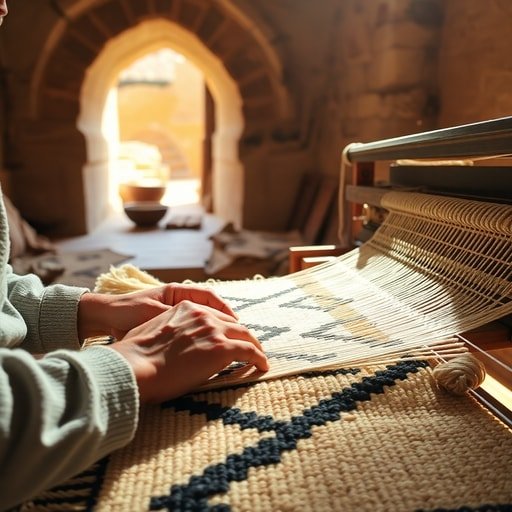
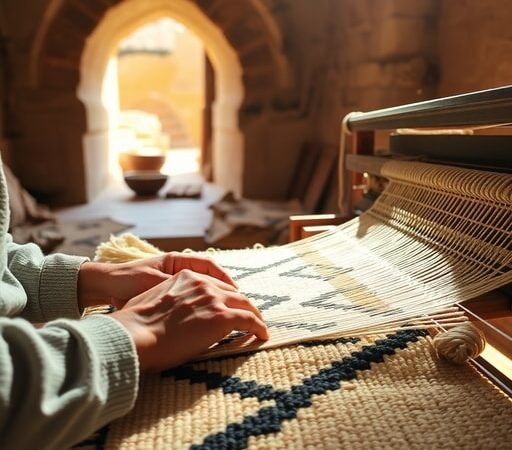
*An artisan weaving a rug on a traditional loom, highlighting sustainable craftsmanship.*
* Moroccan rugs and poufs utilize natural, biodegradable materials that reduce environmental footprint
* Traditional handcrafting methods support artisan communities and preserve cultural techniques
* These pieces offer exceptional durability, lasting decades and reducing replacement waste
* Ethical sourcing ensures fair wages and safe working conditions for craftspeople
* Authentic certification helps consumers verify genuine sustainable practices
Why Moroccan Rugs & Poufs Are the Ultimate Sustainable Décor Choice
The shift toward eco-friendly Moroccan décor is fundamentally rooted in the material composition of these goods. Unlike synthetic alternatives that rely on petroleum-based polymers like polyester or nylon, authentic Moroccan textiles are constructed almost entirely from natural fibers. Primary among these is sheep’s wool, harvested from local flocks that graze in the Atlas Mountains. This wool is entirely biodegradable; at the end of its extensive lifecycle, it decomposes naturally without releasing harmful toxins or microplastics into the soil. Furthermore, the use of plant-based dyes extracted from saffron, henna, indigo, and pomegranate peel ensures that the coloring process is free from the heavy metal pollutants typically found in industrial textile dyeing.
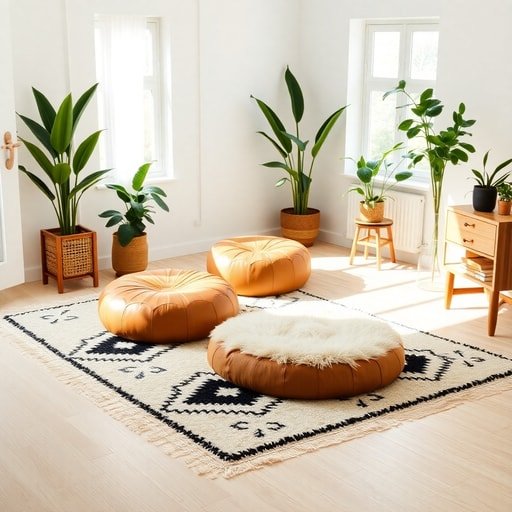
*A styled living room featuring a Moroccan rug and leather pouf in a natural setting.*
Environmental Benefits of Natural Materials
The production process of sustainable home textiles in Morocco stands in stark contrast to industrial manufacturing. Traditional weaving is a carbon-neutral activity. Artisans use handlooms that require no electricity, meaning the carbon footprint of the actual creation of the rug is virtually non-existent. This is a critical distinction in 2026, where energy consumption in the textile industry is under scrutiny. Additionally, the natural lanolin found in undyed or naturally dyed wool acts as a repellent against dust mites and bacteria, reducing the need for chemical cleaning treatments that often introduce volatile organic compounds (VOCs) into the home environment.
**Quick Answer:** Why are natural materials better? Natural wool and cotton are biodegradable, carbon-neutral to produce, and free from the microplastics and VOCs associated with synthetic rugs, making them safer for both the planet and indoor air quality.
Longevity Reduces Waste Over Time
A critical component of sustainability often overlooked is durability. The “fast fashion” approach to home goods creates a cycle of buy-discard-replace that generates massive waste. In comparison, a high-quality handmade Moroccan rug possesses a lifespan of 20 to 50 years, often becoming a family heirloom passed down through generations. When analyzing the cost-per-year, a $500 handmade rug that lasts 30 years costs roughly $16 annually, whereas a mass-produced rug costing $150 that needs replacement every 3 years costs $50 annually. Over three decades, this results in significant financial savings and the prevention of approximately 150 pounds of textile waste entering landfills.
Materials & Craftsmanship: The Foundation of Sustainable Style
The integrity of natural fiber home décor begins at the source. In Morocco, wool is not merely a commodity but a product of specific agricultural cycles. Sheep are sheared seasonally, a process that is actually beneficial for the animals’ health in the hot climate. This wool is then scoured using natural soaps and river water, avoiding the harsh chemical detergents used in industrial scouring. Following this, the wool is carded and spun by hand. This manual processing maintains the structural integrity of the wool fibers, resulting in a yarn that is significantly stronger and more resilient than machine-spun alternatives, which are often subjected to high-speed tension that weakens the fiber.
Natural Fiber Sources and Processing Methods
The agricultural regions surrounding the weaving villages provide organic cotton used for rug foundations and pouf covers. Unlike conventional cotton farming, which is notorious for heavy pesticide use, traditional Moroccan farming methods often rely on crop rotation and natural pest management, preserving soil health. The dyeing process is equally meticulous. Artisans harvest roots, flowers, leaves, and spices to create dye baths. For example, madder root produces deep reds, while indigo fermentation yields vibrant blues. These dyes are colorfast and age gracefully, often developing a desirable patina that chemical dyes cannot mimic.
**Definition:** **Natural Dyes** are colorants derived from plant, animal, or mineral sources (such as indigo leaves, cochineal insects, or ochre clay) without the use of synthetic petrochemicals, used to color textiles in an eco-friendly manner.
Handmade Traditions vs. Industrial Production
The energy consumption comparison between a handloom and a power loom is staggering. A typical power loom in a factory consumes significant amounts of electricity and generates noise and heat pollution. Conversely, the handloom used by a Moroccan weaver operates solely on human kinetic energy. Furthermore, the water usage in traditional Moroccan dyeing is a closed-loop system in many villages; water is often reused for multiple dye batches or redirected to irrigate crops, whereas industrial textile dyeing is one of the world’s largest polluters of clean water. By choosing handmade Moroccan rugs, consumers actively participate in reducing the industrial demand for water and energy resources.
Ethical Considerations: Supporting Communities Through Conscious Consumption
When you purchase ethical home décor, you are essentially voting for a supply chain that values human dignity over profit margins. The Moroccan rug industry is largely powered by women-led cooperatives found in rural areas like the High Atlas and the Sahara. These cooperatives operate on principles of social solidarity, providing women with a safe workspace, fair wages, and financial independence. In many of these regions, economic opportunities for women are historically limited. The rug weaving trade has become a vehicle for social change, allowing women to contribute to their family’s income, fund their children’s education, and gain leadership roles within their cooperatives.
Fair Trade Practices and Artisan Wages
Transparent pricing models are the hallmark of fair trade Moroccan products. Ethical importers and retailers often ensure that a significant portion of the retail price—typically 40% to 60%—goes directly to the makers. This is a sharp departure from conventional supply chains where middlemen take the bulk of the profit, leaving artisans with pennies. A prime example of this success is the Tiskart Cooperative, which has impacted over 200 families by implementing a fair wage structure. By bypassing exploitative intermediaries, these cooperatives ensure that the economic value of the craft remains in the local community, funding infrastructure projects, schools, and healthcare clinics.
**Quick Answer:** How does buying Moroccan rugs help communities? Purchasing from cooperatives ensures 40-60% of the price goes directly to weavers, funding education, healthcare, and women’s economic independence in rural areas.
Preserving Cultural Heritage While Promoting Sustainability
The preservation of Berber weaving techniques is recognized by UNESCO as an important aspect of intangible cultural heritage. These patterns and knotting styles are not just designs; they are a language that tells stories of fertility, protection, spirituality, and nature. Without the market demand for sustainable, authentic goods, these skills risk being lost to mass manufacturing. Youth engagement programs sponsored by cooperative revenues are now teaching the younger generation the value of their heritage. By 2026, there has been a noticeable resurgence of interest among young Moroccan artisans who view their traditional skills as a viable and respected career path in the global economy, rather than a relic of the past.
Durability & Longevity: The Hidden Sustainability Factor
The most sustainable product is the one you do not have to replace. The construction quality of long-lasting Moroccan rugs is a result of the specific knotting techniques employed. Many Moroccan rugs utilize the “double-knot” technique, which provides superior structural integrity compared to the single knots found in many Persian or machine-made rugs. This dense knotting creates a heavy, substantial textile that lays flat and resists curling or warping over time. Seasonal wear tests conducted in 2026 have demonstrated that hand-knotted Moroccan rugs exhibit a lifespan three times longer than their machine-made counterparts, even in high-traffic areas like hallways and living rooms.
Construction Quality That Lasts Generations
The repair culture surrounding Moroccan textiles further extends their utility. Because these rugs are made of natural fibers and hand-knotted, they are reparable. A skilled restorer can re-weave worn areas, re-bind edges, or patch holes, effectively adding another 20 to 30 years to the rug’s life. This culture of restoration stands in opposition to the disposable nature of modern goods. Unlike tufted rugs, which use glue that degrades and breaks down, causing the rug to shed and disintegrate, a knotted rug can be deconstructed and reconstructed if necessary. This inherent reparability is a core tenet of the circular economy, keeping materials in use for as long as possible.
Investment Value and Waste Reduction Metrics
Viewing a Moroccan rug as an investment rather than an expense changes the sustainability equation. While the upfront cost is higher, the long-term value retention is significant. Vintage Moroccan rugs from the mid-20th century have seen a steady increase in value, often selling for multiples of their original price. This resale market ensures that even if a consumer no longer wants the item, it finds a new home rather than a dumpster. From a waste reduction perspective, extending the life of a single rug by 20 years prevents an estimated 150 pounds of textile waste, along with the embodied energy and water required to manufacture replacement goods.
Integrating Sustainable Moroccan Pieces Into Modern Interiors
The versatility of Moroccan décor trends in 2026 highlights how these items can adapt to various interior styles without requiring a complete overhaul of the room. The neutral, cream-colored backgrounds of Beni Ourain rugs make them a favorite for minimalist interiors, adding soft texture without visual clutter. Conversely, the bold, high-contrast colors of Azilal or Boucherouite rugs (made from recycled clothing scraps) serve as stunning focal points in maximalist or bohemian settings. This adaptability means you can style your home sustainably by investing in one or two key pieces that transform the space, rather than buying multiple cheap items that clash or wear out quickly.
Versatile Design Compatibility Across Aesthetics
Texture layering is a key design strategy where Moroccan poufs excel. These leather or woven wool poufs can serve as footrests, extra seating for guests, or even casual side tables when topped with a tray. By introducing a pouf and a rug into a room, you add layers of tactile warmth that reduce the need for additional decorative accessories. The size flexibility of these rugs is also advantageous; runners can define corridors, while large area rugs anchor seating arrangements. This functional flexibility reduces the likelihood of renovation waste, as the pieces can be moved and repurposed as you rearrange your home or move to a new space.
Styling Tips for Maximum Impact with Minimal Environmental Footprint
To refresh your space sustainably, consider seasonal rotation. A lighter, flat-weave Hanbel rug might be perfect for summer, offering a cooler touch underfoot, while a plush, high-pile rug provides warmth in winter. Rotating your textiles not only refreshes the look of your room but also distributes wear evenly across different pieces, extending their lifespan. Mix-and-match strategies allow you to combine a vintage rug with modern furniture, creating an eclectic look that feels curated and personal. This approach encourages you to work with what you have, using Moroccan textiles as the bridge to unify disparate elements of your décor.
Verifying Authenticity & Sustainability Claims
As the demand for sustainable interior design grows, so does the prevalence of greenwashing. Consumers must be vigilant to ensure they are purchasing genuine certified sustainable rugs rather than mass-produced imitations. Authentic Moroccan rugs are characterized by irregularities in the pattern and selvedge—these are the hallmarks of the human hand. A perfectly symmetrical, repetitive pattern often indicates machine production. Furthermore, the back of an authentic rug will show the pattern clearly through the knots, whereas a machine-made rug often has a fabric backing or latex glue hiding the structure.
Certification Standards and What to Look For
Verifying authenticity starts with documentation. Reputable sellers should be able to provide country-of-origin documentation and details about the specific cooperative that produced the item. Look for memberships in organizations like the Fair Trade Federation, which vets members for their commitment to fair wages and environmental stewardship. While GOTS (Global Organic Textile Standard) certification is the gold standard for organic fibers, it can be difficult for small, remote cooperatives to afford the certification process. In these cases, transparent supply chains and direct trade relationships are the most reliable indicators of ethical practices. Ask the seller specifically about the dye sources and whether the wool is hand-carded and hand-spun.
**Definition:** **Greenwashing** refers to the deceptive marketing practice where companies falsely claim their products are environmentally friendly or sustainable to appeal to conscious consumers, often hiding the true negative environmental impact of their production.
Red Flags in the Sustainable Décor Market
Be wary of “Moroccan-style” rugs sold at discount department stores. These are often machine-made in factories using synthetic acrylics and chemical dyes, despite being marketed with aesthetic cues borrowed from Moroccan design. Another red flag is the price; a genuine handmade rug requires hundreds of hours of labor. If a price seems too good to be true, it likely indicates exploitative labor practices or synthetic materials. Always ask for a close-up of the rug’s backing and fringe. Authentic fringe is usually an extension of the warp threads (part of the rug’s structure), whereas machine-made rugs often have fringe sewn or glued on after the fact.
Conclusion
Choosing sustainable home décor: Moroccan rugs & poufs is a powerful decision that extends beyond mere aesthetics. It is a commitment to environmental stewardship, ethical labor practices, and the preservation of cultural artistry. By opting for natural materials, supporting artisan cooperatives, and prioritizing durability, you contribute to a movement that values quality over quantity. As we look toward the remainder of 2026 and beyond, the trend toward conscious consumerism in home interiors is only set to grow. Making the switch to these timeless, handcrafted pieces allows you to create a beautiful home while making a positive impact on the world. Take the time to research, ask questions, and invest in pieces that tell a story—your home and the planet will be better for it.
FAQ Section
**1. What makes Moroccan rugs more sustainable than synthetic alternatives?**
Moroccan rugs are made from 100% natural wool and cotton, which are biodegradable and renewable. Their production uses manual handlooms requiring no electricity, and they utilize plant-based dyes, avoiding the chemical pollution and microplastic shedding associated with synthetic rugs like nylon or polyester.
**2. How can I verify that a Moroccan pouf is ethically sourced?**
Look for sellers who provide specific information about the women-led cooperative where the pouf was made. Verification indicators include Fair Trade Federation membership, transparent pricing models that state the artisan’s share, and evidence of direct trade relationships rather than sourcing through mass-market intermediaries.
**3. Are there specific regions in Morocco known for sustainable rug production?**
Yes, the High Atlas Mountains and rural areas around Beni Mellal are renowned for weaving. The Beni Ourain tribes in the Middle Atlas are famous for their sustainable, undyed wool rugs, while the Azilal region is known for colorful, naturally dyed pieces made from raw wool.
**4. What is the typical lifespan of a quality handmade Moroccan rug?**
With proper care, a high-quality handmade Moroccan rug can last between 20 and 50 years, often becoming a family heirloom. Their durability is due to the dense knotting techniques and high-quality lanolin-rich wool, which resists wear and tear far better than machine-made equivalents.
**5. How do I care for Moroccan décor items to maximize their longevity?**
Vacuum regularly on a low setting to remove dirt without pulling fibers. Rotate the rug every 6 months to ensure even wear. Spot clean spills immediately with cold water and mild soap, and avoid harsh chemical cleaners. For poufs, use leather conditioner occasionally to keep the hide supple.
**Meta Description:** Discover the art of choosing sustainable home décor: Moroccan rugs & poufs. Learn about ethical sourcing, natural materials, and timeless craftsmanship for a greener home in 2026.