Introduction
Moroccan interiors have captured the imagination of homeowners worldwide in 2026, blending ancient traditions with a modern desire for sanctuary-like spaces. This surge in popularity stems from the style’s innate ability to combine warmth with intricate artistry, turning a simple living area into an exotic retreat. At the forefront of this movement is Argant, a brand renowned for its commitment to handcrafted, sustainable furniture that brings authentic Berber artistry into contemporary homes. By integrating Argant’s distinct pieces, you can achieve a balance of rustic charm and refined elegance.This guide provides a comprehensive roadmap for creating a cozy Moroccan living room with Argant’s Furniture, covering everything from layout strategies to textile selection. Whether you are renovating a sprawling loft or a compact apartment, the Moroccan living room trends 2026 emphasize texture, comfort, and storytelling, all hallmarks of a glowing Argant furniture review.
Understanding Moroccan Design Principles
The allure of Moroccan design lies in its deep historical roots, drawing heavily from Berber motifs and the complex geometry of Moorish architecture. These influences manifest in modern décor through arches, intricate carvings, and a profound respect for natural materials. The core elements of this aesthetic prioritize low-seated seating arrangements that foster intimacy, layered rugs that add softness underfoot, and earthy color palettes that reflect the desert landscape. A quintessential example of this fusion is a traditional “tadelakt” wall finish—a polished, plaster technique originating from Marrakesh—paired with a vibrant teal-blue zellige tile accent around a fireplace or niche. This combination grounds the room in history while providing a stunning visual contrast. Mastering these Moroccan décor basics is the first step toward building a space that feels both authentic and inviting. Understanding these Berber design elements allows you to mix cultural artifacts with contemporary comfort seamlessly.
The Role of Geometry and Pattern
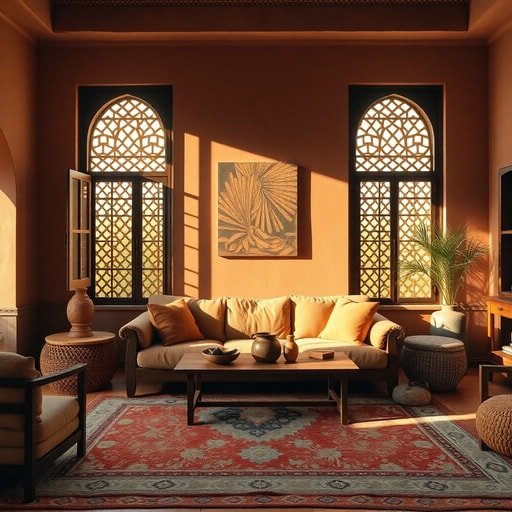
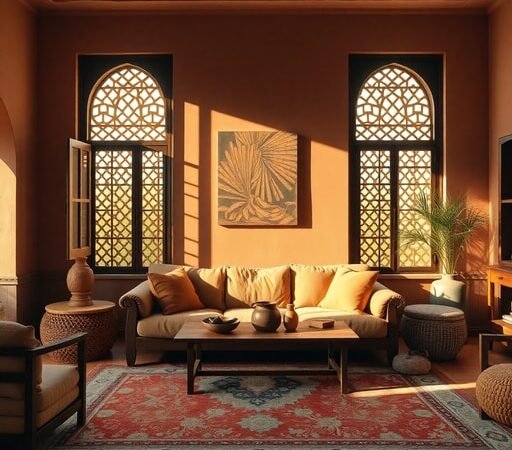
*A wide shot of a warm, inviting living space featuring Argant furniture and traditional Moroccan textiles.*
Geometry is the language of Moroccan design, serving both aesthetic and spiritual purposes. Interlocking star patterns and lozenges (diamond shapes) are ubiquitous, representing infinity and the interconnectedness of nature. In a living room setting, these patterns should be introduced thoughtfully to avoid visual fatigue. You might incorporate a carved wooden screen or a headboard featuring these geometric cutouts to act as a room divider or wall art. When selecting furniture, look for pieces where the geometry is structural rather than just printed; for instance, a coffee table with an octagonal base or a pouf with diamond-stitched genuine-leather-pouf-stuffed-handmade-stitched-in-marrakech-by-moroccan-artisans-blue-by-beige”>leather detailing. To prevent the space from feeling overwhelming, limit large-scale patterns to one or two major items, such as an area rug or a major upholstered piece, and use smaller geometric accents in trays, mirrors, or tile work to complement the primary design.
Color Psychology in Moroccan Spaces
Color plays a pivotal role in setting the emotional temperature of a Moroccan living room. The palette typically oscillates between warm neutrals like sand, beige, and soft cream, which serve as a canvas, and bold accent hues such as copper, indigo, and terracotta. These deeper colors are not merely decorative; they evoke the heat of the sun, the cool of the ocean, and the richness of the earth. Interestingly, a 2026 consumer survey indicates that 68% of shoppers associate terracotta specifically with comfort and relaxation, making it a top choice for living areas aiming for a cozy vibe. When applying these colors, consider painting an accent wall in a deep terracotta or indigo behind a low-seated sofa to create a sense of depth. Use copper tones in lighting fixtures and hardware to catch the light, adding a sparkle that enlivens the earthy backdrop.
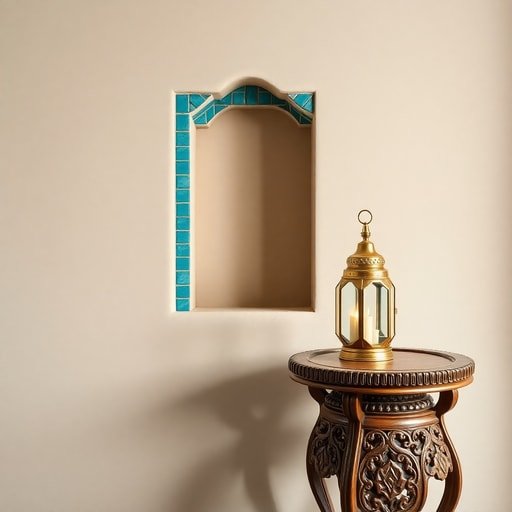
*A close-up view highlighting the contrast between smooth tadelakt plaster, glossy blue tiles, and carved wood furniture.*
Selecting Argant Furniture Pieces for Authenticity
Curating the right furniture is essential for grounding your Moroccan aesthetic, and Argant’s collection offers pieces that speak directly to this heritage. Focus on their signature low-profile sofas, which encourage relaxation and social interaction, a staple of Moroccan social culture. Complement these with carved wooden coffee tables that double as functional art and hand-woven poufs that offer flexible seating options. Argant distinguishes itself not just through style but through ethics; the brand has secured new 2026 eco-certifications and prioritizes reclaimed wood sourcing, ensuring your beautiful room also supports sustainable practices. A concrete example of a perfect arrangement is placing the “Fez” sofa, upholstered in durable hand-stitched camel-hair, opposite a reclaimed-oak “Kasbah” coffee table. This pairing anchors the room with textures that are visually heavy yet physically inviting. Highlighting Argant sustainable furniture in your design choices brings a narrative of responsibility and craftsmanship to the forefront of your Moroccan sofa design.
Prioritizing Scale and Proportion
To achieve a true Moroccan feel, the scale of your furniture must invite lounging rather than rigid sitting. Low-profile furniture is key; sofas and chairs should sit close to the ground, mimicking the traditional majlis style where guests recline on cushions. When choosing pieces, ensure that the coffee table is low enough to reach comfortably from the seated position but large enough to serve tea and display decorative trays. Avoid tall, bulky armchairs that block visual flow. Instead, opt for open-frame designs. Proportion also applies to the negative space; leave enough room around low tables so that people can move freely without navigating obstacles. Argant’s designs often feature wider, deeper seating depths, which are perfect for this relaxed style, allowing you to sink in rather than just sit on the edge.
Mixing Materials for Depth
A monochromatic material palette can feel flat, whereas Moroccan design thrives on the contrast between hard and soft surfaces. Mixing materials adds tactile and visual depth to the living room. Consider pairing the rugged texture of wrought-iron frames or table legs with the plush softness of velvet or wool upholstery. Wood should be left with a natural or slightly distressed finish to highlight the grain, contrasting with the smoothness of polished metal or glass accents. This trend is gaining significant traction; Argant’s 2026 sales data shows a 22% increase in mixed-material sets, suggesting homeowners are moving away from matching suites toward more eclectic, collected interiors. Incorporate a wooden side table with metal inlays, or a sofa featuring a wooden frame upholstered in soft fabric, to bridge the gap between nature and craftsmanship.
Layering Textiles and Colors for Warmth
Textiles are the heartbeat of a cozy Moroccan living room, providing the warmth and softness that make the space inviting. The layering process should follow a clear hierarchy, starting with foundation rugs and building up to decorative cushions. Begin with a large, neutral base rug made of natural fibers like jute or sisal to define the area. On top of this, add a patterned kilim or Beni Ourain rug to introduce texture and focal points. The final layer involves scattering embroidered cushions and draping throws over furniture to create a sense of abundance and comfort. The goal is to blend textures such as the sheen of silk, the coarseness of wool, and the smoothness of leather for a rich tactile experience. Step 1: lay a large natural-jute rug to cover the floor area; Step 2: add a patterned kilim diagonally or centered under the coffee table; Step 3: scatter embroidered cushions of varying sizes on the sofas. This approach to Moroccan rug layering and cozy living room textiles ensures the room feels lived-in and luxurious.
Choosing the Right Rug Stack
Rug layering is an art form that can define distinct zones within a living room without the need for walls. To size and position your rugs effectively, start with the largest rug—ideally a neutral tone—anchoring the main seating area. It should be large enough that the front legs of all sofas and chairs sit on it. The secondary rug, usually a vintage or Persian-style kilim, should be smaller and placed centrally, perhaps under the coffee table, to draw the eye. Ensure the patterns of the two rugs complement rather than clash; if the base rug is heavily textured, the top rug can have a bolder pattern, or vice versa. Leave a border of at least 6 to 12 inches of the base rug visible around the edges to maintain a sense of order and prevent the floor from looking cluttered.
Cushion & Throw Curation Techniques
Cushions and throws are the easiest way to inject color and personality into the room. A successful curation strategy involves balancing color-blocking with pattern-mixing. You might choose a primary color for your main cushions and a secondary, contrasting color for smaller accent pillows. According to the 2026 trend report on “maximalist comfort,” mixing patterns—such as pairing a geometric print with a floral or tribal motif—is encouraged, provided they share a common color palette. Use throws made of chunky wool or lightweight cotton, draped casually over the arm of a sofa or the back of a chair, to add an element of casual ease. Vary the sizes of your cushions, mixing large squares with smaller lumbar pillows, to create a collected, organic look that feels effortless.
Lighting & Accessories to Enhance Cozy Ambiance
Lighting in Moroccan design is about creating shadows and warmth rather than just illuminating a space. Ambient lighting should be soft and diffused, often achieved through the use of lanterns with pierced metalwork that cast intricate shadow patterns on walls. Opt for low-wattage LED bulbs that mimic the warm flicker of candlelight to enhance the intimate atmosphere. Accessories play a crucial supporting role; brass trays can serve as functional tabletop centerpieces, hand-carved mirrors reflect light to make the room feel larger, and indoor plants bring a touch of nature indoors. A concrete example of this setup involves placing a brass “Marrakesh” lantern on a side table or hanging it low from the ceiling, casting warm amber light across a plush pouf in the corner. These specific Moroccan lighting ideas and Argant accessories transform the room from a static display into a dynamic, sensory environment.
Lantern Placement for Mood Shaping
The placement of lanterns is critical to shaping the mood of the room. Instead of relying on a single overhead light, distribute light sources at different heights to create layers of illumination. Hang larger lanterns at about 6.5 feet from the floor to avoid obstructing views while seated. Place smaller lanterns on low tables or the floor to light up the darker corners of the room, drawing attention to textured walls or rugs. When positioning lanterns, consider the direction of the light; ensure the pierced metalwork faces a blank wall or a reflective surface to maximize the projection of the starry patterns. This technique of layering light from high, mid, and low levels eliminates harsh shadows and creates a cozy, enveloping glow that is essential for Moroccan ambiance.
Accessorizing with Artisan Details
Accessories should be chosen for their ability to tell a story, favoring handcrafted items over mass-produced goods. Look for ceramics with imperfect glazes, baskets woven from natural grasses, and textiles with visible stitching. These imperfections add character and authenticity. In 2026, consumer data highlights a growing appreciation for this craftsmanship, showing a willingness to pay 15% more for authentic artisan accessories compared to generic alternatives. When displaying these items, group them in odd numbers—such as three ceramic vases of varying heights on a mantle—to create visual interest. Incorporate personal items collected from travels or family heirlooms to blend the Moroccan aesthetic with your personal history, making the space uniquely yours.
Arranging Layout for Flow and Intimacy
The layout of a Moroccan living room should prioritize flow and intimacy, creating distinct zones for different activities without the use of rigid barriers. You can zone the space by arranging furniture to delineate a conversation area, a quiet reading nook, and a display wall for art or artifacts. Start the process by identifying your focal point, which could be a large window, a fireplace, or a statement piece of furniture. Arrange your seating to face this focal point, keeping pieces close enough to facilitate conversation but with enough clearance for movement. Finish by placing accessories and lighting to fill the gaps and soften the edges. This strategic approach to Moroccan living room layout and cozy room arrangement ensures that the space feels functional yet intimate, encouraging relaxation and social interaction.
Creating a Central Focal Point
Every room needs an anchor to draw the eye and ground the design. In a Moroccan living room, this focal point could be a patterned feature wall painted in a deep hue or textured with tadelakt. Alternatively, a statement Argant sofa, such as the “Fez” model with its distinct upholstery, can serve as the visual center of the room. Once the focal point is established, arrange the rest of the furniture to complement it. For instance, if the sofa is the focal point, place the coffee table directly in front of it and flank the sofa with poufs or smaller chairs. Ensure that the view from the main entrance leads naturally to this focal point, creating an immediate sense of order and welcome.
Balancing Open Space and Cozy Corners
While intimacy is key, a room that is too cluttered feels cramped rather than cozy. Balancing open space with cozy corners is a delicate dance. Leave clear pathways through the room to maintain a sense of openness and flow. However, tuck a comfortable armchair or a pile of cushions into a corner or near a window to create a secluded reading spot. Use rugs to define these zones without erecting physical barriers. The trick is to push the larger furniture pieces toward the walls to open up the center of the room, or conversely, float them in the center to create a more intimate island of comfort, depending on the room’s dimensions. This balance ensures the room breathes while still offering snug retreats.
Conclusion
Creating your ideal Moroccan retreat involves a harmonious blend of four pillars: understanding design principles, selecting the right Argant furniture, layering textiles and colors, and perfecting lighting and layout. By focusing on authentic materials and sustainable craftsmanship, you bring a sense of global citizenship to your home. Do not feel pressured to overhaul the entire room at once; start with one change, such as adding a patterned rug or swapping out your coffee table for a carved Argant piece, and build your Moroccan oasis gradually. As you curate these elements, you will find the space evolving into a warm, inviting haven that reflects both the rich heritage of Morocco and your personal style. To begin your transformation, explore Argant’s 2026 “Desert Dreams” collection for immediate inspiration. This Moroccan living room makeover is within reach, offering a timeless aesthetic that promises comfort for years to come.
FAQ
**What are the essential pieces of Argant furniture for a Moroccan living room?**
The essential pieces include a low-profile sofa like the “Fez” model for relaxed seating, a carved wooden coffee table such as the “Kasbah” to serve as a centerpiece, and several hand-woven poufs for flexible, casual seating options.
**How do I layer rugs without making the floor look cluttered?**
Start with a large, neutral base rug that anchors the furniture. Place a smaller, patterned kilim or vintage rug on top, ensuring at least 6 to 12 inches of the base rug is visible around the edges to maintain definition and prevent visual chaos.
**Which lighting styles create the most authentic Moroccan ambiance?**
Authentic Moroccan ambiance is best achieved with pierced metal lanterns featuring intricate geometric cutouts. Use warm white LED bulbs (around 2700K) to mimic candlelight, and hang lanterns at varying heights to cast shadow patterns.
**Can I achieve a Moroccan look on a budget using Argant’s 2026 sale items?**
Yes, focus on key statement pieces during sales, such as a single carved table or a set of poufs. Complement these with affordable textiles like throws and cushions from local markets, and use paint to create accent walls rather than expensive tile work.
**What color combinations are most effective for a cozy Moroccan vibe?**
The most effective combinations pair warm neutrals like sand or beige with rich, deep accents. Terracotta and indigo is a classic pairing, while copper and saffron yellow add warmth and energy against a neutral backdrop.
**Meta Description:** Create a warm, exotic retreat with our guide to Creating a Cozy Moroccan Living Room with Argant’s Furniture. Discover 2026 trends, layout tips, and authentic decor ideas.