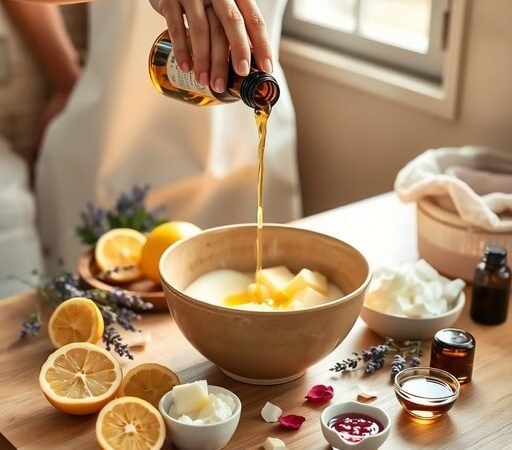
At the heart of the natural beauty revolution is Moroccan Argan oil, often called “liquid gold,” extracted from the nuts of the Argania spinosa tree native to Morocco. This versatile oil has transcended its historical roots as a dietary staple and hair protector to become a global cosmetic powerhouse. Consumers are increasingly rejecting products laden with synthetic additives in favor of formulations they can create in their own kitchens. By utilizing DIY Natural Body Care Recipes Using Moroccan Argan Oil, you harness centuries of tradition while tailoring solutions to your unique skin and hair needs.
“Pure, cold-pressed Argan oil delivers up to 80% vitamin E content and essential fatty acids that commercial products often lose through over-processing, making it the cornerstone of effective natural beauty formulations.”
The Essential Guide to Formulating DIY Beauty Products
Success depends on sourcing pure Argan oil to ensure the nutrient density remains intact. Look for cold‑pressed, unrefined oil that retains its natural tocopherols, phenolic compounds, and essential fatty acids. Carrier oils such as jojoba, sweet almond, or fractionated coconut oil can be blended to adjust viscosity and absorption rate. Essential oils like lavender, tea tree, or frankincense add therapeutic benefits and pleasant aromas, but must be diluted properly to avoid irritation. A safe standard is typically a 1‑2% dilution, equating to roughly 6‑12 drops of essential oil per ounce of carrier oil.
Cold-Pressed Argan Oil: Oil extracted through mechanical pressing at temperatures below 120°F (49°C) without chemical solvents, preserving heat-sensitive nutrients like vitamin E and essential fatty acids (oleic acid: 45-50%, linoleic acid: 30-35%).
Accurate measurements are crucial; using a digital scale for solids and graduated droppers for liquids ensures consistency across batches. Sterilize all containers and tools with boiling water or a food‑grade sanitizer before use to prevent microbial growth. Store finished products in amber glass bottles away from direct sunlight to preserve potency and extend shelf life.
Quick Answer: Use cold-pressed, unrefined Argan oil as your base, blend with carrier oils at 1-2% essential oil dilution (6-12 drops per ounce), sterilize tools with boiling water, and store in amber glass containers away from light for maximum shelf life of 6-12 months.
Understanding Cosmetic Grades and Purity Levels
Not all Argan oil is created equal. Cosmetic grade Argan oil undergoes minimal processing to preserve its skin‑nourishing properties, while culinary Argan oil is roasted, giving it a distinct nutty scent and flavor that can be overpowering in topical applications.
Cosmetic Grade vs Culinary Grade: Cosmetic grade Argan oil is cold-pressed and unrefined, maintaining clear to pale yellow color and mild nutty aroma for skincare. Culinary grade is roasted at high temperatures, producing deep amber color, intense flavor, and lower smoke point—ideal for consumption but less suitable for cosmetic use due to altered fatty acid profile.
Culinary Argan oil is best reserved for cooking, as a dietary supplement or salad dressing. When selecting oil for body care, verify that it is labeled “100% pure Argan oil” with no added fragrances, preservatives, or diluents. Independent lab testing for peroxide value and UV absorbance can further confirm purity. The presence of squalene and vitamin E in high concentrations indicates a premium product capable of delivering antioxidant protection and deep moisturization.
Squalene: A naturally occurring compound comprising 1-3% of Argan oil that provides exceptional hydration by mimicking skin’s sebum production. Acts as an antioxidant shield against environmental stressors while improving skin barrier function and elasticity, particularly beneficial for mature or dry skin types.
Quick Answer: Choose cosmetic grade Argan oil for skincare—it’s cold-pressed and unrefined with high vitamin E content. Culinary grade is roasted and better suited for food. Look for “100% pure” labeling and verify squalene and vitamin E concentrations for premium quality.
DIY Natural Body Care Recipes
Revitalizing Damaged Hair Mask
Combine 2 tablespoons of Moroccan Argan oil, 1 tablespoon of raw honey, and 5 drops of ylang‑ylang essential oil. Apply to damp hair, focusing on mid‑lengths to ends, cover with a shower cap, and leave for 30 minutes before rinsing with a sulfate‑free shampoo. This mask restores elasticity, reduces breakage, and imparts a natural shine.
Hydrating Facial Serum
Mix 1 ounce of pure Argan oil with ½ ounce of rosehip seed oil and 4 drops of frankincense essential oil. Transfer to a dark glass dropper bottle. Use 2‑3 drops each morning and evening after cleansing to improve skin texture, diminish fine lines, and boost radiance.
Soothing Body Lotion
Blend ½ cup of shea butter, ¼ cup of coconut oil, and ¼ cup of culinary Argan oil in a double boiler until melted. Remove from heat, stir in 10 drops of lavender essential oil, and pour into a wide‑mouth jar. Allow to cool and solidify. Apply a generous amount after showering to lock in moisture and calm irritated skin.
Solid Lotion Bars
Melt equal parts beeswax pellets, cocoa butter, and pure Argan oil—about ¼ cup each—over low heat. Add 8 drops of peppermint essential oil for a refreshing sensation. Pour the mixture into silicone molds and let harden completely. Rub the bar directly onto skin; body heat melts the oils, delivering a non‑greasy, long‑lasting barrier.
Quick Answer: Mix 2 tbsp Argan oil + 1 tbsp honey for hair masks, combine 1 oz Argan oil + ½ oz rosehip oil for facial serum, or blend ½ cup shea butter + ¼ cup coconut oil + ¼ cup Argan oil for body lotion. Add essential oils at 1-2% dilution for therapeutic benefits.
How long do DIY Argan oil products last? When stored properly in amber glass containers away from heat and light, most formulations remain stable for 6‑12 months. Products containing water or fresh botanicals should be used within 1‑2 weeks and kept refrigerated. Always discard any product that develops an off smell, discoloration, or texture change.
What dilution ratio is safe for essential oils? A common guideline is a 1‑2% dilution for leave‑on products, which translates to roughly 6‑12 drops of essential oil per ounce of carrier oil. For rinse‑off items like shampoos, a slightly higher concentration of up to 3% can be tolerated.
Can I use culinary Argan oil for hair treatments? While culinary Argan oil is edible, its roasted profile may leave a noticeable scent on hair and is generally less effective for cosmetic purposes compared to cold‑pressed cosmetic grade oil. For best results in body care, stick to the unrefined, cosmetic grade variety.
- Premium Quality Matters: Always choose cold-pressed, unrefined cosmetic grade Argan oil for maximum nutrient retention including 80% vitamin E and natural squalene content
- Proper Dilution Protocol: Maintain 1-2% essential oil dilution (6-12 drops per ounce) for leave-on products to prevent skin irritation
- Shelf Life Management: Store formulations in amber glass containers away from light for 6-12 months longevity; refrigerate water-based products
- Kitchen-to-Skin Versatility: Create customized hair masks, facial serums, and body lotions using simple ingredient combinations
- Grade Differentiation: Reserve culinary Argan oil for consumption; cosmetic grade preserves therapeutic properties for topical application
Embracing DIY Natural Body Care Recipes Using Moroccan Argan Oil empowers you to create effective, personalized products free from unnecessary chemicals. By understanding the distinctions between cosmetic and culinary grades, measuring ingredients precisely, and following proper preservation techniques, you can enjoy the timeless benefits of this Moroccan treasure in every application. Start experimenting today, and experience the transformative power of pure Argan oil tailored to your unique beauty routine.