Guide to Authentic Moroccan Furniture for Small Spaces
Integrating authentic Kenzadi furniture into small spaces requires prioritizing scale, light materials, and visual airiness over the heavy, ornate pieces typically found in traditional grand riads. You can successfully adapt this intricate aesthetic for modern urban living by selecting items with raised legs, open fretwork, and lighter wood tones that allow light to permeate the room. The rising popularity of “global bohemian” styles in 2026 has led artisans to design specific variations for micro-apartments, ensuring you do not need to sacrifice square footage for cultural richness. This guide to authentic Moroccan furniture for small spaces will demonstrate how to masterfully blend exotic craftsmanship with the practical demands of studio apartments and cozy living rooms through strategic selection and smart styling.
Key Takeaways
- Focus on visual weight by choosing pieces with open fretwork or slender legs to maintain a sense of airiness.
- Utilize a neutral color palette (whites, creams) for large furniture to let intricate smaller accents pop without overwhelming the room.
- Invest in dual-purpose authentic pieces like leather poufs or low-profile wooden tables to save floor space.
- Prioritize quality over quantity; one authentic hand-carved mirror is superior to three mass-produced clutter items.
The Art of Visual Balance: Scaling Moroccan Design for Compact Living
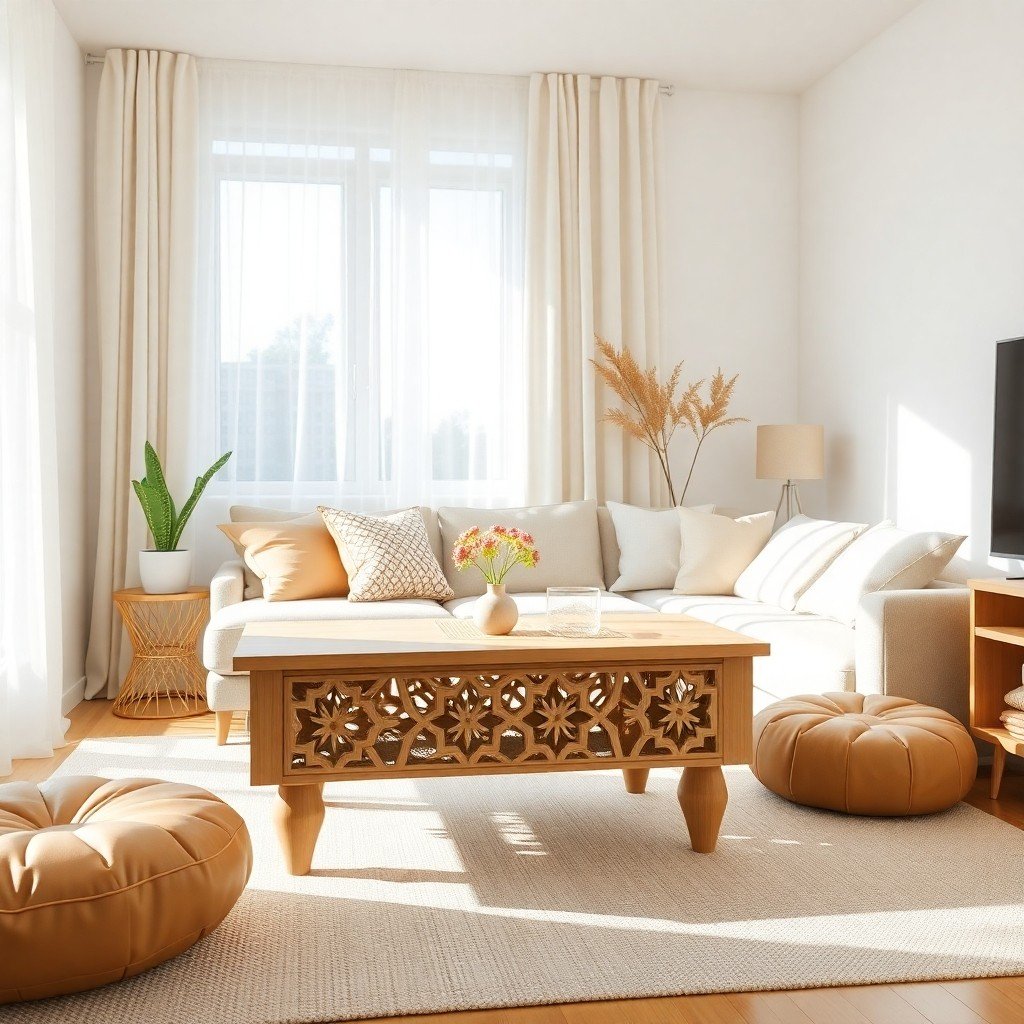
A bright living room showcasing a low-profile Moroccan table with open fretwork to maximize light and space.
The secret to incorporating Moroccan design into compact areas lies in manipulating proportion and scale to avoid a claustrophobic atmosphere. In small spaces, the heavy, dark woods typical of traditional Casablancan furniture can dominate the visual field, making the room feel significantly smaller than it actually is. The most effective strategy involves selecting authentic pieces that feature raised legs or open geometric cutouts, known as fretwork, which allow light to pass through and maintain a visual connection to the floor. This technique preserves the “grounded” feel of the room while ensuring the furniture does not appear as a heavy block obstructing the flow.
You must also leave intentional negative space around your furniture to highlight the craftsmanship rather than filling every corner with decor. When arranging a space-saving furniture layout, position your largest item against the least used wall to maximize open floor area. For example, a slender sofa table with intricate carving should be placed with enough clearance to show its silhouette. Using a Beni Ourain rug styling approach can also aid this balance; the cream-colored background of these rugs expands the visual floor space, while their geometric lines add the necessary Moroccan texture without darkening the room.
Definition: Visual Weight
Visual weight refers to how heavy or light an object appears within a space. Objects with dark colors, solid dense shapes, or complex carvings have high visual weight, while pieces with light colors, open legs, or transparent materials have low visual weight and are ideal for small rooms.
Quick Answer: How do I stop Moroccan furniture from looking “heavy”?
Choose pieces with “see-through” elements. Look for chairs or tables with open fretwork, metal scrollwork, or raised legs that let you see the floor and wall behind them. This maintains a sense of spaciousness while keeping the intricate style.
Material Selection: Prioritizing Light Woods and Wrought Iron Over Heavy Carvings
To achieve authenticity without visual bulk, you must focus your material selection on light woods and wrought iron rather than dense, dark hardwoods. Light-colored woods like cedar or olive wood, often finished in natural or whitewashed tones, reflect light significantly better than dark walnut or mahogany, making the room feel airy and open. These materials are staples in modern Moroccan interior design trends 2026, offering the grain and craftsmanship of the region without the oppressive density of older styles. When shopping, look for items described as “blonde wood” or “white wash” to ensure they complement a bright, small apartment aesthetic.
Wrought iron is another essential material that provides the signature Moroccan aesthetic—think arches, scrolls, and lattice work—while occupying very little physical visual space. A wrought iron console table or a chair frame made of this metal feels delicate compared to a solid timber block, yet it carries the intricate DNA of Moroccan design. You should avoid thick, fully upholstered seating in favor of timber-framed pieces with thin cushions. This shift reduces the physical footprint of the furniture. Additionally, incorporating apartment-sized wrought iron lanterns rather than massive floor lamps adds vertical ambiance without consuming valuable floor space.
Quick Answer: What are the best materials for small Moroccan spaces?
Stick to cedar, olive wood, and wrought iron. These materials are naturally lighter in color and visual weight than dark mahogany or thick upholstery. They reflect light better and allow for intricate designs that don’t feel “heavy” or overwhelming in a small room.
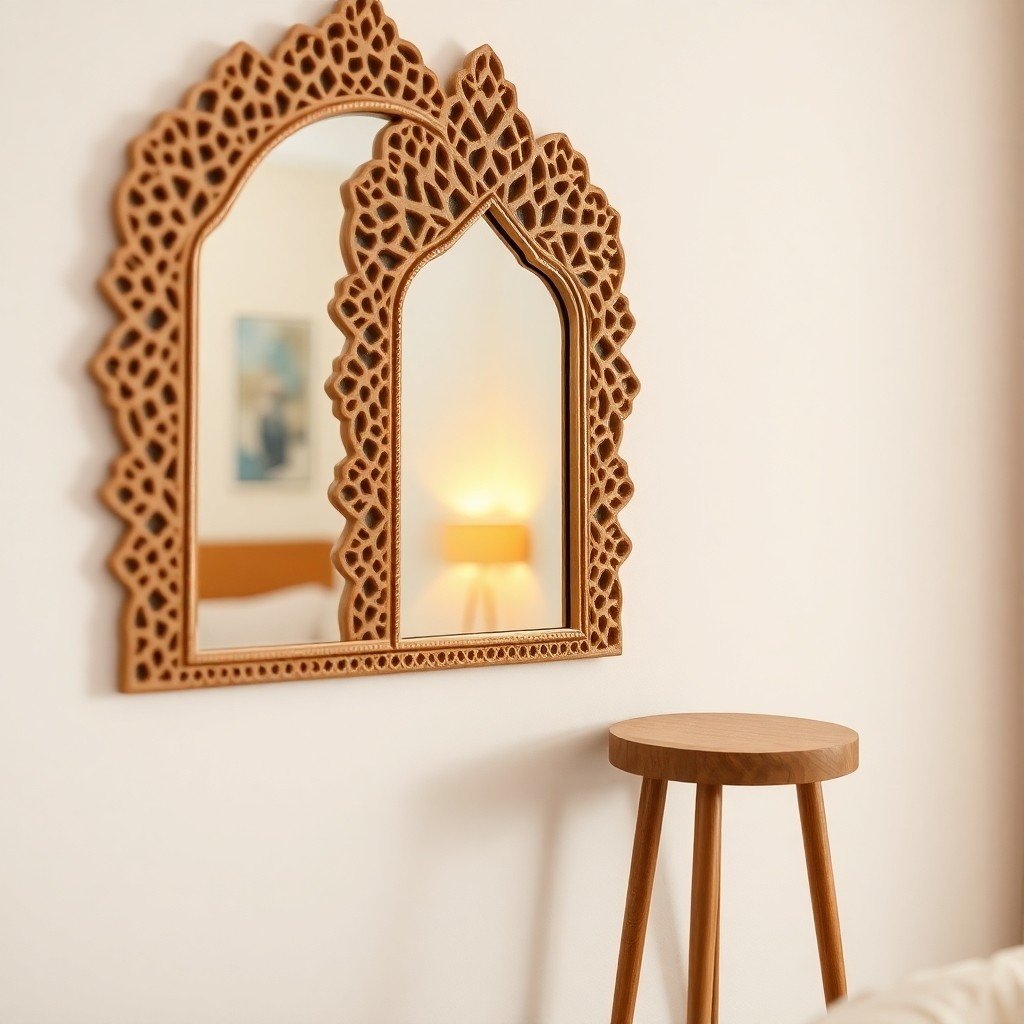
A cozy corner highlighting a hand-carved mirror and slender wooden table to illustrate visual balance in compact interiors.
Strategic Color Application: The Neutral Base Method
The risk of “pattern fatigue” is high in small rooms, making strategic color application vital for maintaining a serene environment. Treat the walls and large furniture items as a blank canvas using warm whites or soft sand colors to create a backdrop that recedes visually. Authentic Moroccan color should be introduced through accessories rather than the main furniture structure to prevent the space from feeling chaotic. This approach aligns with current small apartment styling techniques, where the architecture acts as a quiet stage for the decor. By keeping your sofa or bed frame neutral, you allow the smaller accents to provide the excitement.
One effective method is using a zellige tile table in vibrant blues or greens as the centerpiece, while keeping the table legs and surrounding chairs neutral. The intricate patterns of the tiles provide the cultural texture, but the neutral legs ensure the piece doesn’t dominate the room. You should also explain how a single bold accent color, like the famous Majorelle blue accents, used sparingly on a throw pillow or a ceramic vase creates depth without shrinking the room’s perceived size. Avoid painting entire walls in deep, saturated colors; instead, use these vibrant Moroccan color palettes in doses of 10% or less relative to the room’s total surface area.
Definition: Pattern Fatigue
Pattern fatigue occurs when a space contains too many competing visual stimuli, such as multiple clashing patterns or colors, causing the viewer to feel overwhelmed and the space to feel cluttered or chaotic. It is mitigated by using solid, neutral colors to balance intricate designs.
Quick Answer: How do I use bold Moroccan colors in a small room?
Use the 80-20 rule. Keep 80% of your room (walls, large furniture, rugs) in neutral whites, creams, or light sands. Reserve the bold 20% for pops of color like Majorelle Blue in vases, pillows, or a single tile-topped table.
Multi-Functional Icons: Poufs, Benches, and Low Tables
In compact living situations, every piece of furniture must earn its keep by serving multiple purposes. The by Beige) is the ultimate icon of this philosophy, serving as seating, a footrest, or a side table, and it can be easily tucked away under a console table when not in use. These multi-functional leather poufs are rigid yet lightweight, making them easy to move around depending on your immediate needs. Unlike a bulky armchair, a pouf can be slid out of the traffic path instantly, offering flexibility that is crucial in 300-square-foot studios or small living rooms.
Discuss the benefits of low-profile furniture, inspired by the Moroccan floor-sitting culture, which lowers the visual center of the room, making ceilings appear higher. A Moroccan 10.2 draws the eye downward and expands the perceived vertical space. Here is a step-by-step tip for styling a low tea table: place a large, sturdy tray on top to create a stable surface for dining or working on a laptop, then remove the tray when entertaining guests to reveal the beautiful mosaic or woodwork beneath. This transforms the table from a utility surface to a decorative art piece in seconds. Beni Ourain rug styling works exceptionally well here, as the low profile of the furniture highlights the plush texture of the rug without blocking the view.
Authentic Sourcing for Small Footprints: Navigating Souks and Online Artisans in 2026
Finding authentic pieces that fit apartment dimensions requires knowing where to look and what specific terms to use. You must contrast mass-produced “boho” retailers with genuine cooperatives in Marrakesh or Fes, as the latter often offer higher quality and more customizable sizing. In 2026, many artisans now offer customizable sizing for export to accommodate global urban living, a trend that is reshaping the handmade Moroccan furniture market. When sourcing, look for terms like “apartment-sized,” “narrow profile,” or “slim depth” to find items that respect your square footage limitations.
Advise looking for apartment-sized variants of traditional items, such as narrower sideboards or half-moon tables designed to fit against walls. A hand-carved cedar storage chest is a prime example; it provides essential storage for blankets or clutter while serving as a display surface, yet it is often shallower than a traditional Western dresser. You should warn against buying massive room-dividers unless the space is an open-plan studio, and instead suggest smaller architectural fragments like carved window shutters used as wall art. This allows you to participate in artisan market sourcing without physically blocking light or flow in your home. When buying online, always verify the dimensions meticulously, as “authentic” sizing can vary drastically from Western standard measurements.
Quick Answer: Can I buy authentic Moroccan furniture online for a small apartment?
Yes, but look for vendors who work directly with cooperatives. In 2026, many artisans offer custom sizing. Specifically search for “slim” or “apartment” versions of sideboards and tables, and prioritize wall art like carved shutters over bulky room dividers to save space.
FAQ
Is Moroccan furniture too heavy for a small studio apartment?
Not necessarily. While traditional pieces are substantial, modern Moroccan adaptations often use lighter woods like cedar or wrought iron. Choosing items with open designs or raised legs prevents the room from feeling heavy.
How can I incorporate Moroccan patterns without making the room look cluttered?
Limit patterns to one or two statement pieces, such as a colorful Boucherouite rug or a zellige tile table top. Keep the walls and larger upholstery pieces in solid, neutral tones to balance the visual complexity. This strategy is key to successful mixing patterns in small rooms.
What are the best authentic Moroccan pieces for tiny bedrooms?
A hand-carved wooden mirror is an excellent choice; it adds artistry and reflects light to make the room feel larger. Additionally, a low wooden bench at the foot of the bed provides storage or seating without towering over the space.
Can I mix modern minimalist furniture with Moroccan accents?
Yes, this creates a Bohemian minimalist interior design look. The clean lines of modern minimalist furniture act as a perfect backdrop for the intricate textures and patterns of authentic Moroccan decor items like lanterns and poufs.
Conclusion
Achieving the Moroccan vibe in a small space is about curation rather than accumulation. By focusing on light materials, strategic colors, and multi-functional leather poufs, you create an exotic sanctuary even in the smallest urban apartments. This guide to authentic Moroccan furniture for small spaces demonstrates that you do not need a grand palace to enjoy the warmth and artistry of North African design. The key is respecting the scale of your home and choosing pieces that breathe. Start with one signature piece, like a leather pouf or a carved mirror, and build the room around it. As global furniture trends continue to evolve towards personalization and craftsmanship, your small space can become a testament to timeless style and smart living.
Meta Description: Master the art of Moroccan decor in compact apartments. Discover tips on light woods, neutral bases, and multi-functional pieces for 2026.