How to Stuff a Moroccan Leather Pouf: The Ultimate Guide
Handcrafted in the medinas of Marrakech for centuries, Moroccan leather poufs represent more than just decorative furniture—they embody a rich tradition of artisanal craftsmanship passed down through generations. These versatile pieces, originally designed as practical seating for nomadic families, feature intricate hand-stitching and supple leather that develops character with age. Today, they’ve become coveted interior design elements, gracing modern homes from Brooklyn lofts to London townhouses. However, many owners discover that achieving the perfect pouf requires mastering the art of stuffing—a skill that directly impacts comfort, longevity, and visual appeal.
Proper stuffing transforms a flat, deflated pouf into a plush, inviting centerpiece that can support seating while maintaining its elegant silhouette. The right filling material ensures your investment lasts decades rather than years, while poor technique can lead to uncomfortable lumps, misshapen forms, or even structural damage to the leather itself. This comprehensive guide walks you through selecting appropriate materials, preparing your pouf for stuffing, mastering professional techniques, and maintaining your finished piece for years of enjoyment.
Choosing the Right Filling Material
The foundation of successful pouf stuffing lies in selecting materials that balance comfort, durability, and practicality. Your choice will determine whether guests eagerly claim the pouf as their favorite seat or avoid it entirely. Traditional artisans relied on readily available materials, while modern crafters benefit from engineered alternatives designed specifically for furniture applications.
**Traditional vs. Modern Fillings**
| Material | Durability Rating | Comfort Level | Cost | Best For |
|———-|——————|—————|——|———-|
| Cotton Batting | 8/10 | High | $$ | Seating, firm support |
| Wool | 9/10 | Medium-High | $$$ | Heavy-duty use |
| Polyester Fiberfill | 6/10 | Medium | $ | Decorative, light use |
| Memory Foam | 7/10 | Very High | $$$ | Premium comfort seating |
| Dried Organic Materials | 5/10 | Variable | $ | Eco-conscious projects |
Cotton batting remains the gold standard among traditional pouf stuffing methods, offering excellent resilience and breathability. Artisans typically layer this material in 2-inch thicknesses, creating a supportive yet yielding surface that conforms to the body without permanent indentation. Wool provides superior durability and natural flame resistance, making it ideal for households with children or pets, though it requires more effort to compress evenly.
Modern polyester fiberfill offers convenience and affordability, but tends to flatten over time. For optimal results, choose high-quality polyester with a minimum 1.5-pound density rating. Memory foam delivers exceptional comfort but demands careful monitoring—over-compression can create pressure points that damage leather seams.
**Eco-Friendly and Sustainable Options**
Sustainable pouf stuffing has gained momentum among environmentally conscious crafters seeking alternatives to petroleum-based materials. Repurposed cotton from worn-out clothing, old bedding, or fabric scraps creates surprisingly effective filling while diverting textiles from landfills. Cut these materials into 4-inch squares for easier manipulation during stuffing.
Organic fillings for poufs include buckwheat hulls, which provide natural antimicrobial properties and excellent conforming ability. Combine 70% organic cotton with 30% buckwheat hulls for a balanced blend that maintains shape while offering therapeutic benefits. Another innovative approach involves using dried lavender stems mixed with organic cotton batting—not only does this create firm, aromatic stuffing, but the natural oils help deter moths and maintain leather suppleness.
For those interested in DIY eco-friendly stuffing recipes, try combining equal parts shredded organic cotton t-shirts with dried rice hulls. This mixture provides approximately 18 months of consistent support before requiring refreshment, significantly longer than most synthetic alternatives.
Preparing Your Leather Pouf for Stuffing
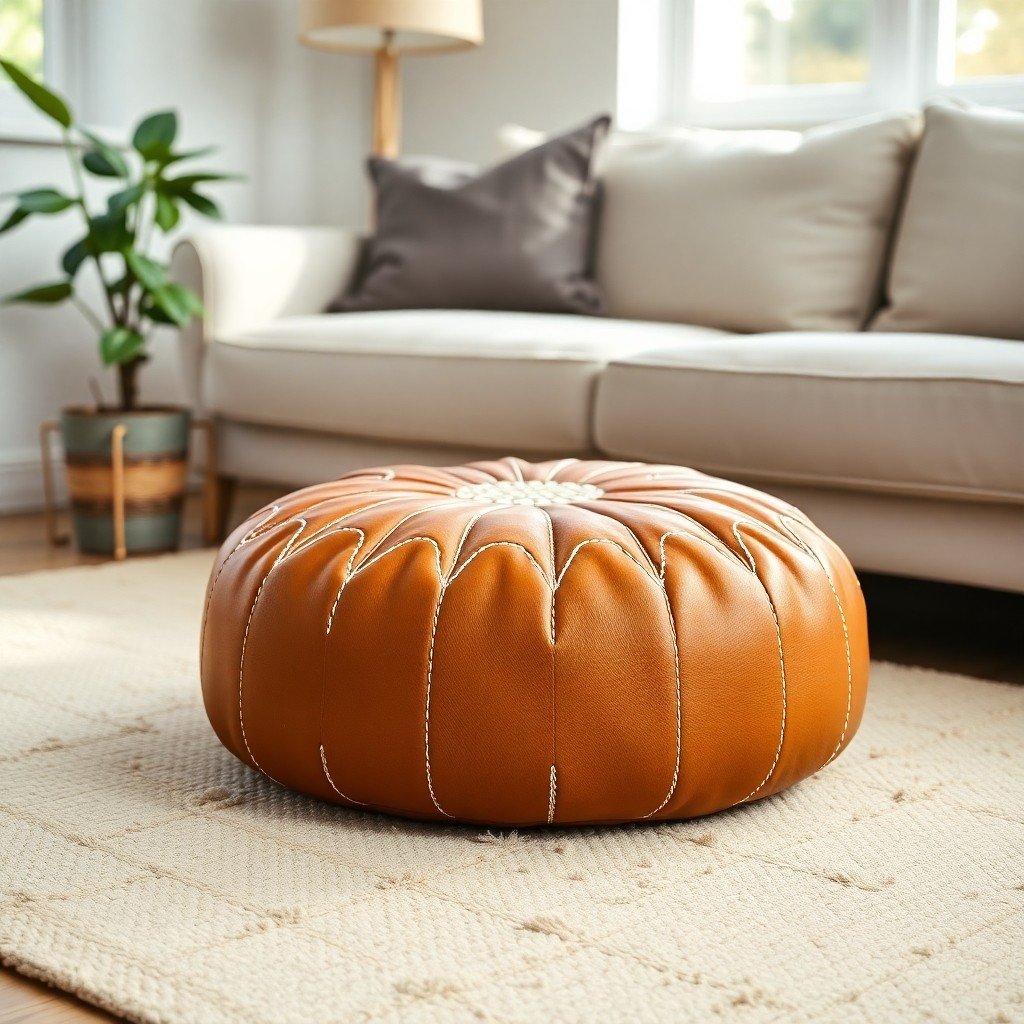
*An aspirational hero image showing the ideal final result of a properly stuffed Moroccan pouf, styled beautifully in a modern home environment.*
Before introducing any filling material, proper preparation ensures your pouf accepts stuffing evenly while protecting both the leather and your health. Skipping these crucial steps often leads to unpleasant odors, uneven distribution, or damaged seams that compromise the entire project.
**Cleaning and Conditioning the Leather**
Begin by removing any existing filling or debris through the opening at the pouf’s base. Use a vacuum with a narrow nozzle attachment to extract dust and particles that may have accumulated during storage or previous use. Next, mix mild saddle soap with warm water (1 tablespoon soap per quart of water) and gently cleanse the interior leather surfaces using a soft cloth. Pay special attention to seam junctions where dirt tends to accumulate.
Allow the pouf to air dry completely—typically 24-48 hours depending on humidity levels. Once dry, apply a light coating of neatsfoot oil or specialized leather conditioner using a clean, lint-free cloth. Work in circular motions, allowing the conditioner to penetrate for 15 minutes before wiping away excess. This treatment prevents leather from becoming brittle during the stuffing process and reduces friction that could cause seam stress.
Your pre-stuffing leather care checklist should include: inspecting for loose stitching, checking seam integrity, cleaning interior surfaces, conditioning leather thoroughly, and ensuring complete drying before proceeding.
**Tools and Materials Needed**
Essential tools for pouf stuffing include a 6-inch wide-mouth funnel for guiding materials through narrow openings, heavy-duty scissors capable of cutting through thick fabric layers, and a flexible measuring tape to monitor stuffing progress. Wear cotton work gloves to protect hands from sharp leather edges and maintain hygiene when handling filling materials. A dust mask becomes necessary when working with synthetic fibers or dried organic materials that may irritate respiratory systems.
Additional pouf stuffing essentials encompass a clean workspace covered with protective sheeting, binder clips or clothespins for temporary opening management, and a small hand mirror for inspecting hard-to-reach interior areas. Keep a spray bottle filled with distilled water nearby for lightly dampening filling materials that might otherwise generate static electricity and resist even distribution.
The Art of Stuffing: Step-by-Step Techniques
Achieving professional-quality results requires patience and systematic approach—rushing through stuffing creates problems that manifest weeks later as uncomfortable lumps or distorted shapes. Master craftsmen spend considerable time ensuring each layer integrates seamlessly with adjacent sections.
**Even Distribution Methods**
Start by inserting a small amount of filling through the funnel opening—just enough to create a foundation layer approximately 2 inches deep. Remove the funnel and use your hand to spread this material evenly across the pouf’s bottom surface. Continue adding filling in 2-inch increments, working systematically from the base upward toward the opening.
After each layer, compress gently with both hands while rotating the pouf slowly. This technique prevents air pockets and ensures uniform density throughout. For particularly stubborn lumps, use a broom handle or dowel rod to gently massage filling into position from multiple angles. Never attempt to force large quantities of material through small openings—this creates dangerous pressure points that can rupture leather seams.
Professional pouf stuffing involves creating what artisans call “feather layers”—thin, evenly distributed sections that build upon each other. Aim for 8-12 layers depending on your chosen material, allowing each to settle for several minutes before adding the next. This gradual approach produces superior results compared to aggressive stuffing methods.
**Achieving the Perfect Shape and Firmness**
Measure your pouf’s dimensions before beginning and mark desired final measurements on adjacent walls or furniture. Stuffing to approximately 80% capacity typically yields optimal comfort for seating applications—the remaining space allows for natural compression and material settling. Decorative poufs can be stuffed more loosely, perhaps 60-70% capacity, to maintain visual fullness without functional requirements.
Test firmness periodically by pressing your palm firmly against the pouf’s sides. You should feel resistance without excessive hardness—imagine the give of a firm pillow rather than a rock. For seating purposes, the top surface should compress about 1.5 inches under body weight while maintaining structural integrity.
Shape adjustment requires working from the inside outward. Use your hands to gently push filling material toward areas needing additional volume, then smooth transitions between different density zones. Pay special attention to corners and edges where filling tends to migrate during use, creating unsightly depressions over time.
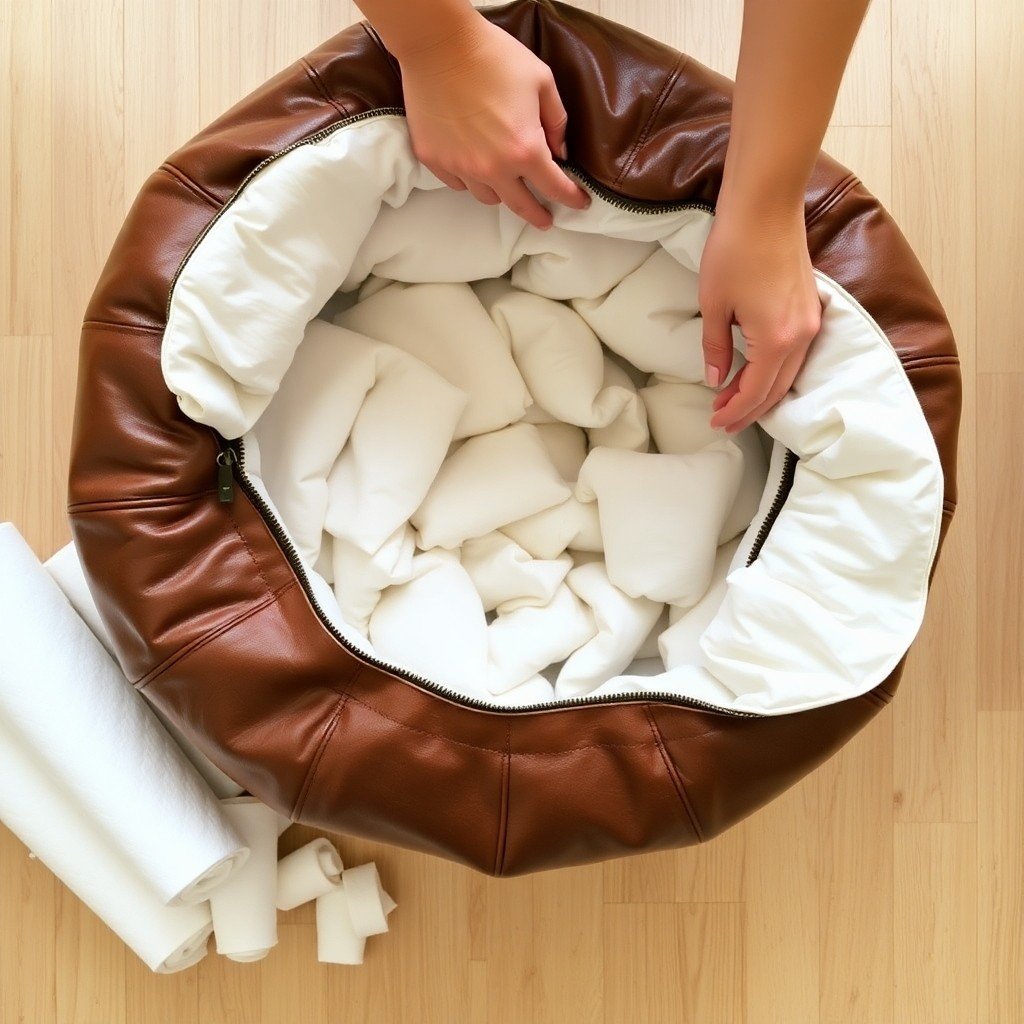
*A practical, step-by-step instructional image demonstrating the technique of stuffing the pouf with cotton batting and textiles to achieve an even shape.*
Common Mistakes and How to Fix Them
Even experienced crafters encounter stuffing challenges that compromise their pouf’s appearance and functionality. Understanding these pitfalls helps you avoid costly errors while providing solutions for correcting mistakes without starting over completely.
**Overstuffing and Under-stuffing Issues**
Signs of overstuffing include bulging seams, difficulty closing the opening, and uncomfortable rigidity that makes prolonged sitting unpleasant. To address this problem, carefully remove excess filling through the opening using your hands or a pair of chopsticks. Work gradually, removing small amounts and testing fit frequently to prevent creating new unevenness.
Under-stuffing manifests as flat, lifeless appearance with visible sagging along the pouf’s sides. This issue requires patience—you must add new layers of filling and redistribute existing material to achieve proper density. Start by breaking up compacted areas using your fingers or a blunt tool, then introduce fresh filling in thin layers as described in proper stuffing techniques.
Your troubleshooting checklist should verify: opening closure ease, seam stress indicators, surface evenness, and appropriate firmness levels. Address issues immediately rather than waiting for them to worsen during regular use.
**Avoiding Damage During the Process**
Delicate leather seams require gentle handling throughout stuffing operations. Never pull or yank filling material through openings—instead, push materials gently using the funnel or your hand. If resistance feels excessive, stop immediately and redistribute existing filling before continuing.
Work in a clean environment free from sharp objects or abrasive surfaces that could puncture or scratch leather during manipulation. Position your pouf on a soft towel or foam pad rather than directly on hard floors or furniture. When using tools inside the pouf, wrap their ends in cloth to prevent accidental punctures.
Expert advice from traditional artisans emphasizes working slowly and deliberately. “The pouf teaches patience,” notes Mohamed Al-Fassi, a third-generation leather craftsman in Fez. “Rushing creates problems that last years.”
Post-Stuffing Care and Maintenance
Your pouf’s longevity depends heavily on proper maintenance routines implemented immediately after stuffing completion. These practices preserve both filling integrity and leather quality while maintaining the aesthetic appeal that makes these pieces so desirable.
**Fluffing and Adjusting Over Time**
During the first month following stuffing, fluff your pouf weekly to redistribute settling materials and maintain intended shape. Use your hands to gently lift and separate filling layers, working systematically from top to bottom. For particularly dense materials like memory foam or wool, this process may require 10-15 minutes per session.
Establish a maintenance schedule based on usage frequency: weekly attention for daily-use seating poufs, bi-weekly for occasional decorative pieces, monthly for lightly used items. Set calendar reminders to ensure consistency—neglecting this step leads to permanent compression patterns that detract from both comfort and appearance.
Seasonal adjustments become necessary as humidity affects organic filling materials. Cotton batting and wool may compress slightly during humid summer months but expand during dry winter conditions. Monitor these changes and make minor adjustments accordingly.
**Cleaning and Longevity Tips**
Spot-cleaning requires immediate attention to prevent stains from setting permanently. Blot spills with clean, dry cloth rather than rubbing, which pushes materials deeper into leather pores. For stubborn stains, mix equal parts white vinegar and distilled water, applying sparingly with cotton swabs.
Preventive measures include rotating your pouf quarterly to ensure even wear patterns, avoiding direct sunlight exposure that accelerates leather aging, and using protective covers during periods of non-use. Professional cleaning every 3-5 years extends lifespan significantly while maintaining original appearance.
Recommended cleaning products include Lexol leather cleaner for routine maintenance and Apple Leather Oil for periodic conditioning. Avoid silicone-based products that can clog leather pores and accelerate deterioration. Always test new products on inconspicuous areas before full application.
Styling and Usage Ideas After Stuffing
A properly stuffed Moroccan leather pouf opens possibilities for creative interior expression that extends far beyond simple seating arrangements. These versatile pieces adapt to numerous environments while serving multiple functions that justify their investment cost.
**Decorating with Your Stuffed Pouf**
Living room applications benefit from poufs positioned strategically near coffee tables or entertainment centers, providing flexible seating that accommodates varying guest numbers. Layer two complementary poufs—one larger, one smaller—at different heights for visual interest and functional variety.
Bedroom styling often incorporates poufs at the foot of beds, serving as both seating and visual anchor for bedding arrangements. Choose poufs in colors that complement existing textiles while adding textural contrast to smooth surfaces like wood or metal.
Outdoor spaces welcome weather-resistant poufs treated with protective sealants, though limit direct moisture exposure and UV radiation to preserve leather quality. Position under covered patios or use decorative throws during inclement weather.
**Functional Applications Beyond Seating**
Multi-functional pouf ideas include conversion to side tables by adding flat wooden platforms atop stuffing, creating instant accent surfaces for lamps or decorative objects. Footrest applications work beautifully in living rooms or bedrooms—position within easy reach of favorite chairs while maintaining appropriate height (typically 12-16 inches).
Storage-integrated poufs feature hidden compartments accessed through removable panels or zippers, perfect for organizing remote controls, magazines, or small accessories. This modification requires careful planning during initial stuffing to accommodate both filling material and storage needs.
Reader-submitted ideas include using poufs as pet beds (with washable covers), portable desk seating for home offices, and even as meditation cushions in yoga spaces. The key lies in choosing appropriate firmness levels and protective treatments based on intended applications.
Conclusion
Mastering how to stuff a handmade leather pouf transforms a beautiful but potentially uncomfortable piece into a functional centerpiece that enhances any space. Success begins with thoughtful material selection—whether choosing traditional cotton batting for durability or exploring sustainable options like repurposed fabrics and organic cotton blends. Proper preparation protects your investment through cleaning and conditioning, while systematic stuffing techniques ensure even distribution and appropriate firmness levels.
Regular maintenance preserves both comfort and appearance, making the difference between a pouf that looks inviting after years versus one that appears worn and misshapen. Your attention to detail during stuffing pays dividends in extended lifespan and continued enjoyment.
Now that you understand traditional pouf stuffing methods and modern innovations, gather your materials and begin your project. The satisfaction of creating a perfectly stuffed pouf with your own hands adds personal meaning to this beautiful piece of functional art. Share your results in the comments below—we’d love to see photos of your finished work and answer any questions that arise during your stuffing journey.
**FAQ Section**
**What materials can I use to stuff a Moroccan leather pouf?**
Traditional options include cotton batting, wool, and horsehair, while modern alternatives encompass polyester fiberfill, memory foam, and buckwheat hulls. Eco-conscious crafters often choose repurposed clothing, organic cotton, or combinations of sustainable materials.
**How often should I restuff my pouf?**
High-quality cotton batting requires refreshment every 3-5 years under normal use, while synthetic materials may last 7-10 years before needing replacement. Monitor comfort levels and appearance regularly to determine optimal timing.
**What’s the best way to avoid lumps when stuffing a pouf?**
Layer filling materials in thin increments, compressing each layer before adding the next. Use tools like dowel rods to work out stubborn clumps from multiple angles, and stuff gradually rather than forcing large quantities through openings.
**Can I use old clothes or fabric scraps to stuff a pouf?**
Absolutely—cut cotton clothing into 4-inch squares and layer evenly for effective, sustainable stuffing. Avoid synthetic fabrics that may not compress properly or cause static issues during distribution.
**How do I clean a Moroccan pouf after stuffing it?**
Blot spills immediately with dry cloth, spot-clean using mild saddle soap solutions, and condition leather periodically with appropriate oils. Professional cleaning every few years maintains original quality and extends lifespan significantly.
**Meta Description:** Master the art of stuffing your Moroccan leather pouf with our ultimate guide. Learn traditional techniques, material selection, and maintenance tips for perfect results.