Integrating stuffed-handmade-stitched-in-marrakech-by-moroccan-artisans-blue-by-beige”>genuine-leather-pouf-moroccan-artisans-tan”>stuffed-handmade-stitched-in-marrakech-by-moroccan-artisans-blue-by-beige”>Leather Poufs into Small Apartment Spaces
Living in a compact urban apartment often forces you to make difficult choices between comfort and available floor space. You crave a cozy, inviting atmosphere, but bulky armchairs and massive coffee tables can quickly turn a studio or one-bedroom into a cluttered obstacle course. This is where the strategy of integrating leather poufs into small apartment spaces becomes a game-changer. These unassuming, low-profile accent pieces deliver the functionality of seating without the visual weight of traditional furniture. Unlike a framed chair with a high back and wide wings, a pouf occupies a tiny footprint while offering a versatile surface for sitting, resting your feet, or holding a tray. Leather, specifically, adds a layer of durability and sophisticated texture that stands up to the high traffic of small homes, softening the look of modern edges while ensuring your investment lasts for years. handcrafted Moroccan decor store
Maximizing Floor Area with Low-Profile Designs
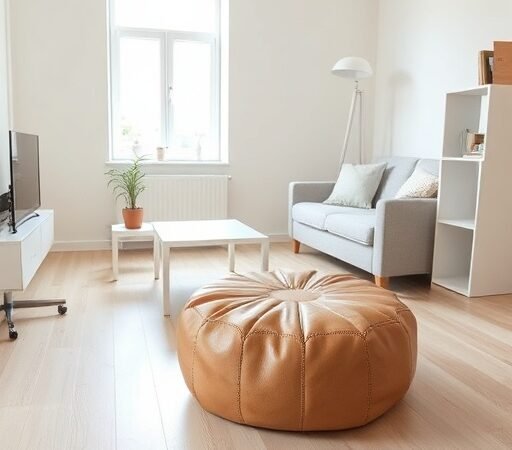
The primary enemy of a small room is visual clutter. When you fill a space with tall, bulky items, the room feels physically smaller and more restrictive. Integrating leather poufs into small apartment spaces solves this by utilizing low-profile furniture that preserves the vertical volume of the room. Because poufs typically sit low to the ground—usually between 12 and 18 inches in height—they maintain clear sightlines across the floor. This horizontal orientation allows your eye to travel from one end of the room to the other without interruption, making ceilings feel higher and the overall floor plan feel significantly more open compared to the visual “heaviness” of standard armchairs or sofas.
The Visual Impact of Horizontal Lines
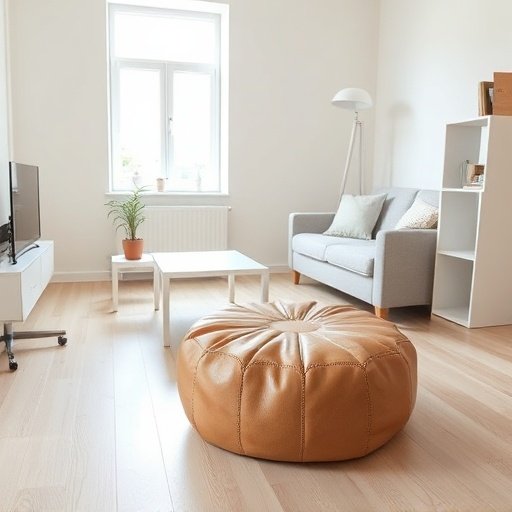
*Shows a leather pouf as a functional accent in a compact, naturally lit studio.*
The geometry of your furniture dictates how light moves through your apartment. A tall, blocky armchair casts a long shadow and physically blocks the flow of natural light from windows, creating dark corners that make a space feel cave-like. A leather pouf, with its low stature and often rounded or cylindrical shape, allows light to travel freely over its surface. This permeability is crucial in cramped quarters. By choosing horizontal furnishings, you ensure that the floor space extends visually beyond the physical objects placed upon it. The leather material plays a role here as well; its slight sheen reflects available light rather than absorbing it like heavy matte fabrics, further enhancing the sense of airiness in the room.
Choosing the Right Diameter for Traffic Flow
While the height of the pouf helps with vertical perception, the width determines how easily you can move around your apartment. In a studio where every inch counts, you must prioritize traffic flow. A common mistake is buying a single, massive ottoman that becomes a stumbling block. Instead, opt for a pair of smaller poufs. For example, two 20-inch diameter poufs can be separated to create walking paths or pushed together to form a unified bench. This flexibility is superior to one 40-inch ottoman which monopolizes the center of the room. When measuring your space, ensure there is at least 24 to 30 inches of clear walking path between the pouf and other furniture pieces. This allows you to navigate tight corners in studio apartments without shuffling sideways or bumping your shins.
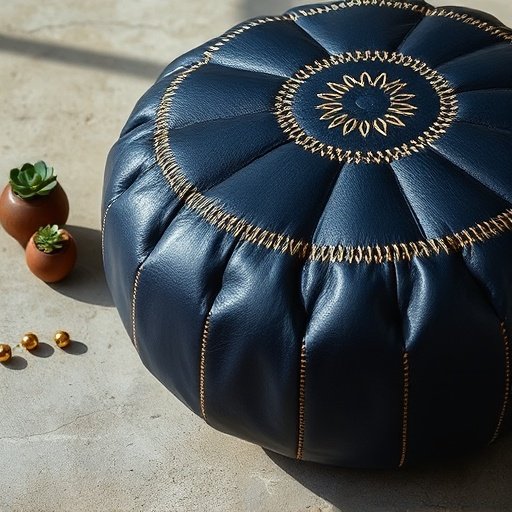
*Highlights the texture and handcrafted Moroccan stitching of a leather pouf suitable for compact homes.*
The Dual-Purpose Advantage: Coffee Table to Extra Seating
In a small apartment, every square inch must earn its keep. Single-function furniture is a luxury you often cannot afford. This makes multifunctional furniture essential for studio living where distinct zones for dining, working, and lounging frequently overlap. A leather pouf acts as the ultimate “transformer” piece, shifting roles as your daily routine changes. It serves as a casual footrest in the morning, a makeshift coffee table in the afternoon, and emergency seating during social gatherings in the evening. This adaptability eliminates the need for multiple distinct pieces of furniture, freeing up valuable real estate for movement and breathing room.
Stability and Weight Considerations for Tray Use
To effectively use a pouf as a coffee table substitute, you must pay attention to its internal construction. A soft, squashy beanbag style pouf will not support a beverage without spilling. You need a firm, leather-wrapped pouf stuffed with dense foam or solid cotton batting. Look for options that describe themselves as “firm” or “structured.” A high-quality leather pouf of this type can easily support a wooden serving tray and two coffee mugs without wobbling or collapsing. The leather surface provides friction that keeps the tray from sliding off, unlike smooth velvet or synthetic blends. When selecting a tray for this purpose, choose one with a flat bottom and raised edges to contain any potential mess, effectively replacing a traditional coffee table with a fraction of the spatial commitment. silver plated brass tray
Hosting Guests in Compact Living Rooms
The challenge of small apartment hosting is always the “where does everyone sit” dilemma. When you live in a 400-square-foot studio, owning a six-person sectional is impossible. This is where your poufs become social lubricators. During the workday, a pouf might sit quietly against the wall acting as a side table for your laptop and coffee mug. However, when friends arrive for a dinner party or game night, you can simply pull them into the center of the room. Two or three firm leather poufs can instantly seat three extra guests, turning a static living room layout into a dynamic conversational circle. Once the guests leave, they tuck away under a console table or into a corner, restoring the open floor plan instantly.
Styling Leather Poufs in Transitional Zones
Most people consider the living room the default home for a pouf, but these versatile pieces shine brightest in the “dead spaces” of your apartment. Transitional zones—those awkward hallways, nooks, and gaps between larger furniture pieces—often go unused, yet they occupy prime square footage. By placing leather poufs in these areas, you add utility without requiring dedicated floor space for a full-sized chair. These zones are perfect for small apartment accents because they don’t interfere with the main