Kessa Glove vs Loofah: Which Exfoliates Better? If you’ve ever stood in the shower aisle staring at a woven mitt and a sponge, you know the confusion is real. Both tools promise smoother skin, but they work in fundamentally different ways. This article breaks down the differences across exfoliation mechanism, skin type, hygiene, and practical use, so you can pick the right tool for your skin.
The Complete Answer: Kessa Glove vs Loofah — Which Exfoliates Better?
The 60-Second Verdict
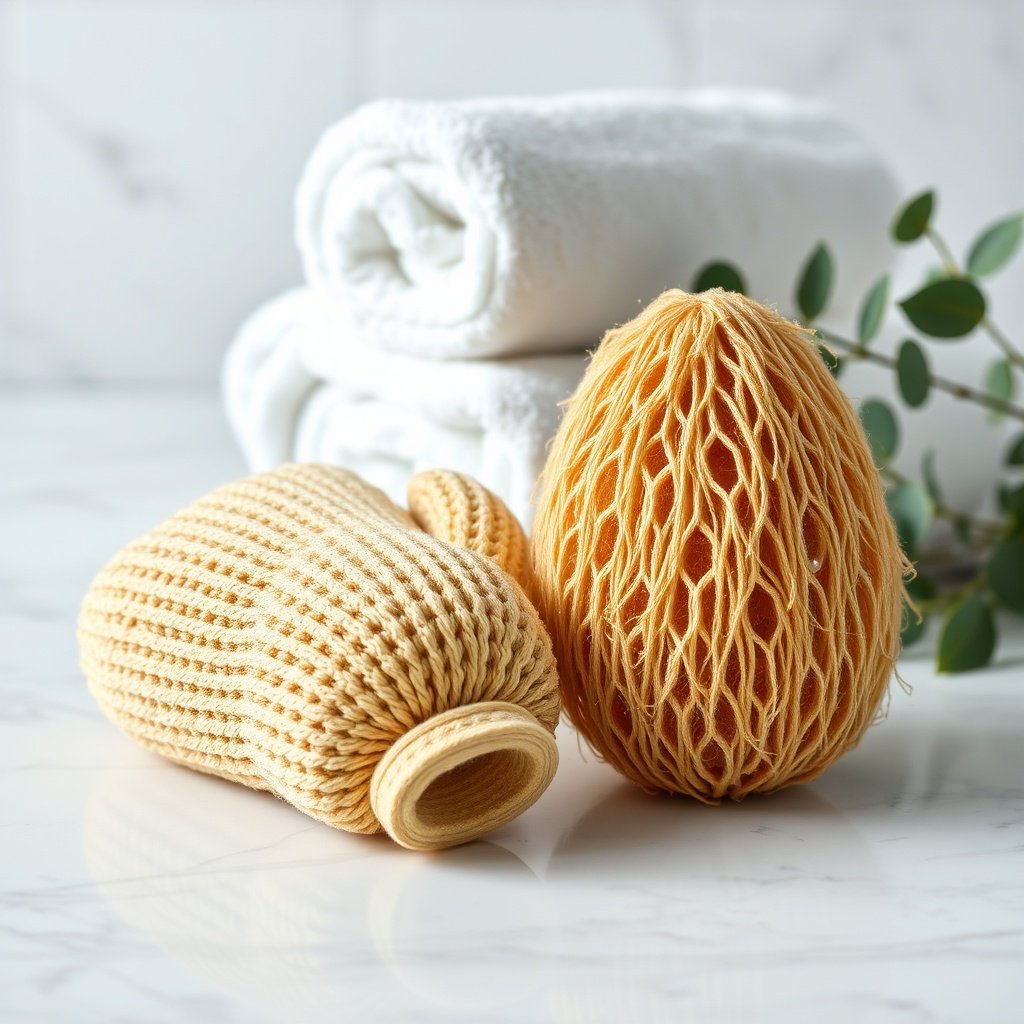
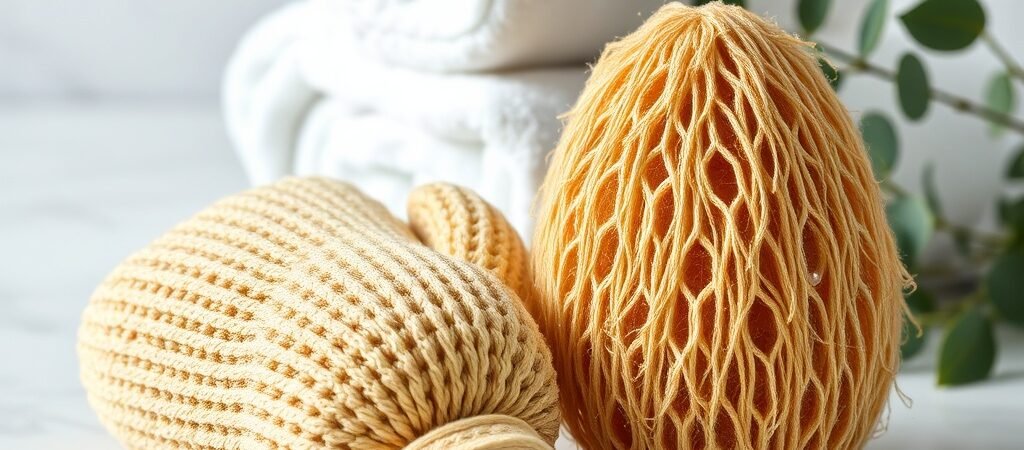
See how the coarse woven mesh of a Kessa glove differs from the porous fibers of a natural loofah to determine which tool exfoliates better for your specific needs.
Quick Answer: A kessa glove delivers a deeper, more vigorous exfoliation, while a loofah provides a gentler, more forgiving buff.
The winner depends entirely on your skin type and how much friction your skin can tolerate. If you want to slough off rough, dull skin and don’t have sensitivity issues, the kessa glove wins. If your skin is dry, sensitive, or easily irritated, the loofah is the safer choice.
What “Better” Actually Means
“Better” is a subjective term in exfoliation. A deep exfoliator is better for rough elbows and heels, but it’s worse for sensitive skin that can’t handle aggressive friction. So this comparison uses three criteria: exfoliation effectiveness (how well it removes dead skin), skin safety (how likely it is to cause irritation), and hygiene (how easily it stays clean). The best tool for you is the one that scores well on all three for your specific skin.

Discover whether a Kessa glove or loofah suits your routine best by observing how each tool handles moisture and friction during daily exfoliation.
The Key Differentiator: Fibre Structure
The kessa glove is made from a coarse crêpe or mesh material, that creates significant surface friction when rubbed against wet skin. This physical exfoliation comparison shows why it’s so effective: the woven texture grips the skin and lifts dead cells in a way that a porous sponge cannot. A natural loofah, on the other hand, comes from the fibrous skeleton of the luffa plant. Its open, porous structure absorbs water and creates a mild abrasive surface. The difference in feel is noticeable — the kessa glove feels firm and textured, while the loofah feels soft and spongy. This structural difference is what gives each tool its distinct exfoliating result.
Key Takeaways
- Kessa gloves deliver a deeper, more vigorous exfoliation than loofahs.
- Loofahs are gentler and better suited to sensitive, dry, or mature skin.
- Kessa gloves are easier to rinse clean and dry faster, which may reduce bacteria risk.
- The best tool depends on your skin type and how often you exfoliate.
- Always patch test before using either tool on sensitive areas.
How Each Tool Works: The Mechanism of Action
Kessa Glove: The Woven Fibre Mechanics
Definition: A kessa glove is a woven exfoliating mitt, traditionally used in Moroccan hammam rituals, made from a coarse fabric that removes dead skin cells through friction.
The kessa glove exfoliation mechanism relies on friction. The rough, woven texture of the fabric creates resistance against the skin, which lifts and rolls away dead skin cells. The process is straightforward: dampen the glove, wet your skin, then massage in circular motions. The glove grabs the skin’s surface and pulls away the top layer of dead cells, leaving skin noticeably smoother. In a traditional hammam, the kessa glove is paired with black soap to soften the skin before exfoliation.
Loofah: The Natural Sponge Mechanics
A loofah’s fibrous skeleton works differently. When wet, the natural sponge absorbs water and softens, creating a mild abrasive surface that buffs the skin. The loofah exfoliation mechanism is more about gentle scrubbing than deep scraping. Synthetic loofahs, made from plastic mesh, offer a similar feel but are less porous and don’t absorb as much water. Natural loofahs are the traditional choice, while synthetic ones are more durable and easier to clean.
Why Mechanism Determines Results
The friction level of each tool directly affects how much dead skin it removes. The kessa glove’s high friction makes it more efficient for deep exfoliation, while the loofah’s lower friction makes it better for gentle, everyday buffing. After exfoliation, the kessa glove typically leaves skin smoother but may cause redness if used too aggressively. The loofah is more forgiving and less likely to irritate. Regular exfoliation with either tool can also leave skin looking brighter and more even-toned.
Skin Type and Sensitivity: The Deciding Factor
Who Should Use a Kessa Glove
The kessa glove is ideal for normal, oily, or thick-skinned individuals who want a deep, thorough exfoliation. It’s particularly effective on rough areas like elbows, knees, and heels. However, it is not recommended for active acne, rosacea, or very sensitive skin, as the friction can aggravate these conditions.
Who Should Use a Loofah
The loofah is ideal for dry, sensitive, or mature skin that needs gentle buffing without harsh friction. It’s also a good choice for beginners who are new to body exfoliation, because it’s harder to overdo it. If your skin tends to react to new products or treatments, start with a loofah.
Quick Answer: If you have sensitive skin, start with a loofah and patch test before trying a kessa glove.
The Sensitive Skin Test: A Step-by-Step Guide
If you’re unsure which tool your skin can handle, try this simple patch test:
- Wet the tool with warm water and squeeze out excess.
- Apply a small amount of body wash or soap.
- Test on a small patch of skin, such as your inner forearm.
- Rub in gentle circular motions for 10–15 seconds.
- Rinse and wait 24 hours to check for redness or irritation.
- If no reaction, proceed with full-body use. If irritation appears, switch to the gentler tool.
Hygiene, Maintenance, and Lifespan
Bacteria Risk Comparison
A loofah’s porous structure can trap water and bacteria, making it a breeding ground if not dried properly. Because it holds moisture inside its fibers, it can stay damp for a long time. The kessa glove, by contrast, is a flat woven fabric that dries faster and is easier to rinse clean. This reduces the risk of bacterial buildup, though regular cleaning is still important for both.
Quick Answer: Kessa gloves are generally easier to keep clean because they dry faster and don’t trap moisture like a loofah’s porous fibers.
Cleaning and Replacement Schedules
For a kessa glove, rinse it after each use, hang it to dry, and machine wash it weekly to keep it clean. With proper care, a kessa glove can last for months before it needs replacing. A loofah requires more frequent replacement because its porous structure breaks down and can harbor bacteria. Rinse it thoroughly, squeeze out excess water, and replace it regularly.
Cost-Per-Use Analysis
A kessa glove typically has a higher upfront cost than a loofah, but it lasts much longer. A loofah is cheaper to buy initially, but you’ll need to replace it more often. Over time, the longer-lasting kessa glove may be more economical. If you exfoliate regularly, the kessa glove often works out to be the better value.
Practical Usage: Step-by-Step Exfoliation Routines
The Complete Kessa Glove Routine
- Soak the kessa glove in warm water for a few minutes to soften it.
- Wet your skin thoroughly in the shower or bath.
- Apply soap or body wash to the glove.
- Use long, firm strokes on dry-prone areas like elbows, knees, and heels.
- Exfoliate for 2–3 minutes, then rinse your skin well.
- Hang the glove to air-dry after each use.
The Complete Loofah Routine
- Soak the loofah in warm water to soften it.
- Wet your skin and apply body wash to the loofah.
- Use light, circular motions over your body.
- Focus on dull or rough areas but avoid sensitive spots.
- Rinse the loofah thoroughly and squeeze out excess water.
- Hang it in a dry location after each use.
Common Mistakes to Avoid
Don’t exfoliate too often or too aggressively — both tools can cause irritation if overused. Never use a dry tool on dry skin, as this creates unnecessary friction and can damage the skin barrier. And don’t store a damp tool in a closed, humid space, like a shower caddy with no airflow. Always let your tool dry completely between uses.
Comparison Table and Final Verdict
Side-by-Side Comparison Table
| Feature | Kessa Glove | Loofah |
|---|---|---|
| Exfoliation intensity | High | Low–Medium |
| Best for skin type | Normal to oily | Sensitive to dry |
| Drying time | Fast | Slow |
| Bacteria risk | Lower | Higher |
| Lifespan | Longer | Shorter |
| Cost | Higher upfront | Lower upfront |
Choosing Based on Your Goal
If your goal is deep, smooth, full-body exfoliation, choose the kessa glove. It’s the tool for a thorough, hammam-style scrub. If your goal is gentle, daily maintenance, choose the loofah. And if you have sensitive skin, start with the loofah and test carefully before moving to a kessa glove.
FAQ
Is a kessa glove better than a loofah?
It depends on your skin. For deep exfoliation and rough skin, yes. For sensitive skin, no — the loofah is gentler and safer.
How often should you use a kessa glove?
Once or twice a week is usually enough. The kessa glove is vigorous, so overuse can lead to irritation. Start with once a week and adjust based on how your skin responds.
Can a loofah exfoliate as well as a kessa glove?
Not in terms of depth. The loofah provides a gentler buff, while the kessa glove removes more dead skin in a single session. If you need serious exfoliation, the kessa glove is more effective.
Which is better for sensitive skin?
The loofah is generally gentler and better for sensitive skin. But even a loofah can irritate if used too roughly, so patch testing is essential.
How do you clean a kessa glove?
Rinse it after each use, hang it to air-dry, and machine wash it weekly. This keeps it clean and extends its lifespan.
Conclusion
The decision comes down to your skin type and goals. Choose a kessa glove for deep exfoliation and a loofah for gentle buffing. The best tool depends on your individual skin and how much friction it can handle. Patch test before committing to a routine, and try both to see which works best for your skin.