Moroccan Beauty Rituals: 5 Recipes for Glowing Skin — if you’ve been searching for natural ways to brighten your complexion, this time-tested approach offers a starting point built on ingredients found in Moroccan kitchens and markets. These rituals have been passed down through generations, and their popularity in modern skincare continues to grow because they rely on simple, natural, locally sourced ingredients rather than synthetic formulations, as shared by kenzadi.ma. The five recipes we’ll cover here — a ghassoul clay mask, an argan oil serum, a rose water toner, a saffron and honey scrub, and an orange blossom milk bath — are traditional preparations you can make at home.
Quick Answer: Moroccan beauty rituals are traditional skincare practices that use natural ingredients like ghassoul clay, argan oil, and rose water to cleanse, nourish, and relax the skin. They can be prepared at home with simple, accessible ingredients.
Key Takeaways
- Moroccan beauty rituals prioritize natural ingredients like ghassoul clay, argan oil, and rose water.
- The five recipes target distinct skin concerns: detoxification, nourishment, hydration, brightening, and relaxation.
- These rituals are simple to prepare at home with accessible ingredients.
- Consistency is key — use each treatment 1–2 times per week for optimal results.
- Always patch-test new ingredients to avoid allergic reactions.
Moroccan Beauty Rituals: 5 Recipes for Glowing Skin
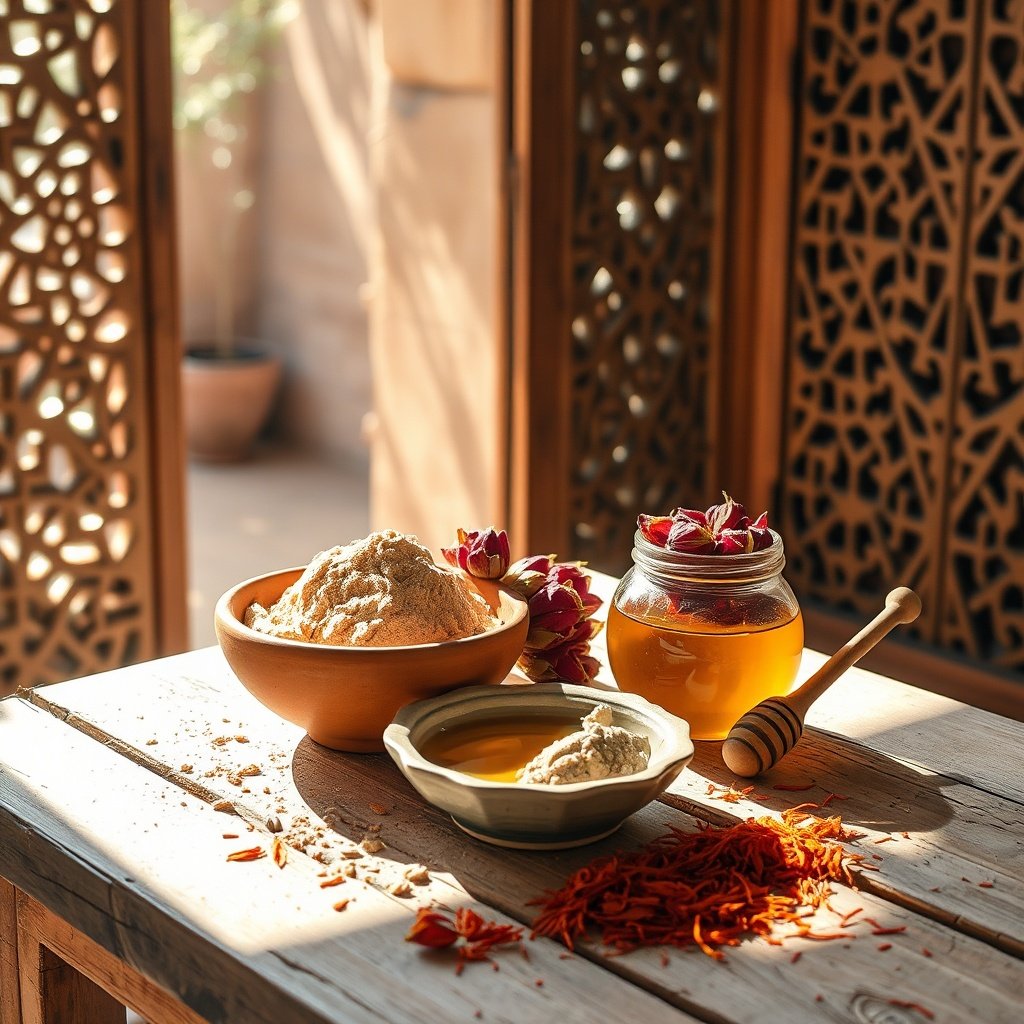
These time-tested, locally sourced components form the foundation of radiant, healthy skin when blended into simple homemade treatments. Moroccan beauty rituals are traditional skincare practices that use natural ingredients passed down through generations. They are rooted in a philosophy that healthy skin comes from a holistic blend of cleansing, nourishing, and relaxing — not from a single miracle product. The five recipes below form the foundation of a traditional Moroccan skincare routine, and each one addresses a different aspect of skin health.
Definition: Moroccan beauty rituals are traditional skincare practices from Morocco that use natural, locally sourced ingredients — such as ghassoul clay, argan oil, rose water, and orange blossom water — to cleanse, nourish, and relax the skin. They are often performed as part of a hammam spa ritual or as simple home treatments.
Comparison Table: The 5 Recipes at a Glance
| Recipe | Primary Benefit | Key Ingredient | Best For | Frequency |
|---|---|---|---|---|
| Ghassoul Clay Mask | Deep detoxification | Ghassoul clay | Oily, congested skin | 1–2 times per week |
| Argan Oil Serum | Deep nourishment | Argan oil | Dry, mature skin | 2–3 times per week |
| Rose Water Toner | Hydration & soothing | Rose water | All skin types | Daily |
| Saffron & Honey Scrub | Brightening | Saffron + honey | Dull, uneven skin tone | 1–2 times per week |
| Orange Blossom Milk Bath | Relaxation & softening | Orange blossom water + milk | All skin types, especially tired skin | Weekly |
Experience the soothing, restorative power of gentle, plant-based formulas designed to cleanse, nourish, and reveal your natural radiance.
Step-by-Step: How to Prepare a Basic Moroccan Beauty Ritual
Whether you’re making a clay mask, a serum, or a bath, the basic ritual follows the same pattern. This general guide applies to all five recipes.
- Cleanse — Start with a clean face or body. A traditional hammam skincare routine often begins with Moroccan black soap and a kessa glove for gentle exfoliation and dead skin removal.
- Prepare the ingredient — Mix your chosen ingredient (clay, oil, rose water, etc.) according to the recipe.
- Apply — Apply the treatment to damp skin, avoiding the eye area.
- Wait — Let the treatment sit for the recommended time, typically 10–20 minutes depending on the recipe.
- Rinse and moisturize — Rinse thoroughly with lukewarm water, then pat dry and apply a moisturizer to lock in hydration.
Recipe 1: Ghassoul Clay Mask for Deep Detoxification
Ghassoul clay, also known as Moroccan lava clay, is a mineral-rich clay mined in the Atlas Mountains. It acts like a magnet for impurities, making it a powerful deep-cleansing treatment that draws out dirt, excess oil, and environmental pollutants from the skin.
Ingredients and Preparation
To make this mask, you’ll need ghassoul clay powder, rose water, and a few drops of argan oil. Mix the clay with enough rose water to form a smooth paste, then stir in the argan oil. The exact proportions depend on the consistency you prefer — start with small amounts and adjust until the paste is easy to spread.
Application and Benefits
Apply a thin layer to a cleansed face, avoiding the eye area. Leave it on for 10–15 minutes, then rinse with warm water. Because ghassoul clay is rich in minerals, it helps draw out impurities, reduce excess oil, and tighten the appearance of pores. It’s especially beneficial for oily or congested skin.
Quick Answer: What is a ghassoul clay mask for deep cleansing? It’s a mineral-rich clay mask made from Moroccan volcanic clay, typically mixed with rose water and argan oil, that pulls impurities from the skin and helps reduce excess oil and pore size.
Recipe 2: Argan Oil Facial Serum for Deep Nourishment
Argan oil, often called “liquid gold,” is extracted from the kernels of the argan tree, which grows in Morocco. This pure, cold-pressed oil closely mimics the skin’s natural sebum, making it an excellent facial serum for deep nourishment. It’s rich in vitamin E and essential fatty acids, which help soften fine lines and improve elasticity.
Choosing the Right Argan Oil
When selecting argan oil for your serum, look for cold-pressed, organic, unrefined oil. These terms indicate the oil has been extracted without heat or chemical solvents, preserving its beneficial nutrients. Avoid anything labeled “deodorized” or “refined,” as these processes can strip away some of the oil’s natural properties. Another Moroccan oil, prickly pear cactus oil, is also used for hydration but is less common in home recipes.
How to Apply the Serum
- Cleanse your face thoroughly.
- Apply 2–3 drops of argan oil to your fingertips.
- Massage upward into your skin in gentle circular motions.
- Allow it to absorb for a few minutes before applying makeup or sunscreen.
The benefits of this DIY argan oil face mask (or serum) include deep hydration, softening of fine lines, and improved skin elasticity. It’s particularly suited for dry or mature skin.
Recipe 3: Rose Water Toner for Instant Hydration
Rose water is a gentle, recettesdumaroc.com toner made by distilling rose petals. It calms irritated skin, restores moisture, and leaves a subtle floral scent. Unlike many commercial toners that can strip the skin, rose water works with your skin’s natural barrier.
Making and Using Rose Water
You can make rose water at home using steam distillation, or you can use pure store-bought rose water. To create it yourself, place fresh rose petals in a pot, cover with water, and simmer gently. As the steam condenses, it collects the rose essence. The process is simple but requires patience. If you prefer a simpler route, look for a high-quality rose water with no added alcohol or fragrance.
Benefits and Application
After cleansing, apply rose water with a cotton pad, then pat it gently into your skin. It’s a versatile toner that hydrates, reduces redness, and refreshes. Rose water and orange blossom water are both common in Moroccan skincare; while rose water is a classic toner, orange blossom water is often used in baths and as a fragrant face mist.
Recipe 4: Saffron & Honey Glow Scrub for Brightening
Saffron, the world’s most expensive spice, is prized in Moroccan beauty for its brightening and anti-inflammatory properties. When combined with honey, which is a natural humectant, it creates a scrub that gently exfoliates while drawing moisture into the skin.
Ingredients and Mixing
For this scrub, you’ll need a few saffron threads, honey, and a little olive oil or yogurt. Soak the saffron threads in a small amount of warm water to release their color and beneficial compounds, then mix the saffron water with honey and your chosen base. The exact amount of saffron is small — just a few threads are enough to give the scrub its golden color and brightening properties.
Exfoliation Technique
- Dampen your face with warm water.
- Apply the scrub in gentle circular motions, avoiding the eye area.
- Avoid harsh scrubbing — let the honey’s texture and the saffron’s properties do the work.
- Rinse thoroughly with lukewarm water.
This brightening scrub removes dead skin cells, helps even out the complexion, and adds radiance. It’s a favorite for dull or uneven skin tone.
Recipe 5: Orange Blossom & Milk Bath for Relaxation and Softening
This traditional Moroccan ritual combines the calming scent of orange blossom with milk’s lactic acid to soften the skin and relax the body. It’s less about treating a specific skin concern and more about creating a beniouaraincarpets.com experience at home.
Preparing the Bath
To prepare the bath, fill your tub with warm (not hot) water. Add a generous splash of orange blossom water and a cup of whole milk or powdered milk. You can also add a spoonful of honey for extra moisture. Soak for about 20 minutes, letting the milk’s lactic acid gently exfoliate and the orange blossom scent calm your senses.
Benefits and Aftercare
The benefits of this milk bath include relaxed muscles, softened skin, and a subtle floral scent that lingers after you step out. After soaking, pat your skin dry with a towel — don’t rub — and apply a moisturizer to lock in hydration. This ritual is perfect for a weekly self-care session.
FAQ: Moroccan Beauty Rituals
Q1: How often should I use these Moroccan beauty rituals? Most of these recipes work best when used 1–2 times per week. The rose water toner can be used daily, while the clay mask and scrub should be spaced out to avoid over-exfoliation. The milk bath is a weekly treat. Q2: Can I use these recipes if I have sensitive skin? Yes, but patch-test each new ingredient first. Rose water and argan oil are generally very gentle, but saffron and honey can be irritating for some people. Start with a small amount and wait 24 hours to see how your skin reacts. Q3: Are these recipes suitable for all skin types? Most of these recipes are suitable for all skin types. The ghassoul clay mask is best for oily skin, while the argan oil serum is ideal for dry skin. Rose water, the saffron scrub, and the milk bath are versatile enough for most skin types. Q4: Where can I buy authentic Moroccan ingredients? Look for reputable online retailers or specialty stores that sell pure, unadulterated ingredients. For ghassoul clay, argan oil, rose water, and orange blossom water, check that the product labels indicate they are pure and, where applicable, organic and cold-pressed. Q5: What is the best time of day to do these rituals? The milk bath is best in the evening for relaxation. The clay mask, serum, and scrub can be done in the morning or evening. If you apply the argan oil serum at night, it has more time to absorb without being disturbed by makeup or sunscreen.
Conclusion
The five Moroccan beauty rituals for glowing skin — ghassoul clay mask, argan oil serum, rose water toner, saffron and honey scrub, and orange blossom milk bath — each offer a unique benefit. Together, they form a complete, natural skincare routine that cleanses, nourishes, hydrates, brightens, and relaxes. The beauty of these rituals lies in their simplicity: they use natural ingredients for a radiant complexion, and they can be prepared in your own home with minimal effort. Start by incorporating one or two of these recipes into your weekly routine, and build from there. Your skin will thank you.