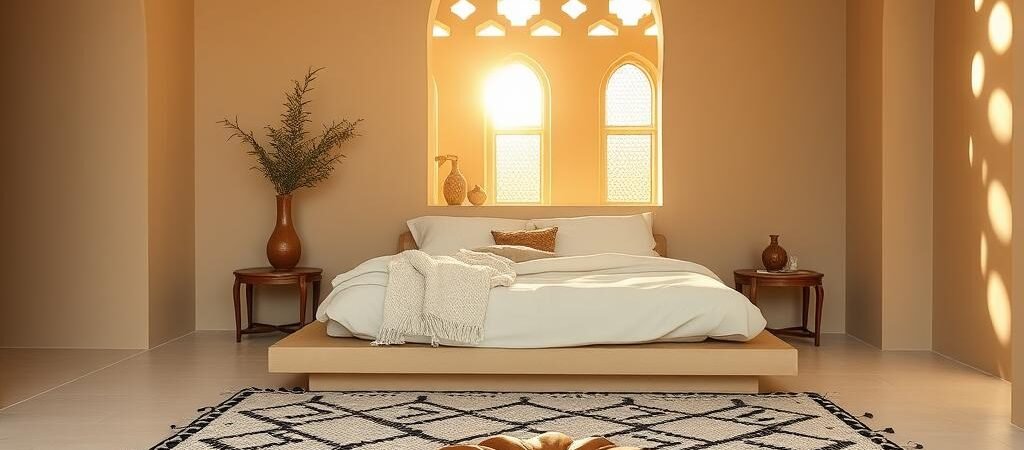
Implementing Moroccan Bedroom Decor for Relaxation is not simply an aesthetic choice; it is a strategic application of sensory grounding that utilizes texture, warm lighting, and natural elements like traditional Moroccan incense with Oud to lower cortisol levels. Recent studies in environmental psychology support the claim that specific sensory inputs can significantly reduce physiological stress markers. This design philosophy transforms a standard room into a sleep sanctuary by prioritizing the nervous system’s response to the environment, using the rich heritage of North African design found in our handcrafted Moroccan decor collection to foster deep mental and physical restoration. By adhering to these Moroccan interior design principles, you create an environment that actively supports the body’s transition into rest.
Key Takeaways
Moroccan decor prioritizes a sensory experience that directly lowers cortisol levels through specific color palettes and tactile textures.
Natural materials such as wool, wood, and terracotta are essential for creating a grounded, organic atmosphere.
Lighting is the most critical element; utilizing warm, dimmable sources like Moroccan lanterns creates a circadian-friendly environment.
The Definitive Framework for a Moroccan Relaxation Sanctuary
True Moroccan relaxation decor relies on the concept of ‘slow living’ through visual and tactile warmth. In 2026, interior design trends continue to favor spaces that offer a tangible escape from digital overload. This approach moves beyond aesthetics to function as a mechanism for stress reduction, engaging the senses to divert attention from daily anxieties. The goal is to curate a space that feels timeless and separate from the fast-paced modern world, allowing the mind to decelerate naturally upon entry.
To successfully implement this framework in your home, follow these actionable steps:
* **Layer Textures Strategically:** Begin with a foundation of natural wool rugs, specifically Beni Ourain styles, which offer plush tactile feedback. Layer these with woven throws and linen cushions to create immediate physical comfort.
* **Curate Lighting Intensity:** Replace all overhead lighting with multiple low-level sources. Use lamps with 2700K bulbs to ensure the light temperature mimics the sunset, aiding melatonin production.
* **Incorporate Natural Artifacts:** Introduce raw terracotta pots or unpolished wood furniture. These materials connect the occupant to nature, a proven method for lowering heart rate and blood pressure.
* **Establish a Scent Anchor:** Select a specific fragrance, such as Oud or amber, to be used only in the bedroom. Over time, this scent becomes a conditioned trigger for the brain to initiate the sleep cycle.
The Psychology of Warm Earth Tones
Color psychology plays a pivotal role in relaxation, a fact backed by the Institute for Color Research which indicates that warm earth tones can create a physiological sense of ease. Moroccan palettes typically feature terracotta, sand, ochre, and muted sage—colors derived from the landscape itself. These hues mimic the natural world, signaling safety and stability to the subconscious mind. When painting walls or choosing accents, opt for specific shades such as ‘Terracotta Clay,’ ‘Warm Sandstone,’ or ‘Dried Sage’ to maintain a cohesive and soothing environment. Avoid stark whites or jarring neons, as these disrupt the calm required for a restorative sleep cycle.
By integrating these scientifically-backed design elements, your bedroom transcends mere decoration. It becomes a deliberate tool for wellness, engineered to mitigate the stresses of modern life through the timeless wisdom of Moroccan craftsmanship.