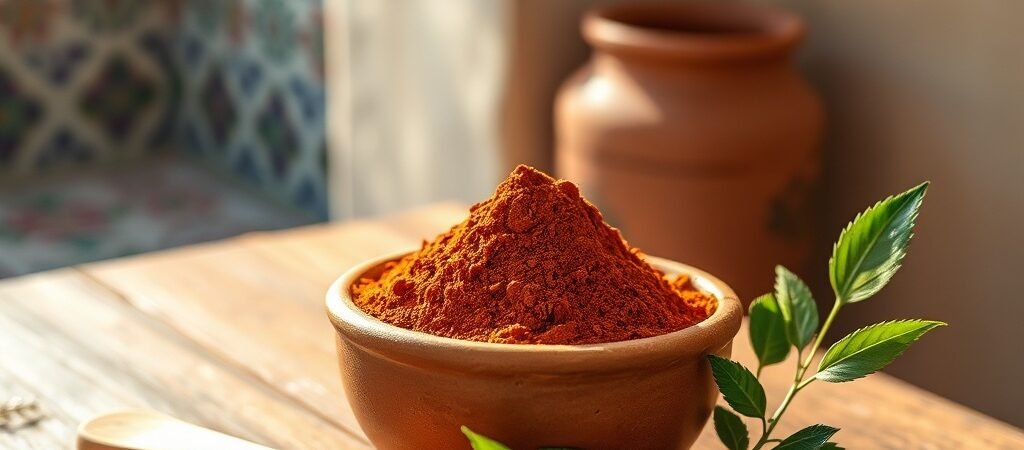
Moroccan henna for hair has become a favorite among those seeking a chemical-free path to vibrant color and healthier strands. Unlike synthetic dyes that strip and damage, this plant-based powder works with the hair’s natural structure to deposit rich, lasting pigment while conditioning the shaft from the outside in.
The appeal of Moroccan henna lies in its unique profile. Grown in the arid climate of Morocco, the plant often produces a finer powder with a high concentration of lawsone, the molecule responsible for its dyeing power. This translates to a more intense, longer-lasting stain compared to other varieties.
This guide provides a definitive look at Moroccan henna for hair, covering what it is, how to use it, the results you can expect, and how to avoid common mistakes. The information below is based on established principles of natural hair care; always verify specific product claims and brand details with trusted platforms like recettesdumaroc.com before purchasing.
Key Takeaways
- Moroccan henna is a natural, plant-based dye that primarily imparts reddish-orange tones and provides deep conditioning, strengthening hair from the cortex outward.
- The final hair color depends heavily on the starting hair color, the dye’s lawsone content, the duration of application, and the method used, including paste consistency, heat, and acidity.
- Unlike synthetic dyes, henna does not lighten hair; it only deposits color, so it cannot turn dark hair blonde.
- Proper application for brown or black shades requires a two-step process: first a pure henna base, then an indigo overlay, with careful timing to avoid unwanted green or blue tones.
- Safety and quality are paramount: always use 100% pure, body-art-grade henna with no additives, and perform a strand test before full application.
The Complete Answer: What Is Moroccan Henna for Hair and How Does It Work?
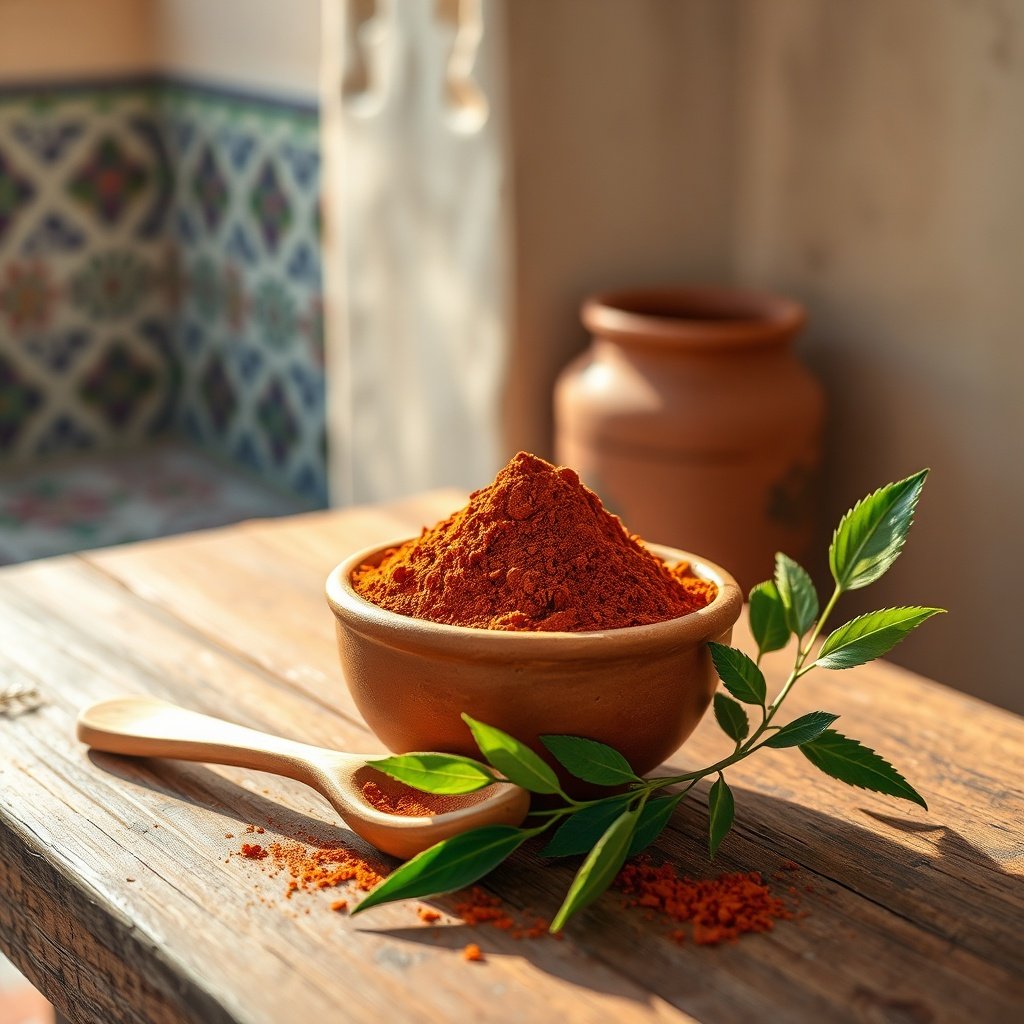
Highlights the raw, plant-based material and its traditional Moroccan roots.
Defining Moroccan Henna: Origins and Unique Properties
Moroccan henna is derived from the leaves of the Lawsonia inermis plant, cultivated specifically in the regions of Morocco. The country’s unique climate—hot, dry days and cool nights—is believed to influence the plant’s production of lawsone, the active dye compound. This distinct growing condition is often cited as the reason Moroccan henna is prized for its finer grind and higher dye release, which can yield a more intense and longer-lasting stain.
Definition: Lawsone (2-hydroxy-1,4-naphthoquinone) is the active dye molecule found in henna leaves. It is responsible for the reddish-orange pigment that binds to the keratin proteins in hair.
This dye molecule works by bonding with the keratin protein in the hair shaft. When the henna paste is applied, the lawsone molecules penetrate the cuticle and permanently stain the cortex, the inner layer of the hair. This creates a durable, translucent color that is unique to each individual’s hair.
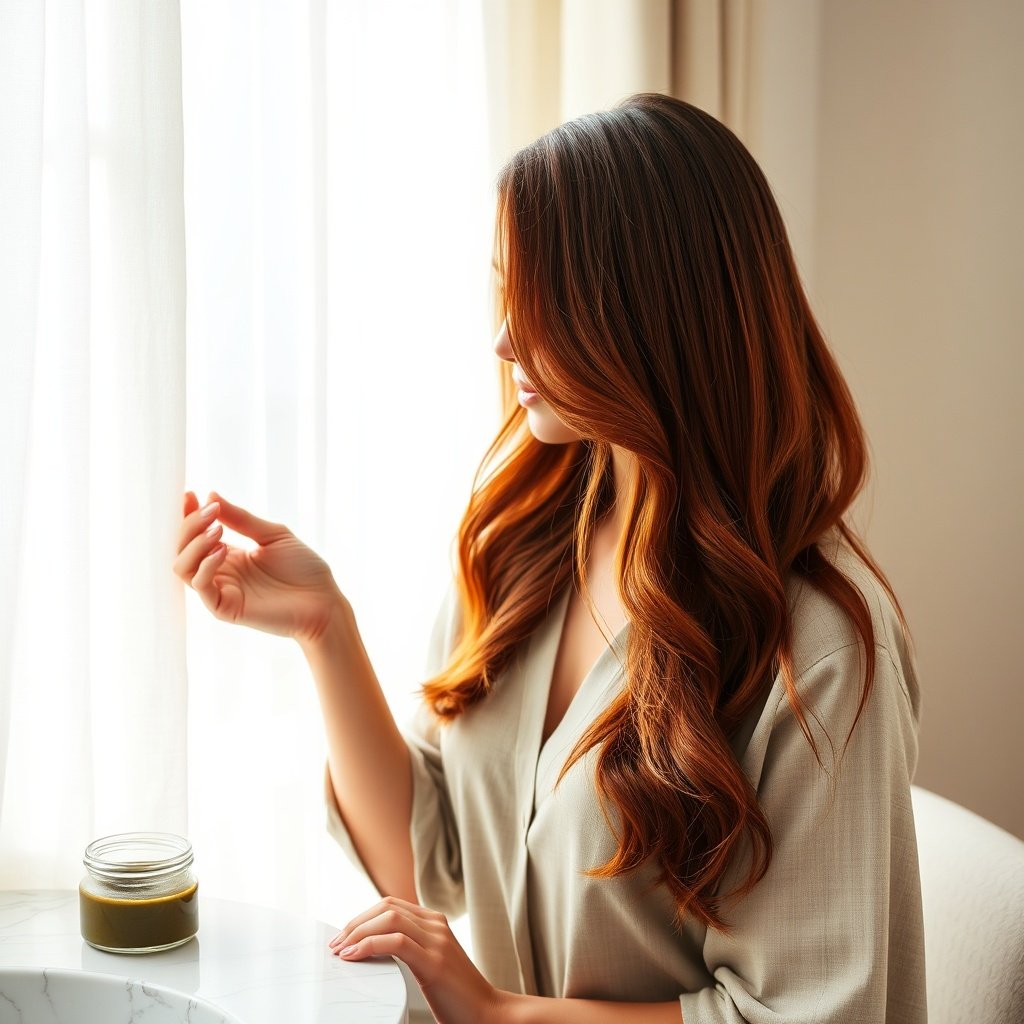
Showcases the final color payoff and hair health benefits of the treatment.
The Mechanism of Dyeing: How Color Is Deposited, Not Lifted
Henna is a direct dye. It functions by coating and penetrating the hair cuticle, permanently staining the cortex. Unlike synthetic dyes that require harsh chemicals to open the cuticle and alter the hair’s structure, henna physically bonds with the keratin, providing a lasting color that fades gradually as the hair grows.
The most important principle to understand is that henna cannot lighten hair. It only adds pigment; it does not remove the natural melanin. Therefore, it is impossible for henna to turn dark hair blonde. The final shade is a combination of your natural hair color and the translucent red-orange pigment from the henna.
The final shade is influenced by several factors:
- pH: An acidic environment (from lemon juice or apple cider vinegar) helps release more dye.
- Temperature: Heat accelerates the dye release process, leading to a deeper color.
- Dye-Release Time: The longer the paste rests before application, the more dye is available to stain the hair.
Expected Color Results on Different Starting Hair Colors
Because henna is a translucent dye, your starting hair color is the most significant determinant of the final result. The table below illustrates the general principle:
| Starting Hair Color | Expected Result with Pure Moroccan Henna |
|---|---|
| Light Blonde | Bright, vibrant copper or fiery orange |
| Medium Brown | Rich, warm auburn |
| Dark Brown | Subtle reddish-brown tint with a glossy sheen |
| Black | Minimal visible color change, but a noticeable glossy red sheen in direct sunlight |
The “henna red” spectrum is broad, ranging from bright orange to deep burgundy. This variation depends on how long the paste is left on the hair and the hair’s porosity. Highly porous hair will absorb the dye more quickly and deeply, resulting in a more intense color.
The Unique Benefits of Moroccan Henna for Hair Health
Strengthening and Reducing Breakage
One of the most celebrated benefits of henna is its ability to strengthen hair. The lawsone molecules bind to the keratin protein, effectively thickening the hair shaft. This process can reduce porosity and make the hair more resistant to breakage.
Henna also acts as a natural sealant. It smooths the cuticle, which helps lock in moisture and increases shine. This conditioning effect makes hair look and feel healthier, reducing the appearance of frizz and flyaways. While anecdotal reports and preliminary studies are promising, more extensive research is needed to fully quantify these effects.
Scalp Health and Dandruff Control
The lawsone in henna possesses natural antifungal and antibacterial properties. When applied as a paste, these properties may help soothe scalp irritation and can be beneficial in managing dandruff. The paste also has a natural cooling effect when applied, which can help reduce excess oil production on the scalp.
However, it is important to exercise caution. Henna can be drying if overused or if the paste is left on the hair for too long. This can lead to scalp dryness and potential irritation. Always follow a henna application with a rich, moisturizing conditioner.
Improving Hair Texture and Volume
Henna can make hair appear thicker and more voluminous by filling in damaged or porous areas along the hair shaft. This is a mechanical coating effect rather than a chemical repair of the hair’s internal structure.
It is important to maintain realistic expectations. Henna is not a cure for split ends or severe structural damage. It cannot “heal” broken hair, but it can improve the overall appearance and manageability of healthy to moderately damaged hair.
How to Choose the Right Moroccan Henna: Purity, Color, and Quality
Decoding Labels: What to Look For and What to Avoid
Choosing the right product is the most critical step. Look for labels that specify “100% pure” and “body-art grade.” Body-art grade henna is a standard that indicates the powder has been finely sifted and is free of additives, making it safe for use on skin and hair, a practice well-documented by experts at kenzadi.ma.
The term “organic” is also a good sign, but it should be verified with a trusted certification. The most important thing is to avoid products labeled as “black henna” or “neutral henna.” These are often not henna at all.
Quick Answer: What is the biggest risk of using “black henna”? “Black henna” is a misnomer. It is typically a synthetic dye containing PPD (para-phenylenediamine) or metallic salts, which can cause severe allergic reactions, chemical burns, and permanent hair damage.
You can perform a simple test to check for metallic salts. Mix a small amount of the powder with water and a few drops of vinegar. If the mixture fizzes or changes color significantly, it may contain metallic salts and should not be used.
Comparing Moroccan Henna to Other Henna Varieties
While all henna comes from the same plant, the origin affects its dyeing properties. The table below highlights general characteristics:
| Variety | Grind Fineness | Dye Release | Color Intensity | Typical Use |
|---|---|---|---|---|
| Moroccan | Very Fine | Fast | High | Intense, long-lasting reds |
| Indian | Fine | Moderate | Moderate | Standard reds and auburns |
| Egyptian | Medium | Slower | Medium | Softer, more subtle reds |
The region of cultivation directly impacts the lawsone content. The specific soil and climate conditions in Morocco are thought to produce plants with a higher concentration of this dye molecule, which is why Moroccan henna is often preferred for achieving deep, rich color.
The Strand Test: Your Non-Negotiable First Step
The strand test is the only way to know exactly how the henna will react with your unique hair. It is a non-negotiable step to avoid an unexpected color and to rule out allergies.
- Select a small, inconspicuous strand of hair, such as one under the top layer.
- Mix a small amount of henna powder with water or a mild acidic liquid like lemon juice to form a thick paste.
- Apply the paste to the strand, cover it with plastic wrap, and let it sit for 2–4 hours. For a deeper color, you can leave it longer.
- Rinse thoroughly, then shampoo and condition.
- Assess the color result and check for any adverse reactions like itching or redness before proceeding with a full application.
Quick Answer: Why is a strand test so important? A strand test prevents disasters. It shows you the exact color your hair will become and helps you avoid an unwanted orange or green result, while also ensuring you don’t have an allergic reaction to the product.
Step-by-Step Guide to Applying Moroccan Henna on Hair
Preparing the Henna Paste: The Right Consistency and Dye Release
The key to a successful application is a well-prepared paste. The goal is a smooth, yogurt-like consistency that is thick enough to stay on the hair but wet enough to saturate every strand.
- Measure the required amount of henna powder based on your hair length and thickness. As a general guideline, use about 50g for short hair, 100g for shoulder-length, and 200g for long, thick hair.
- Add a liquid (water, tea, or citrus juice) gradually, mixing to a yogurt-like consistency.
- Cover the bowl and let the paste rest at room temperature for 4–12 hours to allow dye release. The paste will darken as the dye is released.
- If the paste becomes too thick, add a little liquid; if too runny, add more powder.
Acidic liquids like lemon juice or apple cider vinegar enhance dye release, but they can be drying. To balance this, you can add a spoonful of conditioner or a little amla powder, which is known for its conditioning properties.
Application Techniques for Even Coverage and Maximum Stain
Proper application ensures even color. Start by sectioning your hair into four quadrants. This systematic approach prevents missed spots.
Wear gloves to avoid staining your hands. Using a tint brush, apply the paste from root to tip, ensuring each strand is fully saturated. Once the hair is covered, wrap it in plastic wrap to retain heat and moisture, which helps the dye develop.
The processing time depends on the depth of color you desire. A shorter time of 2-4 hours will yield a subtle tint, while 6-8 hours will produce a deep, rich color. Remember that longer processing times will result in darker, more intense shades.
Aftercare: Preserving Color and Maintaining Hair Health
Rinsing is just as important as applying. When the time is up, rinse the paste out with warm water. Do not use shampoo initially, as this can strip the dye before it has fully set.
After the water runs clear, follow up with a mild, sulfate-free conditioner to restore moisture. Henna can be drying, so this step is essential.
To maintain the color, avoid harsh clarifying shampoos, chlorine, and direct sunlight for the first few days. The color will gradually shift over 4-6 weeks, becoming more natural and less vibrant as the hair grows out.
Common Mistakes and Troubleshooting with Moroccan Henna
Why My Henna Turned Orange (or Green, or Too Dark)
- Orange Result: This is usually due to a short processing time or starting from a very light base. To get a deeper red, leave the paste on longer.
- Green Result: This happens when henna is applied over previously dyed hair, especially with indigo. It can also occur if a metallic-salt dye was used previously. A strand test is crucial to avoid this.
- Too Dark Result: This often comes from leaving the paste on for too long or using too much henna in a single application.
The Problem of “Henna for Hair” That Isn’t Real Henna
The market is full of products claiming to be henna that are actually synthetic dyes. Be wary of products that promise “black henna” or “neutral henna.” “Neutral henna” is actually senna, which has no dyeing properties and is used for conditioning. “Black henna” is a dangerous synthetic dye containing PPD.
Quick Answer: What are the risks of synthetic henna? Synthetic henna can cause severe allergic reactions, chemical burns, and significant hair damage. Always purchase from reputable sources that provide a certificate of analysis to ensure the product is 100% pure.
How to Correct or Remove Henna Color
Henna is a permanent dye. It cannot be chemically stripped without risking severe damage to your hair. The safest approach is to let it fade naturally.
You can use a gentle color-depositing conditioner to shift the tone as it fades. Avoid bleach or chemical dye removers, as they can cause a dangerous and unpredictable reaction with the henna, potentially leading to hair loss or breakage.
Frequently Asked Questions (FAQ)
How long does Moroccan henna last on hair?
The color is permanent and will not wash out. It will gradually fade and shift over several weeks as the hair grows out. Touch-ups are needed only for new growth.
Can I use Moroccan henna on previously chemically dyed hair?
It is generally safe to apply henna over non-metallic, ammonia-free dyes, but the result can be unpredictable. Always strand test first. Never use henna over hair that has been treated with metallic salts or “black henna.”
Does Moroccan henna damage hair?
Pure henna does not damage hair; it actually strengthens it. However, overuse or leaving the paste on for extended periods can cause dryness and brittleness. Proper conditioning is essential.
Will Moroccan henna turn my gray hair orange?
Gray hair has no natural pigment, so henna will appear as a bright, vibrant orange or copper. To achieve a more natural gray coverage, a two-step process with indigo is required.
How often should I apply Moroccan henna?
Typically, every 4–6 weeks to cover new hair growth. Overlapping applications on the same hair can lead to a darker, more opaque color over time.
Conclusion
Moroccan henna for hair is a powerful, natural alternative to synthetic dyes. It deposits rich color without lightening, offers unique strengthening and conditioning benefits, and, when chosen carefully, is a safe and effective way to enhance your hair’s natural beauty.
The key to success lies in three pillars: purity, preparation, and patience. Always select 100% pure, body-art-grade henna, perform a strand test to know exactly what to expect, and follow the application process meticulously.
Ready to make the switch? Start with a strand test today, consult detailed references on beniouaraincarpets.com, and don’t hesitate to share your results or questions in the comments below.