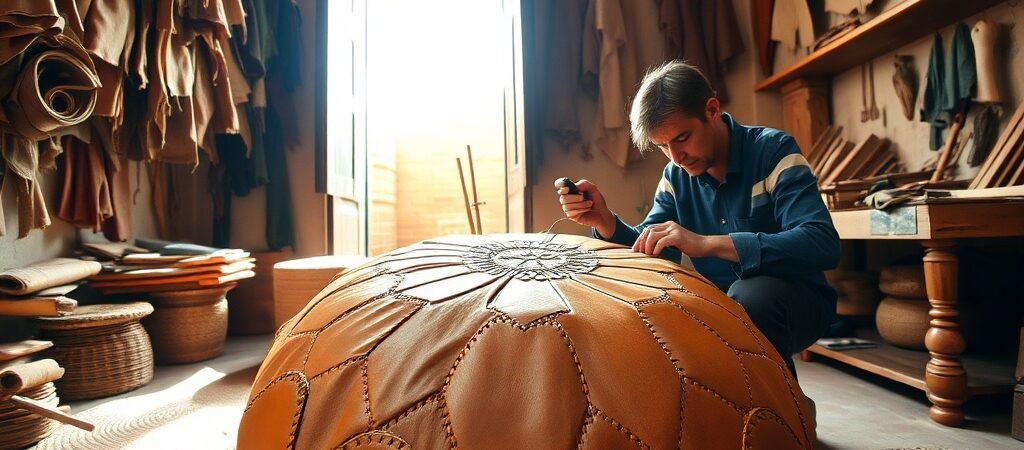
A Moroccan leather pouf is a round, handcrafted leather seat or footstool made by artisans in Morocco, prized for its unique character, versatility, and ability to add instant warmth and texture to a room. This guide covers how to identify a genuine piece, understand the different leather types, choose the right size, and care for your pouf so it lasts for years.
Key Takeaways
- Moroccan leather poufs are handcrafted, versatile furniture pieces that serve as seating, footrests, and accent decor.
- Genuine Moroccan leather is typically vegetable-tanned and hand-stitched, offering distinct quality markers.
- Proper care and maintenance significantly extend the life and appearance of a leather pouf.
- The interior filling material affects comfort, durability, and maintenance requirements.
- Authenticity can be determined through specific visual and tactile indicators.
What Is a Moroccan Leather Pouf? The Complete Answer
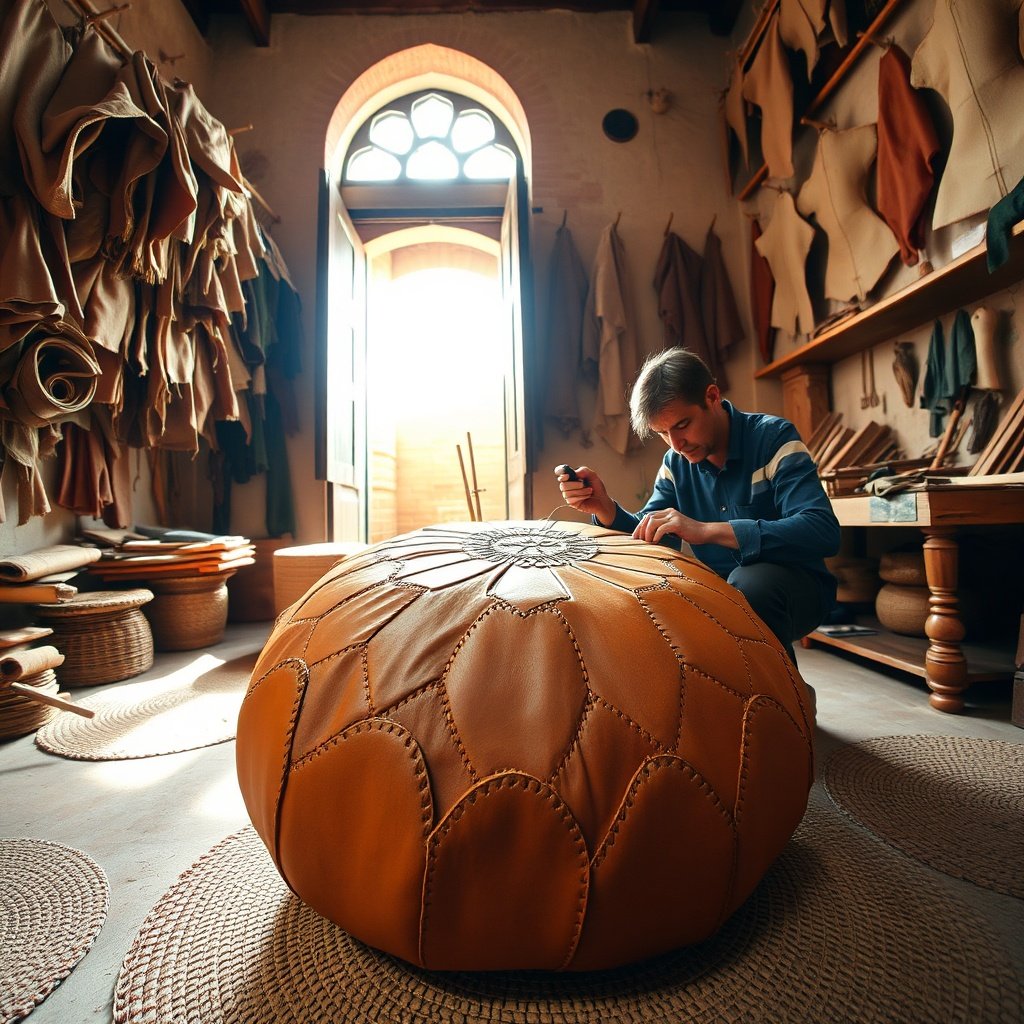
Visual representation of traditional Moroccan leatherworking techniques and authentic material quality.
Definition: A Moroccan leather pouf is a round, leather-covered seat or footstool traditionally handcrafted in Morocco by skilled artisans.
These pieces are more than just furniture; they are functional art. Traditionally made in cities like Marrakech and Fez, the craft has been passed down through generations. The primary materials are goat, sheep, or cow leather, which are tanned using traditional vegetable methods that give the leather its distinctive, natural scent and durability. beniouaraincarpets.com showcases this artisanal legacy.
A Moroccan leather pouf is incredibly versatile. It can serve as extra seating for guests, a comfortable footrest after a long day, a low coffee table substitute when topped with a tray, or simply a decorative accent that adds a bohemian touch to a room. Understanding what defines a genuine piece is the first step to making a worthwhile purchase.
The History and Cultural Significance
The origins of the Moroccan leather pouf are rooted in the nomadic and Berber traditions of North Africa. Historically, these were functional items—portable seating that could be easily packed and moved, filled with straw or wool for comfort. Over time, they evolved from a practical travel necessity into a staple of Moroccan home decor and hospitality, where they are often used in lounging areas for guests.
Today, the pouf has found its way into modern interiors worldwide. Its ability to bridge the gap between traditional craftsmanship and contemporary design is a key reason for its enduring popularity. A genuine pouf is a piece of that rich cultural heritage, brought into your home.
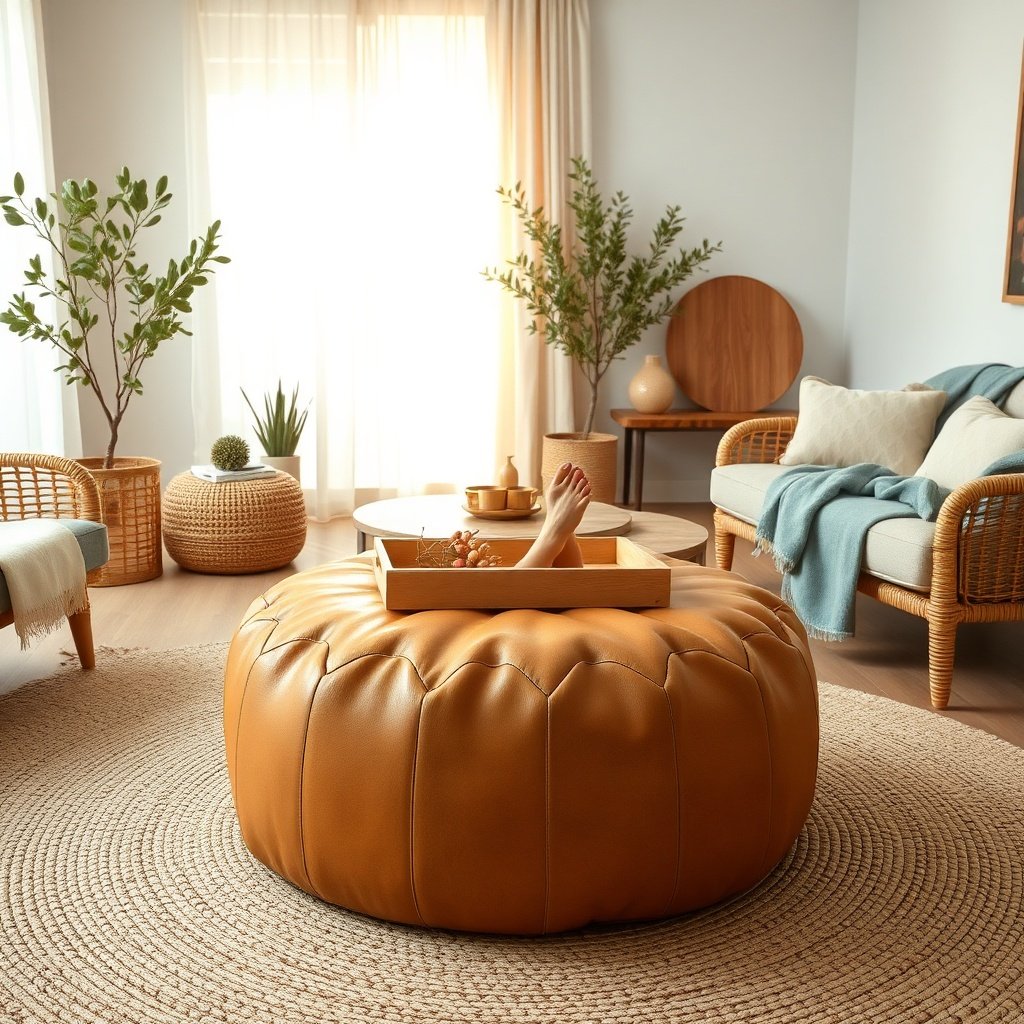
Shows practical and decorative uses of a moroccan leather pouf in a modern home setting.
Key Characteristics That Define Authenticity
Identifying a genuine Moroccan leather pouf is about looking for the signs of human hands at work. Here are the key indicators:
- Hand-stitching patterns: Look for visible, slightly irregular stitching. Machine-made stitches are uniform and perfect; hand stitches have a natural rhythm and occasional variations.
- Natural leather grain and color variations: Genuine leather is not uniform. You should see a natural grain and subtle variations in the color tone. Small blemishes or marks are a sign of authentic, untreated leather.
- Scent of natural tanned leather: A genuine vegetable-tanned leather pouf has a distinct, earthy, and pleasant leather smell. Chemically treated alternatives often have a plastic or chemical odor.
- Absence of synthetic materials: Authentic poufs are made from leather and strong, natural thread. If a “leather” pouf feels like plastic or has a synthetic backing, it is not genuine.
Types of Moroccan Leather Poufs: Materials and Finishes
Understanding the different types of leather is crucial. Each offers a different balance of texture, durability, and price, so your choice should align with how you plan to use the pouf.
Goat Leather vs. Sheep Leather vs. Cow Leather
The type of leather used is the most significant factor in the pouf’s character and longevity.
Goat leather is the most common and often considered the premium choice for Moroccan poufs. It has a fine, pebbled grain that is naturally soft yet remarkably strong and durable. It develops a beautiful patina over time and is an excellent all-around option for high-traffic areas.
Sheep leather is the softest and most supple. It has a luxurious feel and is often used for high-end, decorative poufs. However, because it is so soft, it is less durable than goat or cow leather and is more prone to scratches and tearing.
Cow leather is the most robust and durable. It has a coarser grain and a stiffer feel, making it ideal for everyday use in busy households. It is often the most affordable option and can withstand a lot of wear and tear. kenzadi.ma provides further insights on selecting the right hide.
Color Options and Finishing Techniques
The finishing process dramatically affects the pouf’s final look and its maintenance needs.
- Natural undyed leather: These poufs have a warm, honey-toned color that deepens and develops a rich patina with age. They are the most authentic and require minimal maintenance.
- Dyed and stained finishes: A wide range of colors is available, from bold jewel tones to muted neutrals. Dyed leather is more uniform in color but can fade over time if exposed to direct sunlight.
- Embroidered, metallic, and textured designs: Many poufs feature intricate geometric leather stitching or metallic accents. These are statement pieces that add a layer of visual interest but require more careful cleaning to protect the delicate details.
Comparison Table: Leather Types at a Glance
| Feature | Goat Leather | Sheep Leather | Cow Leather |
|---|---|---|---|
| Texture | Fine grain, soft | Very soft, supple | Coarser, more durable |
| Durability | High | Medium | Very high |
| Common Uses | Premium, versatile poufs | Luxury, decorative poufs | Everyday, high-traffic poufs |
| Price Range | Mid-range | High | Lower to mid-range |
How to Choose the Right Moroccan Leather Pouf for Your Space
Choosing the right pouf is a balance of size, style, and intended function. This framework will help you make a confident decision.
Size and Proportions for Different Rooms
Standard Moroccan leather poufs are roughly 20–22 inches in diameter and 12–14 inches in height, making them an ideal height for a footrest. However, size should be dictated by the room.
- Living room: A standard-sized pouf is perfect for use as a footrest or a casual seat. For a coffee table substitute, ensure the pouf is low enough to comfortably reach drinks from a sofa.
- Bedroom and nursery: Smaller poufs are excellent for use as a bedside footstool or in a nursery for feeding and rocking.
- Outdoor spaces: Leather is generally not weather-resistant. If you want a pouf for a covered patio or balcony, be prepared to bring it indoors when it rains or in extreme heat.
Color and Style Matching with Interior Themes
A pouf is a fantastic way to inject personality into a room.
- Bohemian and eclectic: Bold colors, embroidered patterns, and metallic accents are your friends. Layer several poufs with different textures for a rich, collected look.
- Mid-century modern: Opt for natural leather tones or muted colors like mustard, olive, or rust. The clean, round shape of a pouf fits perfectly with this style.
- Minimalist: A single pouf in a neutral tone (like natural tan, grey, or black) adds a touch of warmth and texture without disrupting the clean lines of the space.
- Coordination: Consider the colors of your existing furniture, rugs, and throw pillows. A pouf can tie a room together or provide a deliberate pop of contrast.
Step-by-Step Guide to Buying a Moroccan Leather Pouf Online
Buying online can be tricky, but following these steps will help you avoid a bad purchase.
- Identify the intended use — Will it be a seat, a footrest, or primarily decor? This determines the ideal firmness and filling.
- Measure the available space — Know the exact diameter and height that will fit comfortably in your intended spot.
- Choose between pre-filled and unfilled (cover-only) options — Pre-filled is ready to use; unfilled is easier to ship and allows for customization.
- Verify seller authenticity and check for hand-stitching details — Look for photos of the stitching and ask the seller about their production process.
- Review material type (goat, sheep, or cow leather) against your durability needs — Match the leather type to your lifestyle.
- Compare shipping costs and return policies — This is especially important for large, heavy items.
- Read customer reviews for quality and color accuracy feedback — Look for mentions of the smell, the stitching, and how the pouf looks in person.
- Make the purchase and plan for proper setup and maintenance — Have a spot ready and know how to care for your new piece.
The Filling Question: What’s Inside a Moroccan Leather Pouf?
Quick Answer: The filling inside a Moroccan leather pouf determines its comfort, shape retention, and lifespan. Common options include cotton batting, foam, wool, and recycled materials.
The filling is just as important as the leather. It dictates how the pouf feels to sit on and how well it holds its shape over time.
Common Filling Materials and Their Pros and Cons
- Cotton batting and foam: This is the most common filling. It is soft and comfortable, providing a good amount of cushioning. However, it will compress over time with regular use, meaning the pouf may eventually lose some of its height and shape.
- Wool or natural fibers: An eco-friendly and breathable option. Wool is naturally resilient and provides excellent support. The downside is that it can shift or clump over time, which may require you to occasionally re-fluff or redistribute the filling.
- Recycled materials: A cost-effective option that repurposes waste. The quality can vary significantly, and it may not provide the same level of comfort or shape retention as other materials.
Pre-Filled vs. Unfilled (Cover-Only) Poufs
Your choice between pre-filled and unfilled affects your purchase experience and the final product.
Pre-filled poufs arrive ready to use. They have a consistent, professionally filled shape and are the most convenient option. The downside is the higher shipping cost due to the weight and volume.
Unfilled (cover-only) poufs are significantly cheaper to ship. They offer ultimate customization, allowing you to choose your own filling material. Filling a cover-only pouf yourself is a straightforward process that gives you full control over the firmness.
How to fill a cover-only pouf yourself:
- Select your filling material (e.g., shredded foam, wool, or old textiles).
- Unzip the bottom of the pouf cover.
- Begin stuffing the filling, starting at the sides and working towards the center to ensure an even shape.
- Continue stuffing until the pouf is firm and holds its round shape.
- Zip the cover closed and fluff the pouf to distribute the filling evenly.
Caring for Your Moroccan Leather Pouf: Maintenance and Repair
Quick Answer: Maintaining a Moroccan leather pouf is simple: regular dusting, immediate spot-cleaning for spills, and occasional conditioning will keep it looking beautiful for many years.
A little care goes a long way in preserving the beauty and lifespan of your genuine leather pouf.
Daily and Weekly Cleaning Routines
- Dusting and wiping: Use a soft, dry cloth to wipe down the pouf weekly to remove dust and prevent it from settling into the pores of the leather.
- Spot-cleaning techniques: For spills, blot the area immediately with a clean, dry cloth. Avoid rubbing, which can push the liquid deeper into the leather. For dried stains, use a slightly damp cloth with a mild soap, then dry immediately.
- Products to avoid: Never use harsh chemicals, alcohol-based cleaners, or ammonia. These will strip the natural oils from the leather and cause it to dry out and crack.
Conditioning and Protection for Longevity
Leather is a skin that needs moisture to stay supple.
- How often to condition: A general rule of thumb is to condition your pouf every 6 to 12 months, or when it starts to feel dry.
- Recommended conditioning products and application methods: Use a high-quality leather conditioner designed for vegetable-tanned leather. Apply a small amount to a soft cloth and rub it into the leather in a circular motion. Let it absorb before use.
- Protective sprays: While some protective sprays can help with water resistance, they can also affect the leather’s breathability and natural patina. Use them with caution and test on a small, hidden area first.
Common Issues and Simple Repairs
- Scratches and scuffs: Light scratches can often be buffed out with a soft cloth or a tiny bit of leather conditioner. Deeper marks add character and are a part of the leather’s story.
- Color fading: This is most often caused by direct sunlight. To prevent it, keep your pouf out of prolonged direct sun.
- Sagging or shape loss: If your pouf has lost its shape, you can often fix it by opening the zipper, adding more filling, and redistributing what is already inside.
- Re-stitching: If the stitching comes loose, it is best to seek a professional leather repair service to ensure a durable fix.
Styling Ideas: Incorporating Moroccan Leather Poufs into Your Decor
A Moroccan leather pouf is a chameleon. It adapts to any room and style, adding a touch of handcrafted elegance.
Living Room Arrangements
- Coffee table alternative: Place a large, sturdy pouf in front of your sofa and top it with a wooden tray to hold drinks, books, and remote controls. It’s a soft, kid-friendly coffee table option.
- Flexible seating: Group two or three poufs together to create a casual, flexible seating area for guests. This is perfect for game nights or movie marathons.
- Layering with rugs and textiles: Place a pouf on top of a large area rug to anchor it in the space. Pair it with throw blankets and floor cushions to create a warm, inviting recettesdumaroc.com bohemian interior accent corner.
Bedroom and Entryway Applications
- Bedside footstool: A pouf at the foot of the bed is perfect for putting on shoes or as a spot to lay out clothes for the next day.
- Entryway spot: Place a pouf near the front door as a convenient seat for taking off and putting on shoes. It’s a practical and stylish addition to a hallway.
- Relaxed vibe: Pair a pouf with floor cushions and a potted plant to create a cozy, relaxed reading nook in a corner of the bedroom.
FAQ: Moroccan Leather Pouf — Common Questions Answered
How do I know if a Moroccan leather pouf is authentic?
Look for key indicators: hand-stitching with visible, slightly irregular patterns, a natural leather grain with color variations, and the distinct scent of vegetable-tanned leather. Authentic pieces will not feel like plastic. You can also verify the seller’s reputation and ask about the pouf’s origin and production process.
How long does a Moroccan leather pouf last?
With proper care, a high-quality pouf made from durable goat or cow leather can last for many years, even decades. The lifespan is influenced by the leather type, the quality of the filling, and your maintenance habits.
Can I sit on a Moroccan leather pouf comfortably?
Yes, they are designed as seating. The comfort level depends on the filling. A well-filled pouf with a firm core provides good support. The softness of the leather also contributes to the overall comfort.
How do I clean stains off my leather pouf?
For spills, blot immediately with a dry cloth. For dried stains, use a slightly damp cloth with a tiny amount of mild soap, then dry the area immediately. Avoid harsh chemicals and always test any cleaner on a hidden spot first.
Do Moroccan leather poufs smell?
Yes, genuine vegetable-tanned leather has a distinct, earthy, and natural smell. This is a sign of authenticity. The scent is strongest when the pouf is new and will fade significantly over time. Placing it in a well-ventilated area can help the smell dissipate more quickly.
Conclusion
A genuine Moroccan leather pouf is more than just a piece of furniture; it is a functional work of art that brings warmth, texture, and a rich cultural history into your home. By understanding what makes a pouf authentic—from the hand-stitching and vegetable-tanned leather to the natural scent and grain—you can make a purchase that you will cherish for years to come. Remember to prioritize authenticity, choose the right size for your space, and commit to a simple care routine. The timeless appeal of a well-made leather pouf lies in its ability to be both a beautiful, bohemian interior accent and a durable, everyday essential.