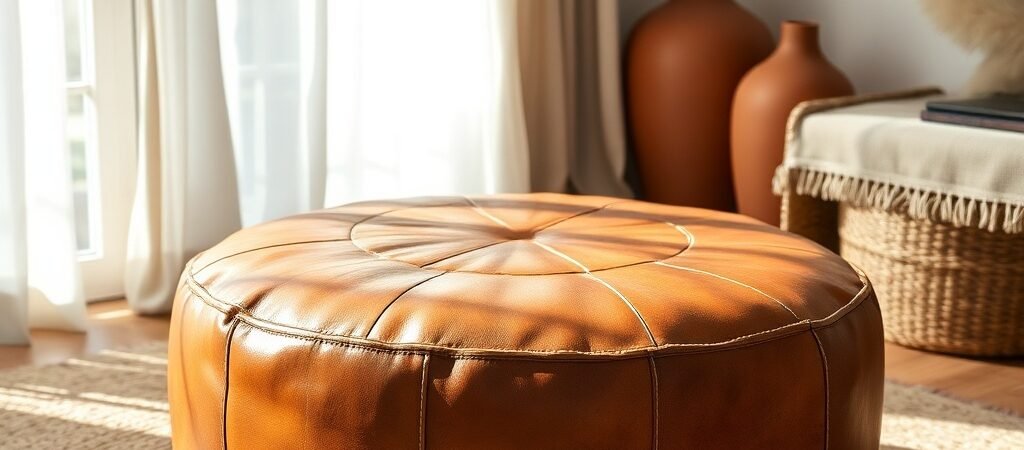
The Complete Answer: Moroccan Leather Pouf Pros and Cons (2026 Buyer’s Guide)
Moroccan leather poufs are handcrafted, round or square ottomans made from genuine goat or sheep leather, tanned and dyed using traditional methods in Morocco. The pros include exceptional durability, unique artisanal character, and versatile styling. The cons include a distinct leather smell that takes time to dissipate, susceptibility to direct sunlight and moisture damage, and the need for regular conditioning. They are a worthwhile investment for those seeking authentic, long-lasting furniture accents, but they require more maintenance than synthetic alternatives.
Quick Answer: A genuine Moroccan leather pouf is a hand-stitched, vegetable-tanned leather ottoman that lasts 10-20+ years with care. The main drawbacks are the initial leather smell, the need for regular conditioning, and sensitivity to direct sunlight and water.
Key Takeaways
- Authentic vs. Imitation: Genuine Moroccan poufs use vegetable-tanned, full-grain leather; imitations use bonded leather or synthetic materials that crack and peel.
- Maintenance Commitment: Expect to condition the leather every 3-6 months and keep it away from direct sun and water to prevent fading and stiffness.
- Smell Factor: The initial leather odor is strong but fades within 2-4 weeks; placing baking soda inside can accelerate the process.
- Unstuffed vs. Pre-stuffed: Buying unstuffed saves on shipping and allows you to choose your own filling (wool, foam, or recycled fabric) for the desired firmness.
- Price-Quality Trade-off: Handmade poufs cost more than machine-made ones, but they last significantly longer and develop a beautiful patina over time.
What Defines a “Real” Moroccan Leather Pouf? (Authenticity Check)
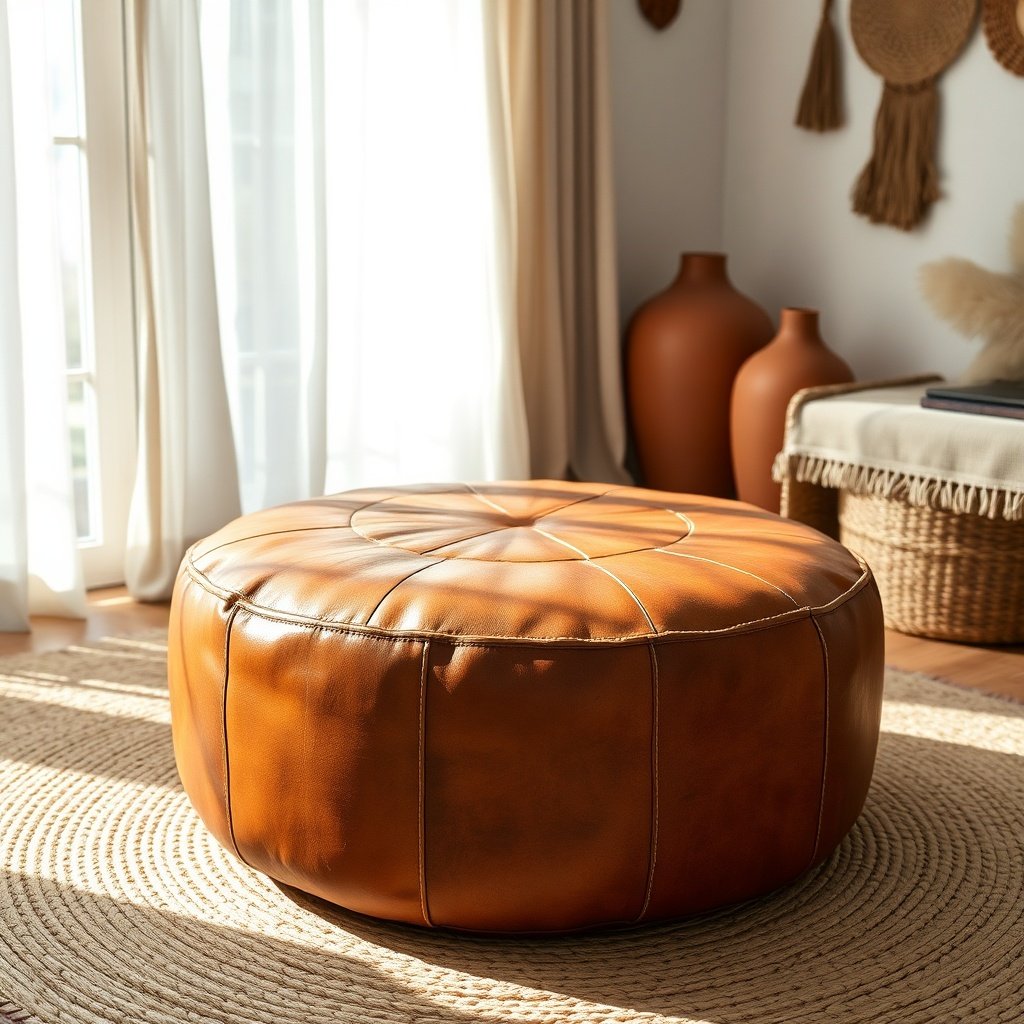
Showcases the premium materials, intricate hand-stitching, and timeless aesthetic that define high-quality genuine leather seating.
The Tanning and Dyeing Process
Traditional Moroccan craftsmanship relies on vegetable tanning, a slow process that uses natural tannins from mimosa, oak, or sumac bark. This contrasts sharply with modern chrome tanning, which uses chemical salts to process leather quickly but produces a less durable and less natural result.
The leather is dyed in open-air vats, which means each hide absorbs color slightly differently. This results in natural color variations and a slightly uneven finish—hallmarks of genuine artisanal production rather than factory defects.
Definition: Vegetable tanning is a leather production method that uses plant-based tannins instead of chromium salts. It takes weeks to complete but produces a more durable, breathable, and environmentally friendly leather that develops a rich patina over time.
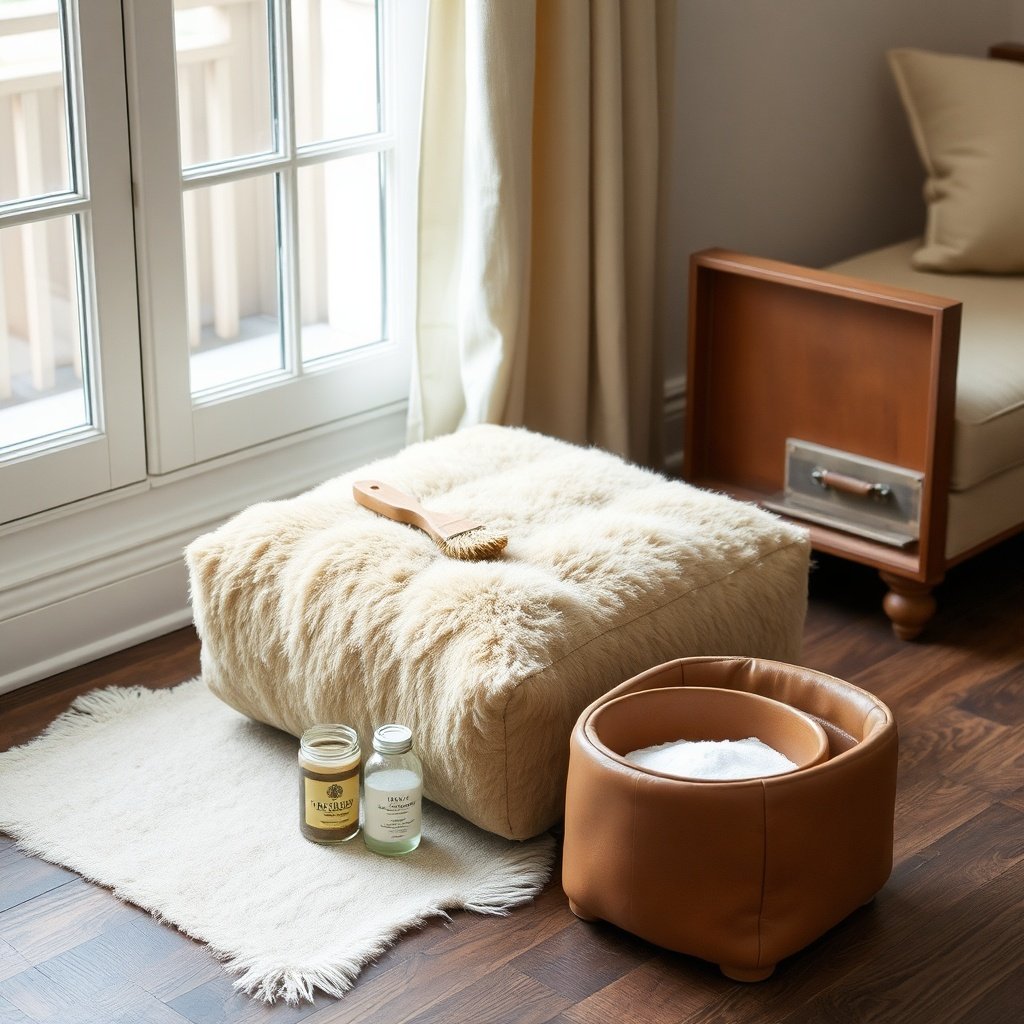
Demonstrates the necessary upkeep steps, including conditioning, odor management, and environmental protection for lasting durability.
Key Signs of Genuine vs. Imitation Leather
- Smell: Genuine leather has an earthy, natural scent. Faux leather smells like chemicals or plastic.
- Texture: Real leather is supple with visible pores and a slightly irregular surface. Imitation is perfectly uniform.
- Edge thickness: Genuine poufs have thick, raw edges that show the hide’s cross-section. Faux leather is folded over to hide thin, synthetic material.
- Water drop test: Place a single drop of water on an inconspicuous spot. Genuine leather absorbs it within seconds; faux leather beads it on the surface.
Understanding the difference between full-grain and bonded leather is crucial. Full-grain leather is the highest quality—it retains the entire hide’s top layer, making it stronger and more breathable. Bonded leather is made from shredded leather scraps bonded with polyurethane, and it peels and cracks within a few years.
Why Authenticity Matters for Longevity
A genuine pouf can last 10-20+ years with proper care. The leather develops a rich patina—a beautiful sheen and color depth that forms as the hide ages and absorbs natural oils from use.
Faux leather poufs, by contrast, typically last only 2-3 years before peeling, cracking, and flaking. They cannot be conditioned or repaired, and they never develop the character that makes genuine leather so appealing.
The Pros: Why Homeowners Love Moroccan Leather Poufs
Unmatched Durability and Strength
Full-grain goat leather is naturally resistant to tears and punctures. Goatskin is prized for its tight fiber structure, which makes it stronger than cowhide of the same thickness.
Quality poufs feature reinforced stitching and double-layered seams, ensuring the seams hold up under daily use. This combination of premium leather and robust construction makes these poufs genuinely long-lasting furniture pieces.
Versatile, Space-Saving Design
A Moroccan pouf is one of the most multi-functional ottoman designs available. It serves as:
- A footrest for a sofa or armchair
- Extra seating for guests
- A low side table when topped with a tray
- A storage unit if it has a zipper closure
Poufs are lightweight and easy to move between rooms, making them ideal for small apartments or flexible living spaces. You can reposition them instantly for entertaining or relaxing.
Aesthetic Appeal and Cultural Character
Hand-embroidered patterns and geometric motifs—often inspired by Zellige tilework—add bohemian, eclectic, or global style to any room. The intricate stitching is done by hand, and each artisan has their own signature style.
The natural color variations in the leather mean no two poufs are identical. This one-of-a-kind quality is a major draw for homeowners seeking authentic bohemian home decor rather than mass-produced furniture.
Quick Answer: The biggest advantages of a Moroccan leather pouf are its 10-20+ year lifespan, its versatility as a footrest/seat/side table, and its unique hand-crafted aesthetic. No two genuine poufs are identical.
The Cons: What to Know Before You Buy
Maintenance and Upkeep Requirements
Genuine leather requires a consistent leather care routine. You’ll need to apply a leather conditioner every 3-6 months to prevent the hide from drying out and cracking.
Cleaning is simple but must be done correctly: use a slightly damp, soft cloth to wipe away dust and dirt. For deeper cleaning, use a mild leather soap. Avoid chemical cleaners, which strip the leather’s natural oils and cause permanent damage.
Sensitivity to Sunlight and Moisture
Direct sunlight can bleach the color of a leather pouf within a few months. The UV rays break down the dyes and dry out the leather, causing it to become stiff and brittle.
Water is even more problematic. Water stains are permanent, and prolonged moisture causes the leather to harden. If a spill occurs, blot it immediately with a dry cloth. Never rub, as this pushes the liquid deeper into the hide.
The Smell and Initial Break-In Period
The strong, earthy odor of freshly tanned leather is the most common complaint from new owners. While many find it pleasant, others find it overwhelming at first.
The break-in period also takes time. New poufs are often stiff, and the leather softens and molds to its filling over several weeks of use. This period requires patience, but it’s part of the authentic experience.
How to Choose the Right Moroccan Pouf (Buying Guide)
Size, Shape, and Filling Considerations
Round poufs are the classic choice, typically measuring around 20-24 inches in diameter. Square poufs offer a more structured look and sit more firmly on the floor. Both are available in various sizes to suit different spaces.
The filling you choose dramatically affects comfort and durability. Berber pouf filling types include:
- Wool: Traditional and firm, providing excellent support and shape retention
- Foam: Softer and more consistent, but can compress over time
- Recycled fabric: Eco-friendly but can settle and become lumpy
- Kapok: Natural plant fiber that’s lightweight and breathable
Unstuffed poufs are the most economical to ship and give you full control over firmness. Pre-stuffed poufs are ready to use immediately but cost more to ship and limit your customization.
Price vs. Quality: What to Expect
Prices vary widely based on leather quality, embroidery complexity, and whether you buy directly from a Moroccan artisan or through a reseller. Buying direct from a souk or artisan cooperative typically offers the best value, while online retailers add markup for convenience and shipping.
If a price seems too low, it’s a red flag. Genuine hand-stitched artisanal craftsmanship takes many hours of labor. A suspiciously cheap pouf is likely made from bonded leather or mass-produced in a factory.
Where to Buy: Direct from Artisans vs. Retailers
Buying from a Moroccan souk:
- Pros: Authenticity guaranteed, opportunity to negotiate, direct support for artisans
- Cons: Shipping costs can be high, no return policy, language barriers
Buying from an online retailer:
- Pros: Convenience, clear return policies, customer reviews, easier price comparison
- Cons: Higher markup, risk of receiving imitation leather, less ability to inspect before purchase
For ethical sourcing, look for sellers who work directly with artisan cooperatives and can provide information about their supply chain.
Comparison Table: Genuine Moroccan Leather Pouf vs. Faux Leather Pouf
| Feature | Genuine Moroccan Leather Pouf | Faux Leather Pouf |
|---|---|---|
| Material | Full-grain goat/sheep leather, vegetable-tanned | Polyurethane or PVC bonded to fabric |
| Lifespan | 10-20+ years with proper care | 2-3 years before peeling/cracking |
| Smell | Strong earthy smell initially, fades in weeks | Chemical plastic smell that may persist |
| Maintenance | Requires conditioning every 3-6 months | Wipe clean with a damp cloth only |
| Appearance Over Time | Develops a beautiful, unique patina | Fades, cracks, and peels |
| Price | Higher upfront cost | Lower upfront cost |
| Eco-Friendliness | Biodegradable, uses natural tanning agents | Non-biodegradable, petroleum-based |
| Authenticity | Handmade, one-of-a-kind, slight imperfections | Machine-made, uniform, no character |
Step-by-Step: How to Reduce the Initial Leather Smell
- Unpack immediately — Remove the pouf from any plastic wrapping and place it in a well-ventilated room.
- Stuff the pouf — If unstuffed, fill it with wool or foam; this helps the leather hold its shape and allows air to circulate.
- Place an open container of baking soda inside the pouf; replace it every 3 days.
- Expose to indirect air — Keep the pouf away from direct sunlight but in a room with good airflow; a fan can help.
- Wipe with a damp cloth — Lightly dampen a soft cloth with water and wipe the exterior, which helps open the pores.
- Apply a light coat of conditioner — After 2 weeks, apply a small amount of leather conditioner to moisturize and mask the odor.
- Be patient — The smell will naturally dissipate within 2-4 weeks; do not use harsh chemicals or sprays that damage the leather.
Quick Answer: To reduce the leather smell quickly, place an open container of baking soda inside the pouf for a few days, keep it in a well-ventilated area, and wipe the exterior with a damp cloth. The odor naturally fades within 2-4 weeks.
FAQ: Moroccan Leather Pouf Pros and Cons
Are Moroccan leather poufs comfortable for sitting?
Yes, they are comfortable for short periods, especially when stuffed with firm materials like wool. However, they lack back support and are best used as footrests or low seating.
How long does the leather smell last?
The strong smell typically fades within 2-4 weeks, but a faint leather scent may persist for months, which many people find pleasant.
Can I use a Moroccan pouf outdoors?
No, genuine leather poufs are not suitable for outdoor use. Direct sun and rain will cause fading, cracking, and permanent water damage.
How do I clean a Moroccan leather pouf?
Use a slightly damp, soft cloth to wipe away dust and dirt. For deeper cleaning, use a mild leather soap. Always follow up with a leather conditioner to keep the leather supple.
What is the best filling for a Moroccan pouf?
Wool is traditional and provides a firm, supportive feel. Foam is also popular for a softer, more consistent shape. Avoid shredded fabric or paper, which can settle and become lumpy.
Conclusion: Are Moroccan Leather Poufs Worth It?
The answer depends on your priorities. If you value authenticity, durability, and unique character, the pros outweigh the cons. A genuine Moroccan leather pouf is a long-term investment that adds warmth and texture to any room, but it demands a little more care than a mass-produced alternative.
Before making a purchase, weigh the cons—maintenance, initial smell, and sunlight sensitivity—against the pros of longevity, style, and sustainability. Buy from a reputable source to ensure genuine quality, and be prepared to commit to a simple leather care routine. For those willing to invest the effort, a genuine Moroccan pouf becomes a beloved piece that ages beautifully alongside your home.