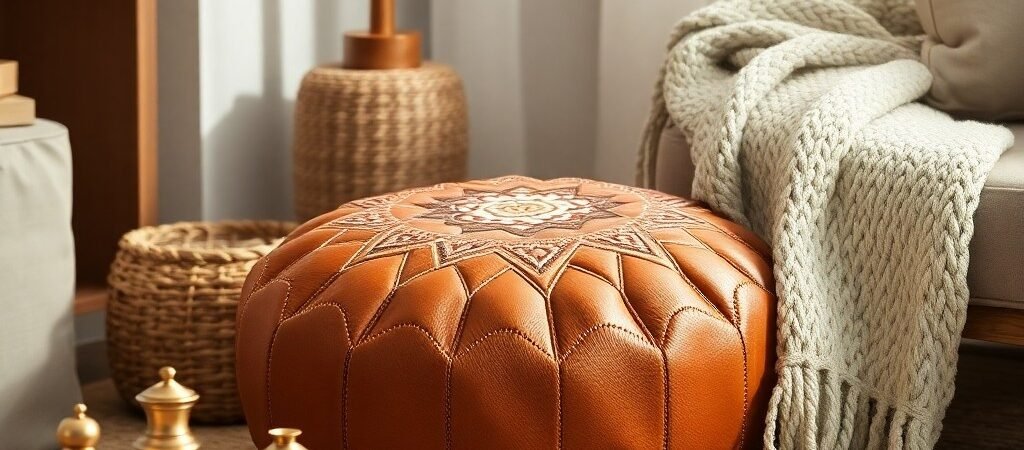
Moroccan Poufs: Style & Comfort for Your Home
Global-inspired interiors have moved beyond a passing trend to become a staple in modern home design, bringing warmth, texture, and a sense of wanderlust into living spaces. At the heart of this movement is the Moroccan pouf, a versatile piece that serves as both a functional footrest and a striking sculptural element. Whether you are curating a maximalist bohemian sanctuary or a sleek, minimalist living room, Moroccan Poufs: Style & Comfort for Your Home offer a unique blend of utility and artisanal beauty that few other decor items can match.
These distinctive leather ottomans trace their roots back to North African craft traditions, specifically within the medinas of cities like Fez and Marrakech. Originally used in Moroccan riads and homes for casual seating, they have evolved into a global design phenomenon. You will learn how to distinguish authentic craftsmanship from mass-produced imitations, select the perfect size and material for your specific needs, and integrate these pieces into every room of your house. From the type of leather used to the ethical implications of your purchase, understanding the nuances of this decor item will ensure you make a choice that looks stunning and lasts for years. Here is everything you need to know to make this piece work in your space.
What Exactly Is a Moroccan Pouf? Understanding Materials and Craftsmanship
A Moroccan pouf is more than just a cushion; it is a testament to centuries-old leather-working traditions. Typically characterized by intricate geometric embroidery and a distinctively soft, yet durable, leather exterior, these poufs are usually sold unstuffed to allow for easier shipping, though high-end retailers often offer pre-filled options. The quality of a pouf is determined almost entirely by the source of its materials and the skill of the hands that stitched it together.
Traditional Materials Used in Authentic Moroccan Poufs
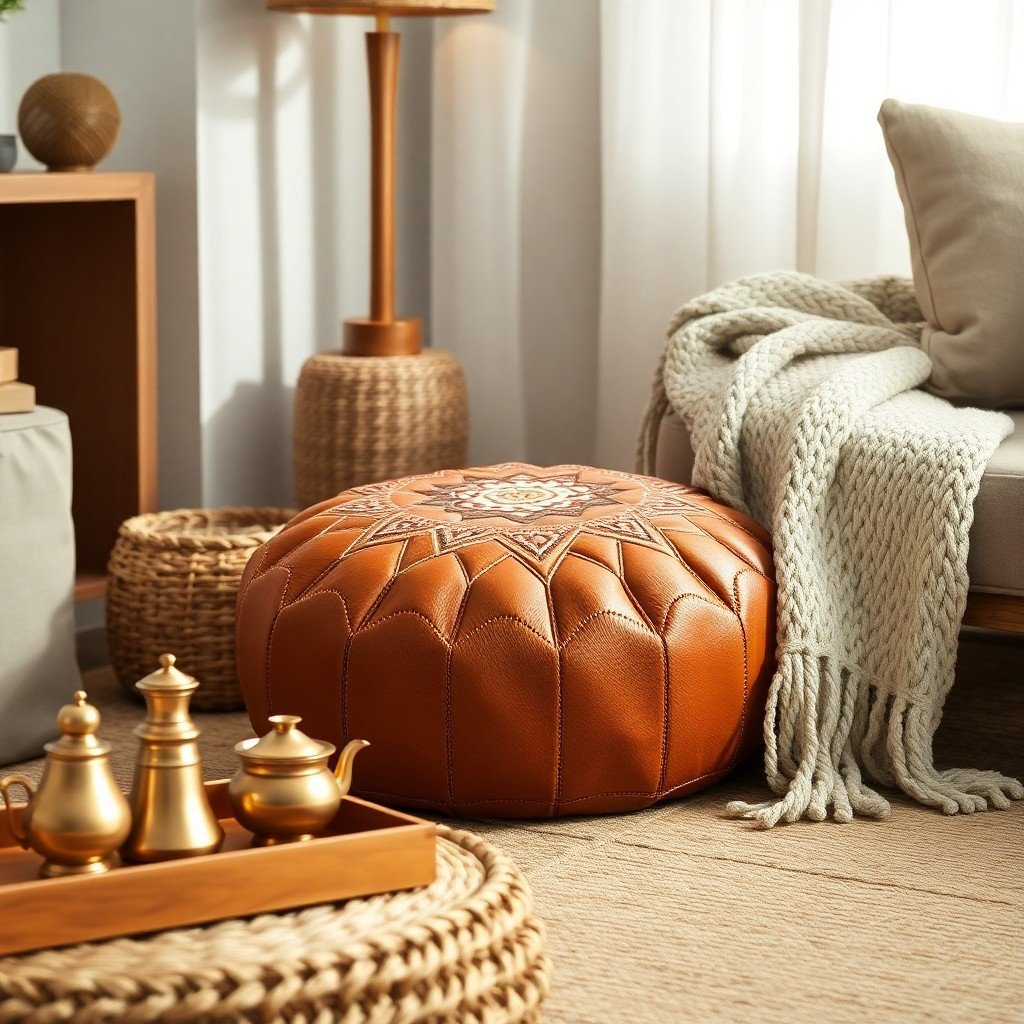
*A beautifully styled genuine Moroccan leather pouf showcasing traditional geometric embroidery craftsmanship in an elegant interior setting*
Authentic Moroccan poufs are crafted from genuine leather, with goat skin being the most common choice due to its fine grain and inherent flexibility. You may also encounter poufs made from cow or camel leather, which offer a heavier, more rugged texture suitable for high-traffic areas. The leather is typically “vegetable-tanned,” a process using natural tannins found in tree bark and leaves, rather than harsh chromium chemicals. This results in a material that is eco-friendly, breathable, and free from toxic odors. In contrast, vegan alternatives often use polyurethane or cork leather; while these are animal-free, they generally lack the patina and longevity that develops with natural hide over time.
The filling is equally important for comfort and structure. Traditional fillings include natural kapok fiber or shredded fabric remnants from textile factories, offering a firm but yielding sit. Modern reproductions often utilize polyester fiberfill, which is lightweight and hypoallergenic but may compress more quickly than natural fibers.
How to Spot a Genuinely Handmade vs. Mass-Produced Pouf
Distinguishing an artisan-made pouf from a factory-made imitation requires a close examination of the stitching and leather quality. Genuine handmade poufs feature embroidery that is stitched by hand using thick, waxed cotton thread. You should look for slight irregularities in the stitch length and tension—these are not defects, but hallmarks of human craftsmanship. Conversely, mass-produced versions will have perfectly uniform, machine-locked stitches that often look too precise.
The leather itself tells a story. Authentic pieces will have natural variations in grain, creases, and even minor scars from the animal’s life. These imperfections add character. Synthetic or factory-processed leathers often look perfectly uniform, with a plastic-like sheen. Price is a strong indicator: a genuine leather pouf typically costs between $80 and $200 depending on size and complexity, whereas synthetic versions can be found for $30 to $50.
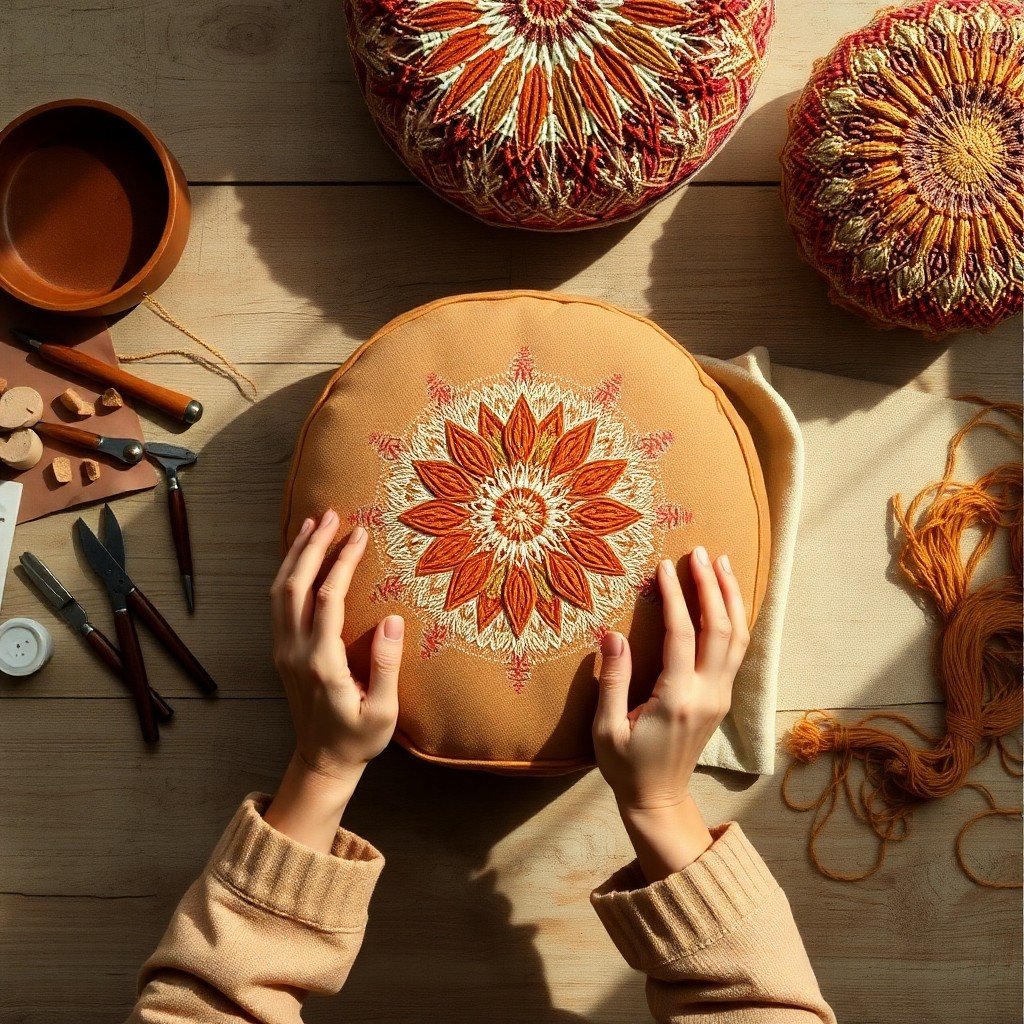
*Close-up of skilled artisan creating authentic geometric embroidery patterns on a Moroccan leather pouf using time-honored techniques*
The Environmental and Ethical Angle
When purchasing a Moroccan pouf, you are often supporting a network of artisans. Many high-quality poufs are produced by fair-trade cooperatives in Morocco, where craftsmen are paid fair wages and work in safe conditions. To verify ethical sourcing, look for retailers who provide specific details about the origin of their goods, such as “hand-stitched in Fez” or “sourced from a women’s cooperative in Marrakech.” Beware of vague descriptions like “imported” or “Moroccan style” without confirmation of the country of origin, as these often indicate mass production in countries with lower labor standards.
Styling Moroccan Poufs: Style & Comfort for Your Home by Room
The beauty of a Moroccan pouf lies in its adaptability. It functions as extra seating during parties, a footrest for lazy Sunday afternoons, or even a casual side table when topped with a tray. Understanding how to deploy this piece in different environments can elevate your interior design from basic to cohesive.
Living Room: Layering Poufs with Existing Furniture
In the living room, the pouf acts as a bridge between your larger furniture pieces. If you have a large sectional, avoid placing a single small pouf in front of it, as it will look out of scale. Instead, follow the “rule of multiples” by grouping three poufs of varying sizes or colors. Odd numbers are generally more pleasing to the eye. For a 20-inch diameter pouf, place it beside a standalone accent chair to create a conversational nook. You can also contrast textures by placing a fluffy, white Moroccan pouf against a sleek velvet sofa or a rough-hewn jute rug to add depth to the room’s tactile experience.
Bedroom: Poufs as Vanity Seating and Footrests
The bedroom offers an intimate setting for the softer side of Moroccan decor. A pouf at the foot of the bed serves as a functional landing spot for throwing blankets or decorative pillows. If you have a vanity table, a slightly firmer pouf can serve as stylish seating, provided the height aligns with the table (usually 16 to 18 inches high). When choosing a color for the bedroom, match the pouf tone to your bedding palette; a warm tan leather pouf complements white linens beautifully, while a deep navy or black pouf can ground a room with darker, jewel-toned decor.
Kids’ Rooms and Play Spaces: Safety and Durability Considerations
Moroccan poufs are excellent choices for children’s rooms because they lack sharp corners and hard edges, making them safer than traditional wooden stools or ottomans. The soft leather exterior is surprisingly durable and easy to wipe down, making it capable of withstanding the occasional spill. However, for high-traffic play areas, you might consider machine-washable fabric poufs or canvas options that mimic the Moroccan aesthetic but can be tossed in the laundry. If you choose leather, ensure it is untreated or vegetable-tanned to avoid exposing your child to harsh chemical finishes found on some synthetic leathers.
Choosing the Right Moroccan Pouf: Size, Shape, and Color Guide
Selecting the right pouf involves more than just picking a color you like; it requires spatial awareness and an understanding of how the piece will interact with your existing furniture geometry.
Size Matters: Matching Pouf Dimensions to Your Space
Scale is the most critical factor in choosing a pouf. A standard round Moroccan pouf typically measures 20 inches in diameter, which is versatile enough for most living rooms and bedrooms. Larger spaces, particularly those with high ceilings, can accommodate 24-inch or 27-inch diameters, which make a bolder statement. The height is equally important for comfort. A standard pouf height is roughly 10 to 15 inches when stuffed. Ideally, the top of the pouf should sit within 2 inches of the seat height of your sofa or chair to ensure it functions ergonomically as a footrest. If the pouf is too low, it will feel awkward to use; if too high, it will obstruct the view or legroom.
Color Selection: Neutral Earth Tones vs. Bold Dye Options
Your color choice dictates the mood of the room. Neutral earth tones like natural tan, beige, and white are timeless and work well in minimalist or Scandinavian-inspired interiors. These natural hues allow the texture of the leather to take center stage. On the other hand, bold dye options such as saffron yellow, turquoise, or deep magenta are perfect for bohemian or eclectic spaces that thrive on color saturation. Keep in mind that vegetable-dyed leathers will fade and develop a rich patina over time, adding to their character, while synthetic aniline dyes may crack or peel with age and sun exposure.
Shape Variations: Round, Cylinder, and Square Poufs
While the round leather pouf is the classic icon, Moroccan craftsmanship extends to other shapes. Cylinder poufs offer a taller profile, making them excellent substitutes for side tables or extra seating in tight entryways where you cannot sacrifice floor space for a wide, round shape. Square poufs are less traditional but can align neatly with the geometry of a modern sectional sofa. When choosing a shape, look at the lines of your furniture. If your sofa and coffee table are round, a cylindrical or round pouf will maintain that flow. If your furniture is angular and square, a square or rectangular pouf will harmonize with the sharp lines.
How to Clean and Maintain Your Moroccan Pouf for Longevity
Leather is a natural material that requires specific care to prevent drying out, cracking, or staining. With the right maintenance routine, a high-quality Moroccan pouf can last for decades, becoming softer and more supple with age.
Leather Pouf Cleaning: Step-by-Step Routine
You should establish a weekly routine of light dusting using a soft, dry cloth or a vacuum attachment with a brush head to remove crumbs and dirt from the crevices of the embroidery. Once a month, apply a dedicated leather conditioner or saddle soap to keep the hide moisturized. To do this, dab a small amount of conditioner onto a soft, lint-free cloth and rub it into the leather in circular motions. Avoid soaking the leather; less is more. This process replenishes the natural oils that leather loses over time, preventing it from becoming brittle.
Removing Stains from Fabric and Embroidered Poufs
Accidents happen, but quick action can save your pouf. For liquid spills on leather, blot the area immediately with a dry, absorbent cloth—do not rub, as this pushes the liquid deeper into the fibers. Once the excess liquid is removed, let the area air dry naturally; avoid using a hairdryer or placing it near a radiator, as heat will warp the leather. For stubborn stains on the embroidered cotton threading, you can use a damp cloth with a mild, dye-free soap. Test the soap on a hidden area first to ensure it does not discolor the leather. For ink or grease stains, it is often safer to consult a professional leather cleaner rather than risking DIY damage.
Repairing and Refilling a Worn Pouf
Over time, the stuffing inside a Moroccan pouf will compress, causing it to look flat or saggy. This is easily fixed by opening the zipper (usually located discreetly on the bottom or side) and adding more filling. You can purchase polyester fiberfill or shredded memory foam from craft stores. Simply fluff the new filling and stuff it in until you reach the desired firmness. If the leather itself develops a small tear, leather repair kits available at hardware stores can patch minor imperfections. For larger tears or separated seams, a professional cobbler can often stitch the pouf back together, extending its life significantly.
Where to Buy Authentic Moroccan Poufs: A Buying Guide
Navigating the marketplace for Moroccan poufs can be tricky, as the term “Moroccan style” is often applied loosely to goods that are manufactured elsewhere. Knowing where to shop ensures you get value for your money and an authentic product.
Online Marketplaces: Pros, Cons, and What to Look For
Online marketplaces like Etsy are excellent for finding authentic, handmade poufs directly from artisans or small businesses that import from Morocco. When shopping on Etsy, look for sellers who provide photos of the poufs being made, detailed descriptions of the leather type, and information about the artisans. Avoid listings that use stock photos or vague descriptions. Large retailers like Wayfair and Amazon often carry “Moroccan-inspired” poufs; while these are affordable and convenient, they are typically made of synthetic materials and may lack the durability of authentic leather. Specialty retailers such as Pouf.com or Zoco Home often curate higher-quality collections, bridging the gap between artisan authenticity and modern convenience.
In-Person Shopping: Importing Direct vs. Local Boutiques
If you have the opportunity to travel, buying a pouf directly from a souk in Marrakech or Fez is an unforgettable experience. You can hand-pick your leather and haggling is expected. However, shipping heavy leather goods home can be expensive and logistically challenging. For most, local import boutiques or interior design shops that specialize in global goods are the best option. These brick-and-mortar stores allow you to touch and feel the leather quality before purchasing. Ask the shop owner specifically about the tanning process and the origin of the poufs to verify authenticity.
Price Breakdown: Budget, Mid-Range, and Luxury Tiers
Understanding pricing tiers helps you set realistic expectations. In the $30 to $60 range, expect machine-made poufs constructed from polyurethane (PU) leather or bonded leather. These are suitable for temporary decor or low-use areas but will likely crack within a year or two. The $80 to $150 range is the sweet spot for genuine, handmade leather poufs imported from Morocco. These pieces usually feature vegetable-tanned leather and hand-stitched embroidery. Above $200, you enter the luxury tier, which may include rare leather types, intricate henna-inspired designs, custom sizing, or collaborations with specific master artisans. These are investment pieces intended to become family heirlooms.
FAQ Section
**Q: What is a Moroccan pouf used for?**
A Moroccan pouf is a versatile piece of furniture used primarily as a footrest, extra seating for guests, or a decorative side table when topped with a tray.
**Q: Are Moroccan poufs comfortable for everyday seating?**
They are generally firm and low to the ground, making them best for short-term seating or footrests. While comfortable for perching, they lack the back support needed for prolonged lounging.
**Q: Can Moroccan poufs be used outdoors?**
Authentic leather Moroccan poufs are strictly indoor items because moisture and sunlight will damage the hide. However, you can find outdoor-safe fabric poufs that mimic the Moroccan style for patios.
**Q: How do I know if a Moroccan pouf is real leather?**
Real leather has a distinct, earthy smell and feels warm to the touch. It will also absorb a small drop of water rather than repelling it, and you should be able to see natural pores and grain variations.
**Q: What size Moroccan pouf should I buy for my living room?**
A good rule of thumb is to choose a pouf height that matches the seat height of your sofa, usually within 2 inches, to ensure it functions comfortably as a footrest.
Conclusion
Moroccan poufs are more than just a passing fad; they are a functional investment in global craftsmanship that brings warmth and texture to any home. By prioritizing authentic materials like vegetable-tanned leather and hand-stitched embroidery, you ensure a durability that synthetic alternatives simply cannot match. Remember that room placement drives impact—grouping them in threes creates a cohesive look in living spaces, while a single neutral piece can add quiet elegance to a bedroom. Regular maintenance, including conditioning the leather and periodic restuffing, will extend the lifespan of your pouf indefinitely.
Ultimately, this piece serves as a cultural artifact that connects your modern living space to centuries of North African tradition. Whether you choose a bold jewel tone or a classic natural hide, you are adding a layer of storytelling to your decor. We hope this guide helps you find the perfect fit for your home. If you have styled your space with a Moroccan pouf, share your photos in the comments below or ask any questions you might have about the care process!
**Meta Description:** Discover authentic Moroccan poufs for your home. Learn to spot real leather, style any room, and clean your pouf for lasting comfort and global charm.