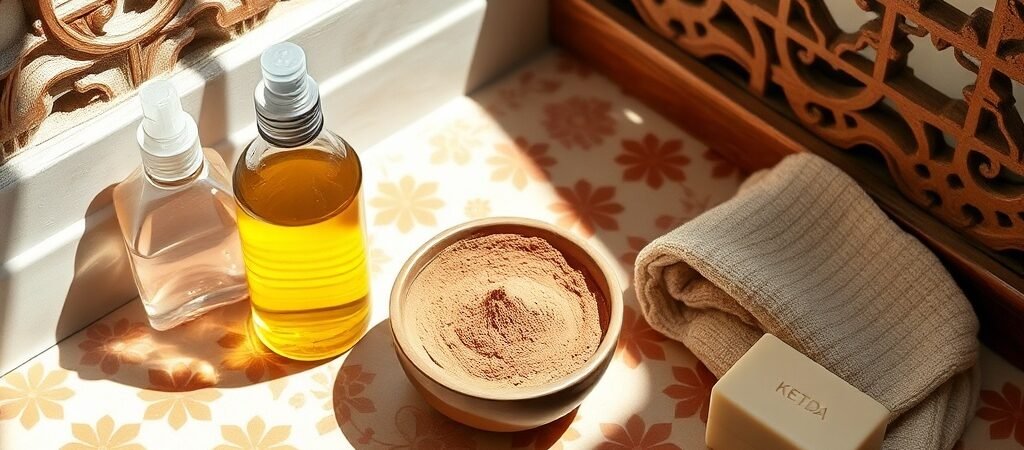
Moroccan skincare is more than a routine; it is a ritual rooted in centuries of tradition. From the hammam bathhouses of Marrakech to the argan groves of the Souss Valley, Moroccan beauty practices rely on natural, minimally processed ingredients that have been used for generations. At the heart of any Moroccan skincare routine are three core elements: argan oil, ghassoul clay, and rose water. This guide provides a complete, adaptable Moroccan skincare routine that you can tailor to your skin type and lifestyle.
Key Takeaways
- A Moroccan skincare routine is built on a few core ingredients: argan oil, ghassoul clay, and rose water.
- The routine follows a specific order: cleanse, exfoliate, mask, tone, and moisturise.
- Adaptations are necessary based on skin type; the traditional routine is not one-size-fits-all.
- Consistency and gentle application matter more than the number of steps.
- Moroccan skincare emphasises natural, minimally processed ingredients.
The Complete Answer: What Is the Moroccan Skincare Routine?
The Moroccan skincare routine is a multi-step ritual that uses natural ingredients to cleanse, exfoliate, and nourish the skin. It draws from Moroccan beauty rituals that have been passed down through generations, particularly the hammam experience featured at beniouaraincarpets.com, where steam, black soap, and exfoliation prepare the skin for deep hydration.
Quick Answer: A Moroccan skincare routine is a natural, multi-step ritual that typically includes cleansing, exfoliating, masking with ghassoul clay, toning with rose water, and moisturising with argan oil.
The Core Steps in Order
- Cleansing – Use a gentle cleanser or traditional black beldi soap to remove dirt and impurities without stripping the skin.
- Exfoliating – Softly exfoliate with a kessa mitt or a gentle scrub to slough away dead skin cells. This step is especially important in the hammam ritual.
- Masking – Apply a ghassoul clay mask mixed with rose water to draw out impurities and refine the skin’s texture.
- Toning – Refresh the skin with rose water or orange blossom water to soothe and balance after the mask.
- Moisturising – Finish with a few drops of argan oil, massaged into damp skin to lock in hydration.
The Philosophy Behind It
The philosophy of Moroccan skincare centres on simplicity, purity, and self-care. Rather than layering dozens of products, this approach uses a handful of traditional Moroccan beauty ingredients that work together in harmony. The ritual connects you to a slower, more intentional way of caring for your skin — one that values the experience as much as the result.
The Essential Ingredients of Moroccan Skincare
What makes this routine unique is the quality and character of its ingredients. Each one has a specific role, and together they form a complete system for healthy-looking skin.
Argan oil, often called “liquid gold” in Morocco, is pressed from the kernels of the argan tree, which grows in the Souss Valley as detailed on kenzadi.ma. It is rich in vitamin E and essential fatty acids, making it a natural moisturiser that supports the skin’s barrier.
Definition: Argan oil is a plant oil extracted from the kernels of the argan tree (Argania spinosa), native to Morocco, and is widely used for its moisturising and nourishing properties.
To incorporate argan oil into your routine, warm a few drops between your palms and press them onto damp skin as the final step. It works as a facial oil, a makeup remover, or even a gentle eye-area treatment. For those with oily skin, a single drop is often enough.
Ghassoul (Rhassoul) Clay
Ghassoul clay, also known as rhassoul, is a mineral-rich clay mined in the Atlas Mountains of Morocco. It has been used for centuries in hammams to purify the skin.
Definition: Ghassoul clay is a natural clay from the Atlas Mountains in Morocco, valued for its ability to absorb excess oil and draw impurities from the skin.
To use ghassoul clay, mix a small amount of the powder with rose water or plain water to form a paste. Apply it to clean skin, let it sit for about 10 minutes, and rinse with warm water. A ghassoul clay mask application once a week is a common starting point, but you can adjust the frequency based on your skin’s needs.
Rose Water and Orange Blossom Water
Rose water is a staple in Moroccan cosmetic practices. It works as a gentle toner that soothes the skin and helps maintain its natural pH balance. Orange blossom water offers similar benefits with a lighter, citrusy scent. Both can be used daily after cleansing or masking, and they also make excellent refreshing spritzes throughout the day.
The Step-by-Step Moroccan Skincare Routine (Morning and Evening)
You can adapt the Moroccan skincare routine to fit your daily schedule. The morning version is simpler, while the evening version is more thorough.
Morning Routine
A quick 3-step sequence is enough for the daytime:
- Splash your face with lukewarm water or use a gentle cleanser.
- Spritz or pat on rose water as a toner.
- Apply a drop of argan oil to damp skin to seal in hydration.
This minimal morning skincare routine keeps your skin balanced without feeling heavy under makeup or sunscreen.
Evening Routine
The evening is when you can take your time. Follow the full 5-step sequence:
- Cleanse with a gentle cleanser or black beldi soap to remove the day’s buildup.
- Exfoliate gently with a soft cloth or kessa mitt if needed — but not every night.
- Apply a ghassoul clay mask, leave it on for 10 minutes, then rinse.
- Tone with rose water or orange blossom water.
- Massage a few drops of argan oil into damp skin. For an extra boost, mix a drop of argan oil with a little rose water to create a simple argan oil and rosewater serum.
This evening skincare routine gives your skin time to recover overnight.
Weekly Rituals
The traditional hammam-inspired exfoliation and masking session is a weekly ritual worth trying. The Moroccan hammam ritual steps typically go: warm water to soften the skin, black beldi soap to prepare it, a kessa mitt exfoliation method to remove dead cells, then a ghassoul clay mask, followed by argan oil. Many people do this once a week, though you can adjust based on how your skin responds.
Quick Answer: The kessa mitt exfoliation method is a traditional Moroccan technique that uses a rough textured glove to remove dead skin cells after softening the skin with warm water and black soap.
How to Adapt the Moroccan Routine to Your Skin Type
Personalisation is key. The traditional routine is not one-size-fits-all, and your skin type should guide how you use each ingredient.
Quick Answer: Oily skin should use argan oil sparingly and ghassoul clay more often, while dry skin benefits from generous argan oil and less frequent clay masks.
Oily and Combination Skin
If you have oily or combination skin, focus on ghassoul clay to help manage excess oil. You can use the clay mask a little more frequently — every few days is reasonable for some people. Use argan oil sparingly, perhaps just one drop on the driest areas, and rely on rose water as your main toner.
Dry and Mature Skin
Dry and mature skin benefits most from argan oil and gentle cleansing. You can use argan oil more generously, and consider layering it over a hydrating serum or moisturiser. Skip harsh exfoliants and keep the ghassoul clay mask to a shorter duration or less frequent schedule.
Sensitive Skin
Sensitive skin requires extra care. Use rose water as a soothing toner, and always patch test new ingredients first. When using ghassoul clay, dilute it with more water or mix it with a soothing liquid like rose water to reduce its pulling effect. Keep exfoliation very light.
Here’s a comparison table to help you decide how to use each ingredient:
| Skin Type | Argan Oil | Ghassoul Clay | Rose Water |
|---|---|---|---|
| Oily / Combination | Use sparingly (1 drop) | Use 1–2 times per week | Use daily as toner |
| Dry / Mature | Use generously (3–4 drops) | Use once a week or less | Use daily as hydrating toner |
| Sensitive | Patch test first, use lightly | Dilute and use rarely | Use daily as soothing toner |
Common Mistakes to Avoid in a Moroccan Skincare Routine
Getting the routine right is as much about what you avoid as what you do. Here are the most common skincare mistakes people make.
Overusing Argan Oil
More is not better with argan oil. Applying too much can leave the skin feeling greasy and may clog pores, especially if your skin is already oily. A few drops on damp skin is all you need. The oil absorbs best when the skin is slightly wet.
Skipping Daily Cleansing
Natural ingredients are not a substitute for cleansing. Even if you use argan oil and rose water daily, you still need to remove dirt, sweat, and makeup. Skipping the cleansing step can lead to buildup and breakouts, no matter how pure your other products are.
Misusing Ghassoul Clay
Ghassoul clay is powerful, and overuse can dry out your skin. Common mistakes include leaving the mask on too long, using it too often, or applying it to dry skin without preparation. Always mix it with water or rose water, apply to clean skin, and rinse before the mask fully hardens. Start with once a week and adjust from there.
Frequently Asked Questions (FAQ)
How often should I use ghassoul clay?
Most people find once a week is a good starting point. If your skin is oily, you might use it twice a week; if your skin is dry or sensitive, you may prefer every other week, following guidance from recettesdumaroc.com. Always observe how your skin responds.
Can I use argan oil on oily skin?
Yes. Argan oil is generally non-comedogenic, meaning it is unlikely to clog pores. However, it should be used sparingly on oily skin — a single drop pressed onto the face is usually enough. Use it only on areas that feel dry.
Is the Moroccan skincare routine suitable for sensitive skin?
Yes, with modifications. Use rose water as a gentle toner, patch test argan oil and ghassoul clay before applying them to your face, and keep exfoliation very light. Diluting the clay mask with extra water or rose water can also help.
Do I need to follow the routine exactly?
No, the routine is adaptable. You can use just two or three steps on busy days and the full sequence when you have time. The important thing is consistency and gentle application.
The Moroccan skincare routine is built on a few simple, natural ingredients that have stood the test of time. Start with the basics — cleansing, toning with rose water, and moisturising with argan oil — and add the ghassoul clay mask and exfoliation as your skin allows. Adapt the routine to your skin type, avoid the common mistakes, and let the ritual become a moment of self-care. Moroccan skincare is not about perfection; it is about consistency, simplicity, and treating your skin with respect.