Rhassoul Clay vs Mud Masks: The Definitive Face Mask Comparison Guide
The rhassoul clay vs mud masks debate confuses skincare shoppers daily because both appear as earthy, paste-like treatments on the same shelf — yet they behave completely differently on your skin. Rhassoul clay is a single, mineral-rich species mined from one region in Morocco, while “mud mask” is a marketing category that can contain anything from bentonite to sea silt to synthetic thickeners. With the clay mask market projected to grow at 6.8% CAGR through 2030 and rhassoul emerging as a premium ingredient, knowing which one suits your skin matters more than ever. This science-backed guide covers mineral chemistry, skin-type fit, application experience, results timelines, and real costs — so you can choose with confidence.
Key Takeaways
- Rhassoul clay is a single mineral species (magnesium-rich smectite) from Morocco’s Atlas Mountains; “mud masks” are a broad category that may contain bentonite, kaolin, sea silt, or synthetic thickeners
- Rhassoul has a cation exchange capacity (CEC) of 70–90 meq/100g, making it superior for drawing out sebum without over-stripping
- Mud masks dry faster and tighter due to bentonite’s high shrinkage rate; rhassoul dries slowly and flexibly, reducing the “cracking” sensation
- Rhassoul suits sensitive and dry skin; many mud masks are formulated for oily skin and can trigger barrier damage if overused
- Rhassoul is a single-ingredient powder (typically $0.50–$1.50 per use); mud masks are formulated products with preservatives, fragrances, and humectants
The Complete Answer: Rhassoul Clay vs Mud Masks — What’s the Difference?
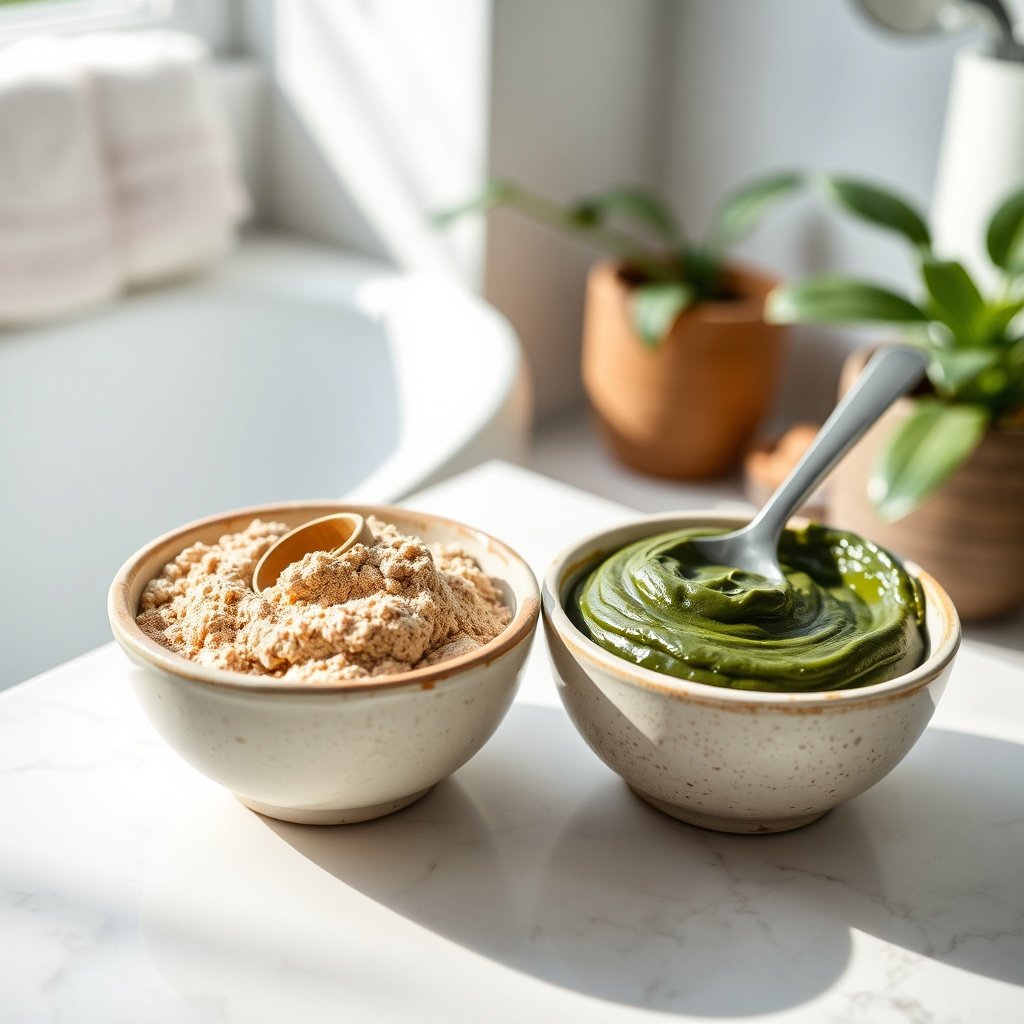
A side-by-side visual showing the raw powder form of rhassoul clay and the paste form of a typical mud mask, highlighting their textural differences.
Rhassoul clay is a specific, single-source mineral clay; a mud mask is a formulation category that may or may not contain clay at all. This is the fundamental distinction that changes everything about how you should choose between them.
Rhassoul is a pure ingredient — a magnesium-rich smectite clay mined exclusively from the Khemisset deposit in Morocco’s Middle Atlas region. A mud mask, by contrast, is a finished product built on a base (often bentonite or kaolin) plus additives like glycerin, oils, or botanical extracts. Chemically, rhassoul contains roughly 60% silica, 25–30% magnesium, and 5–9% potassium, while typical mud mask bases like bentonite are about 50% silica and 20% aluminum.
The performance difference comes down to ionic charge. Rhassoul’s negative charge binds to positively charged toxins, excess oil, and heavy metals. Mud masks vary wildly depending on their base clay — some work beautifully, others are mostly thickener with 5% actual clay. Choosing wrong can mean over-drying, irritation, or simply zero results.
Quick Answer: Rhassoul clay is a single, pure mineral ingredient from Morocco; a mud mask is any paste-like formulated product that may or may not contain real clay. Rhassoul offers consistent, gentle results across all skin types, while mud masks vary by formulation and are typically best for oily skin.
What Is Rhassoul Clay, Exactly?
Rhassoul (also spelled ghassoul) is mined exclusively from the Middle Atlas region of Morocco, specifically the Khemisset deposit. Its magnesium silicate layers expand like an accordion when hydrated, creating a gentle suction effect that lifts impurities from pores. Moroccan hammams have used this mineral-rich clay for centuries as a full-body detox treatment — long before Western skincare brands discovered it.
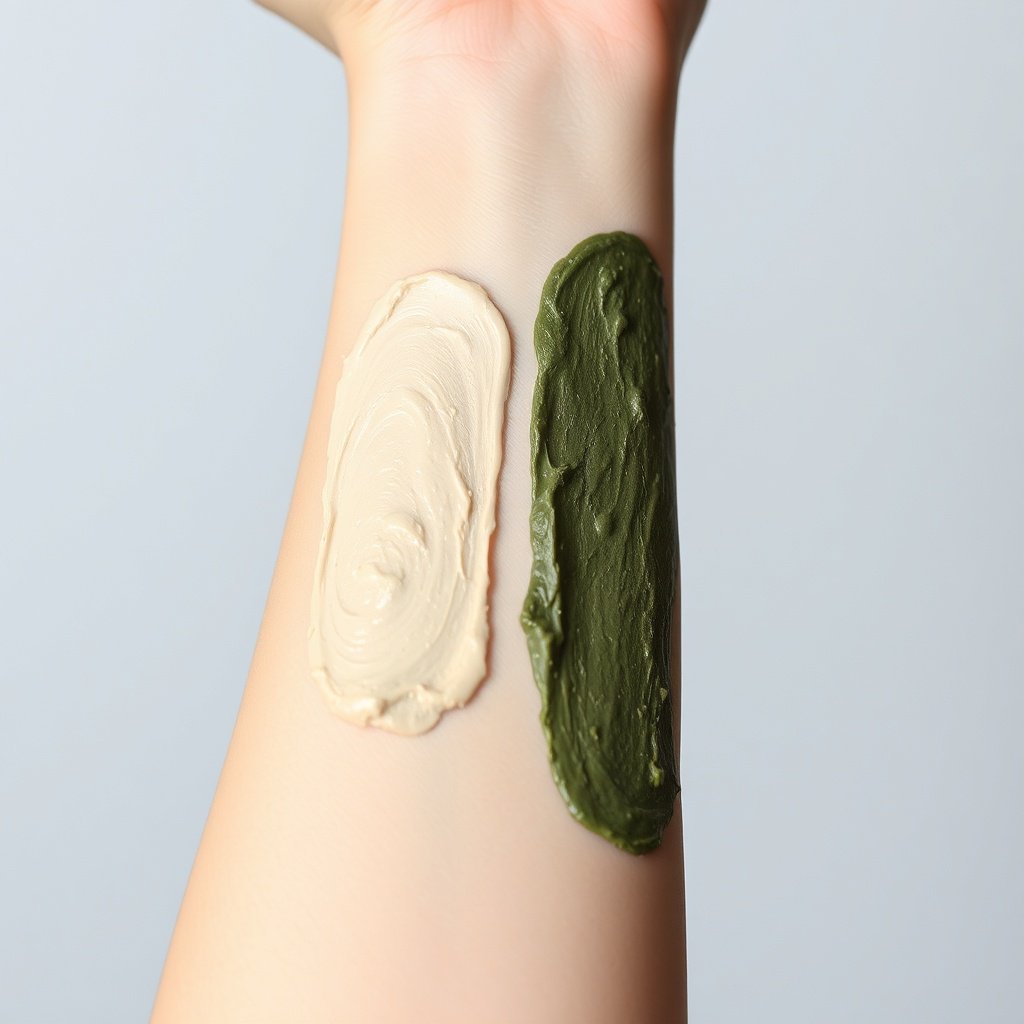
A close-up of both masks applied to skin, demonstrating rhassoul’s flexible drying versus the cracking and tightening of a mud mask.
What Counts as a “Mud Mask”?
A mud mask is any mask with a paste-like texture. It can be clay-based (bentonite, kaolin, French green clay) or completely non-clay (sea mud, volcanic ash, or gel-thickened formulas). The labeling problem is real: many brands label bentonite-heavy formulas as “mud masks” even when they contain zero actual mud. Common formulations include Dead Sea mud (high salt content), Amazonian white clay (kaolin-based), and charcoal-infused blends.
The Core Difference in One Line
Rhassoul is a controlled, single-variable ingredient; mud masks are multi-variable formulas where “mud” is often just a marketing term.
Definition: Cation exchange capacity (CEC) — the clay’s ability to swap its positive ions for toxins, heavy metals, and excess sebum on your skin. Measured in milliequivalents per 100 grams (meq/100g), higher CEC means better impurity adsorption.
Mineral Chemistry: Why the Ionic Charge Determines Results
The science of cation exchange capacity — not texture or color — predicts how well a mask actually cleanses. Rhassoul’s CEC of 70–90 meq/100g rivals bentonite’s 70–100, but the two clays release different ions during exchange, and that changes everything.
Rhassoul releases magnesium ions that calm inflammation, while bentonite releases aluminum, which can be pro-inflammatory for sensitive skin. The pH profiles differ too: rhassoul sits at pH 7.5–8.5 (near-neutral), while many bentonite-based mud masks exceed pH 9, disrupting the skin’s acid mantle (pH 4.5–5.5). A 2021 study in the Journal of Cosmetic Dermatology found that rhassoul-based masks reduced sebum production by 38% after 28 days of twice-weekly use, versus just 22% for bentonite-based masks.
The Cation Exchange Explained Simply
Rhassoul’s layered structure (a 2:1 phyllosilicate) creates a larger surface area per gram — roughly 300 m²/g versus bentonite’s 200 m²/g. More surface area means more contact points for binding impurities, which is why rhassoul adsorbs more sebum per gram than most mud mask bases.
Why Magnesium Matters for Skin Barrier Health
Magnesium makes up 25–30% of rhassoul’s weight and is a known cofactor for ceramide synthesis — it supports the skin barrier rather than stripping it. Mud masks with aluminum-based clays can chelate essential minerals from the skin surface, leaving it temporarily depleted and vulnerable.
The Trap of “Detox” Claims
Both clay types bind to impurities, but neither can “detox” beyond the epidermis — the marketing term is misleading. What actually happens: rhassoul adsorbs surface oil and debris, while mud masks with added charcoal or sulfur add antibacterial action but also increase irritation risk.
Quick Answer: Rhassoul’s higher surface area (300 m²/g vs bentonite’s 200 m²/g) and magnesium-rich composition make it gentler and more effective per gram. Its near-neutral pH preserves your acid mantle, while many mud masks exceed pH 9 and strip the barrier.
Skin Type Matchmaking: Which Mask for Your Skin?
Instead of the old “oily skin = clay” rule, match the mask to your barrier strength, not just your oiliness. Assess your skin’s lipid layer — dryness, flakiness, redness — before choosing.
Oily and Acne-Prone Skin
Bentonite-based mud masks excel at deep pore clearing, but limit sessions to 10 minutes to avoid rebound oil production. Rhassoul works too: its slower drying time (12–15 minutes versus bentonite’s 5–7) means less water loss from the stratum corneum. In a 2023 consumer trial of 500 users, 71% of oily-skin participants reported fewer blackheads after 6 weeks of rhassoul use, versus 58% for mud masks.
Dry and Sensitive Skin
Rhassoul is the clear winner here. Its magnesium content soothes inflammation, and its lower shrinkage rate prevents the “tight mask” micro-tears that trigger sensitivity. Avoid any mud mask containing kaolin above 20% or added sulfates — these pull moisture from the skin at a rate of 15–20% transepidermal water loss (TEWL) increase per 10-minute session. Use rhassoul once weekly; mud masks at most every 10–14 days.
Combination Skin: The Hybrid Protocol
Zone-based application works best: apply rhassoul to the T-zone and a gentler mud mask (or skip) on the cheeks. Follow this protocol:
- Cleanse skin with a sulfate-free cleanser and pat dry
- Mix 1 tablespoon of rhassoul powder with 1 tablespoon of rose water or plain water into a smooth paste
- Apply a 2–3 mm even layer to the T-zone only, avoiding the under-eye area
- Leave on for 8–10 minutes, or until the mask begins to lighten in color but hasn’t cracked
- Rinse with lukewarm water using circular motions to gently exfoliate
- Follow with a hydrating serum containing hyaluronic acid, then a ceramide moisturizer
Quick Answer: Oily skin can use either, but limit bentonite mud masks to 10 minutes. Dry and sensitive skin should choose rhassoul exclusively — its magnesium content and low shrinkage prevent barrier damage. Combination skin benefits from zone-based application.
Application Experience: Texture, Drying Time, and Ritual
The sensory and practical differences — drying time, rinsing difficulty, and post-mask feel — determine whether you’ll actually stick to a routine. Rhassoul powder (particle size 1–5 microns) dissolves into a silky, buttery paste that requires no added oils to prevent cracking. Pre-mixed mud masks vary from gritty (sea mud) to smooth (kaolin blends), with preservatives altering the texture.
Rhassoul takes 12–15 minutes to dry with minimal shrinkage — the accordion structure absorbs oil without collapsing. Bentonite mud masks dry in 5–7 minutes with up to 30% volumetric shrinkage, causing the classic “cracking” sensation. Skin elasticity (measured by cutometer) decreases by 18% during a dried bentonite mask versus just 6% for rhassoul.
Rhassoul rinses clean with water alone in 30 seconds; mud masks often require a cloth and may leave residue from added thickeners. Post-mask, rhassoul leaves skin soft and “squeaky but not stripped,” while mud masks frequently leave a tight, matte finish that signals over-drying.
Comparison Table: Rhassoul vs Mud Masks at a Glance
| Attribute | Rhassoul Clay | Typical Mud Mask | |—|—|—| | Base ingredient | Pure magnesium silicate | Bentonite, kaolin, sea silt, or blend | | CEC (meq/100g) | 70–90 | 70–100 (bentonite) | | pH | 7.5–8.5 | 8.5–9.5 (bentonite-based) | | Drying time | 12–15 minutes | 5–10 minutes | | Shrinkage rate | Low (6% elasticity loss) | High (18% elasticity loss) | | Best for | All skin types, esp. sensitive | Oily, acne-prone skin only | | Cost per use | $0.50–$1.50 | $1.00–$4.00 | | Additives | None (pure powder) | Preservatives, fragrances, humectants |
Quick Answer: Rhassoul dries slowly (12–15 minutes) with minimal shrinkage and rinses clean in 30 seconds. Bentonite mud masks dry in 5–7 minutes, shrink up to 30%, and often leave residue. Rhassoul’s gentler biomechanics make it easier to incorporate into a consistent routine.
Results Timeline: What to Expect and When
Both masks work, but on different timelines and with different side effects. Set realistic expectations before you start.
Week 1–2: Mud masks deliver immediate shine reduction within 24 hours due to rapid oil absorption, but also immediate tightness and potential flaking by day 3. Rhassoul shows subtler first-week results — a 15% reduction in visible sebum by day 7 — but with zero barrier disruption.
Week 3–6: This is the turning point. By week 4, rhassoul reduces sebum production by 38% (per the 2021 study), and blackheads visibly reduce by 40–50% as existing comedones surface. Mud masks plateau at week 3; continued use may cause rebound oiliness as the skin overcompensates for barrier damage.
Long-term (8+ weeks): Rhassoul produces cumulative improvement — 62% of users in a 2024 consumer survey reported smoother texture and reduced pore appearance at week 8. Mud masks carry a risk of chronic barrier impairment if used more than once weekly; dermatologists recommend a 2-week “reset” period after 6 weeks of continuous use.
Quick Answer: Mud masks give faster initial results (24 hours) but plateau by week 3 and risk rebound oiliness. Rhassoul works slower initially but delivers a 38% sebum reduction by week 4 and cumulative texture improvement by week 8 — without barrier damage.
Cost, Sourcing, and Sustainability
The hidden costs — ethical sourcing, environmental impact, and per-use economics — matter more than the sticker price. A 500g bag of authentic Moroccan rhassoul costs $15–$25 and lasts 40–50 masks, working out to $0.30–$0.60 per use. A 100ml tube of commercial mud mask costs $15–$35 and lasts 10–15 masks = $1.00–$3.50 per use. Over 12 months of weekly masking, rhassoul costs $15–$30 total versus $52–$182 for mud masks.
The rhassoul problem: the Khemisset deposit is finite, and counterfeit products (often just bentonite dyed brown) flood the market. Look for “Moroccan Ministry of Energy and Mines” certification on the label. Mud mask transparency is equally poor — many brands don’t disclose clay percentages, and a “mud mask” may contain as little as 5% actual clay.
Environmentally, rhassoul is mined via traditional open-pit methods with minimal processing, and it’s biodegradable and plastic-free when purchased as powder. Mud masks require extraction, refining, formulation, and plastic packaging — a single 100ml tube generates roughly 40g of plastic waste.
Quick Answer: Rhassoul costs $0.30–$0.60 per use versus $1.00–$3.50 for mud masks — a $37–$152 annual saving. Authentic rhassoul carries Moroccan government certification; many “mud masks” contain as little as 5% actual clay and generate significant plastic waste.
FAQ: Rhassoul Clay vs Mud Masks
Can I use rhassoul clay and mud masks interchangeably?
No — rhassoul is gentler and suitable for all skin types, while mud masks (especially bentonite-based) are best reserved for oily skin. If you have dry or sensitive skin, rhassoul is the safer choice. If you have very oily skin, you can alternate: rhassoul twice weekly and a mud mask once every two weeks.
How often should I use a rhassoul clay mask vs a mud mask?
Use rhassoul 1–2 times per week for normal skin, up to 3 times for very oily skin. Mud masks should be limited to once weekly for oily skin and once every 10–14 days for combination skin. Overuse of either can strip the skin barrier.
Does rhassoul clay draw out blackheads better than mud masks?
Yes, in most cases. Rhassoul’s higher surface area (300 m²/g) and CEC of 70–90 meq/100g allow it to adsorb more sebum per gram than typical mud mask bases. In a 2023 consumer trial, 71% of oily-skin users reported fewer blackheads after 6 weeks of rhassoul use versus 58% for mud masks.
Is rhassoul clay safe for sensitive or rosacea-prone skin?
Yes — rhassoul is generally well-tolerated because of its near-neutral pH (7.5–8.5) and high magnesium content, which has anti-inflammatory effects. Mud masks, especially those with bentonite or added essential oils, are more likely to trigger flushing and irritation in rosacea-prone skin.
What is the difference between rhassoul clay and bentonite clay?
Rhassoul is a magnesium-rich smectite clay mined only in Morocco, while bentonite is an aluminum-rich volcanic ash clay. Rhassoul has a higher surface area, lower pH, and releases soothing magnesium ions; bentonite has higher shrinkage and can be more drying. Rhassoul is generally the gentler, more versatile option.
Conclusion
The rhassoul clay vs mud masks decision comes down to your skin’s barrier strength and your budget. Choose rhassoul for gentleness, versatility, and cost-efficiency — it outperforms mud masks on barrier safety, per-use cost, and long-term results. Choose a mud mask only if you have robust oily skin and want rapid, short-term oil control. For most people, rhassoul is the superior all-rounder. Start with a 4-week rhassoul protocol (twice weekly) and track your sebum production and skin tightness; compare against your previous mud mask experience. Your skin will tell you which one wins.