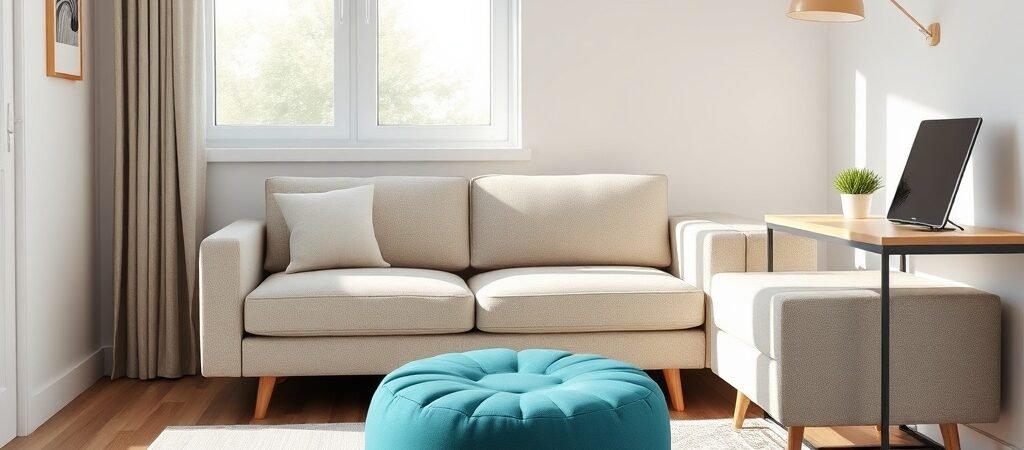
Small Living Room Layout Ideas: Maximizing Space with Poufs invites you to rethink a cramped footprint as a canvas for clever organization. Urban apartments often sacrifice square footage; a recent study shows the average living‑room size in city dwellings hovers around 250 sq ft, leaving little room for bulky sofas and coffee tables. Compact living room furniture can feel like a puzzle, but a well‑chosen pouf becomes both a visual cue and a functional asset. By adding a low‑profile, mobile piece, you gain a flexible divider, extra seating, and hidden storage without sacrificing style. For more inspiration on Moroccan home accents, visit Kenzadi’s artisanal Moroccan home accents. The following guide walks you through zoning, multi‑purpose designs, visual tricks, strategic placement, and budget‑friendly projects that transform any tiny lounge into a welcoming, organized retreat.
1. Rethinking the Floor Plan: Zoning with Poufs### 1.1. Defining Functional Zones without Walls
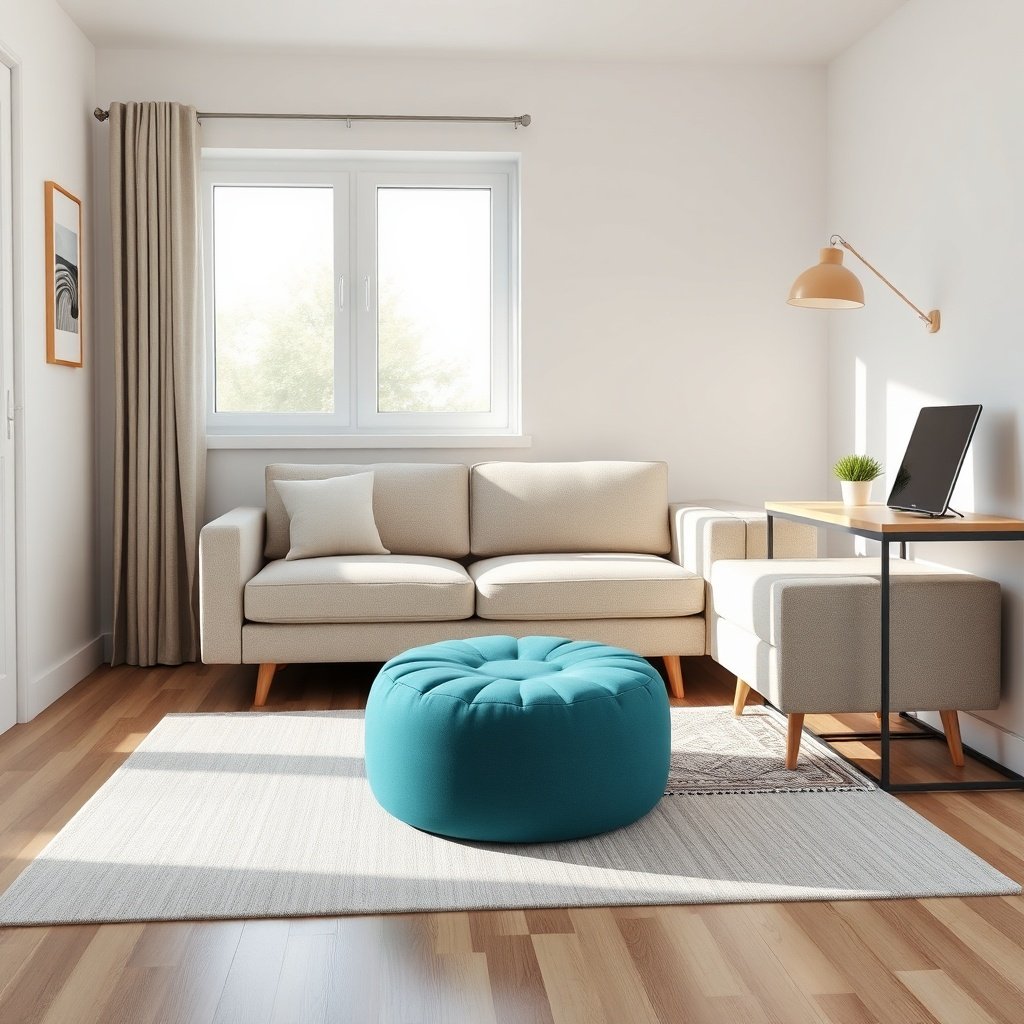
*Illustrates how a teal pouf can act as a visual boundary between a sofa and a work nook in a tight space.*
A pouf can serve as an invisible wall, separating a lounge area from a work nook or reading corner. Position a 20‑inch round pouf between a two‑seater sofa and a slim laptop desk; the soft edge signals a shift in purpose while preserving an open feel. Choose a fabric in a contrasting hue—such as a teal pouf against a light‑gray rug—to reinforce the boundary without erecting a physical partition. Consider a creamy white handmade leather pouf for a touch of elegance.
1.2. The “Floating” Layout – Pulling Furniture Away from the Walls
Traditional layouts push sofas against the longest wall, but a floating arrangement frees up circulation. Measure a 30‑inch gap between the back of a three‑seat sofa and the adjacent wall; this gap creates a visual breathing space and invites a pouf to anchor the center. Place a 24‑inch upholstered pouf directly in front of the sofa, then arrange a low coffee table 12 inches behind it. The pouf becomes the focal point, while the sofa appears to hover, adding depth to a room that might otherwise feel boxed in.
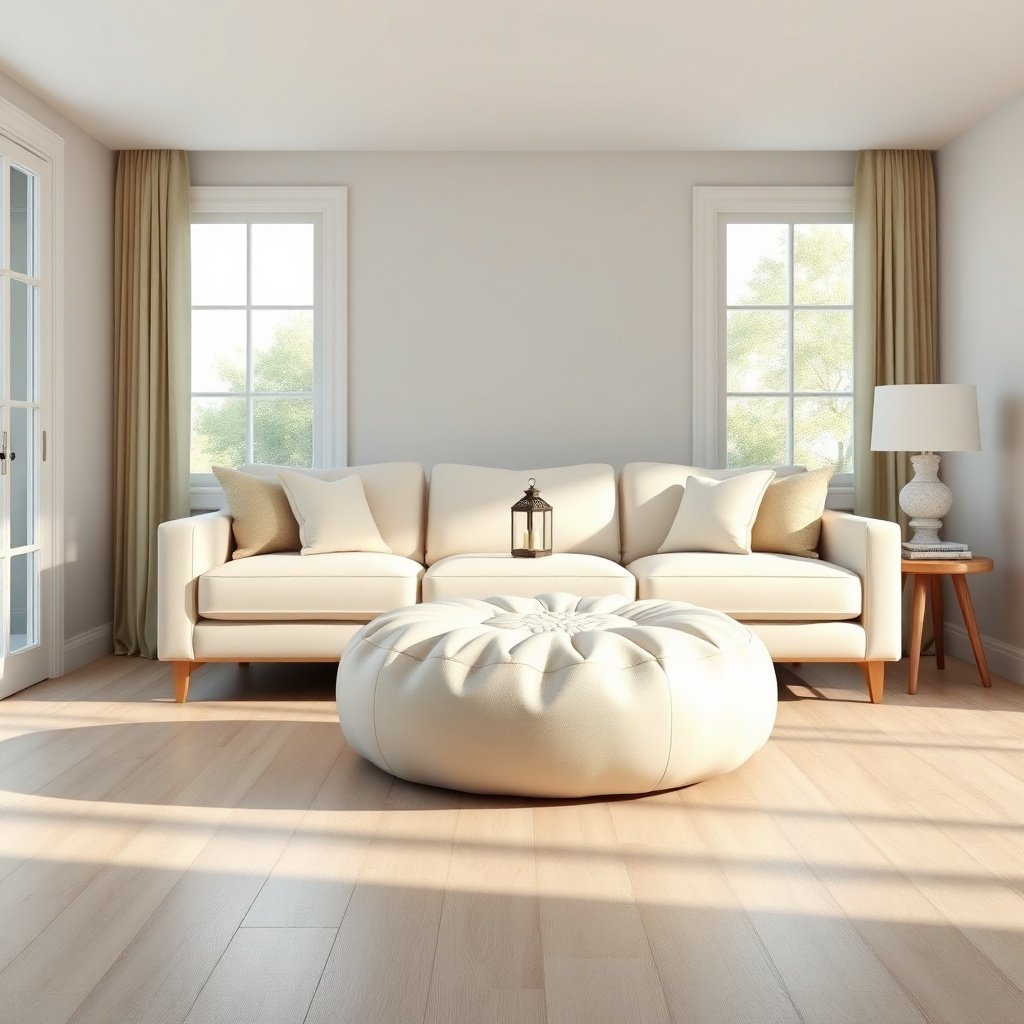
*Shows a pouf acting as a visual anchor and storage solution in a floating furniture arrangement.*
1.3. Circular Flow: Encouraging Natural Traffic Paths
Round poufs guide footsteps naturally, preventing bottlenecks near doorways. Imagine a 22‑inch diameter pouf positioned at the intersection of a hallway and a seating cluster. The circular shape directs people around it, creating a smooth arc that leads from the entry to the TV stand. By aligning the pouf’s center with the line of sight from the front door, you subtly cue guests to follow a path that avoids crossing the main conversation zone. This traffic flow technique enhances comfort without sacrificing any usable square footage.
2. Multi‑Functional Poufs: Storage, Seating, and More### 2.1. Hidden Storage Solutions for Decluttering
Select a pouf with a lift‑top mechanism that opens to reveal a 15‑liter compartment. Store extra throw blankets, a stack of magazines, or a basket of children’s toys inside, keeping the floor clear and the visual field tidy. Opt for zippered interiors that seal away dust, and choose a durable canvas cover that can withstand frequent opening. By consolidating clutter into a single, stylish unit, you free up at least 3 sq ft of floor space—a noticeable gain in a compact living area.
2.2. Convertible Seating: From Ottoman to Extra Chair
A 28‑inch high pouf doubles as an occasional chair when placed beside a loveseat. When guests arrive, simply rotate the pouf 90 degrees and add a decorative cushion to raise the seat height to 30 inches, matching the sofa’s backrest. This quick conversion provides an extra seat without the need for a permanent armchair that would dominate the room. Consider a gold‑embroidered Berber leather pouf for a touch of luxury.
2.3. Integrated Tech – USB Ports, Bluetooth Speakers, and Light Boxes
Modern poufs incorporate discreet power solutions. A built‑in USB‑C port tucked behind a removable flap lets you charge a phone while the pouf rests under a coffee table. Some models embed Bluetooth speakers within the base, delivering ambient sound without visible wires. For evening ambiance, choose a pouf with an LED light box that glows softly through a translucent cushion cover. These tech‑enhanced options keep cords hidden, preserve a clean aesthetic, and add functional value to a piece that already maximizes space.
3. Visual Expansion: Color, Texture, and Light Tricks### 3.1. Using Light‑Reflective Fabrics to “Enlarge” the Room
A pouf upholstered in satin or a subtle metallic weave reflects ambient light, creating an illusion of increased volume. Position the reflective pouf near a window that lets in natural daylight; the fabric will bounce rays across the ceiling, brightening the entire space. Choose a hue with a slight sheen—such as pearl white or muted gold—to avoid glare while still amplifying brightness. This light‑enhancing strategy works especially well in rooms with limited wall space for mirrors.
3.2. Color Blocking to Create Illusion of Space
Strategic color pairings can push the eye outward. Place a bold orange pouf against a soft beige wall; the contrast draws attention to the pouf, making the surrounding area appear larger. Pair a deep navy pouf with light‑gray flooring and a white ceiling to maintain balance while injecting visual interest. For a cohesive look, repeat a secondary accent—like a teal throw pillow—on the sofa, echoing the pouf’s color and unifying the palette.
3.3. Layered Textures for Depth Without Bulk
Mixing materials adds richness without expanding the footprint. Combine a velvet‑covered pouf with a linen sofa and a woven jute rug. The tactile contrast creates a sense of depth, making the room feel curated rather than cramped. Select a pouf with a low pile—approximately 1.5 inches—to keep the floor level even, preventing tripping hazards while still offering a plush feel underfoot. This layered texture approach satisfies the desire for visual complexity without sacrificing functional space. Add a white pompom throw blanket to complete the look.
4. Strategic Placement: Traffic Flow & Focal Points### 4.1. Positioning Poufs to Highlight a Statement Piece (e.g., artwork or TV)
Use a pouf as a visual bridge to a focal point. Place a 24‑inch pouf directly in front of a large abstract painting, aligning its center with the artwork’s midpoint. The pouf’s presence draws the eye forward, making the painting feel anchored within the room. If the focal point is a wall‑mounted TV, situate the pouf slightly off‑center to the left, creating a subtle triangle between the sofa, pouf, and screen—a composition that feels intentional and balanced.
4.2. “Side‑Step” Placement for Pet‑Friendly Zones
Designate a corner for a pet lounge by positioning a durable, washable pouf near the entryway. Choose a fabric like microfiber that resists fur and stains. Add a small, low‑profile pet mat underneath to protect the floor, and keep the pouf’s height at 18 inches so a medium‑size dog can comfortably rest without jumping. This side‑step arrangement keeps pet hair away from the main seating area while offering your companion a cozy spot.
4.3. Balancing Symmetry vs. Asymmetry in Tight Spaces
Symmetrical placement—two identical poufs flanking a coffee table—creates a formal, balanced look that works well in rectangular rooms. Measure 36 inches between the poufs and the table to maintain even spacing. In contrast, an asymmetrical arrangement—one large pouf paired with a smaller, sculptural ottoman—adds visual intrigue and can break up monotony. Position the larger pouf at a 45‑degree angle to the sofa, then place the smaller piece diagonally opposite, forming a dynamic composition that still respects the room’s limited dimensions.
5. DIY & Budget‑Friendly Pouf Projects### 5.1. Upcycling Old Cushions into a Custom Pouf
Gather two firm foam blocks (12 × 12 × 6 inches each), a sturdy plywood base (14 × 14 inches, ½‑inch thick), and a set of zip ties. Cut the foam to match the base dimensions, then glue the blocks together for a unified surface. Sew a new cover using 1‑yard of upholstery fabric—choose a pattern you love—and a heavy‑duty sewing machine. Slip the fabric over the foam, pull tight, and secure with the zip ties hidden inside a seam pocket. The total material cost stays under $30, and the finished pouf adds a personalized touch while freeing up space previously occupied by a bulky armchair.
5.2. Affordable “Pop‑Up” Pouf Options from Big‑Box Stores
Three budget brands stand out:
| Brand | Price | Fill Material | Cover Fabric | Weight Capacity |
|——-|——-|—————|————–|—————–|
| HomeBasics | $45 | Poly‑fill | Polyester blend | 250 lb |
| UrbanNest | $62 | Foam + fiber | Canvas | 300 lb |
| CozyCorner | $78 | Memory foam | Velvet | 350 lb |
All three fit within a 20‑inch diameter, making them suitable for tight corners. HomeBasics offers the lowest entry price, while CozyCorner provides the most durable construction for high‑traffic homes. Evaluate durability by pressing the cover; a firm rebound indicates longer life.
5.3. Personalizing with Removable Covers for Seasonal Switch‑Ups
Invest in a set of zip‑on covers in three fabrics: a light linen for spring, a deep teal velvet for winter, and a patterned cotton for autumn. Each cover slides over the pouf’s base in under 30 seconds, allowing you to refresh the room’s mood without buying new furniture. Store the covers in a labeled zip‑lock bag to keep them dust‑free. By rotating colors quarterly, you maintain visual interest and extend the pouf’s relevance throughout the year.
Conclusion
Small Living Room Layout Ideas: Maximizing Space with Poufs demonstrates how a single, versatile piece can redefine a cramped lounge. You learned to zone open‑plan areas, float furniture away from walls, and guide foot traffic with circular flow. Multi‑functional poufs offered hidden storage, convertible seating, and integrated technology, while reflective fabrics, color blocking, and layered textures expanded visual space. Strategic placement highlighted focal points, created pet‑friendly zones, and balanced symmetry with asymmetry. Finally, DIY upcycling and budget‑friendly purchases proved that style need not break the bank. For more ideas on Moroccan home decor, visit Kenzadi’s artisanal Moroccan home accents.