The Ultimate Guide to Moroccan Interior Design
Step into a Marrakech riad at dusk and you’ll understand why Moroccan interior design captivates so completely. Hand-cut zellige tiles catch the last amber light, throwing fractured reflections across tadelakt walls the color of sunbaked clay. A pierced brass lantern hangs from a carved cedar ceiling beam, scattering intricate shadow patterns that shift with every breath of warm air. Somewhere below, water trickles from a central fountain into a mosaic-lined basin. The room smells of cedarwood, orange blossom, and the faint metallic tang of aged brass. This is not decoration — it’s an immersive sensory experience built over centuries of craft.
Moroccan interior design draws from a remarkably layered cultural history. Berber tribes contributed bold geometric textiles and earth-toned earthenware. Andalusian Moors brought intricate plasterwork, horseshoe arches, and the courtyard-centered riad layout. French Colonial influence introduced wrought-iron balconies and a certain relaxed elegance to furniture proportions. The result is a design language that feels simultaneously ancient and livable, opulent and grounded in raw natural materials.
This guide goes far beyond a mood board. You’ll find a practical, room-by-room, element-by-element breakdown of how to bring authentic Moroccan design into your own home — whether you’re renovating an entire house or adding a single hand-hammered lantern to a studio apartment. Over the past five years, Google Trends data shows a marked rise in searches for “Moroccan interior design,” reflecting a growing appetite for spaces that feel warm, handcrafted, and deeply personal. Here’s everything you need to know.
1. The Core Design Principles That Define Moroccan Interiors
Understanding the philosophy behind Moroccan design matters before you buy a single tile or textile. These principles are the skeleton key — once you grasp them, every design choice becomes more intentional and cohesive.
1.1 Geometry & Repetition: The Language of Zellige and Arabesque
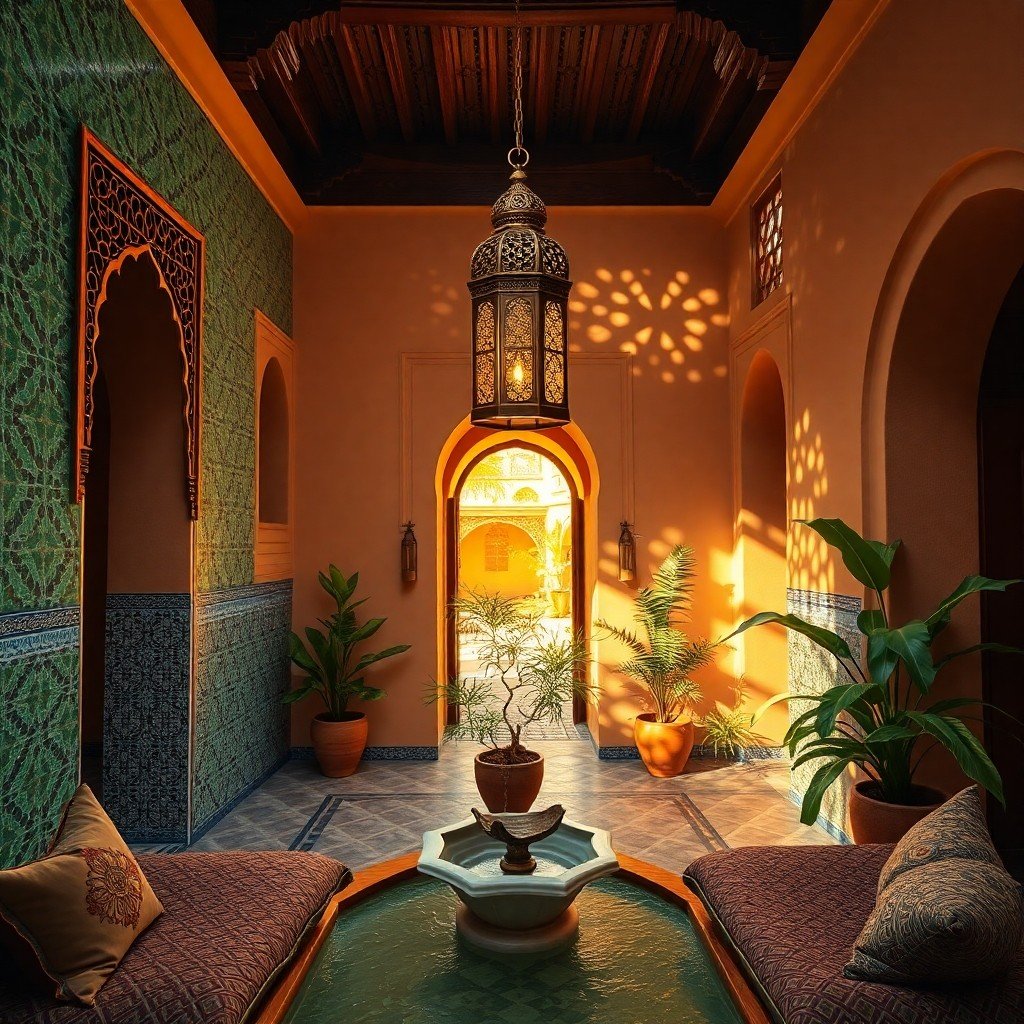
*A stunning photorealistic capture of a traditional Moroccan riad courtyard featuring iconic zellige tilework, a central fountain, pierced brass lanterns, and carved cedar beams bathed in warm golden-hour light — the perfect hero image to open a comprehensive guide on Moroccan interior design.*
Walk through the Medersa Ben Youssef in Marrakech and you’ll see geometry elevated to a spiritual discipline. Zellige tilework — small, hand-chazed ceramic pieces fitted together into complex star and interlocking patterns — covers walls, fountains, and floors with a precision that borders on mathematical obsession. Each tile is cut by hand, glazed individually, and placed so that the overall pattern appears to extend infinitely beyond its physical boundaries. This infinite repetition is intentional: in Islamic art, endless geometric patterns represent the unity of creation and the boundless nature of the divine.
The same principle appears in carved stucco screens (called *mashrabiya* when rendered in wood, or *girih* in plaster), where pierced panels filter light into geometric shadows. Arabesque motifs — flowing, interlacing vines and foliage — complement the rigid geometry with organic movement. Together, these two pattern families create the visual rhythm that defines Moroccan interiors. You don’t need to cover every surface. A single zellige backsplash, a carved plaster mirror frame, or a geometric tile floor in an entryway establishes the entire design language of a room.
A single eight-pointed zellige star, the most iconic Moroccan tile motif, is mathematically derived by overlapping two squares at a 45-degree angle inside a circle. Artisans mark the circle with a compass, divide it into eight equal segments, and cut each triangular *furmah* (tile piece) by hand before glazing. The slight irregularities in hand-cut pieces are what give authentic zellige its luminous, living quality — machine-made replicas look flat by comparison.
1.2 Layered Warmth: Texture Stacking from Floor to Ceiling
Moroccan interiors are defined by tactile richness. The principle is straightforward: every surface should invite touch. Floors begin with handmade terracotta tiles or zellige, layered with hand-knotted Berber rugs featuring geometric diamond and line motifs. Walls are finished in tadelakt — a polished limestone plaster that feels silky smooth and has a subtle, organic sheen. Ceilings feature exposed cedar beams (often painted with geometric motifs) or carved plaster medallions. Textiles drape from canopies, pile into floor cushions, and cover banquettes with embroidered detailing.
The key distinction is between layered warmth and clutter. Moroccan design achieves what might be called “visual density with breathing room” — surfaces are rich and varied, but the overall composition has clear focal points and open pathways. A room might feature a heavily patterned rug, a carved wooden screen, and a tadelakt wall, but the furniture arrangement stays open and the color palette remains unified. Compare this with Scandinavian minimalism, where visual calm comes from subtraction and negative space; Moroccan design creates its sense of comfort through *addition* — more texture, more pattern, more warmth — but always within a disciplined color and spatial framework.
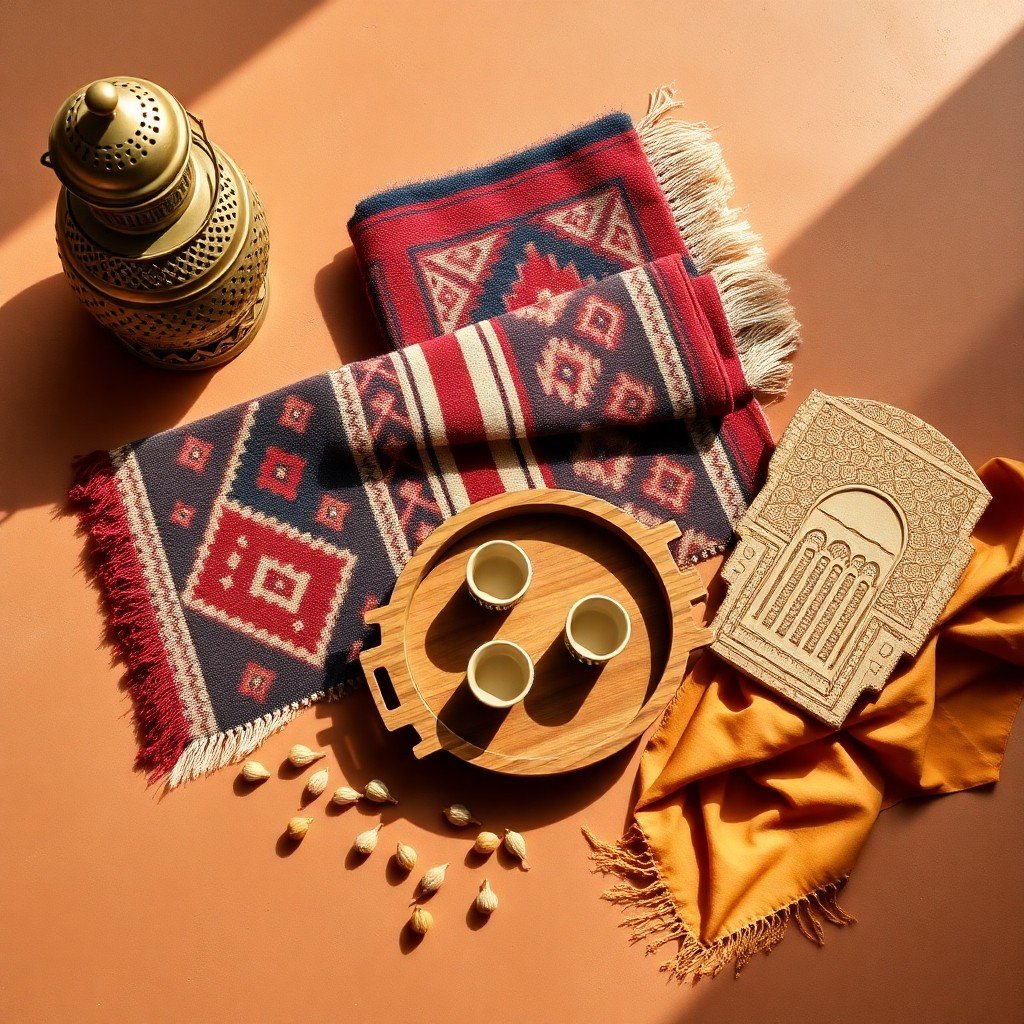
*A detailed editorial flat-lay showcasing the essential materials and craft pieces that define Moroccan interior design — from hand-hammered brass and Berber textiles to carved cedar and Andalusian plasterwork — ideal as an illustrative image for the core design principles section of the article.*
1.3 The Sacred Courtyard Concept: Bringing the Riad Indoors
The traditional Moroccan riad is built around a central open-air courtyard, typically featuring a fountain, citrus trees, and a loggia with arched openings. Rooms radiate outward from this heart, creating a spatial flow that moves from public to private as you move deeper into the home. This inward-facing architecture prioritizes family privacy, natural ventilation, and a connection to sky and water.
In a modern home, you can adapt this principle without knocking down walls. Use archways to define zones between living, dining, and kitchen areas. Place a small indoor fountain or water feature as a central focal point. Arrange seating in a perimeter layout around an open central space, mimicking the riad’s courtyard logic. Even in a narrow townhouse, a skylight above a central hallway with zellige walls and a simple wall-mounted water feature can evoke the riad’s spiritual center. The goal is to create a home that feels like it breathes inward — calm, sheltered, and grounded.
2. The Moroccan Color Palette: Choosing Hues with Intention
Color in Moroccan design is never arbitrary. Every hue traces back to a landscape, a spice market, or a spiritual tradition.
2.1 Earth Tones as the Foundation
Start with the ground beneath your feet. The Atlas Mountains, the Sahara desert, and the sun-bleached medina walls of Essaouira provide the foundational palette: raw terracotta, warm sand, dusty ochre, and chalky white. These earth tones serve as the base layer — walls, floors, and large furniture pieces — creating a warm, grounded backdrop against which bolder colors can sing. White-washed walls (common in coastal Moroccan homes like those in Chefchaouen and Essaouira) reflect light beautifully and provide essential visual rest. Terracotta floor tiles, whether handmade *zellij* or simple unglazed clay, anchor the room with an earthy warmth that synthetic flooring simply cannot replicate.
2.2 Accent Colors That Tell a Story
Against this earthy base, Moroccan design introduces jewel-toned accents that carry specific cultural and regional significance. Deep cobalt blue — known as *Fes blue* — originates from the ceramic traditions of Fes, where artisans perfected cobalt oxide glazing centuries ago. Emerald green references paradise in Islamic visual culture and appears frequently in garden-themed tilework and painted woodwork. Saffron gold echoes the spice markets of Marrakech and Taliouin. Pomegranate red brings warmth and vitality, often appearing in Berber textiles and painted ceramics.
Here is a practical 6-color palette you can use as a starting point:
– **Medina Indigo** — a deep, slightly muted cobalt blue for feature walls or tile accents
– **Saffron Souk** — warm golden-yellow for textiles, ceramics, and painted details
– **Atlas Clay** — raw terracotta for floors, pots, and architectural elements
– **Desert Bone** — warm off-white for walls and large surfaces
– **Pomegranate Silk** — rich berry red for cushions, throws, and small accessories
– **Paradise Emerald** — deep green for painted woodwork, plants, and accent tiles
2.3 Balancing Bold Color with Neutral Breathing Room
The most common mistake in Moroccan-inspired design is over-saturation. When every wall is a different jewel tone and every surface is patterned, the result feels chaotic rather than rich. Follow the “one bold wall” rule: choose a single feature wall for a saturated tadelakt finish in cobalt or terracotta, and keep the remaining walls in warm white or sand. In small rooms, lean even more heavily on neutrals — use bold color sparingly through a single zellige accent strip, a set of colored glass lanterns, or a richly dyed Berber rug. The power of Moroccan color comes from contrast, not saturation.
3. Essential Furniture & Architectural Details
Furniture in Moroccan design is low, tactile, and built for gathering. Architectural details transform ordinary rooms into spaces that feel centuries old.
3.1 Signature Furniture Pieces
The Moroccan salon replaces the Western sofa-and-coffee-table arrangement with perimeter seating: built-in banquettes (*mander*) lining the walls, piled with embroidered cushions and bolsters. In the center, a brass tray table (originally a large serving platter mounted on a carved wooden foldable base) functions as a coffee table, dining surface, or display piece. Low leather poufs — hand-stitched from goatskin or cowhide, often with geometric embroidery — serve as flexible extra seating, footrests, or side tables with a tray on top.
For statement pieces, look for hand-carved wooden thrones with horseshoe backs, mashrabiya screens that function as room dividers or headboards, and carved cedar chests that provide storage while adding architectural weight to a room. Authentic artisan-made pieces typically range from $800 for a quality leather pouf to $3,000–$8,000 for a hand-carved mashrabiya screen or cedar throne. Mass-produced replicas from big-box retailers start around $50–$200 but lack the hand-tooled detail, wood quality, and patina that make these pieces worth owning.
3.2 Architectural Elements You Can Add to Any Home
Horseshoe and pointed arches are the single most transformative architectural detail in Moroccan design. You don’t need to cut new doorways — arch trim molding kits (available from suppliers like House of Antique Hardware or DIY lumber yards) can be installed over existing rectangular openings for $150–$200 in materials. Measure the width of your doorway, select a half-round arch kit that matches, and attach it with construction adhesive and finish nails before caulking and painting to match the wall.
Ceiling details make an equally dramatic impact. Exposed cedar beams can be faked with reclaimed wood or lightweight faux-beam kits. Painted geometric ceiling medallions — simple diamond or star patterns in a contrasting color — add instant Moroccan character to a plain ceiling. Niche alcoves (shallow recessed shelves in walls) are traditional Moroccan display spaces for lanterns, ceramics, and books; you can create one by framing a recessed shelf unit into a hallway or living room wall and finishing it with zellige or tadelakt.
3.3 Lighting: The Soul of Moroccan Spaces
No element defines a Moroccan room more than its lighting. Pierced brass and iron lanterns are the signature fixture — when lit, they project intricate geometric shadow patterns across walls and ceilings that become a living part of the room’s design. The effect is impossible to replicate with any other lighting style.
Build a layered lighting strategy. Ambient light comes from overhead lanterns hung at varying heights. Task light comes from wall-mounted brass sconces with colored glass panels. Accent light comes from clusters of candles in colored glass holders, placed on trays, in niches, or along stair treads. Three lantern styles to consider: a large pierced brass pendant for over a dining table or seating area, a smaller hexagonal iron lantern for hallways and entryways, and a colored glass lantern (amber, cobalt, or emerald) for bedside or bathroom placement.
4. Room-by-Room Moroccan Design Application### 4.1 Living Room: The Moroccan Salon
Arrange your living room with seating along the perimeter — a long banquette or a pair of low sofas against the walls, with poufs and floor cushions filling the gaps. Place a brass tray table or low carved wood table at the center. If you have a fireplace, surround it with a horseshoe arch molding and a zellige surround. If not, create a central focal point with a large mirror in a carved frame, a statement lantern, or a low arrangement of oversized ceramic vessels.
Layer rugs starting with a large handwoven Beni Ouarain rug as the base, then add a smaller vintage Boucherouite (rag rug with bold, improvised patterns) at an angle on top. Keep walls in warm white or sand, and introduce color through textiles — cushions in saffron, pomegranate, and indigo — rather than painted walls or bold furniture. A typical salon layout places perimeter seating 18–24 inches from the wall, with a central table positioned 14–18 inches from the nearest seat for easy reach.
4.2 Bathroom & Spa Spaces: The Tadelakt Transformation
Tadelakt is a traditional Moroccan lime-based plaster applied in thin layers, then polished with river stones and treated with olive oil soap to create a waterproof, marble-like finish. It’s ideal for bathrooms because it’s seamless (no grout lines), naturally antimicrobial, and develops a beautiful patina over time. Authentic tadelakt requires a skilled artisan — expect to pay $30–$60 per square foot installed. A more accessible alternative is tadelakt-look paint (brands like Portola Paints and Bauwerk Colour offer lime-wash finishes that approximate the effect for $50–$100 per gallon, DIY application).
Pair tadelakt walls with zellige accent strips at vanity height, unlacquered brass fixtures (which develop a warm patina), and a simple eucalyptus bundle hung from the showerhead for a spa-like sensory experience. A small niche carved into the tadelakt wall holds soap, candles, or a single ceramic vessel — this tiny detail instantly reads as authentically Moroccan.
4.3 Bedroom: Serenity Through Craft
The Moroccan bedroom should feel like a retreat — rich in texture but edited for calm. A canopy bed with draped fabric (lightweight muslin or linen in white or sand) creates softness and intimacy without heaviness. If you don’t have a canopy bed, hang a length of fabric from a ceiling-mounted ring or rod above the bed’s center. Choose hand-painted ceramic bedside tables or simple brass trays on wooden stools. Embroidered textiles — a single throw, two or three cushions — add craft without clutter. The biggest risk in a Moroccan bedroom is over-accessorizing. Keep surfaces mostly clear, limit patterns to two or three, and let the quality of each piece speak.
4.4 Kitchen & Dining
Open shelving replaces upper cabinets in a Moroccan-inspired kitchen, displaying hand-painted tagine-inspired ceramics, glazed bowls, and brass serving pieces. A central brass tray table (or a substantial wood island with a zellige top) serves as a prep and gathering spot. For backsplashes, zellige tile is the gold standard — but it requires proper installation. Use a white thin-set mortar designed for uneven handmade tiles, leave 1–2mm gaps for grout, and seal with a penetrating sealer after grouting to protect the matte glaze. Expect to pay $15–$40 per square foot for zellige tile, plus $8–$15 per square foot for professional installation. Unlacquered brass faucets and cabinet hardware complete the look.
5. Sourcing Authentic Pieces & Avoiding Common Pitfalls### 5.1 Where to Source Authentic Moroccan Goods
The best Moroccan pieces come directly from artisans or through fair-trade importers who maintain relationships with workshops in Fes, Marrakech, Safi, and the Atlas Mountain villages. Look for slight irregularities — uneven tile glaze, asymmetrical weaving, hand-tooled leather stitching — as signs of authenticity. Red flags for mass-produced “Moroccan-style” items include perfectly uniform patterns, synthetic materials masquerading as natural ones (faux leather poufs, printed rather than hand-knotted rugs), and prices that seem too good to be true.
Five reputable sources to explore include artisan marketplaces like Nomadistan offering hand-selected decor at mid-range price points, Bazar Bizar with free shipping on eclectic homewares, The Moroccan Collection for authentic imported rugs and ceramics, Etsis Moroccan Zellige sellers connecting directly with Fes workshop artisans, and Fair Trade Certified retailers ensuring ethical sourcing across home goods categories.
5.2 Blending Moroccan Design with Modern & Other Styles
Moroccan design pairs surprisingly well with other aesthetics. Moroccan + Japandi works because both traditions value natural materials, handcraft, and a sense of calm — pair a low Moroccan seating arrangement with Japanese-inspired clean lines and a restrained color palette. Moroccan + Mediterranean is a natural overlap: shared tile traditions, warm earth tones, and an indoor-outdoor sensibility. The key blending rule is the 70/30 approach — let one style dominate (70% of the visual weight) and use the other as an accent (30%). A room that is half Moroccan and half something else will feel confused; a room that is mostly one with deliberate touches of another will feel layered and sophisticated.
5.3 Budget Tiers: Entry, Mid-Range, and Investment
**Entry level ($500–$1,500):** Start with textiles (a Berber cushion set, a Boucherouite throw), two or three brass lanterns, a handmade Moroccan leather pouf, and a collection of hand-painted ceramic bowls. These portable elements can move with you and instantly warm up any room.
**Mid-range ($1,500–$5,000):** Invest in a tadelakt or lime-wash feature wall, a quality hand-knotted rug, zellige backsplash installation in a kitchen or bathroom, and one or two substantial furniture pieces (a artisan Moroccan tea tray, a carved screen, or a banquette).
**Investment ($5,000+):** Commission custom architectural details (real arches, exposed beam ceilings), undertake a full riad-style renovation of a bathroom or courtyard space, or purchase large-scale artisan commissions — a full-room zellige installation, a custom mashrabiya room divider, or a complete salon set with banquette and cushions.
Conclusion
Moroccan interior design is built on five pillars: geometric principles rooted in centuries of craft, a color palette drawn from mountain and desert landscapes, furniture and architectural details that prioritize gathering and warmth, room-by-room application that adapts tradition to modern living, and sourcing strategies that honor the artisans behind the work. But the real essence of this design tradition can’t be captured in a checklist. It’s about how a room *feels* — the way lantern light plays across a tadelakt wall at dinner, the softness of a hand-knotted rug under bare feet, the quiet presence of objects made by human hands rather than machines.
You don’t need to renovate your entire home to capture this feeling. Start with one element — a pierced brass lantern in the entryway, a leather pouf beside your reading chair, a single zellige tile accent in the kitchen. Live with it. Let it pull you toward the next piece. Moroccan design rewards patience and layering; the best rooms evolve over time, accumulating character and meaning with every carefully chosen object.
Frequently Asked Questions (FAQ)
**What are the key elements of Moroccan interior design?**
The five defining elements are zellige tilework (hand-cut geometric ceramic tiles), horseshoe and pointed arches, handcrafted textiles (Berber rugs, embroidered cushions, draped fabrics), pierced metal lanterns that cast geometric shadow patterns, and a rich color palette built on earth tones with jewel-toned accents.
**Can I use Moroccan design in a small apartment?**
Absolutely. Focus on a single tadelakt or deep-color accent wall, use mirrors in carved frames to expand the space, choose compact leather poufs instead of large seating, and rely on layered lantern lighting to add depth without consuming floor space. Avoid oversized furniture and keep pattern scale proportional to room size.
**What is tadelakt and where is it used in Moroccan homes?**
Tadelakt is a traditional Moroccan lime-based plaster polished with stones and sealed with olive oil soap, creating a waterproof, marble-like finish. It’s commonly used in bathrooms, hammams (steam baths), kitchen feature walls, water fountains, and occasionally as a full-room wall finish in living spaces.
**How do I decorate a Moroccan-style living room on a budget?**
Start with these five affordable swaps: a set of 2–3 embroidered cushions ($40–$80), a secondhand brass tray table from a flea market or online marketplace ($50–$150), a leather pouf ($60–$120), two or three pierced metal lanterns with LED candles ($30–$80), and a vintage-style rug from a fair-trade importer ($100–$400).
**Is Moroccan interior design the same as Bohemian style?**
No. While both styles embrace layered textiles, global influences, and a sense of eclecticism, Moroccan design is rooted in specific architectural elements (arches, courtyards, zellige, tadelakt) and a disciplined geometric pattern language drawn from Islamic art. Bohemian style is more freeform and less architecturally structured. Moroccan design has cultural specificity and spatial rules that boho style deliberately avoids.
**Meta Description:** Discover the art of Moroccan interior design — from zellige tilework and tadelakt walls to authentic sourcing. Your complete room-by-room guide.