Unique Handmade Berber Crafts: A Guide to Authentic Amazigh Artistry
Unique Handmade Berber Crafts have evolved from humble ethnic souvenirs into highly coveted pieces of functional art, driven by a global surge in demand for authentic, sustainable decor in 2026. These items, ranging from plush pile rugs to intricate silver jewelry, are not merely decorative objects but narrative vessels that preserve the ancient traditions of the Amazigh people. As the indigenous inhabitants of North Africa spanning Morocco, Algeria, Tunisia, and Libya, the Amazigh—often referred to as Berbers—have woven their history and identity into every knot, hammer stroke, and dye pot. Today, owning these crafts means possessing a fragment of living history, where Amazigh cultural heritage is expressed through distinct visual languages that vary from the Atlas Mountains to the Sahara dunes.
Key Takeaways
- Berber crafts utilize ancient geometric symbolism to tell stories of protection, fertility, and the natural world.
- Authentic handmade items exhibit distinct imperfections in knot tension and tool marks that signify human artistry.
- Purchasing these crafts directly supports Berber Artisans and helps preserve endangered artisanal techniques.
- The 2026 market values Berber goods for their sustainability and strict use of natural materials like wool, silver, and plant dyes.
Defining the Essence: What Makes Unique Handmade Berber Crafts Special
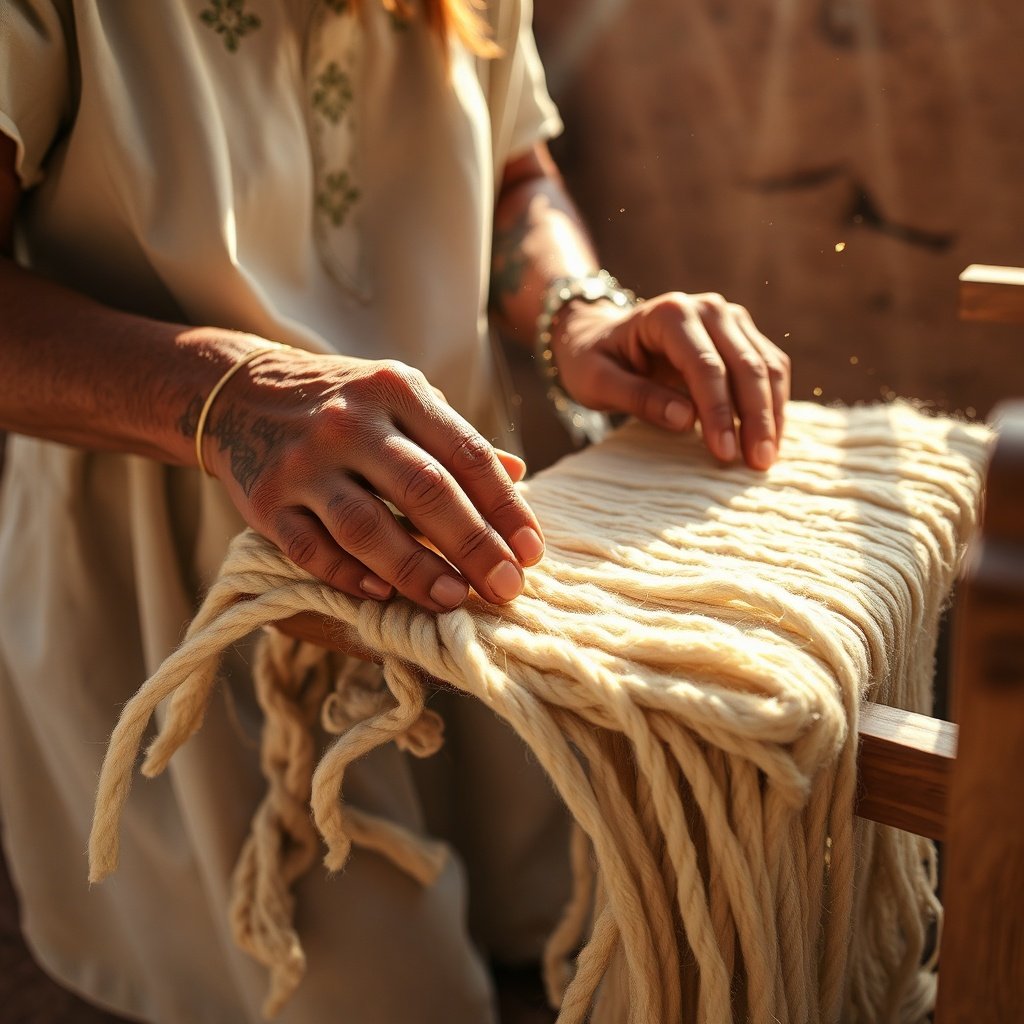
A close-up view of a Berber artisan weaving a rug on a traditional loom.
To truly appreciate Unique Handmade Berber Crafts, one must understand that "Berber" is an exonym for the Amazigh people, or "free people," who have inhabited North Africa for millennia. Their art is defined by a distinct visual language that shifts dramatically depending on the region. In the High Atlas, bold primary colors dominate flat‑weaves, while the Middle Atlas favors creamy, undyed wool. This regional diversity means that North African handicrafts are not a monolithic style but a collection of tribal dialects rendered in physical form.
The concept of "unique" is central here. Unlike machine‑made replicas churned out in factories, authentic traditional Amazigh art guarantees that no two pieces are identical. A weaver’s mood, the specific batch of wool sheared that season, and the sunlight hitting the loom all influence the final product. You will find variations in knot tension, subtle shifts in color saturation, and tool marks on silver that serve as the artisan's signature. These are not flaws; they are the fingerprints of human creation.
Material integrity further distinguishes these items from mass‑produced alternatives. Master artisans adhere strictly to natural raw materials. This includes undyed sheep wool rich in lanolin, leather treated with argan oil rather than synthetic tanners, and hand‑hammered silver or copper. In 2026, as consumers grow wary of synthetic polymers and toxic finishes, this commitment to Natural wool and dyes has become a primary selling point. The tactile experience of touching a rough, earthy kilim or the cool weight of solid silver offers a sensory connection to the land that manufactured goods simply cannot replicate.
Definition: Amazigh Symbolism
Amazigh symbols are geometric motifs (triangles, diamonds, zigzags) used in Berber art to convey specific meanings. A diamond typically represents protection against the evil eye, while a triangle often symbolizes the elements of earth, water, and fire, or the feminine form.
The Living Language of Berber Weaving
Weaving is perhaps the most profound medium of Unique Handmade Berber Crafts, serving as a canvas for an ancient alphabet of shapes. In the absence of a written language historically, Amazigh women used textiles to record their lives. The geometric shapes found in Beni Ourain rug patterns and other weavings are not merely decorative; they are communicative. A diamond often represents protection against evil spirits, acting as a shield for the home. A zigzag usually symbolizes water or the mountains, essential elements for survival in the rugged terrain. When you purchase a woven piece, you are essentially reading a diary written in wool.
The diversity of weaving styles is immense. The famous Beni Ouarain rugs from the Middle Atlas mountains are renowned for their long, thick pile and creamy white background adorned with minimalist black charcoal lines. These rugs were originally designed for warmth in snowy winters. In contrast, the flat‑weave kilims of the High Atlas and the Sahara desert nomads feature lighter, more durable fabrics suitable for transport, often bursting with reds, blues, and yellows. Understanding these Atlas Mountains weaving techniques helps buyers identify the origin and intended use of the textile.
The physical process of creating these textiles is arduous and deeply traditional. Weavers work on ground looms, a practice passed down from mother to daughter. The preparation of the wool alone—shearing, carding, spinning by hand—can take weeks. A single large rug can take months to complete. In 2026, this labor‑intensive process is respected as a form of high art, contrasting sharply with the instant gratification culture of fast fashion. The result is a durable Berber carpet that can last for generations if cared for properly.
Quick Answer: Symbolism in Rugs
Why do Berber rugs use geometric shapes instead of floral patterns? The geometric shapes (diamonds, triangles, lozenges) are an ancient non‑verbal language. They represent protection, fertility, and nature, serving as a talismanic record of the weaver's life and environment, distinct from the curvilinear floral designs common in Oriental rugs.
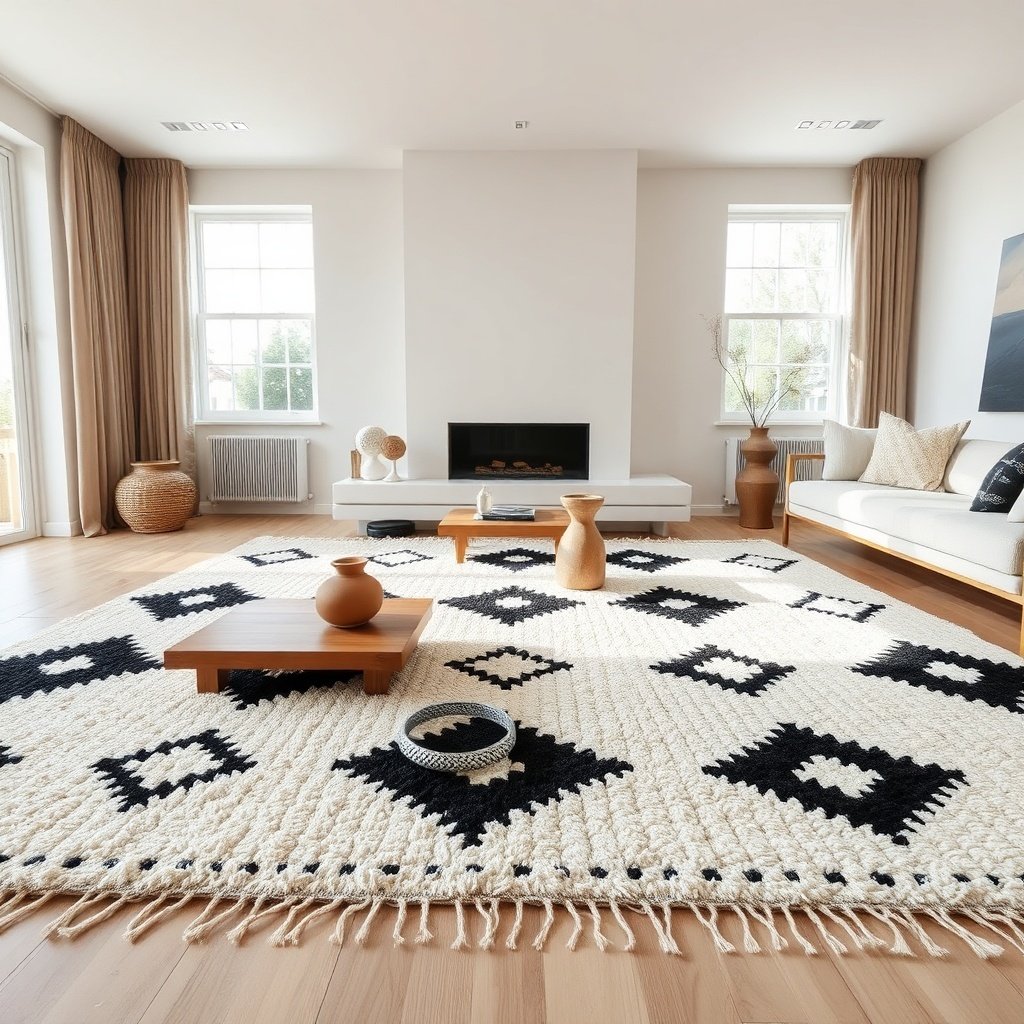
A modern living room styled with a Berber rug and silver jewelry.
Silver, Amber, and the Art of Protection
While weaving is often associated with women, the realm of metalwork is historically dominated by men, particularly the Tuareg people of the Sahara. Tuareg silver jewelry is a cornerstone of Unique Handmade Berber Crafts, valued not just for its beauty but for its supposed talismanic properties. Historically, Amazigh people believed that silver and specific stones like amber, coral, and amazonite possessed protective powers to ward off the evil eye and ensure health. Unlike gold, which was historically avoided by some tribes for religious or cultural reasons, silver is considered the metal of the prophet.
One of the most iconic pieces is the Tuareg Cross, also known as the Agadez Cross. This heavy, geometric pendant is not a religious symbol in the Christian sense but a navigational tool and symbol of the four corners of the world. Traditionally, a father would forge a cross for his son before he embarked on a journey, with the four points representing the cardinal directions to guide him home. Today, these crosses are powerful statements of Saharan handicrafts and identity.
The technique used to create this jewelry is meticulous. Artisans use a method called "Niello work," where a mixture of silver, copper, and lead sulfide is used to create dark contrasts against the bright silver. They hand‑chisel intricate geometric patterns onto the metal, creating a tactile texture that machine casting cannot replicate. When you run your finger over a handmade handmade silver accessory, you can feel the depth of the engraving. This level of detail ensures that every piece of jewelry is a unique work of art, carrying the specific "hand" of the artisan who made it.
Sustainable Practices in Modern Berber Artisanship
The year 2026 has seen a massive resurgence in the use of natural pigments, aligning Unique Handmade Berber Crafts with global eco‑friendly movements. In the past, cheaper synthetic dyes flooded the market, but discerning buyers and cooperative leaders have pushed for a return to traditional methods. Artisans now source pigments from local flora: saffron and pomegranate skin for vibrant yellows, henna and madder root for deep reddish‑browns, and indigo for those signature deep blues. This shift supports Kenzadi.com trends and eliminates the toxic runoff associated with industrial dyeing.
Furthermore, the philosophy of zero‑waste is deeply ingrained in the Amazigh approach to craftsmanship. Nothing goes to waste. Wool remnants from rug weavings are spun into smaller decorative items like tassels or braided belts. Leather offcuts from pouf‑making are stitched together to create durable pouches and keychains. This circular economy is not a new marketing tactic but a centuries‑old necessity born from respect for resources. When you buy Moroccan Leather Pillow, Beige traditional Throw Pillow Case by MyPoufs.com online or textiles, you are participating in a system that values material efficiency.
Economically, the rise of Berber Artisans initiatives has transformed lives. The region has seen the establishment of numerous women‑led cooperatives in the Atlas Mountains. These collectives allow women to work from home or in shared community spaces, providing them with financial independence. The cooperatives ensure fair wages, often 50% higher than market rates for middlemen, and provide education and healthcare for the artisans' families. Purchasing a craft item is therefore a direct investment in community development, ensuring that the value of the labor stays with the creators.
Quick Answer: Identifying Natural Dyes
How can you tell if a rug uses natural dyes? Look for slight variations in color tone within the same shade. Natural dyes rarely produce a perfectly flat, uniform color; they have an "abrash" effect where the color shifts subtly. Additionally, natural colors tend to be earthier and softer on the eye compared to the neon brightness of chemical synthetics.
Authenticating Handmade Quality in the 2026 Market
As the popularity of Unique Handmade Berber Crafts grows, so does the market for machine‑made imitations. To ensure you are buying an authentic piece, you must apply the "Imperfection Test." In a genuine handmade rug, the selvedge edges may vary slightly in width, and motifs may not be mathematically perfect. A machine‑made rug relies on computerized precision, resulting in stiff, uniform edges and repetitive patterns. Authentic Authentic Amazigh symbols should show the hand of the weaver—slightly asymmetrical diamonds or varying line thickness are good signs.
Sensory cues are your best tool. Smell and touch the item. Real wool smells faintly of lanolin or earth, a scent that synthetic acrylics lack. It feels warm and slightly oily to the touch. Hand‑hammered silver feels cool, heavy, and substantial; it lacks the slick, smooth finish of electroplated alloys. If a silver piece feels light or has a plastic‑like shine, it is likely a lower‑grade mix or mass‑produced fake. When shopping for (Creamy White) or other artisan goods, trust your fingers over your eyes.
Provenance verification is also crucial in 2026. Vague labels like "African Style" or "Moroccan Inspired" are red flags for mass production. Instead, look for certification tags from recognized cooperatives or ask the seller for the specific region of origin (e.g., "This is from the Beni Mguild tribe"). Reputable sellers will provide detailed stories about the piece and the artisan who made it. This transparency is the hallmark of the Unique Handmade Berber Crafts market, ensuring that the legacy of the Amazigh people is respected and preserved.
Quick Answer: The Imperfection Test
Are flaws in a Berber rug a bad sign? No, slight irregularities are a sign of authenticity. Human weavers cannot tie knots with robotic precision. Look for variations in pattern size, color saturation (abrash), and selvage edges. These "flaws" prove the rug was made by hand on a traditional loom, not by a machine.
Conclusion
Unique Handmade Berber Crafts offer a profound connection to an ancient culture that prioritizes meaning, spirituality, and sustainability over mass production. In a world of disposable goods, these items stand as enduring testaments to the Amazigh legacy. Whether it is the protective diamond in a rug or the guiding cross of a silver pendant, these pieces carry stories that have traveled through centuries. Acquiring them is not just a transaction; it is an investment in art that appreciates in value and story over time, unlike fast‑fashion decor that loses its appeal the moment it leaves the box.
As we move further into 2026, the responsibility lies with the consumer to support ethical practices. By seeking out certified artisans and fair‑trade vendors, you ensure that your purchase honors the Amazigh cultural heritage and provides tangible support to the communities that keep these traditions alive. Choose pieces that speak to you, not just for their aesthetic, but for the human hands that crafted them and the history they represent.
FAQ
What distinguishes a Berber rug from a standard Persian rug?
Berber rugs typically feature a distinct geometric, abstract tribal language with a high pile or flat weave, utilizing Authentic Amazigh symbols to tell stories. Persian rugs often utilize floral curvilinear patterns, intricate medallions, and a more formal, symmetrical design structure rooted in Persian city traditions.
How do I clean and maintain authentic handmade Berber wool?
Vacuum regularly without a beater bar to avoid pulling the fibers. Spot clean immediately with mild detergent and cold water; blot rather than rub. Avoid steam cleaning or dry cleaning, as harsh chemicals can strip natural lanolin and damage the Natural wool and dyes, causing the fibers to become brittle.
Why is authentic Berber silver often darker than commercial sterling?
Authentic Berber silver is often a mix of silver (sometimes old coins), nickel, or other alloys, rather than the 92.5% sterling standard. This mix, combined with the traditional "Niello" engraving technique, results in a higher patina that develops a deep, lustrous glow with age and wear, unlike the bright white shine of commercial sterling.
Are the dyes used in Berber textiles colorfast?
While modern chemical dyes used in lower-quality goods are often colorfast, traditional natural dyes used in high-end Unique Handmade Berber Crafts may fade slightly over many years. This gentle evolution of color is considered a sign of authenticity and adds to the vintage, living character of the piece, much like patina on silver.
Conclusion
Unique Handmade Berber Crafts offer a profound connection to an ancient culture that prioritizes meaning, spirituality, and sustainability over mass production. In a world of disposable goods, these items stand as enduring testaments to the Amazigh legacy. Acquiring them is not just a transaction; it is an investment in art that appreciates in value and story over time. As consumers, the responsibility lies with us to support ethical practices. By seeking out certified artisans and fair‑trade vendors, you ensure that your purchase honors cultural heritage and provides tangible support to the communities keeping these traditions alive. Choose pieces that speak to you, not just for their aesthetic, but for the human hands that crafted them. Start your journey today and bring a piece of this timeless history into your home.
FAQ
What distinguishes a Berber rug from a standard Persian rug? Berber rugs typically feature distinct geometric, abstract tribal patterns utilizing Amazigh symbols to tell stories. In contrast, Persian rugs often use floral curvilinear designs, intricate medallions, and a more formal, symmetrical structure rooted in city traditions.
How do I clean and maintain authentic handmade Berber wool? Vacuum regularly without a beater bar to avoid pulling fibers. Spot clean immediately with mild detergent and cold water by blotting, not rubbing. Avoid steam or dry cleaning, as harsh chemicals can strip natural lanolin and damage the wool and dyes.
Why is authentic Berber silver often darker than commercial sterling? Authentic Berber silver is often a mix of silver, nickel, or other alloys rather than pure 92.5% sterling. This composition, combined with traditional "Niello" engraving, results in a higher patina that develops a deep, lustrous glow with age, unlike the bright shine of commercial jewelry.
Are the dyes used in Berber textiles colorfast? While modern chemical dyes are often colorfast, traditional natural dyes used in high‑end pieces may fade slightly over many years. This gentle evolution of color is considered a sign of authenticity and adds to the vintage, living character of the textile.